Josef Mánes Exhibition Diary

Prague’s Wallenstein Riding Stables hosted a comprehensive exhibition of Josef Mánes’ portraits, genre paintings, landscapes, drawings, prints, designs and illustrations of Slav history from the Czech Romanticism and Realism eras of the 19th century. Some 400 of his creations captured my undivided attention. He also created standards, insignia and uniforms for the Sokol physical education organization, some of which were also on display.

I knew the name well because Josef Mánes had been born into an artistic family: His father, Antonín, created landscapes while his brother and two sisters also became painters. Josef – I will refer to him by his first name so readers do not confuse him with his father or siblings – grew up in the Habsburg Empire when German was the official language of the Czech lands. He spoke only German as a youth. He didn’t learn Czech until he was grown up, even though he was one of the leading figures in the Czech National Revival that promoted the Czech language.

This prominent artist was inspired by his time in Munich, where he spent three years as a young man. For many years he resided in Moravia, including at the Čechy pod Košířem Chateau. In addition to making portraits, landscapes and Second Rococo style genre paintings, Josef developed a strong interest in folk costume, rendering portraits of Czechs in traditional dress. He created many works portraying villagers and everyday life in the Hana region of Moravia.

Inspired by Prague’s Old Town, Josef created portraits of its residents and even painted two genre paintings for Prague brothels. His work also decorated much more elegant structures, such as the Žofín concert hall in the center of Prague, for instance. When I first set foot in Prague, I fell in love with the Old Town. I could sense the history of the nation on its streets and in Josef Mánes’ paintings of that historical quarter.

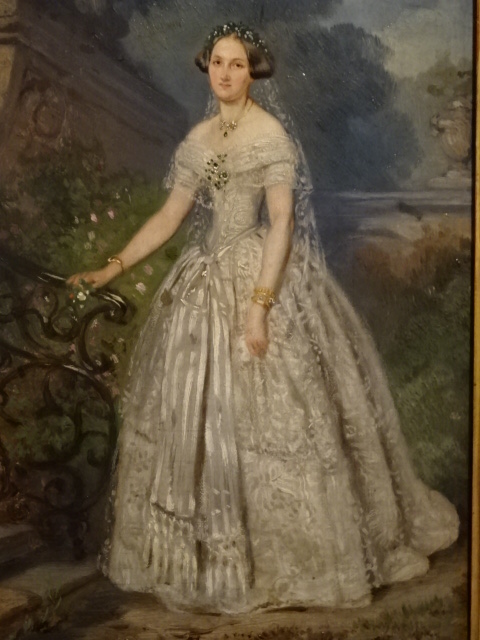
His portraits are stunning because they are characterized by immense psychological depth and sensitivity. The viewer almost is looking into the sitter’s soul. Each portrait told an individual story of a unique life. Before this exhibition, I had considered him to be first and foremost a portrait painter, but I learned at the Wallenstein Riding Stables that he had been much more versatile in his accomplishments.

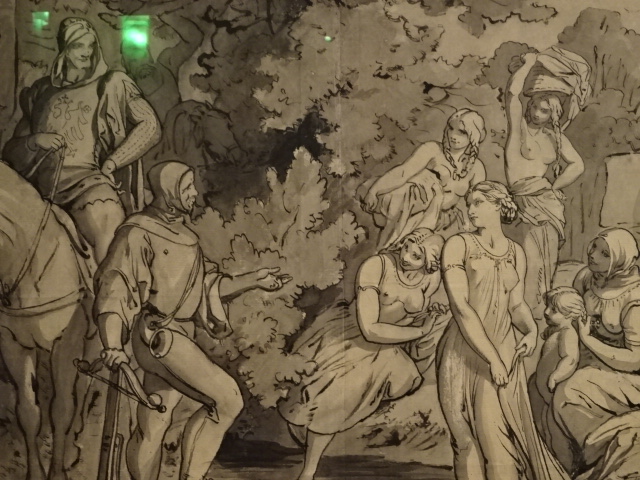
I was most enamored by his landscapes because I was fascinated by landscape painting in general, especially by Czech art in this field. I had seen many exciting Czech landscapes in galleries throughout the country as well as in chateaus. Josef’s work utilized subtle colors and masterful brushwork that portrayed both the Czech and Slovak countryside with elements of Romanticism and Realism. He was one of my favorite landscape painters, excelling at employing light and atmosphere in his renderings of the Hana region, the Czech Paradise region, the Krkonoše Mountains and the Šumava Mountains, for instance. I had traveled extensively throughout these parts of the country. Josef’s travels in the Austrian Alps also inspired the creations of some masterful landscapes. While I had never been there in person, I always wound up gawking at the sheer power, beauty and seemingly invincibility of the Austrian Alps. In several other works, he depicted nymphs, using the Šumava Mountains and Moravia’s Čechy pod Košířem as backdrops.

On Astronomical Clock

Astronomical Clock

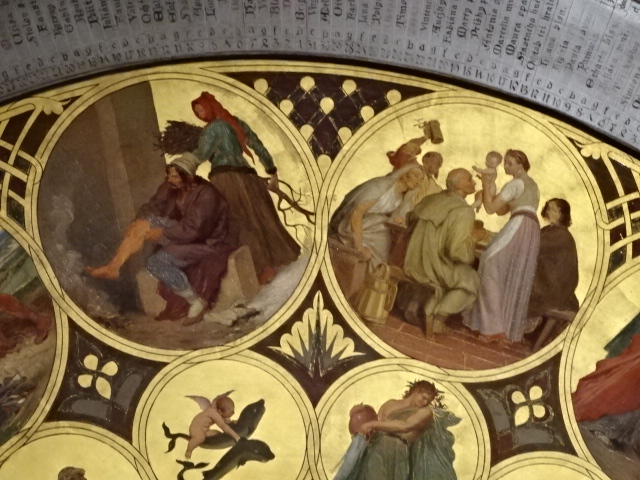
Perhaps Josef’s greatest achievement was creating 12 medallions for Prague’s Astronomical Clock. I recalled how so many tourists crowded around the clock to watch its hourly show in the late morning and afternoon. I always came to admire the clock in the early morning to avoid the crowds and the possibility of getting pickpocketed. Painted in 1865, the original calendar dial was on display at this exhibition. The allegories of the months of the year dealt with agriculture themes. I often had admired the calendar in the Museum of the City of Prague, where it was usually on display.
Astronomical Clock

I looked closely at the calendar dial, which consisted of circular rings. Standing for the 12 months, figures dressed in folk costume glorified Slav identity. September was represented by the ruins of Troský Castle, which I had seen on my trips numerous times. The Czech village tradition of pig-slaughtering was the focus of December. I remember one irate acquaintance telling me that he did not support the European Union because its regulations did not allow citizens to slaughter their own pigs at home.

Bezděz Castle was in the background of March. I recalled the four-kilometer walk up to the castle ruins that had fascinated me, even though I was not usually so enthusiastic about ruins. A young farmer used a plough in the foreground of the March portrayal. Josef had also painted allegories of zodiac signs. I noticed dolphins and a plump cherub for Pisces. Capricorn was represented by a cherub leading a goat. Romanesque features were evident in Josef’s pictorial work for the dial. 

Designed for Sokol physical education organization

Josef’s personal life had not been so rosy, however. After he got a servant pregnant, his parents made him marry her. Josef also was plagued by mental illness from 1866, when he began to lose much weight, to pronounce words badly and behave in a strange manner. It is possible that he suffered from syphilis affecting the brain or tuberculosis. He died in 1871 at the age of 51.

The exhibition also included explanations of how Josef’s work has been perceived throughout the centuries. After his death, he achieved fame because of his work for the Czech National Revival. As the 20th century approached, Josef became known as an artistic pioneer of new trends and advancements in his field. During Communism, though, his works took on an ideological meaning. It was not until after the downfall of Communism that people interested in art could once again express the masterful skill and individuality of his paintings as his works became appreciated in the cultural sphere.
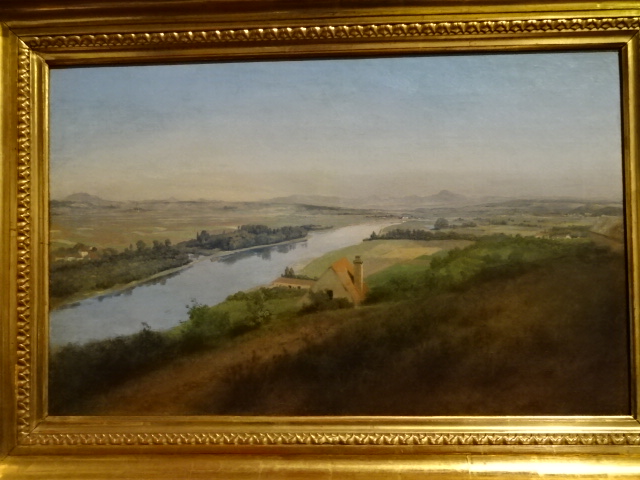
While I had seen many works by Josef throughout the country, I was overwhelmed by viewing so many in one large exhibition hall. I had not truly understood the mastery of Josef’s art and realized that he had been so talented at many genres. For a long time, I had admired the works of his siblings and father, too. Now I knew that Josef was the most skilled in his family. I was fascinated by all aspects of this exhibition.

Tracy A. Burns is a writer, proofreader and editor in Prague.

Josef Mánes

Sucharda’s Second Villa Diary

The second Sucharda Villa

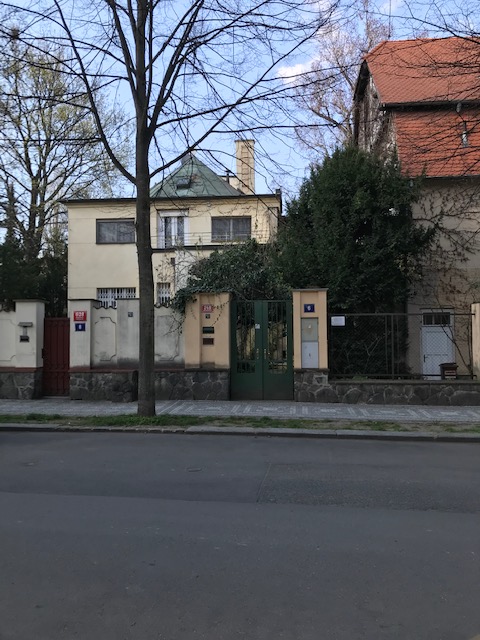
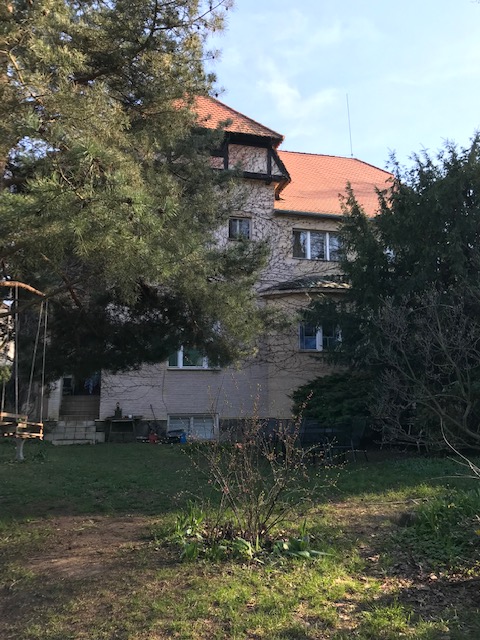
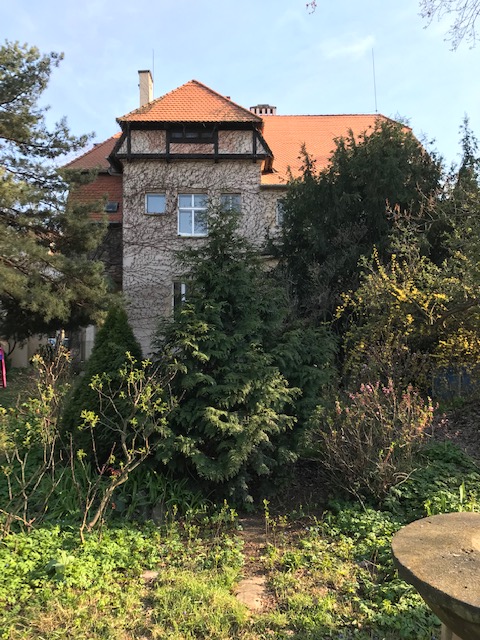
I had waited months for the tour of Stanislav Sucharda’s second villa. The first time I had had to cancel due to illness. I had seen the exterior of the Sucharda Villa on Slavíčkova Street for the first time on a tour of Bubeneč in Prague’s sixth district. Constructed for sculptor, designer and medallist Stanislav Sucharda from 1904 to 1907 by architect Jan Kotěra, the villa is shaped like a cube and features a mansard roof, polygonal bay windows and half-timbered gables. To say I was impressed is an understatement.

The studio of the Sucharda Villa, now a separate building

A large studio building, influenced by Cubism, stood next to what was Sucharda’s second villa. A knight figure is featured on its steep roof. This had once been Sucharda’s atelier but now was owned by the government for administrative purposes. Sucharda had needed a large studio after he won the competition for the colossal monument to František Palacký, the founder of Czech historiography as well as a prominent politician. Palacký’s nickname was the Father of the Nation.

Jan Kotěra – Photo from Kralovehradecký architektonický manual

Kotěra received accolades not only as an architect but also as a theoretician of architecture, a furniture designer and a painter. He designed all the interior furnishings for this villa. I was familiar with Kotěra’s National Building in Prostějov, Moravia. The two-winged, L-shaped building in Prostějov was clearly divided into sections for a hall, restaurant and cafes. Kotěra had also designed half of the complex for the Law Faculty of what is now Charles University, which I had often passed on foot or on the tram.

Decoration on Sucharda’s first villa

As I have already pointed out, this was Sucharda’s second villa in Bubeneč. The first one is also on Slavíčkova Street. It is a neo-Renaissance structure that he and his family had inhabited for 10 years. An exquisite painting of the bishop Božetěch is featured on the exterior of this villa. Stanislav sold this building to his brother Vojtěch, who had made a name for himself as an artist, too.

Mašek’s Villa on Slavíčková Street

Indeed, Slavíčkova Street is dotted with villas built for artists, including architect Jan Koula and painter Karel Vítězslav Mašek. The prominent villas on this street were built from 1895 to 1907. On Mašek’s villa there is floral decoration with a painting of the Virgin Mary with Child. Both the Koula and Mašek villas feature motifs of white pigeons. The painting on one side of Koula’s villa is outstanding.

Koula’s Villa on Slavíčkova Street

Back to Stanislav Sucharda: Family members have taken up artistic professions for at least 250 years. Stanislav was brought up in Nová Paka, where his father, Antonín Sucharda, had created and restored sculptures. The five children helped out in their father’s workshop and would continue to pursue artistic careers.

Stanislav Sucharda

Stanislav attended the School of Decorative Arts in Prague, where he studied under the greatest Czech sculptor of the 19th and 20th century, Josef Václav Myslbek. Every Praguer knows Myslbek’s equestrian statue of Saint Wenceslas at the top of Wenceslas Square. I vividly remember the statue being decorated with votive candles and pictures of Václav Havel shortly after the former president and former dissident died in 2011. The sight had made an unforgettable impression of me and filled me with an immense feeling of loss. Many demonstrations have taken place around the statue, too, even under Communism.  

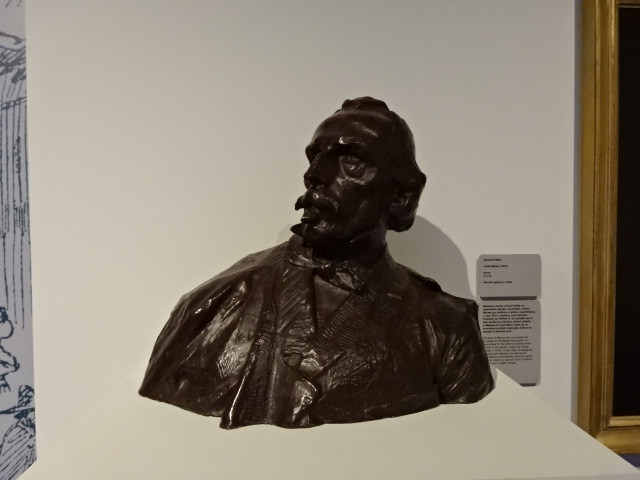
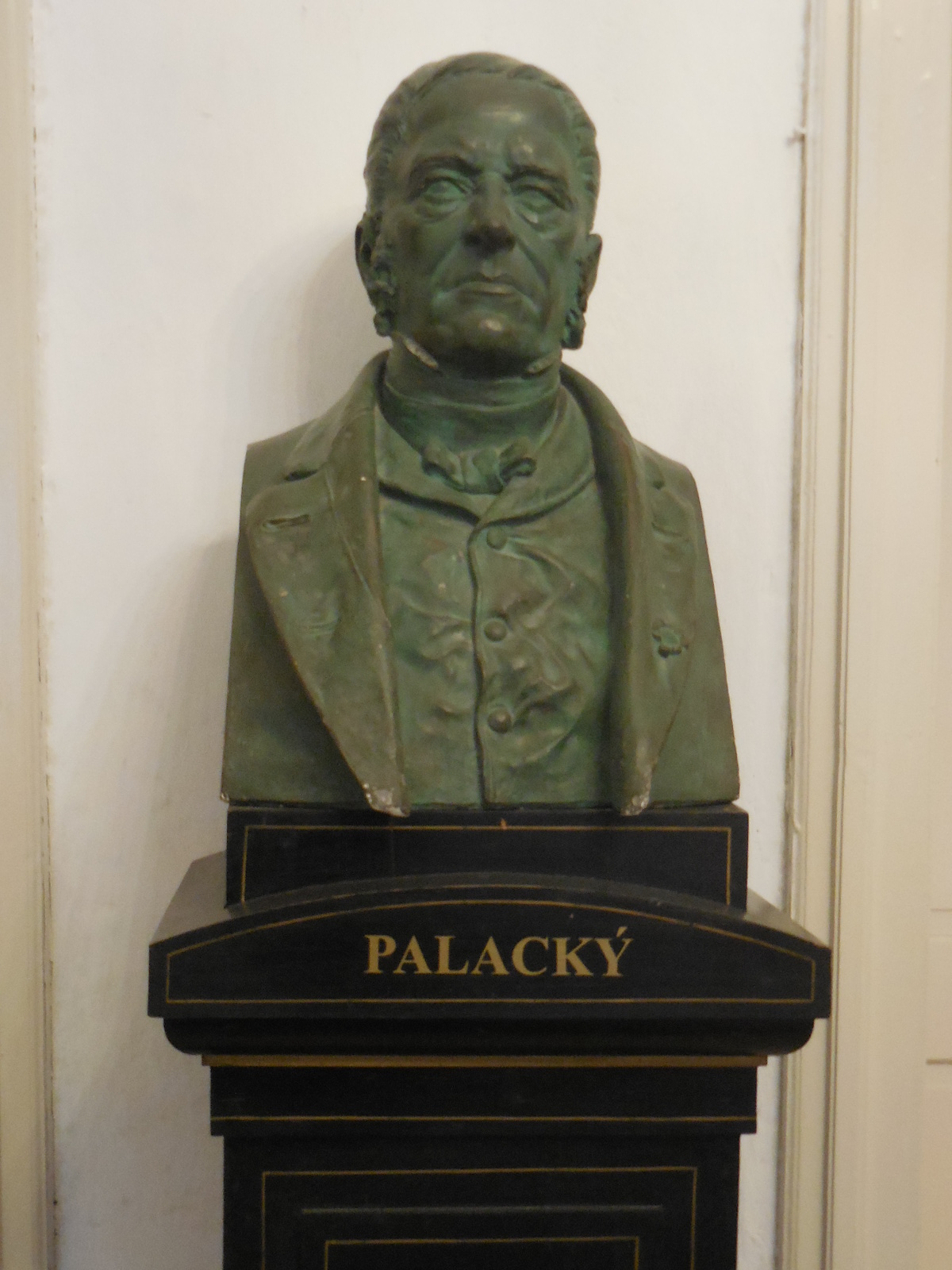
Bust of František Palacký from Maleč Chateau, where Palacky had resided.

Myslbek had been very influenced by the Czech National Revival that promoted Czech culture and the Czech language. I was familiar with Myslbek’s sculptural portrait of František Palacký, who had supported the Czech National Revival, on Palacký’s former home in the street named after him.

Postcard of Sucharda’s Prague and Vltava (1902) printed by Museum of Stanislav Sucharda

It is not surprising that Sucharda’s early creations were greatly influenced by Myslbek’s realism. Sucharda became known for his creations of Czech historical figures and the Slavonic themes in his work, which are two of the reasons his works appeal to me. I love Czech history and studied it in graduate school. After a Prague exhibition of Auguste Rodin’s sculpture in 1902, however, Sucharda’s style became more vibrant and underwent some changes.

Postcard of Sucharda’s Liliana (1909), printed by Museum of Stanislav Sucharda

Sucharda is best known for his sculptural grouping of the monument to Palacký on Palacký Square in Prague’s second district. Many years ago, Palacký’s statue had greeted me every time I took the Metro at the square or rode by on a tram. I had become very interested in Palacký’s work during graduate studies in Czech history, and I found that having a monument dedicated to him near my apartment was refreshing and soothing. The bronze statues of the monument brought to mind the revitalization of Czech history and culture during the Czech National Revival.

Palacký monument on Palacký Square in Prague

The monument also made me think of the Czech nation finally gaining independence after World War I with the creation of Czechoslovakia, even though Palacký had not been alive to see that. I thought of the Czech nation breaking free from the Germanization of the Austro-Hungarian Empire whenever I passed by that sculptural grouping.

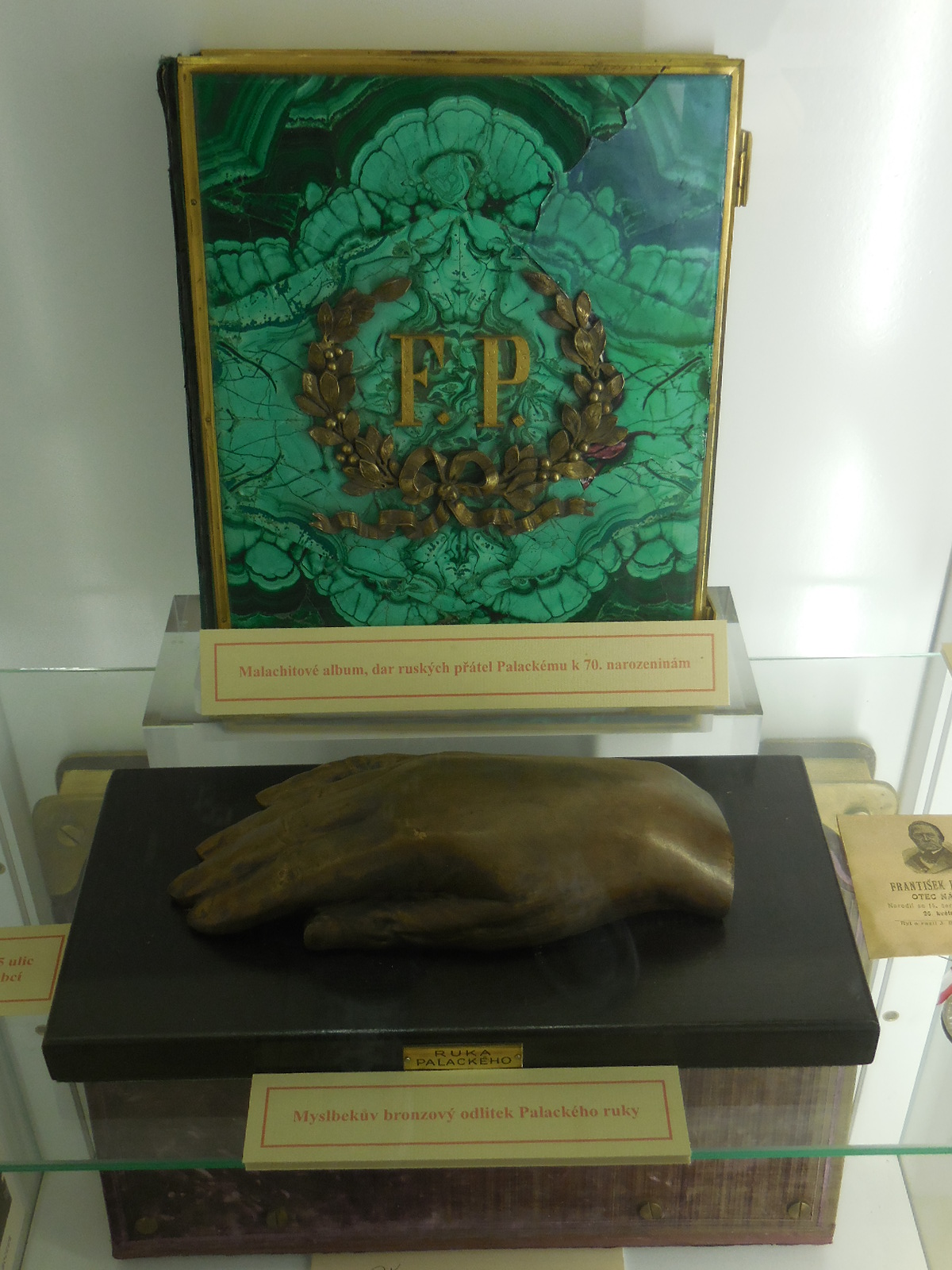
A cast of Palacký’s hand by Myslbek

In the same district as his villa, Sucharda had created a monument to composer Karel Bendl. He also built monuments to Czech historical figures Jan Amos Komenský (Comenius in English) and martyr Jan Hus, for instance. Other designs include sculpture for the study of the mayor of Prague from 1907 to 1909.

Sucharda also authored many reliefs, medals and plaques, and his medal designs were highly praised. His medal works even received international recognition. Stanislav became professor of the first Department of Medal Design of the Academy of Fine Arts in Prague after spending two decades as a professor at the School of Decorative Arts. He had also served for seven years as the chairperson of the Mánes Union of Fine Arts, which organized many influential exhibitions in Prague and was an important promoter of modern art.
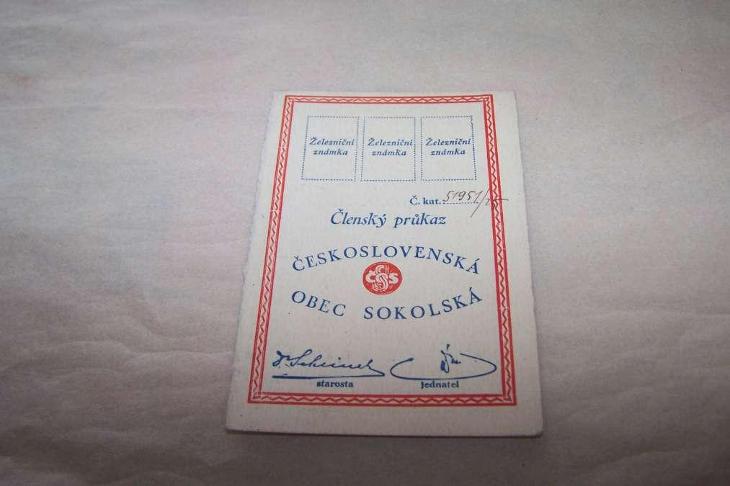
Sokol membership card from 1912. Photo from aukro.cz

For Sucharda there was more to life than artistry. He was an avid member of the legendary Sokol physical education organization, even working as an instructor there. His entire family was involved with this prominent Czech organization.

Then fate intervened. Stanislav served in the military during World War I and did battle on the eastern front. Wounded in the war, he died after returning to the Czech lands in 1916, a year after being chosen to head the medal design department of the Academy of Fine Arts. I thought it was such a shame that he did not get to see the establishment of independent Czechoslovakia with Tomáš Garrigue Masaryk at the helm.

Sucharda’s Second Villa as seen from the garden

The tour of the two-story villa was very impressive as Sucharda’s granddaughter told the group about her father’s work, the pieces of art in the building and the history of the villa. A professional guide was insightful, too. The interior consisted of an English style hall with stained glass decoration on high windows and sculptures, reliefs and paintings. The British architecture of the hall reminded me a bit of Staircase Hall in the Moravian villa of Slovak architect Dušan Jurkovič, who had been inspired by the English Arts and Crafts movement.

Jurkovič’s Villa in Moravia

We saw works by Edvard Munch and Rodin as well as many Czech creations. Small statues and other artworks decorated the top of an elegant decorative fireplace. Behind plush red seating shaped in a semi-circle was a beautiful stained glass window. I especially liked a large relief by Sucharda in the entrance hall and a life-size statue.

In the narrow hallway there was a fountain with sculptural decoration that employed religious motifs. We also saw the dining room with its paintings, statues, busts and ceramics. Works by Stanislav’s daughter were very impressive. The woodcarving of Kotěra furnishings was masterful. A small conservatory was adjoined to the dining room. Intriguing artifacts decorated the piano, and outstanding paintings decorated the walls. I especially liked a rendition of the Roman Forum by Cyril Bouda. It brought to mind my passion for Italy and the time I had showed my parents the Roman Forum

The garden had an intimate feel. I could imagine sitting there, reading a good book and relaxing on a sunny day.

The Muller Villa in Prague

Visiting villas in Prague was one of my favorite pastimes. I recalled touring the František Bílek Villa, the Muller Villa, the Winternitz Villa and the Rothmayer Villa in the capital city. I had also toured several intriguing villas in Brno and the Bauer Villa in central Bohemia. I would definitely recommend touring these villas. I was glad I was able to get to know Stanislav Sucharda better via his villa and the art within it. I developed a much stronger appreciation of Sucharda’s contribution to modern art. The tour was even more impressive than I had imagined it would be.

Tracy A. Burns is a writer, proofreader and editor in Prague. 

Mucha: The Family Collection Exhibition Diary

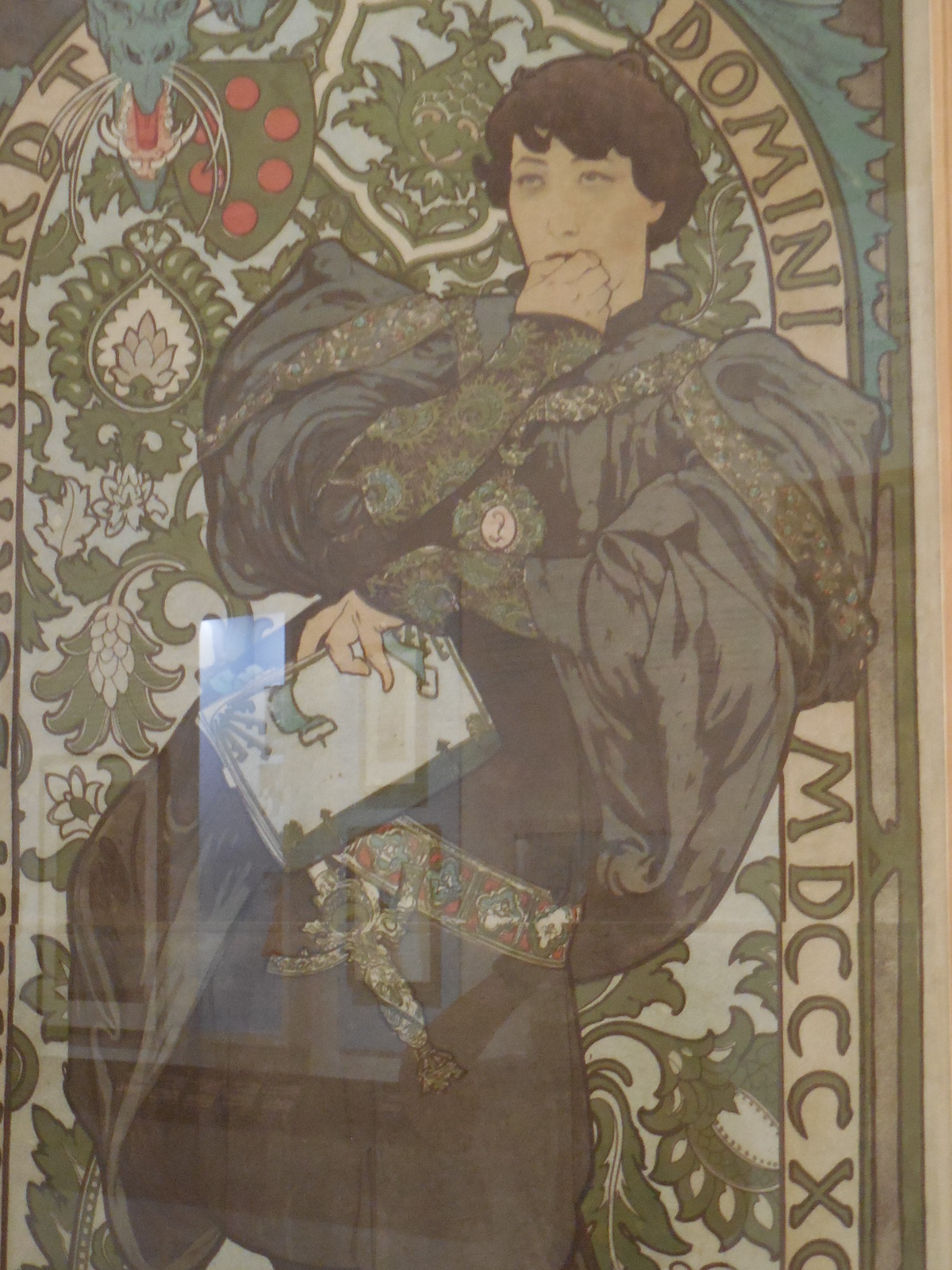
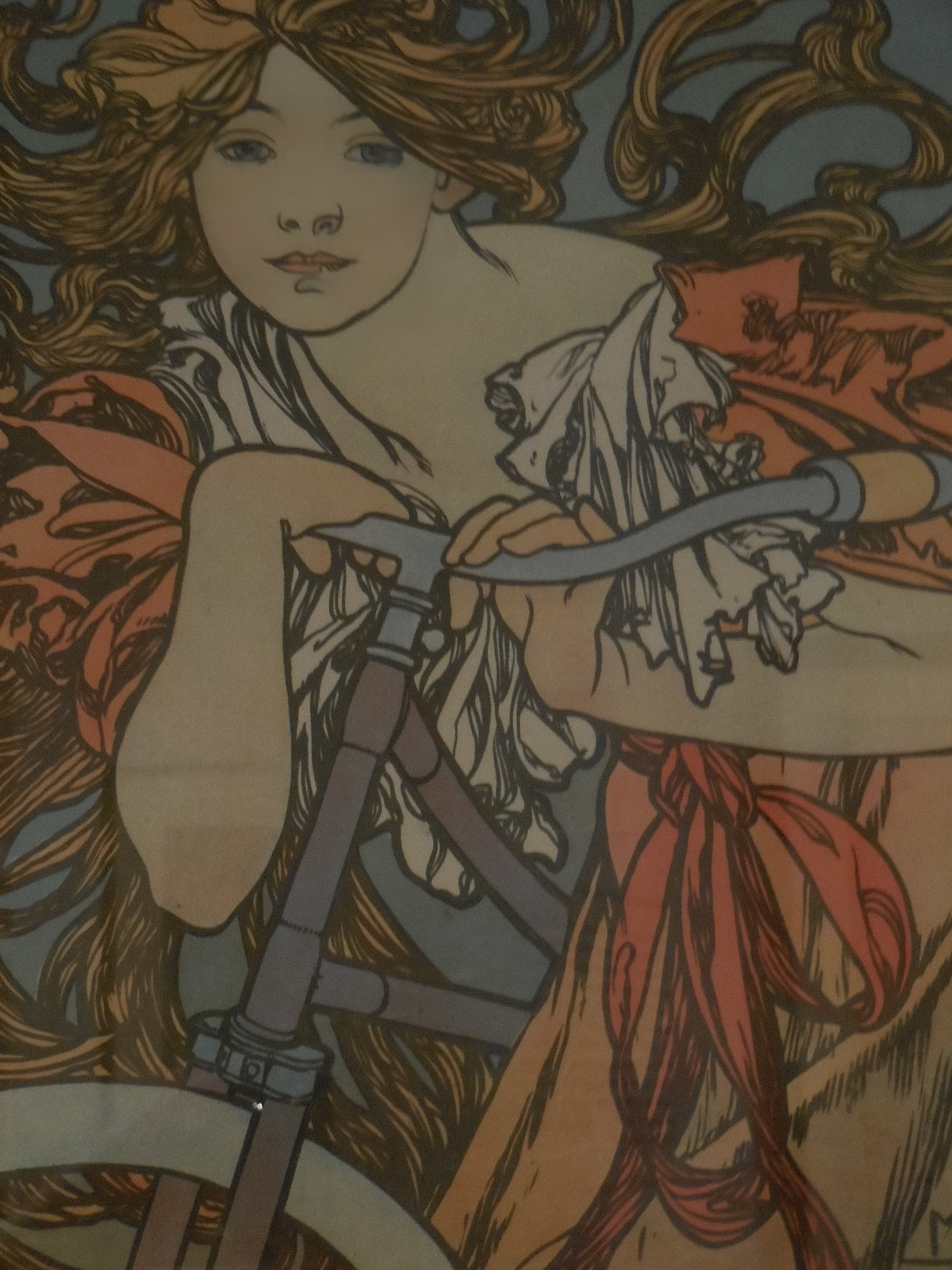
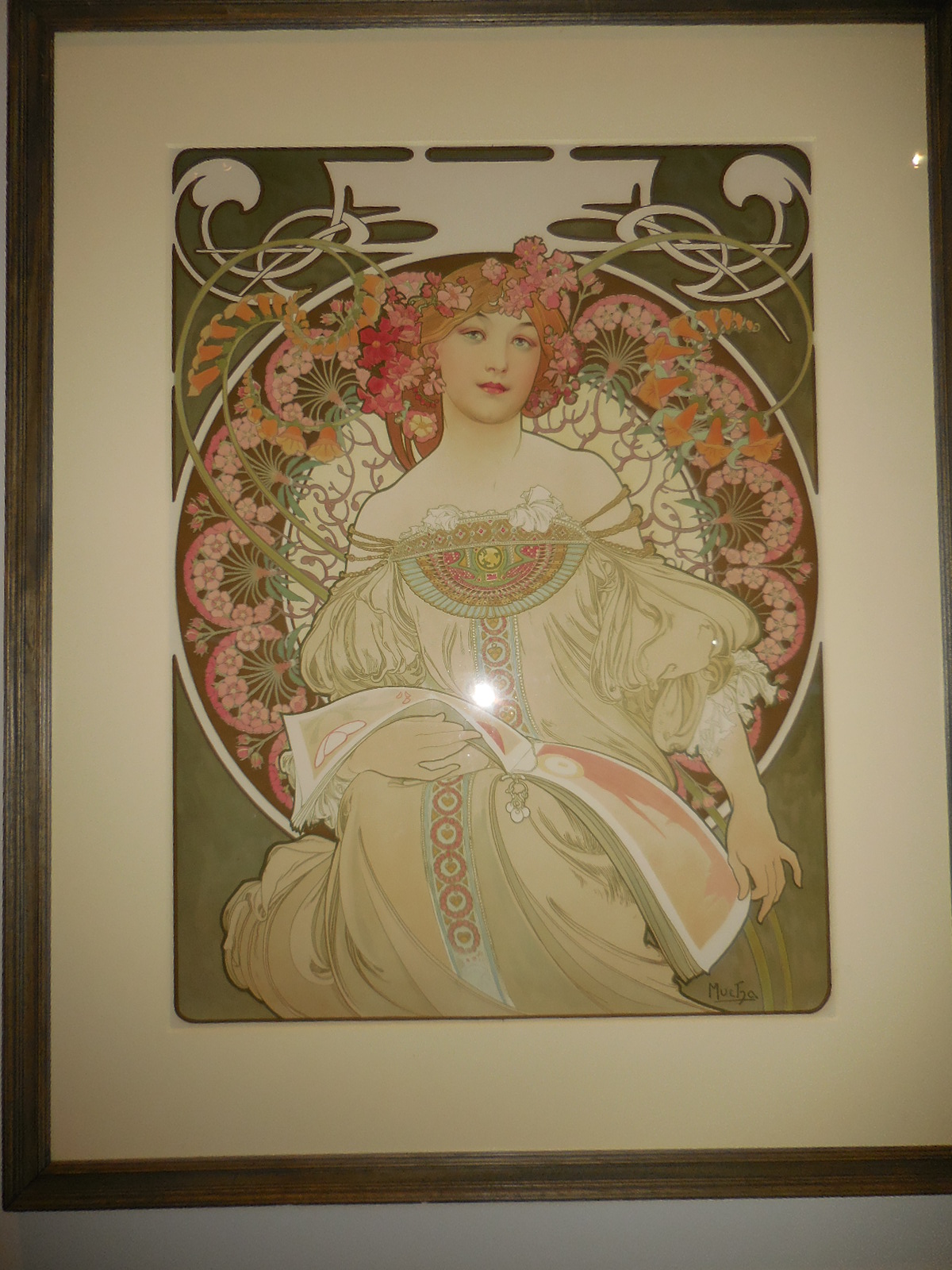
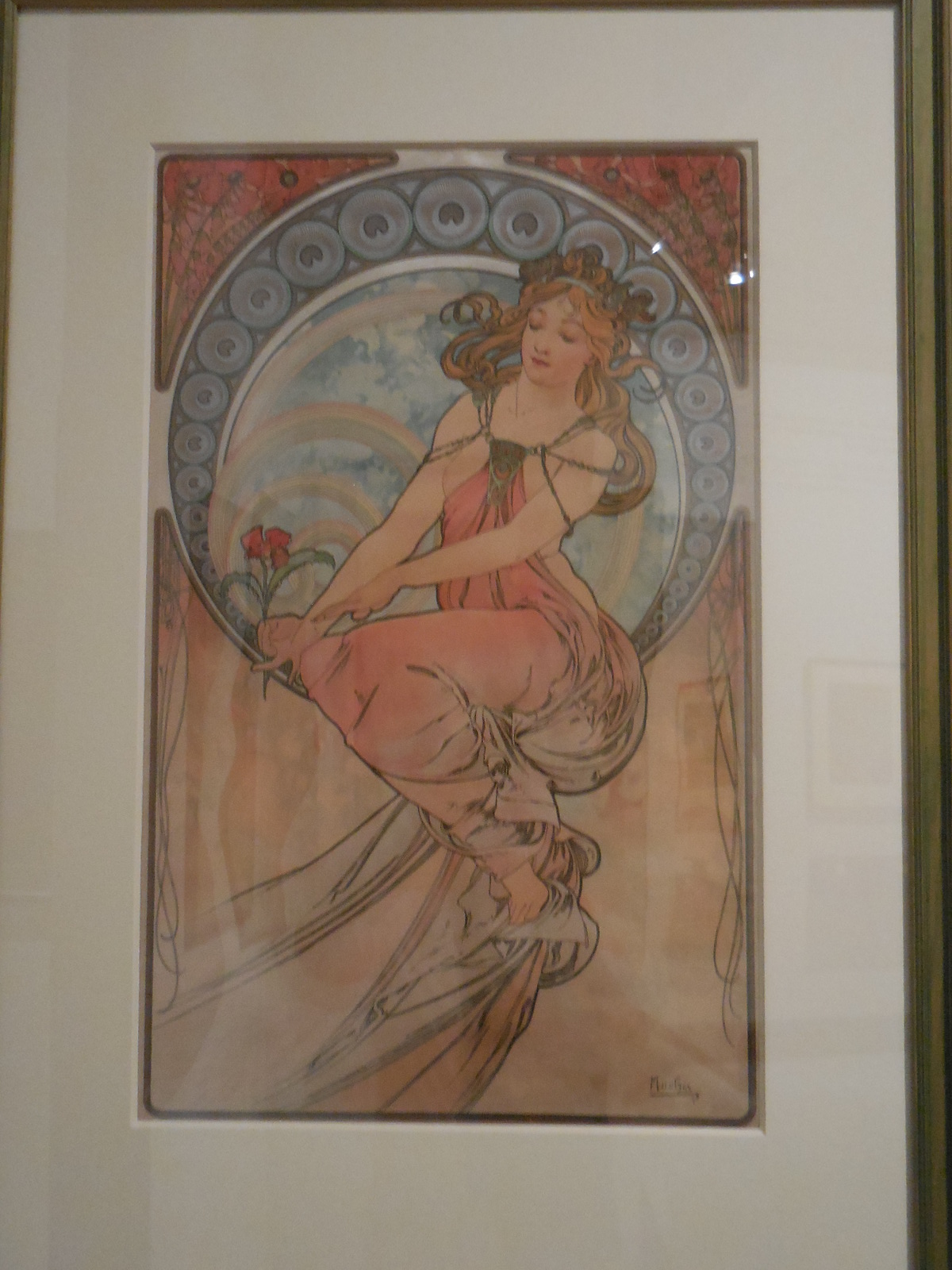
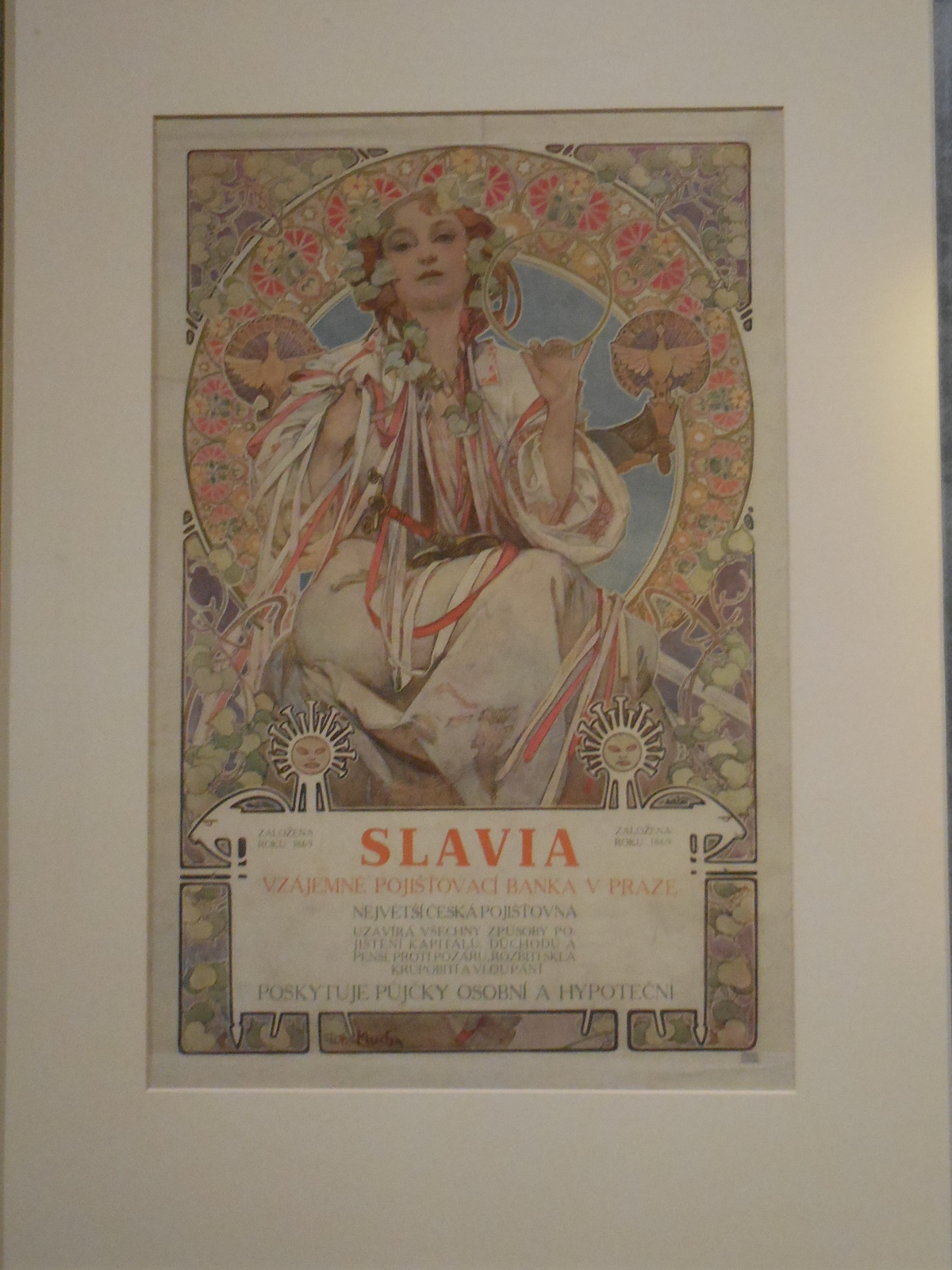
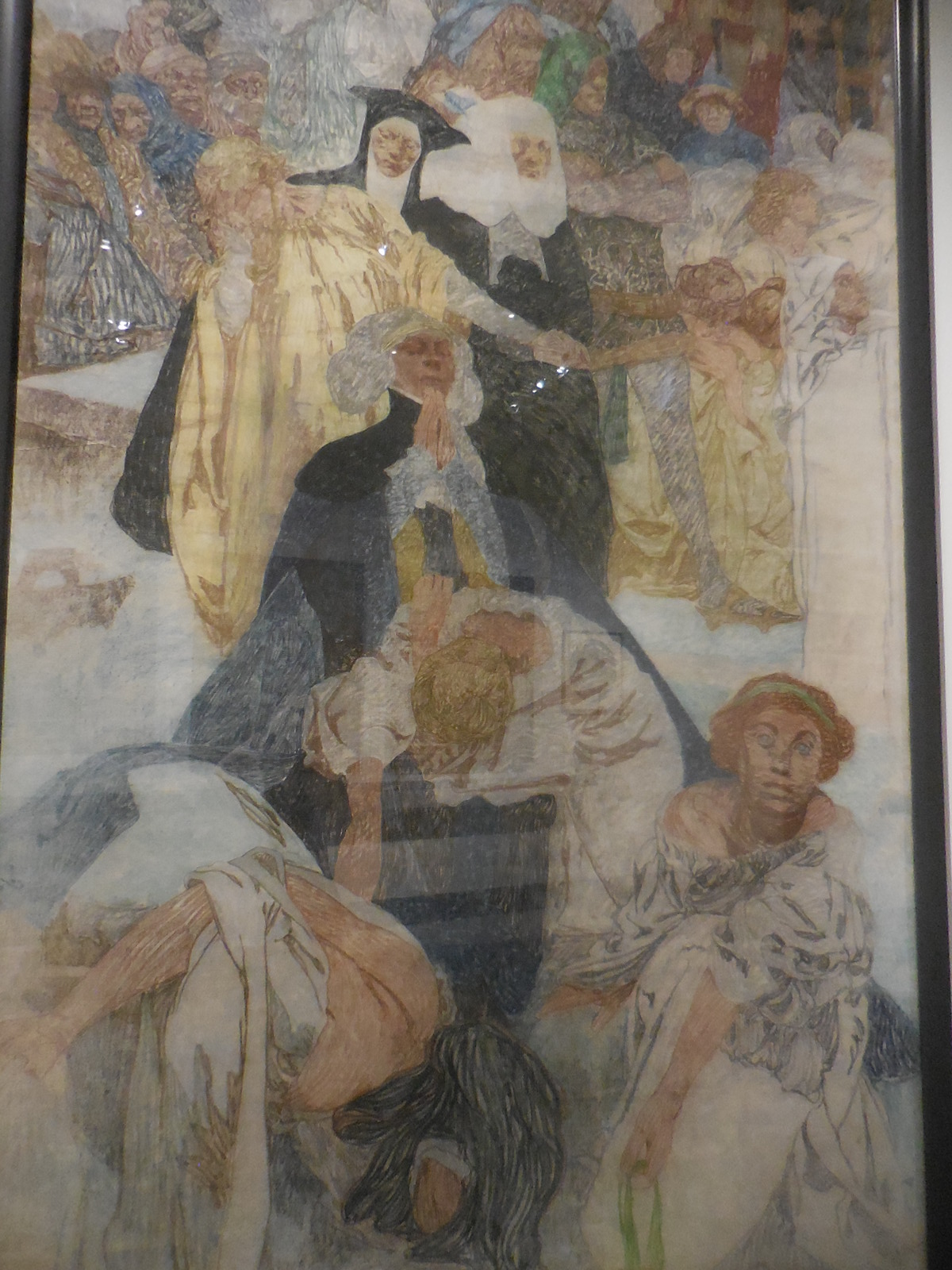
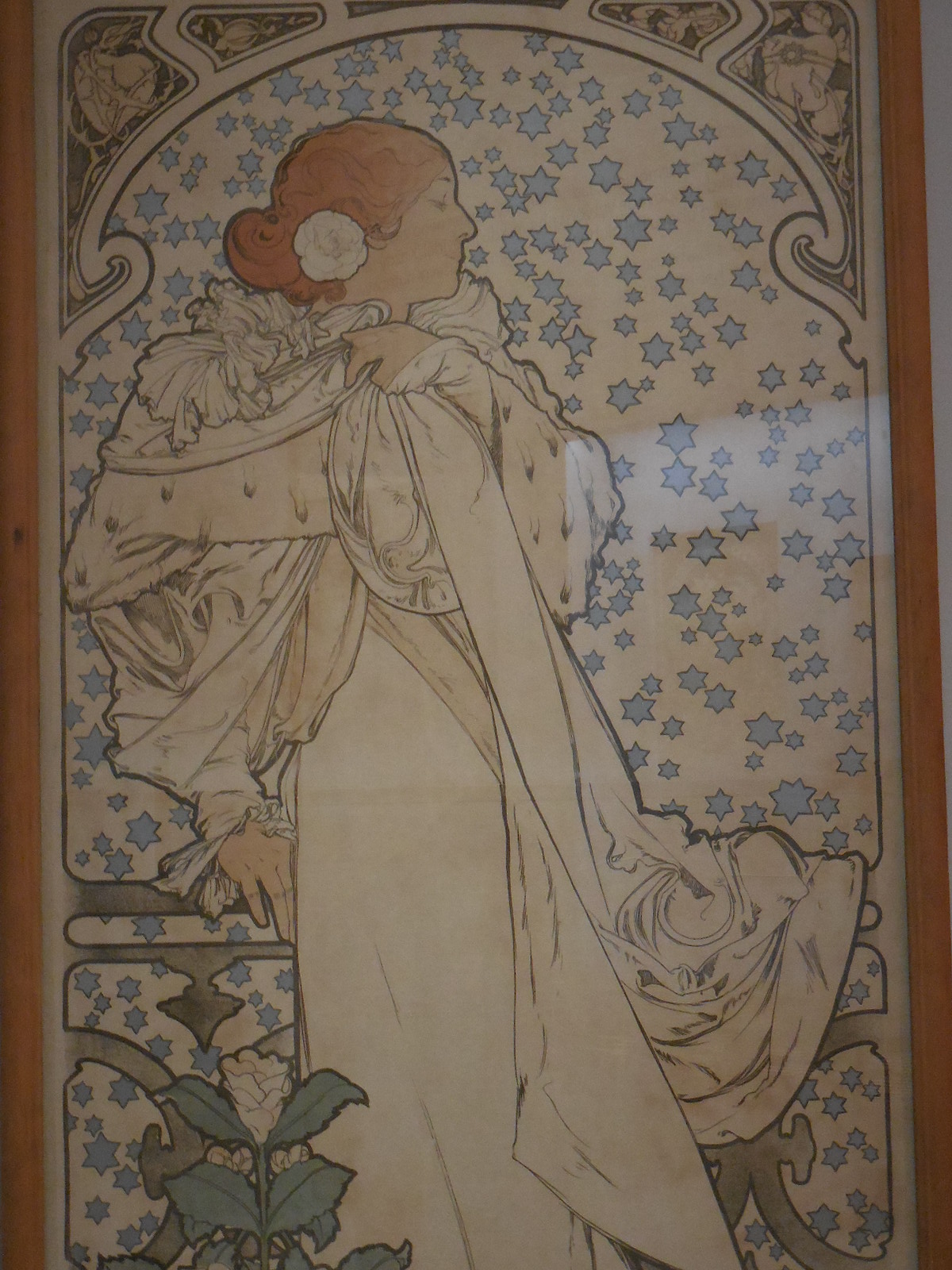
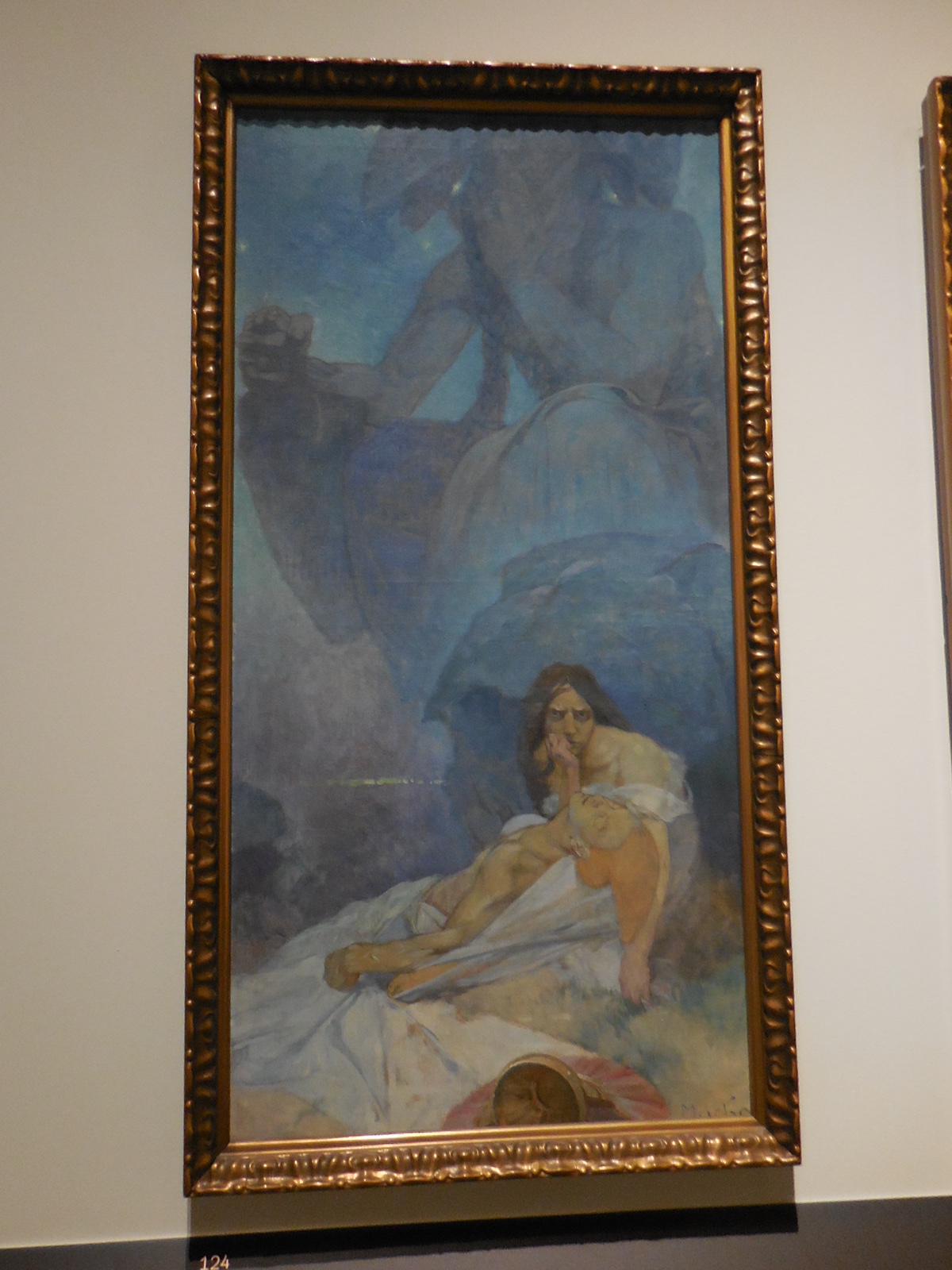
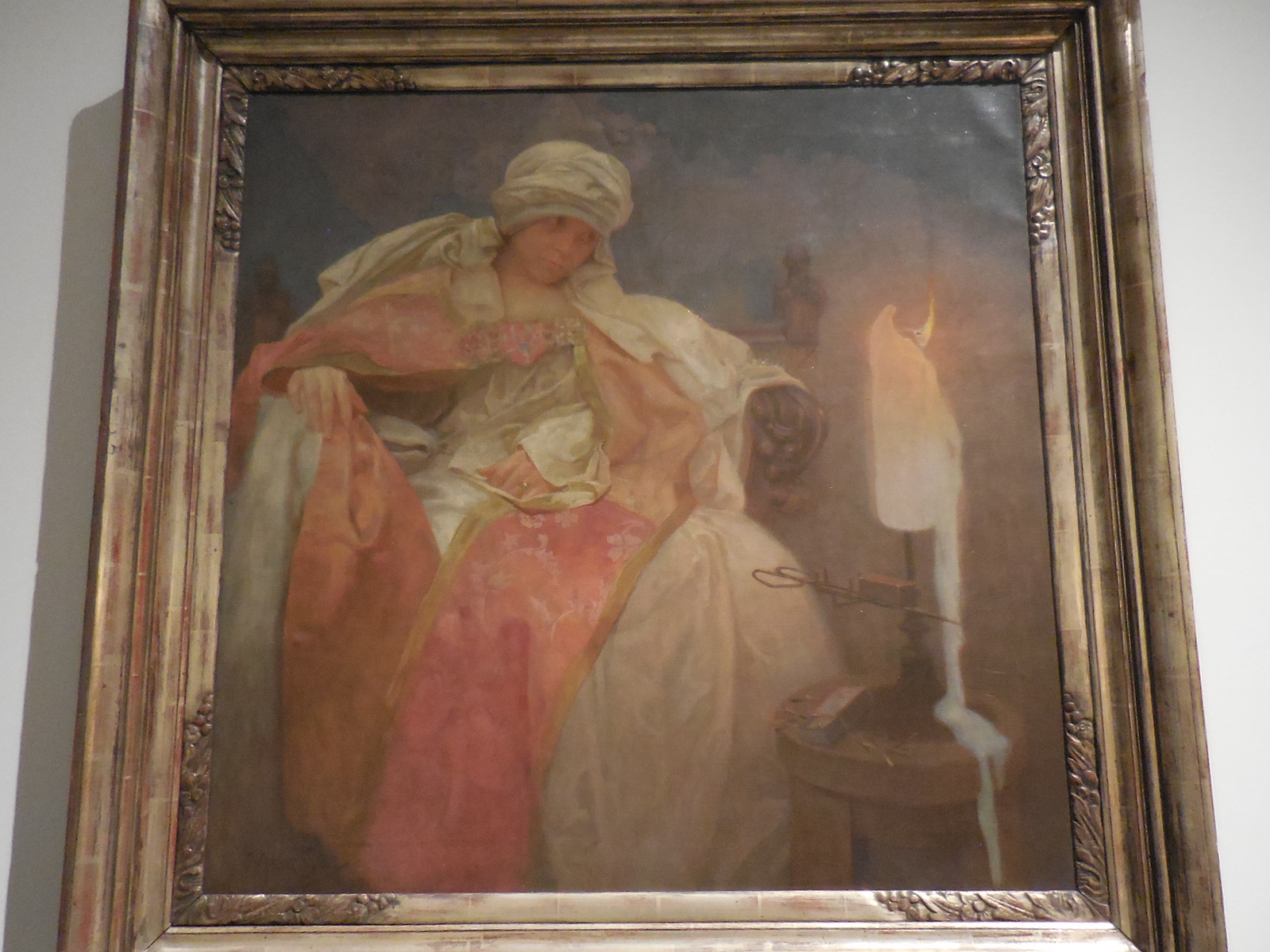
I have been a fan of Alphonse Mucha’s Art Nouveau works ever since I came to Prague in the 1990s. While he is best known for his exhilarating posters of actress Sarah Bernhardt, Mucha was a very versatile artist – as is evidenced in this comprehensive exhibition of creations owned by his descendants. The first extensive showing of his works in 30 years is housed at Prague’s Waldstein Palace. The exhibition highlights not only the advertising posters but also his drawings, paintings, sculptures, photos and jewelry, for instance. The family displays some originals to the public for the first time.  

Family portraits evoking Mucha’s childhood add an intimate feel to the exhibition. Born in Ivančice, Moravia, Mucha called home a building that also included the town jail. The Czech lands were under Austrian rule when Mucha grew up. They were part of the Habsburg Empire in which German was the official language. Yet, during that era, the Czech National Revival took place, when Czech nationalists promoted Czech culture and the Czech language.

At the end of 1894, Mucha became a star overnight when he designed a poster for Bernhardt’s production of Gismonda. The following year he created posters that decorated calendars, postcards and menus as well as theatre programs. His work would find enthusiastic audiences in Vienna, Prague, Budapest, Munich, London, New York and other cities during subsequent years.

I loved how, in his advertising posters, Mucha utilized folk features not only found in Czech art but also in Byzantine, Islamic, Japanese, Gothic, Judaic, Celtic and Rococo works. Much of this genre focuses on beautiful, young women with an optimistic and cheerful flair. They are wearing flowing robes in pastel colors. I loved the touches of floral and plant ornamentation plus arabesques and naturalistic elements, too.

The exhibition boasted family portraits and photos, such as those of his friends Paul Gaugin and Auguste Rodin. Gaugin even was Mucha’s housemate for a while. During the Paris Exposition Universalle of 1900, Mucha represented Austria-Hungary as the show focused on the accomplishments of the past century. I had not known that in 1899 Mucha had designed a jewelry collection that was featured at this major show. One of the jewelry pieces on display at the exhibition features a snake-shaped broach that Bernhardt wore during her portrayal as Medusa. I also was captivated by Mucha’s decorations for a German theatre in the USA. He would wind up making three trips to the United States, hailed by The New York Daily News as “the world’s greatest decorative artist.”

Works in the exhibition illustrated how mysticism had influenced him. His philosophy is also apparent in his creations. For example, he believed in beauty, truth and love to guide him on the spiritual path. For a monument he created a triptych called The Age of Reason, the Age of Wisdom and the Age of Love, fusing these three characteristics into one piece of art. Unfortunately, Mucha didn’t get the chance to finish it.

Perhaps what always captivates me the most about Mucha’s art is his emphasis on Slav identity. Indeed, his phenomenal Slav Epic paintings feature the heroic tales of the Slavs in 20 historical, symbolic canvases. Several reproductions of these works at the exhibition reinforced Mucha’s identity as a Czech and Slav patriot.

I saw panels devoted to Mucha’s decorations in the Municipal House, for which he designed numerous pieces – three wall panels, a ceiling painting depicting prominent Czech personalities, eight pendentives and furnishings. I remember seeing these for myself on tours of the Art Nouveau Municipal House, something I recommend to every Prague visitor. It is notable that, while Mucha’s works often were rooted in Slav identity in the past, he also looked to the future for a prosperous Czech nation.

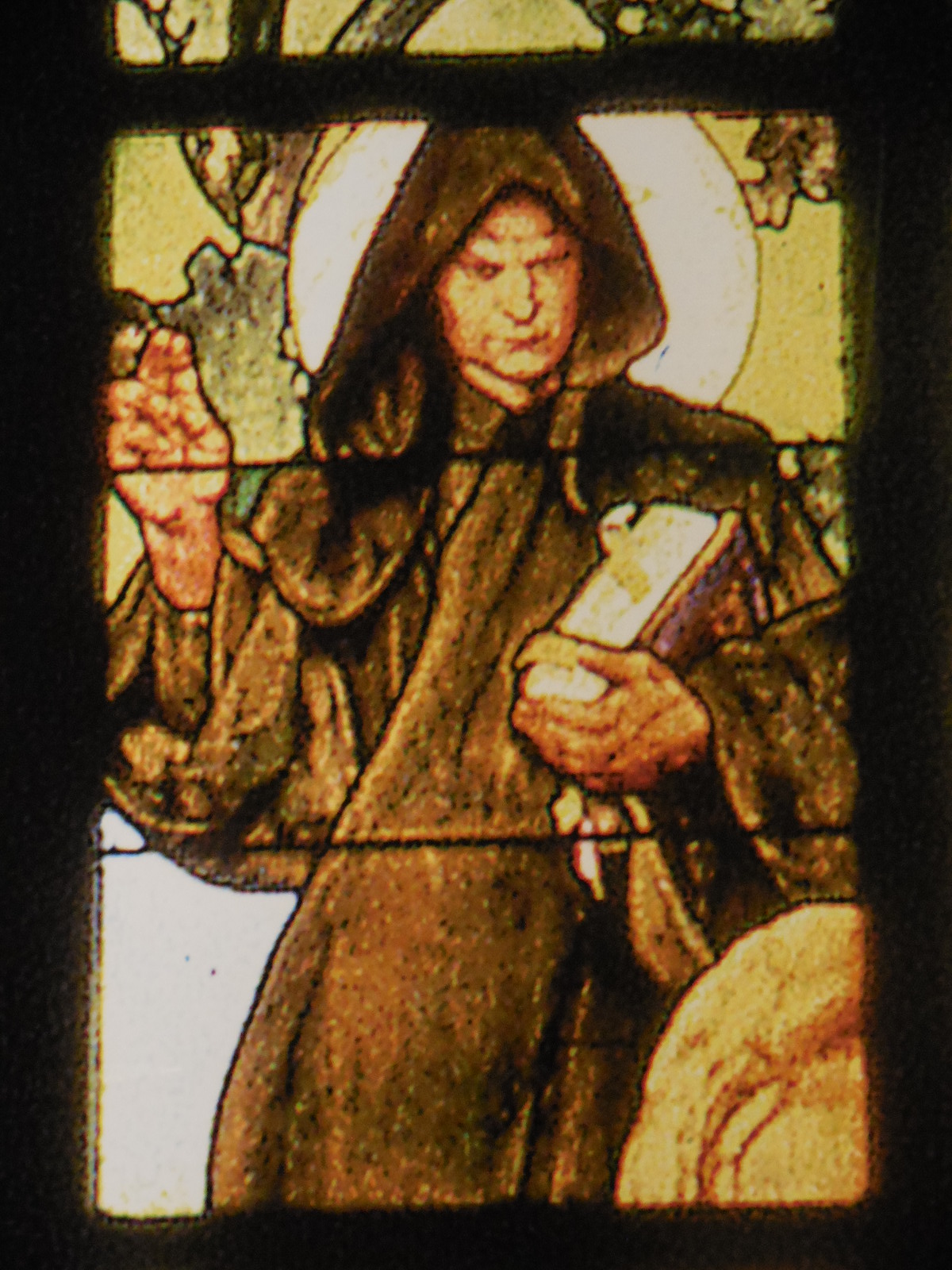
I was enamored by the reproductions of his stained-glass window designs. The originals decorate the interior of Saint Vitus’ Cathedral at Prague Castle. In 1931 he portrayed Saint Wenceslas, the nation’s patron saint, as a child with his grandmother Saint Ludmila in a central panel along with other panels featuring the lives and work of Saints Cyril and Methodius. Seeing examples of his colorful and vibrant stained glass renditions close-up was for me one of the highlights of this exhibition.

Mucha’s life was cut short by the arrival of the Nazis in Prague, where they set up the Protectorate of Bohemia and Moravia during March of 1939. The 79-year-old Mucha, riddled with health problems, was targeted by the Gestapo. Mucha was a Freemason, Judeophile and a promoter of democratic Czechoslovakia. He was one of the first to be interrogated by the Nazis. Mucha was stricken with pneumonia due to the strain from grueling interrogations and died in Prague 10 days short of his 79th birthday on July 14th, 1939. He is now buried in Prague’s Vyšehrad Cemetery along with other prominent Czechs.

This exhibition takes museumgoers on a unique and unforgettable journey from his childhood roots in Moravia to his time as an outsider in Paris to his experiences in the democratic Czechoslovakia until his untimely death. It stresses his identity as a Moravian, as a Czech, as a Slav and as a European. It shows his accomplishments in the art scene by displaying an eclectic collection of his creations that profoundly punctuated the artistic world.

Tracy A. Burns is a writer, proofreader and editor in Prague.