Museo Nazionale Scienza e Tecnologia Leonardo da Vinci

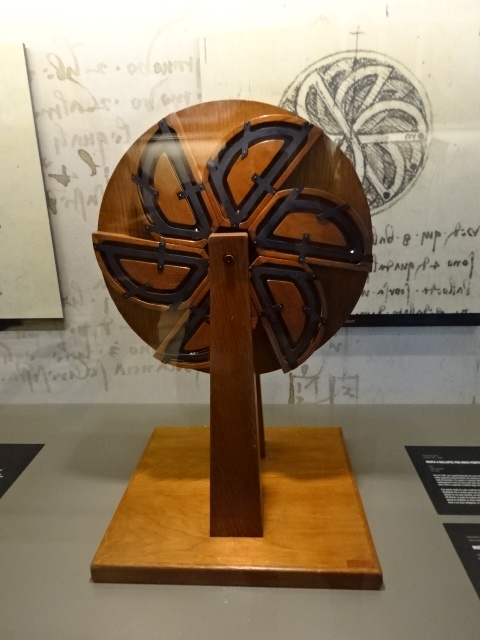
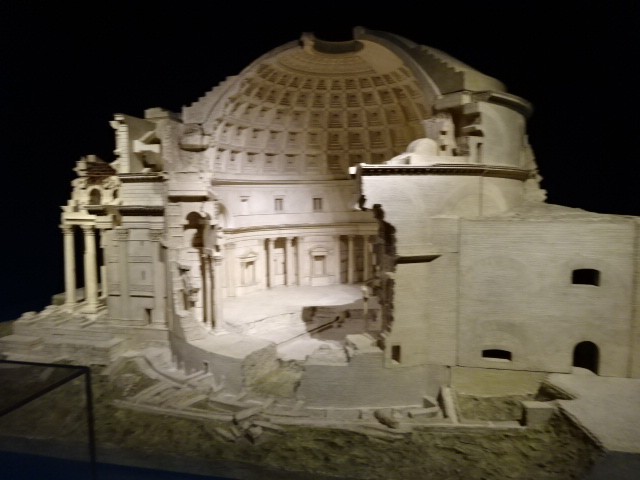
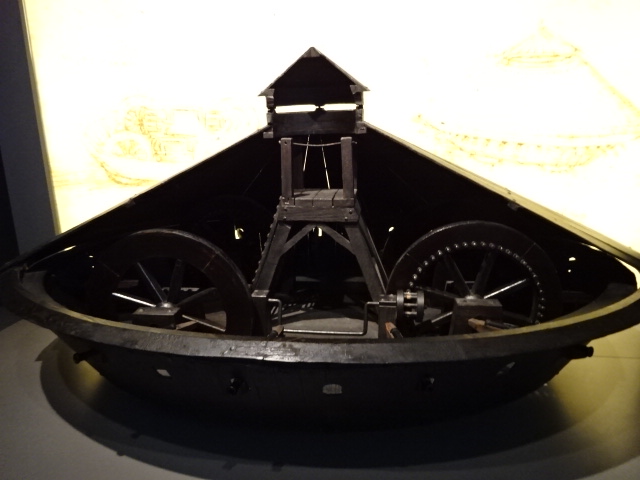
I visited the National Museum of Science and Technology dedicated to Leonardo da Vinci on my last trip to Milan, and, quite frankly, I didn’t expect I would be too enthusiastic because neither science nor technology is my cup of tea. However, the museum was fascinating. I especially was excited by the models made from drawings of Leonardo da Vinci. They showed machines and buildings he had designed on paper as well as his version of the ideal city. I also was enthralled with the hangars containing planes, ships and trains.

Opened in 1953, the museum is one of the largest scientific and technological museums in Europe. It is located in an ancient monastery not far from the Chiesa di Santa Maria delle Grazie, where I had seen Da Vinci’s Last Supper. Covering science and technology in Italy from the 19th century to the present, the museum holds the biggest collections of models of machines from designs by Leonardo da Vinci found anywhere. It includes 2,500 pictures, designs, sculptures, medals and artistic objects. There are seven sections, including materials, energy, communication, transport, food and science for young people as well as the Leonardo da Vinci Art and Science department. Musical instruments, clocks and jewelry are on display in this part.

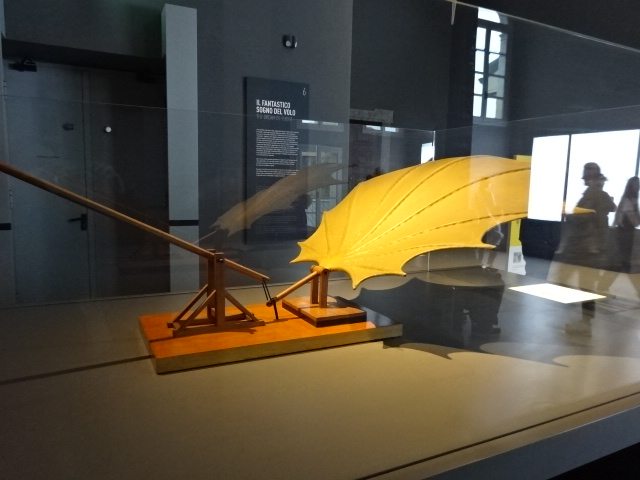
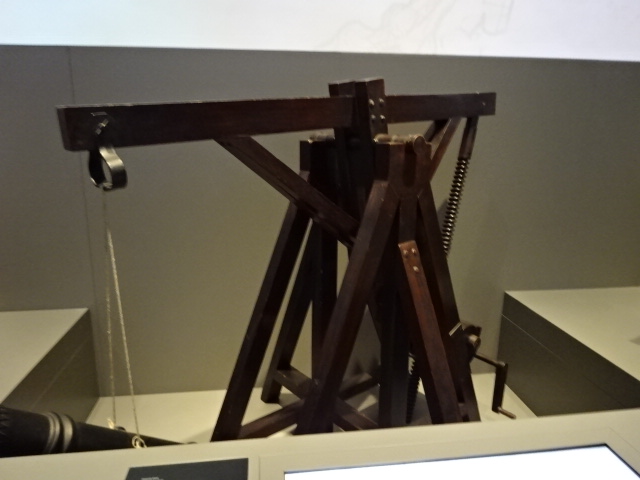
The Leonardo da Vinci galleries display 170 military and civilian models, pieces of art and other objects. The models of buildings based on his drawings are architectural gems. Machines made from his drawings also impressed me. I saw a hydraulic saw, a flying machine and a spinning machine, for instance. I was awed with Da Vinci’s vast knowledge of anatomy, physics, mathematics, botany, geology and cartography.

The transport department includes air, rail and water. The trains are located in a pavilion originally built for the 1906 Expo. A façade resembling a 19th century structure has been added to the historic building. One train that caught my attention was the GR 552 036 locomotive from 1900. It had towed the Indian Mail train from Bardonecchia to Brindisi on its journey from London to Bombay. A horse-powered omnibus from 1885 was another delight.
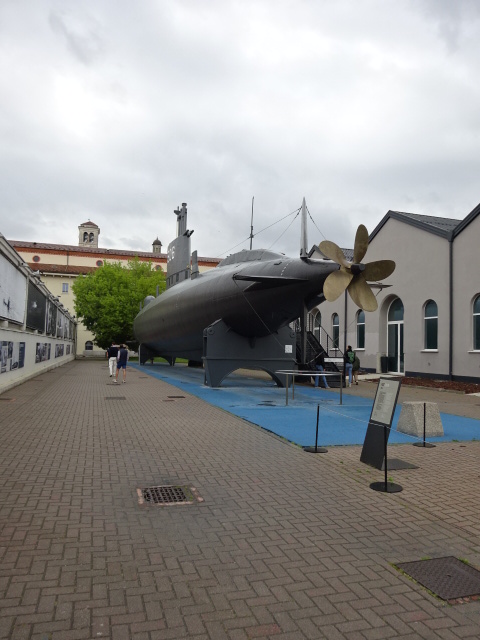
One of the top exhibits is the submarine S 506 Enrico Toti, the first submarine to be constructed in Italy after World War II. It began operation in 1968 and was roaming the seas for 30 years. During the Cold War, it searched for Soviet submarines.

The Vega Launcher from 2012 is a model of the first Vega made by the European Space Agency. It has a height of 30 meters and weighs 37 tons. The Vega can release satellites that weigh up to 2,000 kilograms.

The ships also intrigued me. One of the largest ships in the museum, the Ebe Schooner from 1921 was initially used by merchants to transport their wares through the Mediterranean. In the 1950s it became a training ship. The ballroom and bridge of the Conte Biancamano ocean liner also are worth seeing. They date from 1925. It has traveled extensively, making the journey from Genoa to Naples to New York and also going to South America and the Far East. During World War II it was used by American soldiers.
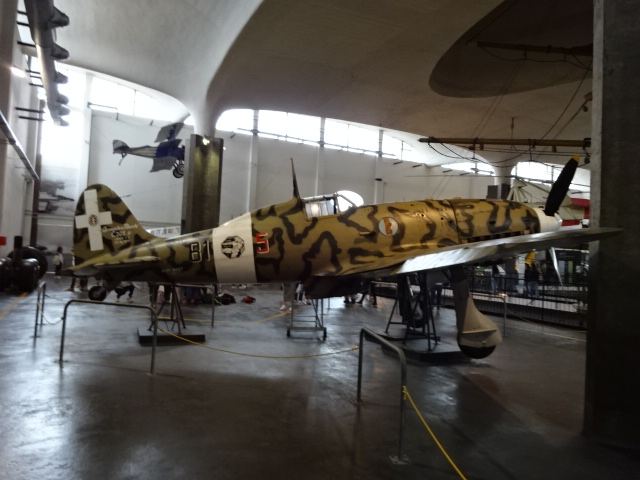
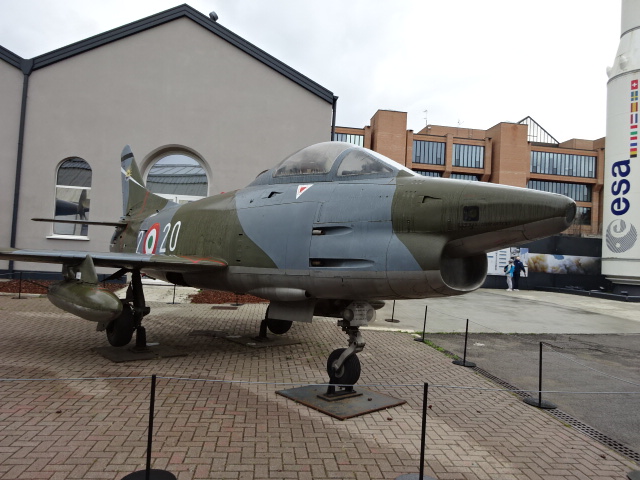
The planes were enthralling. I especially liked the Macchi MC 205 V from 1943. It made a name for itself during World War II. The plane has two machine guns and two cannons. Modern military planes and a modern helicopter also are on display.
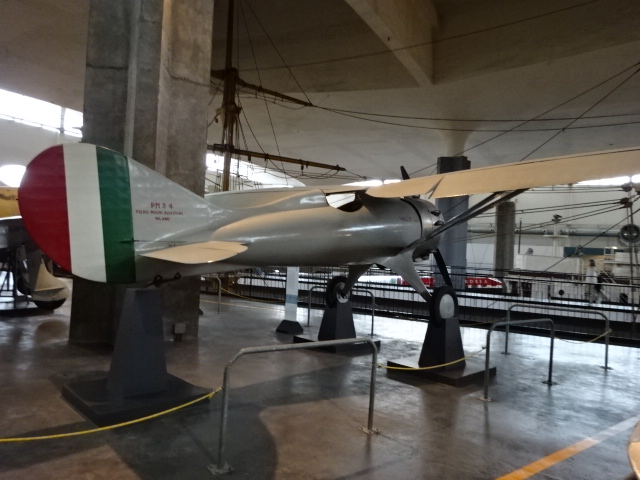
Enrico Forlanini’s experimental helicopter from 1877 has the distinction of being the first object to fly. Pilotless, it has a steam engine and two counter-rotating propellors. During its flight, the helicopter rose about 13 meters and stayed in the air for 20 seconds. It also made an impressive landing.

I saw other intriguing exhibits. The Regina Margherita Thermoelectric plant had once provided lighting plus electrical power for 1,800 looms. Even King Umberto I and Margherita of Savoy were present for the opening ceremony. It hails from 1895.

Computers made up a significant part of the collections. I saw the Olivetti Programma 101 from the 1960s, the first personal computer. It was a programmable calculator that was small enough to fit on a desk. NASA utilized this contraption for calculating the Moon landing.
Space is another theme on which the museum focuses. I saw a moonrock that is 3.7 billion years old. Astronauts on Apollo 17 brought it back to Earth in 1972. Another exhibit showed space coveralls from 2014 and 2019. Astronomy plays a role, too. Two 17th century globes and telescopes are on display. Giovanni Schiaparelli used a telescope made in 1866 to study the surface of Mars. Schiaparelli peered through another telescope, this one hailing from 1774, when he discovered the asteroid 69 Hesperia and was able to describe what goes on with falling stars.
The diverse exhibits were a big thrill to see. I was so surprised that I had been so interested in the museum. Unfortunately, it was very crowded, so I didn’t get to peruse everything as well as I would have liked. The museum was definitely a popular destination for tourists and Milan dwellers alike. I could certainly understand why.

Tracy A. Burns is a writer, proofreader and editor in Prague.

Prague’s National Technical Museum Diary

I visited Prague’s National Technical Museum for the first time in 2023, even though I have been living in Prague for more than 25 years. I am not a big technology fan and didn’t think I would be very interested in the exhibits.

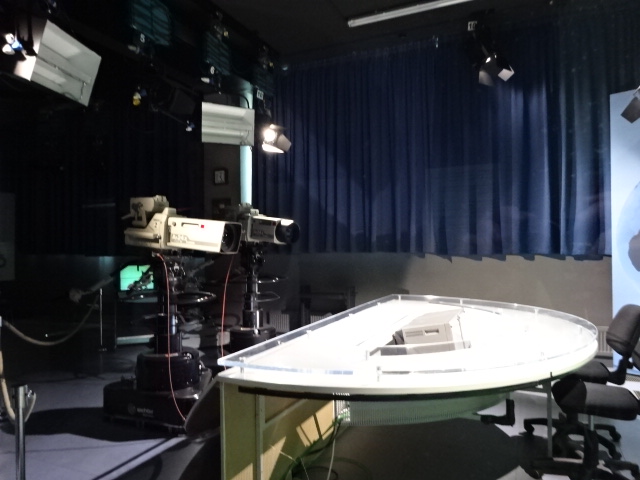
I couldn’t have been more wrong. The museum includes sections on astronomy; chemistry; sugar and chocolate; transportation; printing; household items; photography; the measurement of time; architecture, civil engineering and design; metallurgy and mining, for instance.  A TV studio used by Czech television from 1997 to 2011 allows visitors to sit behind a news desk and see how the TV technology works. A mock mine from the 1950s makes up another exposition. In this post I will concentrate on my two favorite parts – transportation and architecture, civil engineering and design.

Television studio in National Technical Museum

The history of the museum itself is intriguing. Vojtěch Náprstek, a Czech patriot and world-traveler, established the Czech Industrial Museum in 1862. While many exhibits from this museum are now in the Náprstek Museum, some pieces in the collection found their way to the National Technical Museum, which was founded in 1908. Two years later, the museum opened in Prague’s Schwarzenberg Palace near the Castle. After Czechoslovakia was founded in 1918, it moved to the Letná district of Prague, where it is situated today. Construction took place from 1938 to 1941, but, during the Nazi Occupation, the building was used as the ministry of the postal service. After World War II, the museum was located on Letná again, though it was not allocated the entire building. In 1951, new expositions were created, such as transportation, mining, astronomy and photography.

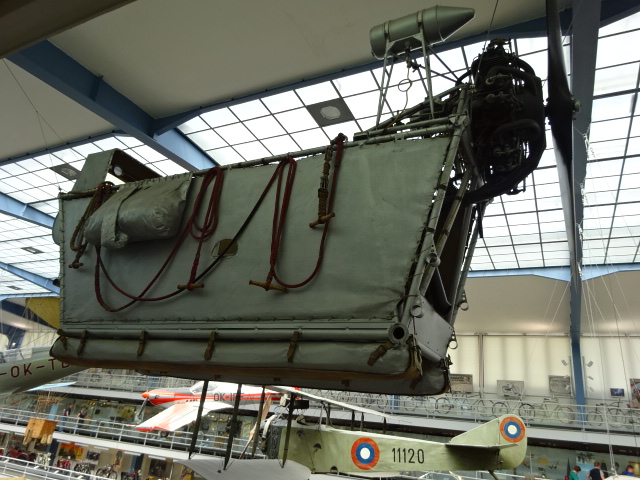
Wicker seat for passengers from Czechoslovak Aria BH-25 airliner, 1920

After the Velvet Revolution that had brought democracy to Czechoslovakia, the museum was able to utilize the entire building. However, there were difficult times ahead. During the 2002 floods, the museum’s depository in the Karlín district was heavily damaged, and some of the artifacts were ruined. Reconstruction started in 2003. In 2011, five expositions were opened. Still, construction wasn’t totally finished until 2013.

Masaryk’s presidential car

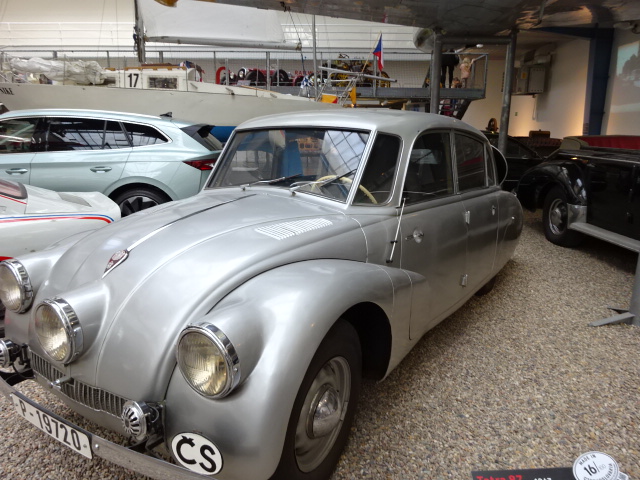
Zigmund and Hazelka’s car in which they traveled throughout Africa and South America

The main hall housing the transportation section is vast and overwhelming. Automobiles, a train dining car, planes, a boat, motorcycles and bicycles all make up the breathtaking exhibition. I liked the Tatra 80 car from 1935, the automobile of the first president of democratic Czechoslovakia, Tomáš Garrigue Masaryk, because I was interested in the First Republic era from 1918 to 1938. I also was excited to see the Tatra 87 car of world travelers Jiří Hanzelka and Miroslav Zigmund. They traveled around Africa and South America in that car from 1947 to 1950 and did more than 700 reports for radio broadcasts about their trips. The two had been the dynamic duo of travel: They visited more than 100 countries. They also made films, mostly documentaries, and wrote books together.

The dining car of Habsburg Emperor Franz Joseph I and later of President Masaryk

I was enamored by the dining car of Habsburg Emperor Franz Joseph I, which in 1923 became part of Masaryk’s presidential train. When President Edvard Beneš returned to his homeland from exile after the war in 1945, this dining car was part of his train. The dining car was put out of commission in 1959.

A sailing boat called Nike was on display, too. Czech Richard Kankolski had sailed around the world in it during 1972, and, at that time, it earned the distinction of being the second smallest boat to sail around the world.

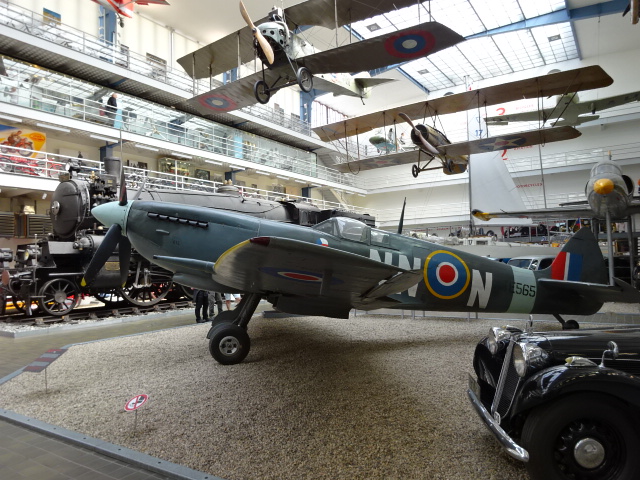
British Spitfire

Three planes that saw action in World War I also are displayed, including an American one. Dating from 1911, the plane manned by the first Czech pilot Jan Kašpar is part of the exhibition. I was drawn to the British Spitfire that members of a Czechoslovak squadron of the RAF had flown during World War II.

Germans drove this kind of motorcycle when they occupied Czechoslovakia in 1939.

I was very interested in the various bicycles and motorcycles, too, even though I vow never to ride either of them. A bamboo-made Slavia bike hails from 1905. The BMW R11 from 1932 caught my undivided attention because the Germans had driven these motorcycles when they occupied Czechoslovakia on March 15, 1939. I tried to imagine seeing so many of these motorcycles at Prague Castle with the flag of the Third Reich fluttering from the flagpole. The very thought was chilling.

Milan Špinka’s bike

The first series-manufactured motorcycle in the world

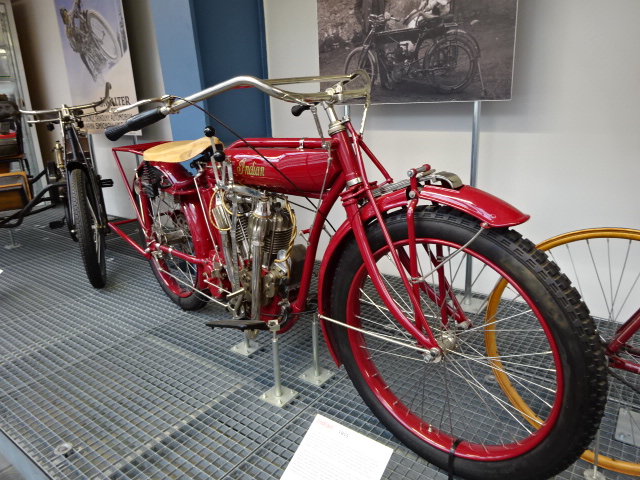
I also saw the Jawa 500 – 891 from 1973. While the Soviet Union had excelled on ice speedway competitions, this is the motorcycle on which Czech Milan Špinka defeated the USSR in the world championships of 1974. Another motorcycle that interested me was the Hildebrand & Wolfmuller from 1894. It was the first series-manufactured motorcycle in the world. The one on display is the first motorcycle manufactured for the Austro-Hungarian Empire.

Indian brand, 1915, manufactured in America

Czechoslovak observation balloon, 1934

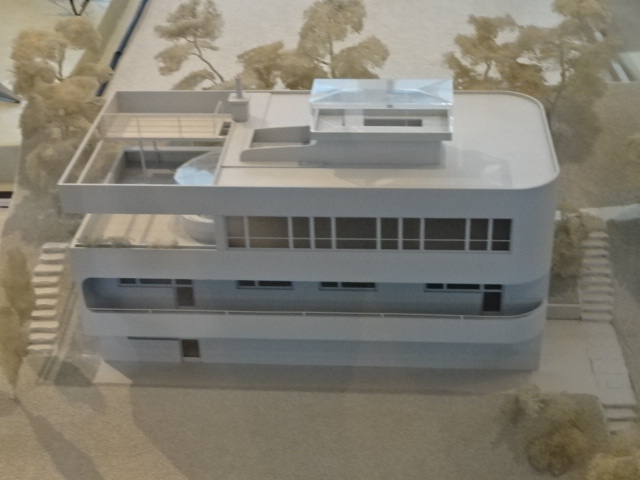
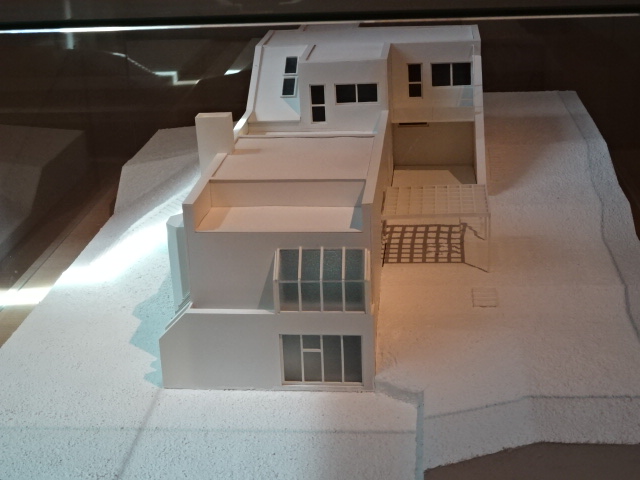
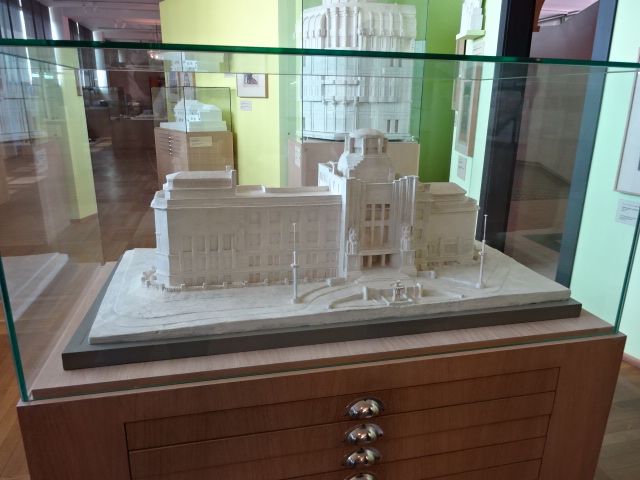
The architectural part of the museum covers the developments in the Czech lands from the second half of the 19th century to the present. Styles of historicism, secession, cubism, constructivism, functionalism and socialist realism as well as modern works are all represented. I loved the architectural models, especially those of villas in Prague, the Czech Pavilion at Expo 58 in Brussels and the Czechoslovak exhibition pavilion at the World Arts and Technology Exhibition in Paris during 1936. I loved to take walks through the villa-dotted sections of Prague’s Baba, Ořechovka and Hanspaulka quarters. In this museum, I saw models of famous villas in the Hodkovičky, Podolí and Troja districts of Prague, for instance.

Czechoslovak World Arts and Technology pavilion, Paris, 1936

Director Martin Frič’s villa in Hodkovičky, 1934-35

Top: Stýblo’s villa in Podolí quarter of Prague, 1935-36, Bottom: Villa of film director Věra Chytilová in Troja quarter of Prague, 1970-75

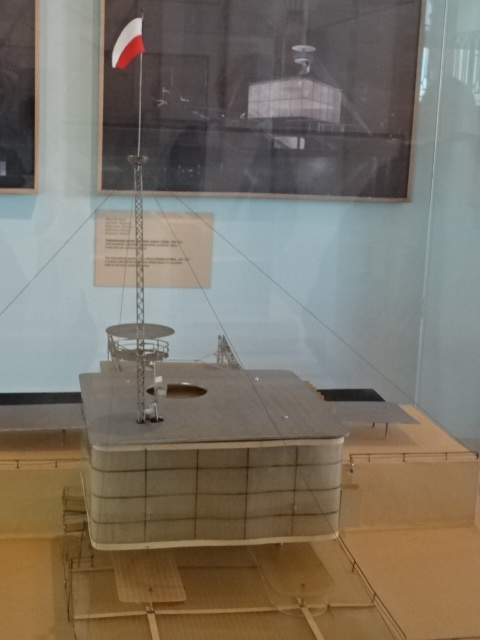
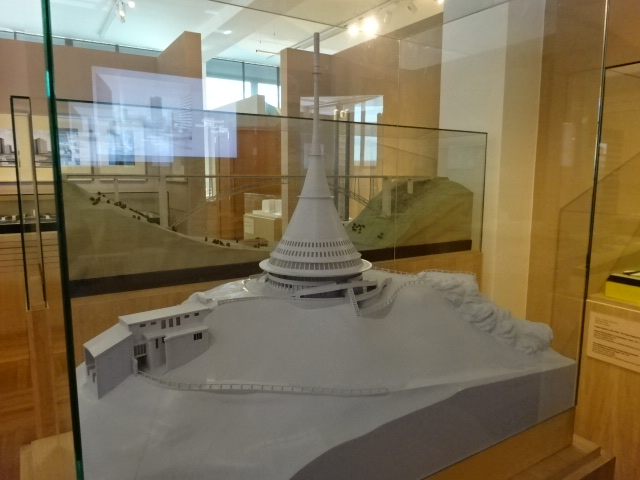
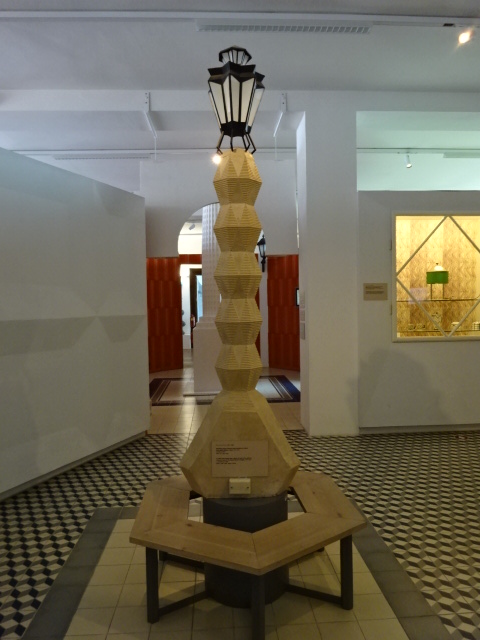
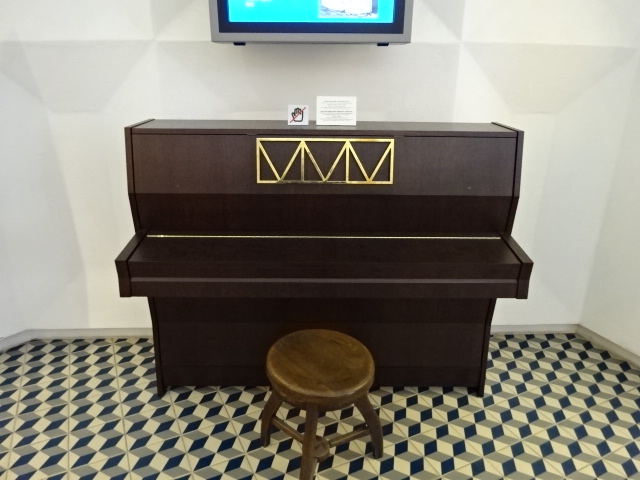
I liked the model of the column with lantern in front of Our Lady of the Snows Church in Prague because it was unique, Cubist in style. I also took notice of the Cubist Petrof BB upright piano. The model of the television transmitter and hotel on Ještěd Hill in Liberec brought back memories of the magnificent views from the observation point at the restaurant and hotel. Some models showed off designs by masterful Czech architect Jan Kotěra, including the East Bohemia Museum in Hradec Králové, which had extremely impressed me about a month previously, and the reconstruction of Saint George’s Church in Doubravka near Pilsen in west Bohemia. The museum in Hradec Králové was constructed from 1906 to 1913 while the church hails from 1899. Architectural plans and photography rounded out the exposition.

Ještěd Hill Hotel and Restaurant

Cubist column in front of church – top photo, Cubist piano – bottom photo

I was glad I had finally visited this museum that offers valuable insights into the technical world. The main hall with various exhibits of transportation was amazing, and my interest in architecture compelled me to take a close look at the exhibits in that section. Overall, it was a day well spent.

Tracy A. Burns is a writer, proofreader and editor in Prague.
Museum of East Bohemia designed by Jan Kotěra

St. George’s Church designed by Jan Kotěra