Biblioteca and Pinacoteca Ambrosiana Diary

This library and art gallery in Milan is named after the patron saint of the city, Ambrose. The library harkens back to 1609, when Cardinal Federico Borromeo founded it, and the same year it opened to the public.
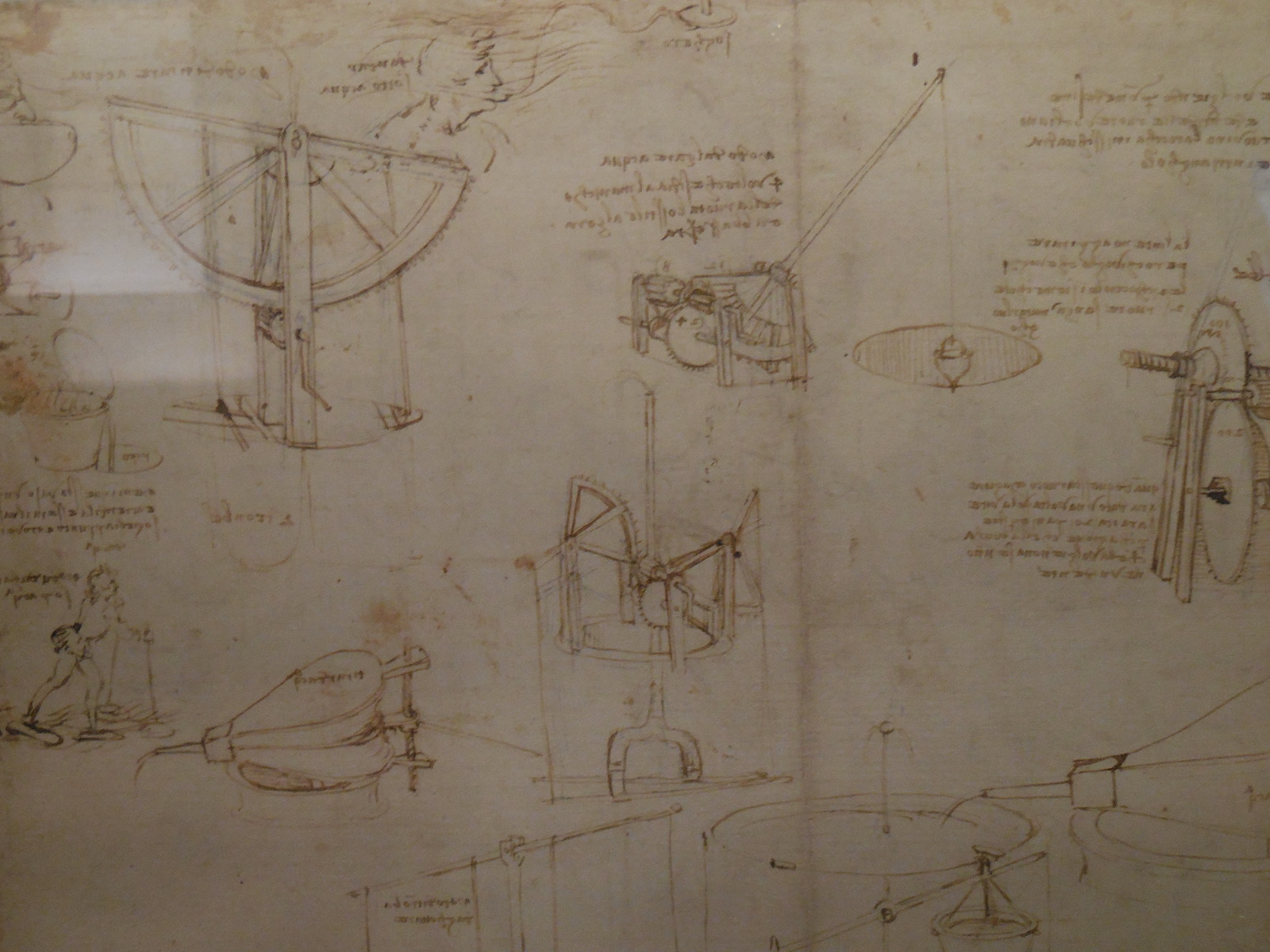
One of Leonardo da Vinci’s drawings of the Codex Atlanticus

The biblioteca houses the Codex Atlanticus by Leonardo da Vinci as well as many of his other manuscripts plus about 12,000 drawings by European artists, ranging from the 14th to 19th century. Raphael and Pisanello are represented in this collection of drawings, too. Many of its more than a million printed volumes hail from the 16th century. There are almost 40,000 manuscripts in numerous languages, including Italian, Latin, Greek and Arabic as well as some 22,000 engravings. Ancient maps, musical manuscripts and parchments also make up the collection. Some prominent guests included poet Lord Byron and novelist Mary Shelley.

Another of Leonardo’s drawings from the Codex Atlanticus

During World War II the library was damaged, and the opera libretti for La Scala Opera House were destroyed. The building was opened again in the early 1950s after undergoing renovations. More reconstruction took place in the 1990s.

When I visited, some of Leonardo’s works for the Codex Atlanticus, the largest collection of da Vinci’s drawings and writings, were on display in the library. The exhibition left me spellbound. I perused studies in aerodynamics and drawings of mechanical wings as well as various types of weapons. Leonardo rendered a large sling to throw stones and a machine to pump water from a well inside a building, for example.

I gazed upwards after studying the drawings by Leonardo, and I was filled with awe. I don’t know if I have ever seen such an incredible library. I just wanted to stand there all day, gazing at the wall-to-wall bookcases as I wondered about the titles and contents of each volume.

Established in 1618 with the collections of Cardinal Federico Borromeo, the pinacoteca was just as impressive as the library. The 24 rooms were dominated by Renaissance artworks but also boasted of renditions by 17th century Lombard artists, 18th century painters and 19th and early 20th century creators. I was especially struck by da Vinci’s 15th century “Portrait of a Musician” as it was the only portrait that he had painted. I noted the musical scroll in one hand of the sitter and was captivated by the detailed curly locks of hair, the musician’s brown eyes and his red cap.

Caravaggio’s insect-infested “Basket of Fruit” tells a story of diminishing beauty by displaying rotting fruit. Bramantino’s “Adoration of the Christ Child” shows the kneeling Bernardino of Siena, Francis of Assisi, Benedict of Nursia and the Virgin Mary making an understandable fuss over baby Jesus. I loved the angels playing musical instruments behind those figures. Emperor Augustus also makes an appearance.

Bergognone’s “Sacred Conversation” shows the Virgin Mary and Christ Child on a massive golden throne, baby Jesus on the Virgin Mary’s lap. Solemn angels flutter in the background. I was struck by the details of the Virgin Mary’s hair and by the material of the clothing worn by the Virgin Mary and baby Jesus. The two were surrounded by saints with captivating headwear, including Saint Ambrose and Saint Jerome.
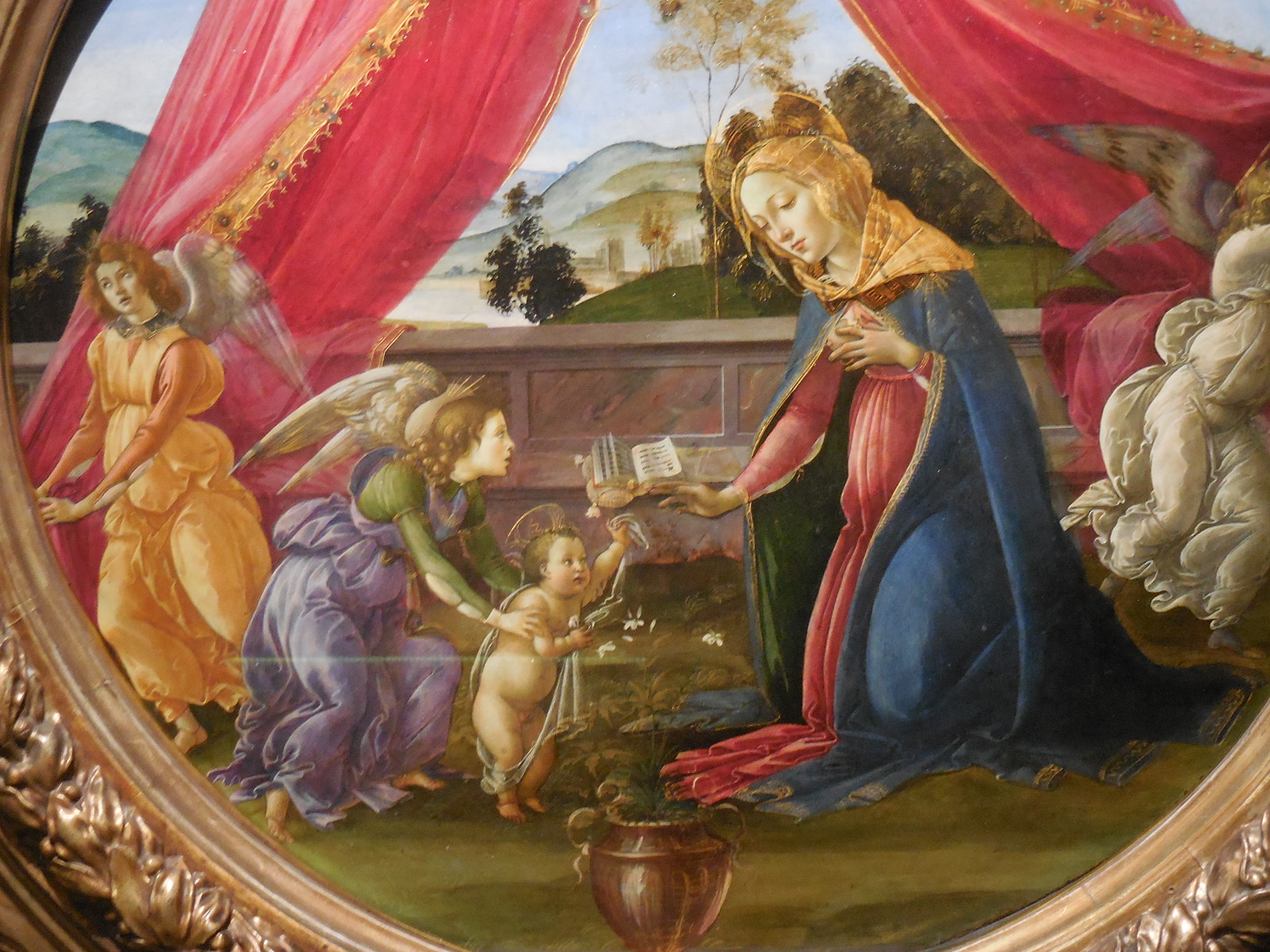
Another painting that left me speechless was Sandro Botticelli’s “The Madonna of the Pavilion.” The artist’s meticulousness was evident. The artwork shows the Virgin and Child with much symbolism. The pavilion that two angels open to reveal the Christ Child is rich in biblical meaning both in the Old and New Testament. I could almost feel the paper of the pages making up the open book in the painting.

Raphael’s School of Athens
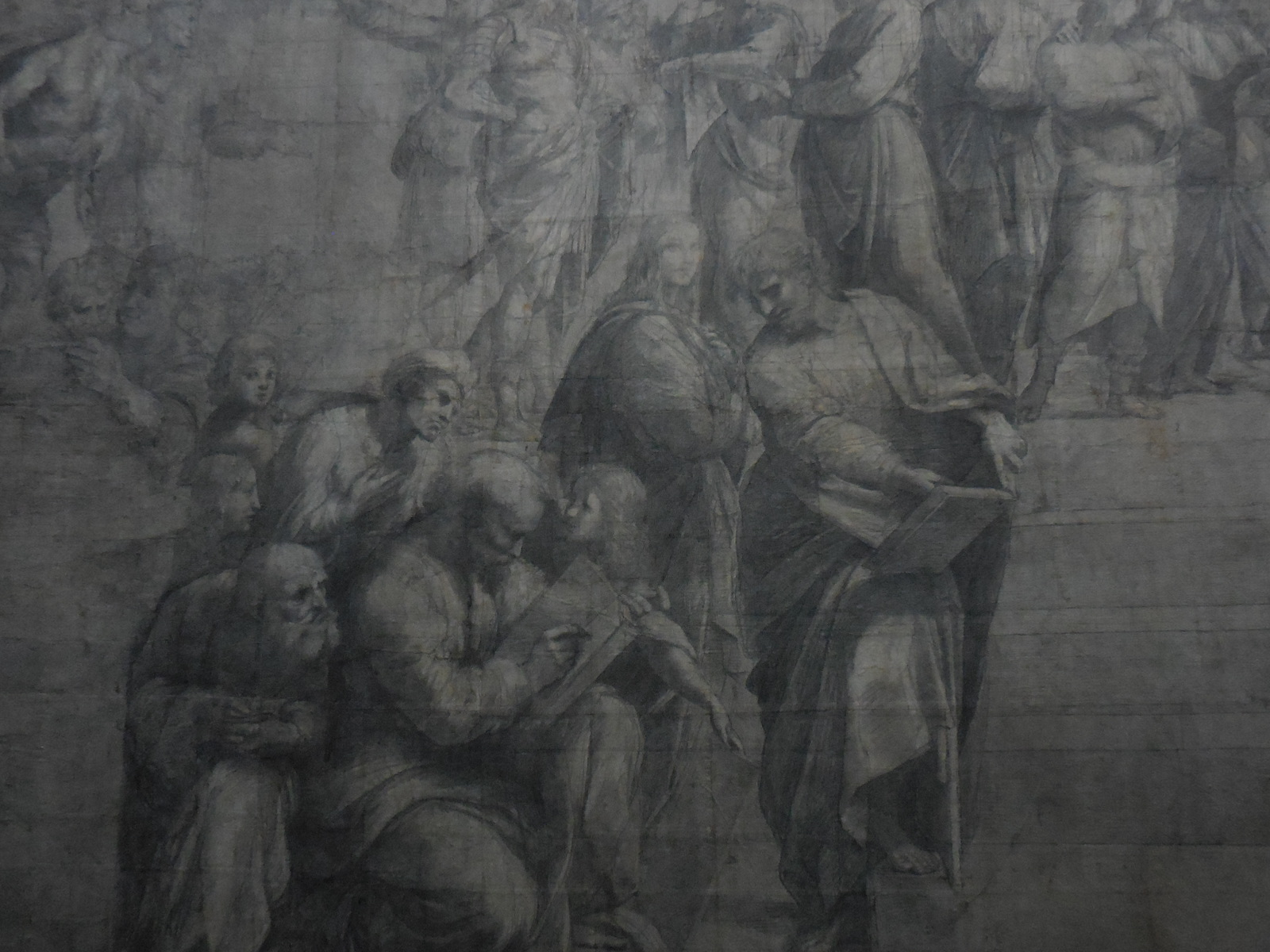
Raphael’s cartoon of the “School of Athens” is a study for the Italian Renaissance fresco painted in the early 1500s for the Raphael Rooms in the Vatican Museum. I recalled seeing the skillful rendition of philosophers and scientists from Ancient Greece at the Vatican on my 40th birthday as I mulled over the dominant role that perspective played in the artwork. Plato, Aristotle and Pythagoras appear in the fresco. Leonardo and Michelangelo are present as Plato and Heraclitus.
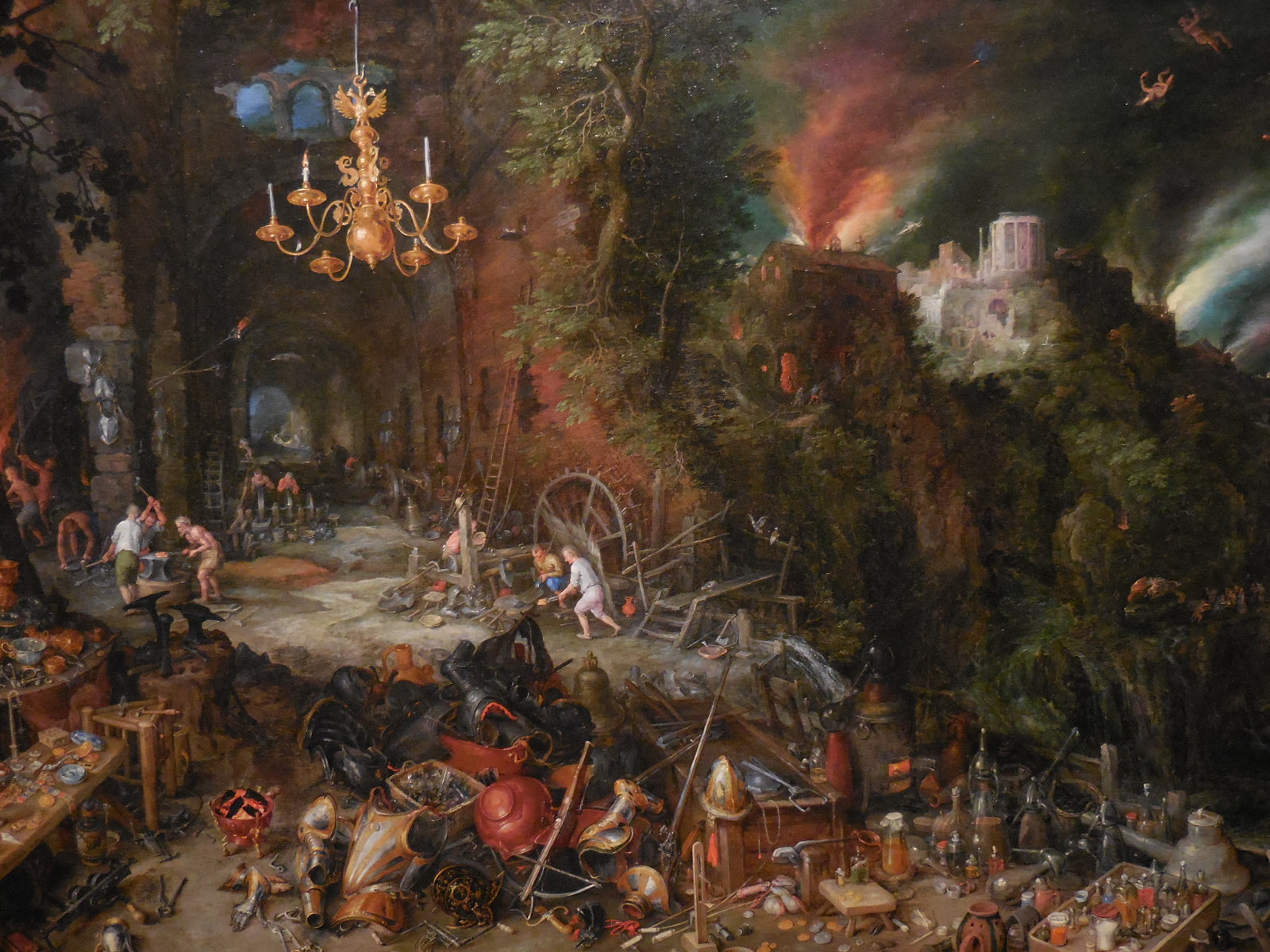
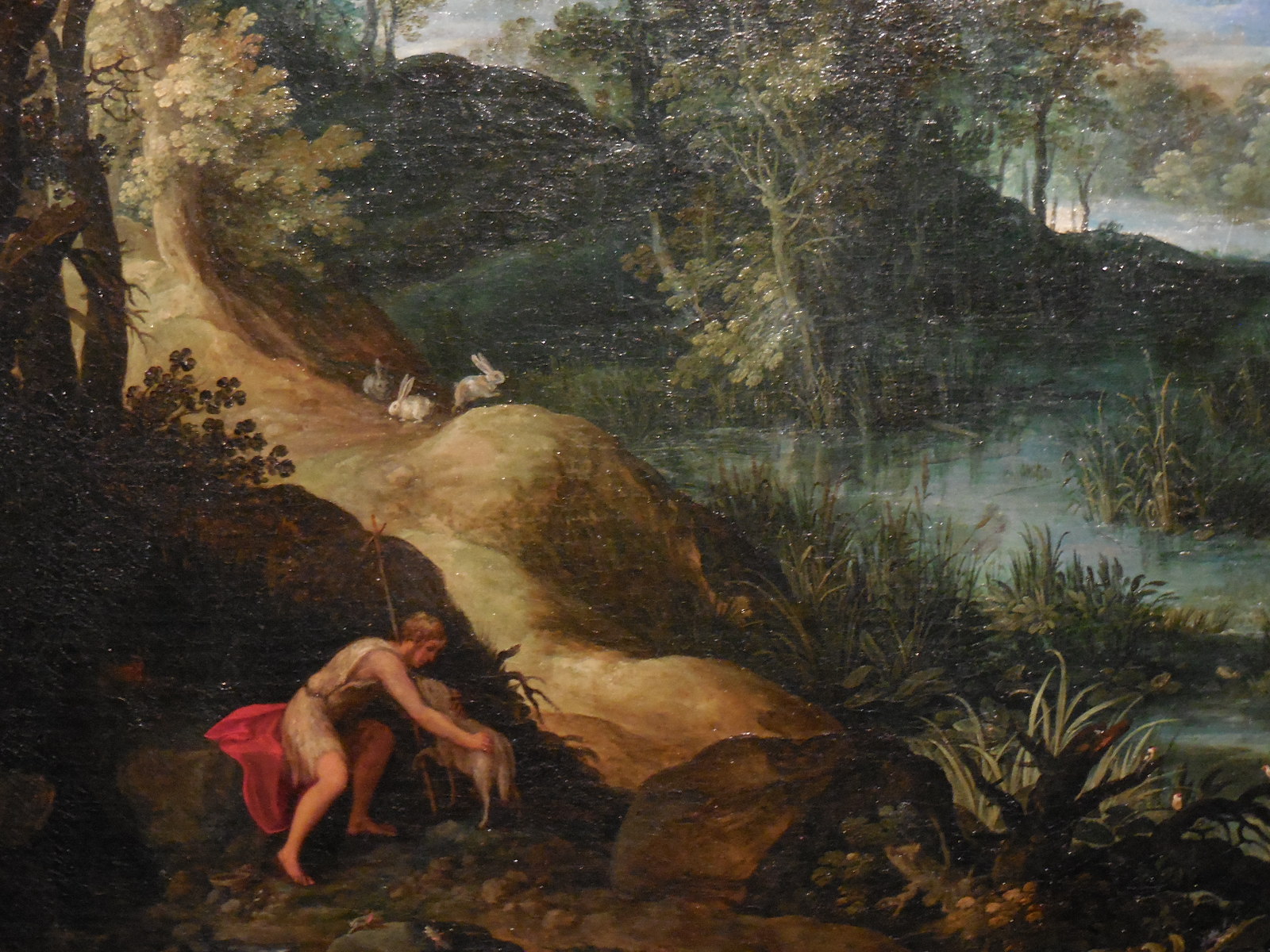
Other paintings that awed me were the fantastic landscapes of Paul Brill, whose works I had discovered some years earlier in Edinburgh. Jan Brueghel’s detailed landscapes and still lifes also are close to my heart, and I adored masterpieces from the Netherlands. I stared at these paintings, losing myself in the fantastical landscapes and details that were so masterfully rendered by both artists. I felt a special connection to these works featuring a dream-like quality as if I could be transported into a fantasy world by merely peering at the canvases.

Other paintings that captured my undivided attention had been created by Bernardino Luini (I fondly recalled his paintings in Milan’s Church of Saint Maurizio), Tizian, Jacopo Bassano, Moretto and Daniele Crespi as well as Francesco Hayez, whose works I knew well from the Brera Gallery in the same city. Andrea Bianchi had created “The Last Supper,” imitating da Vinci’s masterpiece. Tizian’s “Adoration of the Magi,” Bramantino’s “Madonna of the Towers” and the locks of hair of Lucrezia Borgia all left me awe-struck.

The sculptures and frescoes from the second to 16th century in the Sala del Bambaia are very noteworthy. The Hindu art of the Berger Collection captivated me. The Flemish and German painting from the 15th to 17th century enthralled. Ceramics also play an intriguing role in the collection.

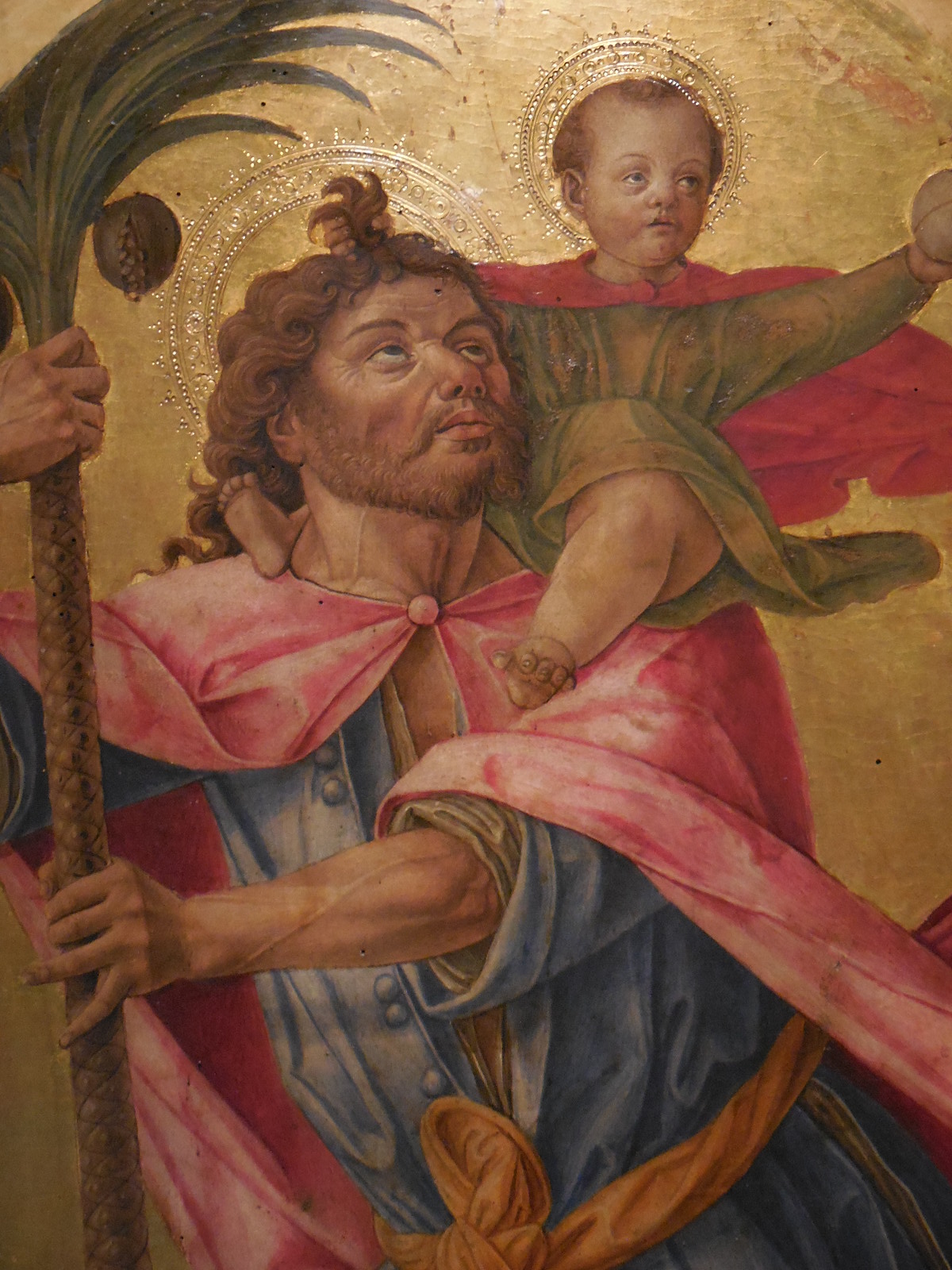
I was so awed by this gallery and library that I visited it twice during my first trip to Milan. I peered at every painting and sculpture, trying to take in each artistic creation, feeling so blessed to be able to see all these masterpieces with my own eyes.

Tracy A. Burns is a writer, proofreader and editor in Prague.

Como, Bellagio and Menaggio Diary

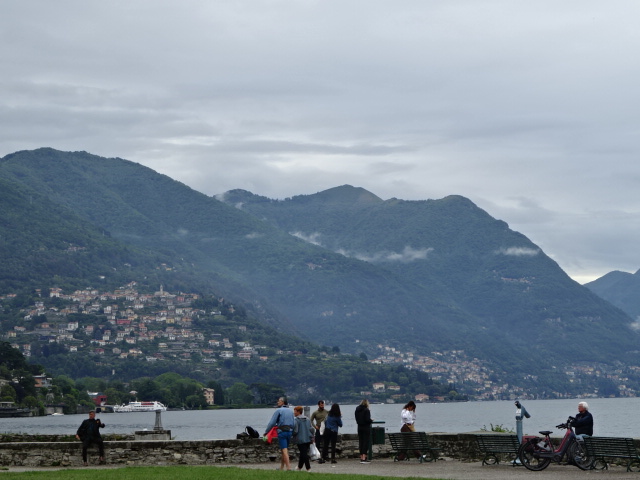
One of my dreams was to visit the romantic towns on Lake Como, so I took a day trip to Como, Bellagio and Menaggio when I was in Milan during May of 2023. Unfortunately, the tour did not go to Varenna, a place I longed to see. Maybe next time. The tour only took us to one villa’s grounds, which were open to visitors. I saw the exteriors of many villas from the boat, but it was drizzling, and I was seated on the wrong side to get pictures. I hope to go back one day and visit Villa Carlotta, an architectural gem that includes a botanical garden with 150 types of azaleas, rhododendrons, tropical plants, cedars, palms and more. I heard that its interior is filled with superb art. Antonio Canova and Francesco Hayez are two of the artists represented in the villa’s art-dotted spaces. Maybe next time.

First, we visited the charming town of Como, located only 40 kilometers from the Swiss border. Our guide pointed out that former Fascist Prime Minister Benito Mussolini and his mistress had gone through Como while trying to flee to Switzerland and eventually to Spain. However, in April of 1945 he was arrested in Dingo, a town near Como and a day later shot in Giulino di Mezzegra.

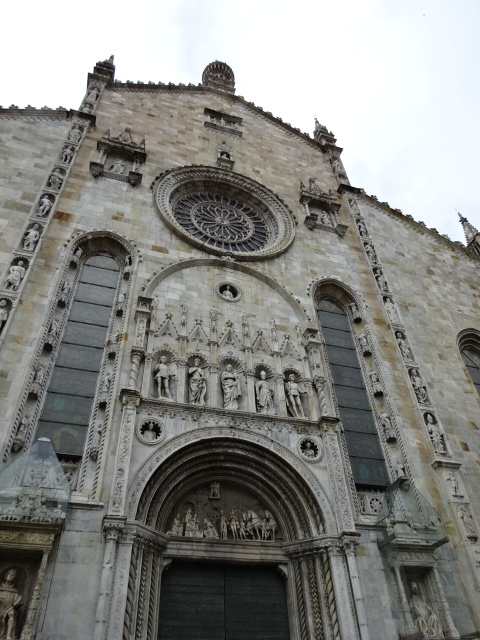
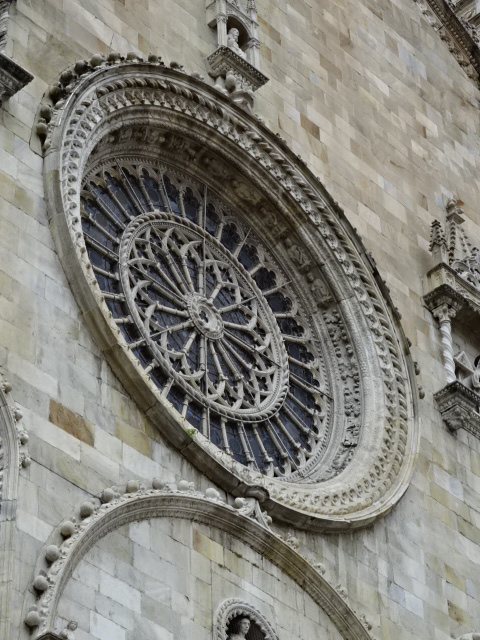
Upon reaching the center, I first noticed the cathedral, dedicated to the Assumption of the Blessed Virgin Mary. It had an impressive Late Gothic façade with sculptural decoration. The construction took a considerable amount of time; in fact, it took four centuries to build. I took note of the statues of writers Pliny the Elder and Pliny the Younger, natives of Como.

Inside, the cathedral had a Latin cross configuration with three naves divided by pilasters. The Romanesque sculpture was noteworthy. Three of Bernardino Luini’s paintings from the 16th century hang inside. Stained glass windows hail from the Gothic and Renaissance eras. The stunning cupola is Rococo while the main altar harkens back to the 14th century. What impressed me the most were the nine tapestries woven in the 16th century. They focused on themes such as the Eucharist, the Sacrifice of Isaac, the Adoration of the Magi and the Pentecost, for example.

The Basilica of Saint Abbondio is another sight worth seeing in Como. This Romanesque edifice included 14th century frescoes. Como also boasted of a very unique building designed during totalitarian times, the Caso del Fascio, which was erected from 1933 to 1936. The functionalist structure lacked any ornamentation. The Caso del Fascio served as an example of Italian architecture designed during totalitarian times. The Como-based building had four geometrical and opaque facades. Designed by Guiseppe Terragni, the place was occupied by the National Fascist Party until 1945, when various political parties had their offices there. Now the Finance Police calls the curious structure home.

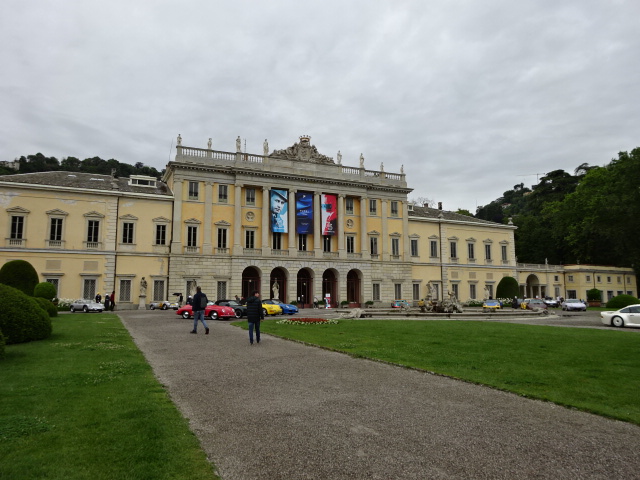
Walking around the center of Como, taking in the romantic atmosphere, was a real thrill. We also visited the grounds of the Villa Olmo, an impressive neoclassical structure dating from the 18th century. The lake views were outstanding, and the English style garden was beautiful.

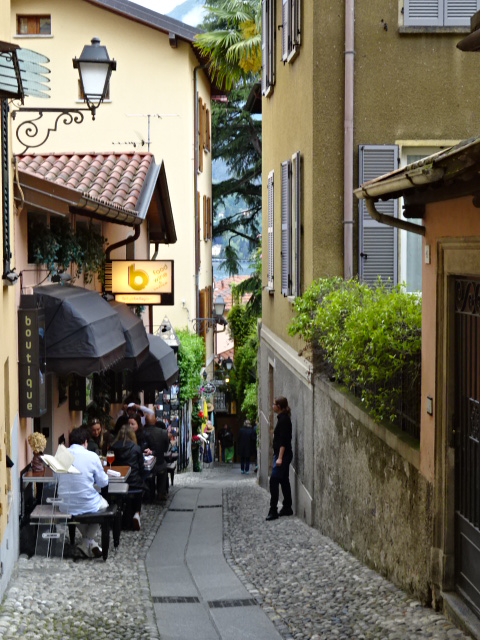
Bellagio was next on the itinerary. I ate a delicious lunch in an costly restaurant in this charming town with steep cobblestoned lanes dotted with some expensive shops. The historic center was made up of only three streets but also sported a park and marina. I walked up one steep street that had a medieval aura and found myself on the main square looking at the Basilica of San Giacomo and a tower. The basilica hailed from the Romanesque days of the 11th and 12th centuries and featured a Romanesque cross and Gothic triptych.

While I didn’t have the chance to visit any of the villas there, the Villa Melzi with its English style garden is worth mentioning. The luxurious structure inspired many of the rich to build villas on Lake Como during the 19th century. Franz Liszt composed many piano works there, inspired by the romantic atmosphere.

We also visited the quaint town of Menaggio with its quaint waterfront square. The three-naved Church of Santo Stefano Protomartire, built on a Paleochristian site, showed off frescoes from the 16th and 17th centuries. The Chiesa di Santa Maria had a neo-Gothic façade and included an artistic rendition of Saint Ambrogio as a young man. Other churches in the town are noteworthy, too. There are many villas in Menaggio, including the neoclassical Villa Vigoni. Goethe often traveled to that villa.

I did get a look at some villas where movies and some episodes of the show Succession had been filmed, and I saw a hotel where Greta Garbo had made a movie. Unfortunately, it wasn’t possible to take good pictures due to the rain slivering down the window and the location of my seat on the boat. I did like Richard Branson’s villa with its fairy-tale appearance, though.

Even though it rained often while I was exploring the towns surrounding Lake Como, I enjoyed the romantic atmosphere that had inspired Liszt, Goethe and so many more. The towns were very crowded even on a rainy day. I could only imagine how crowded they must be in the summer on sunny days. I hope to return to Lake Como sometime, heading to Varenna or Villa Carlotta.

Tracy A. Burns is a writer, proofreader and editor in Prague.
The Church of San Maurizio Diary

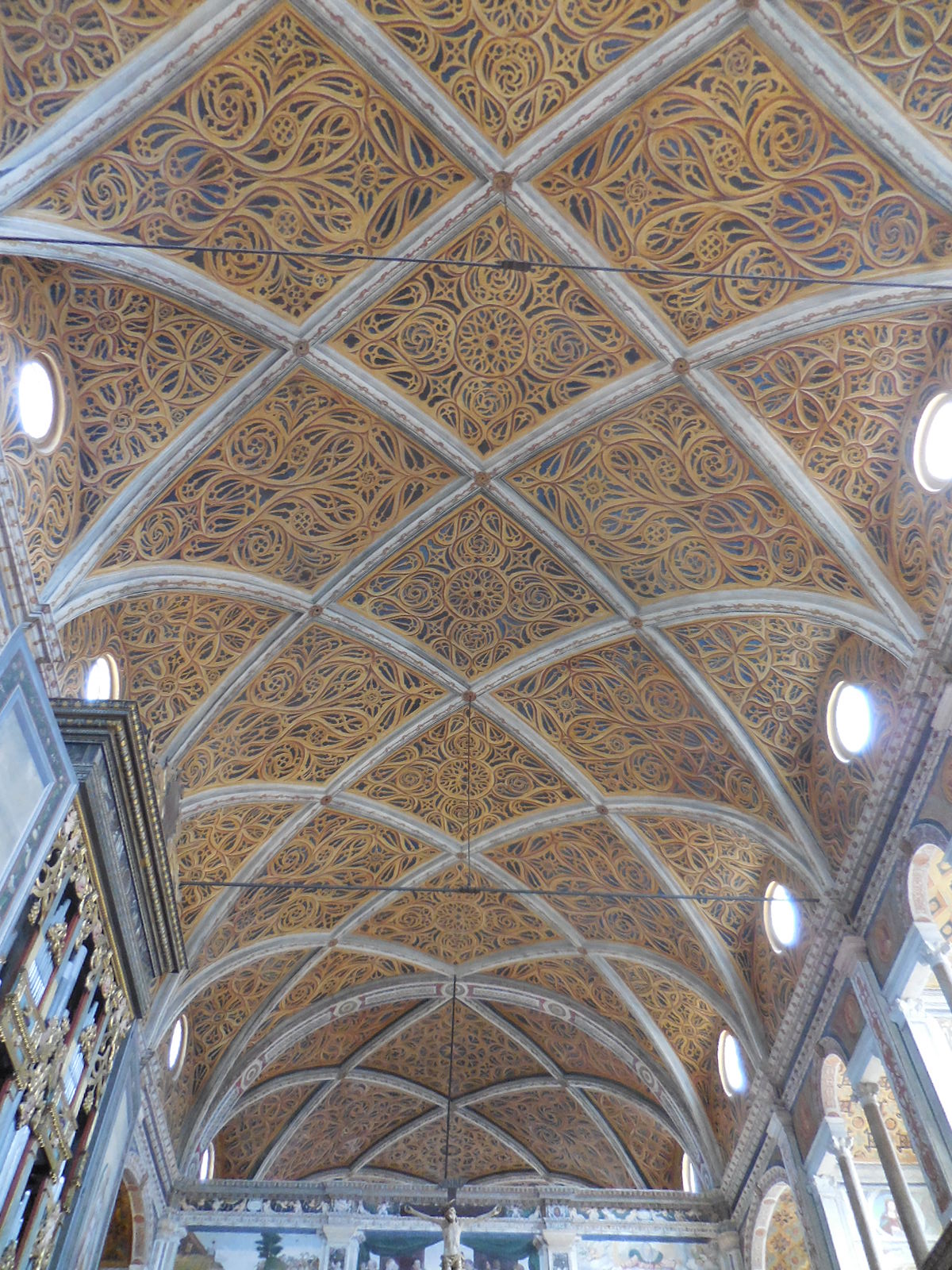
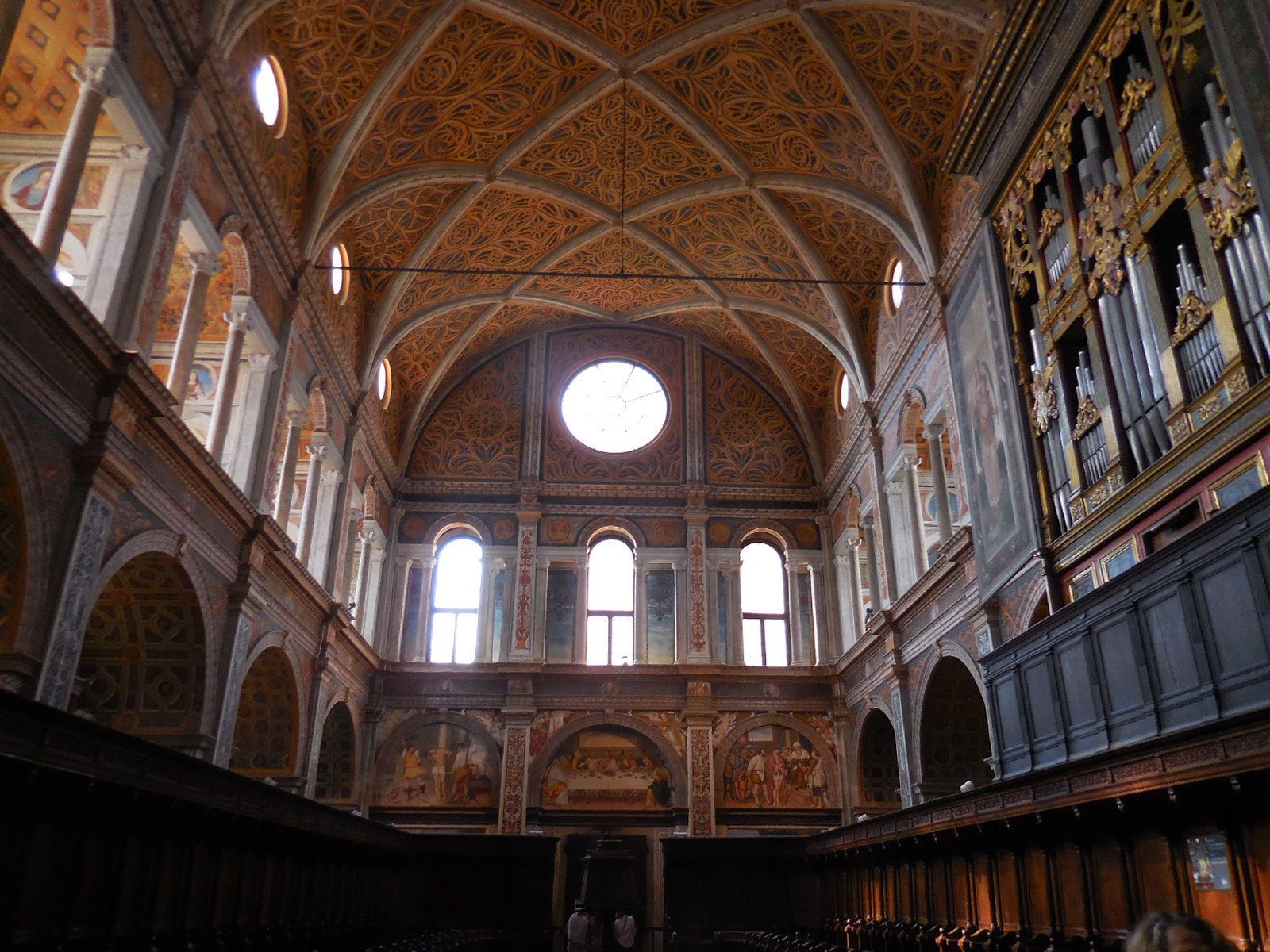
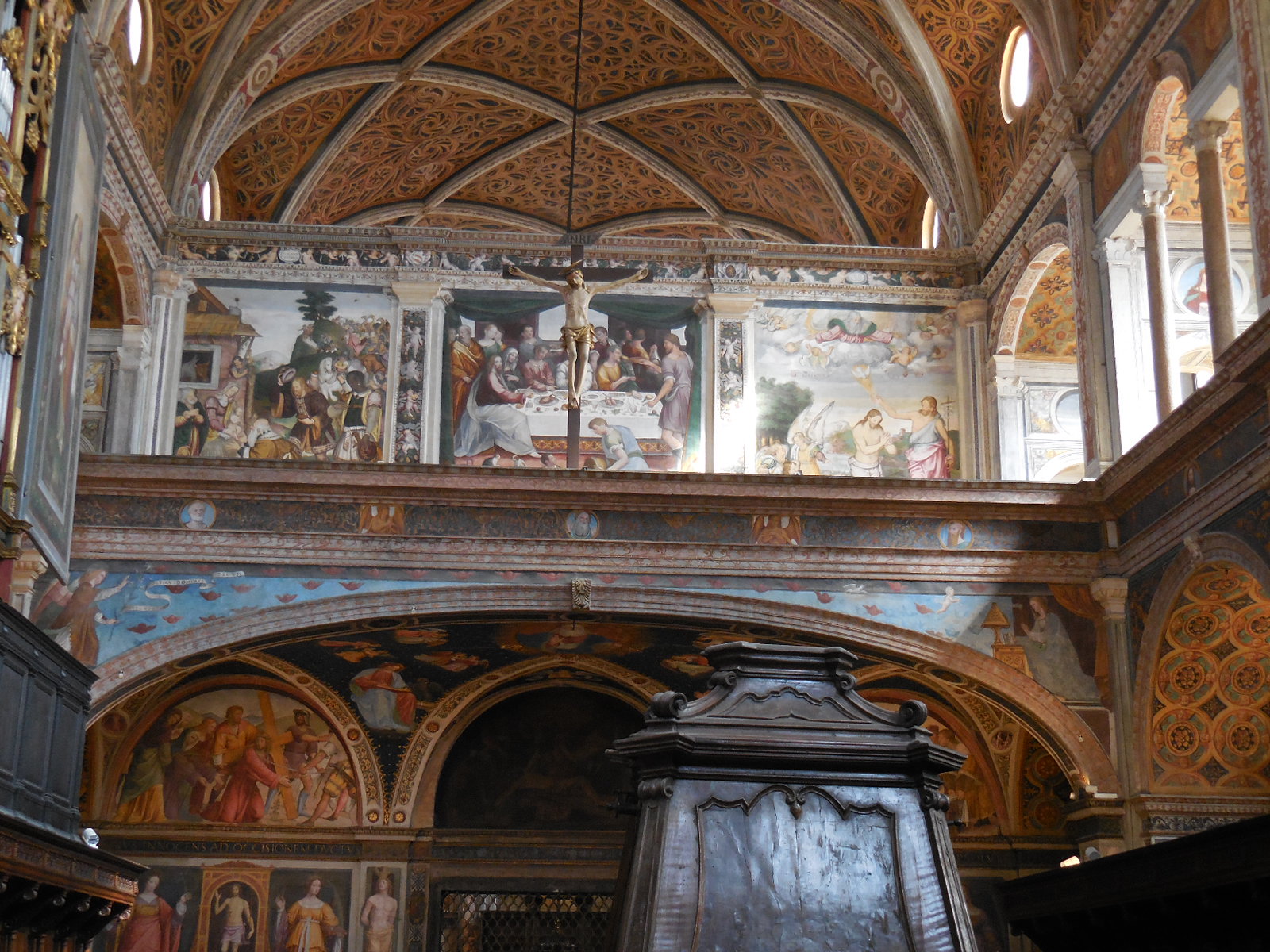
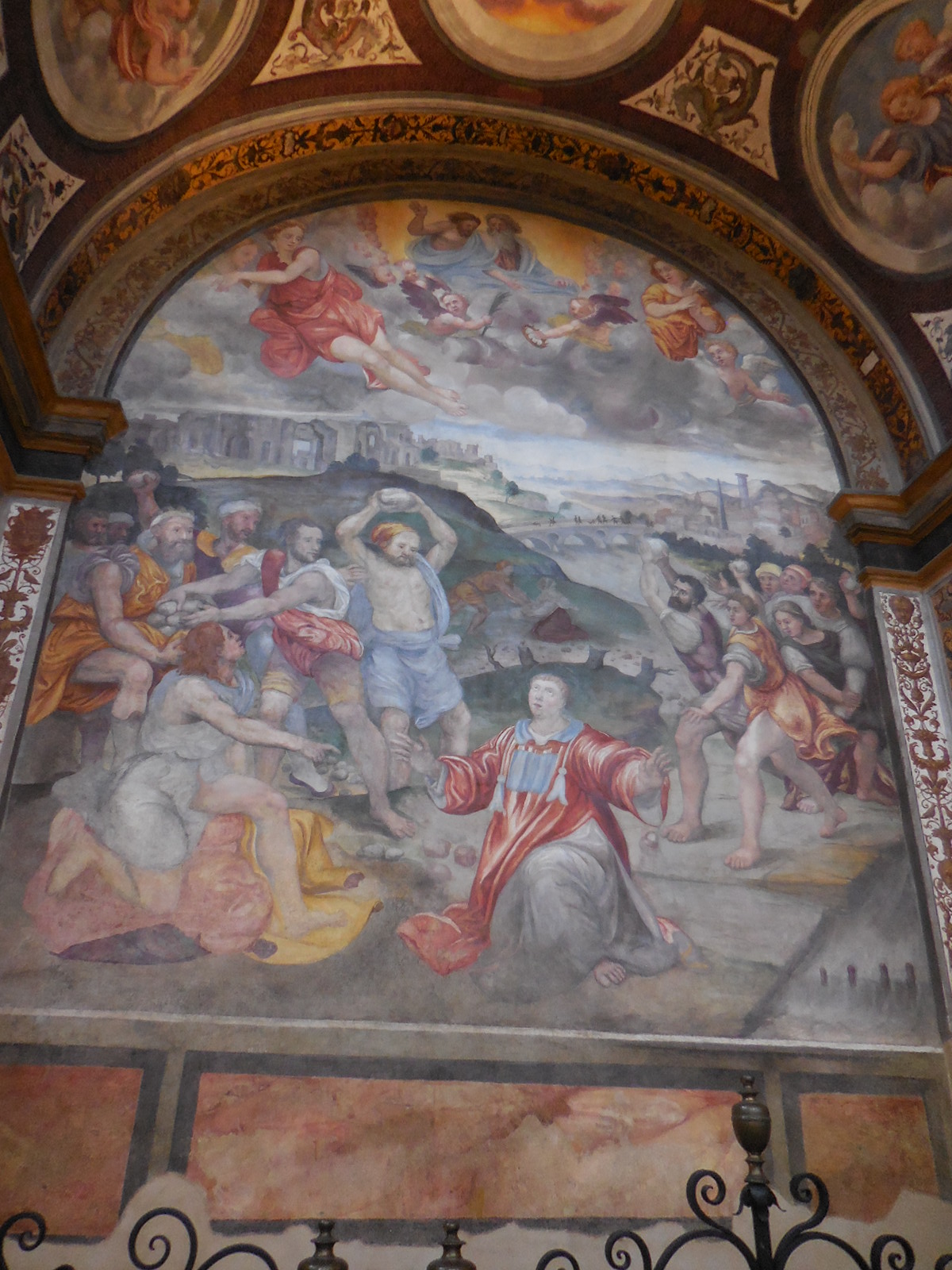
When I left the busy Milan street and stepped inside the Church of San Maurizio al Monastero Maggiore, I could not believe my eyes. The entire interior was a work of art. The Renaissance church featured 16th century frescoes by Bernardino Luini, his brothers and his son. Divided into two parts, it included a worship area for the public and another for the nuns. (An adjacent 17th century former cloister for Benedictine nuns now houses the museum of archeology.) There are eight chapels in the part of the church for the faithful and ten in the section for the nuns. On pilasters between the chapels in the Hall of Nuns, scenes from the life of Christ are portrayed.

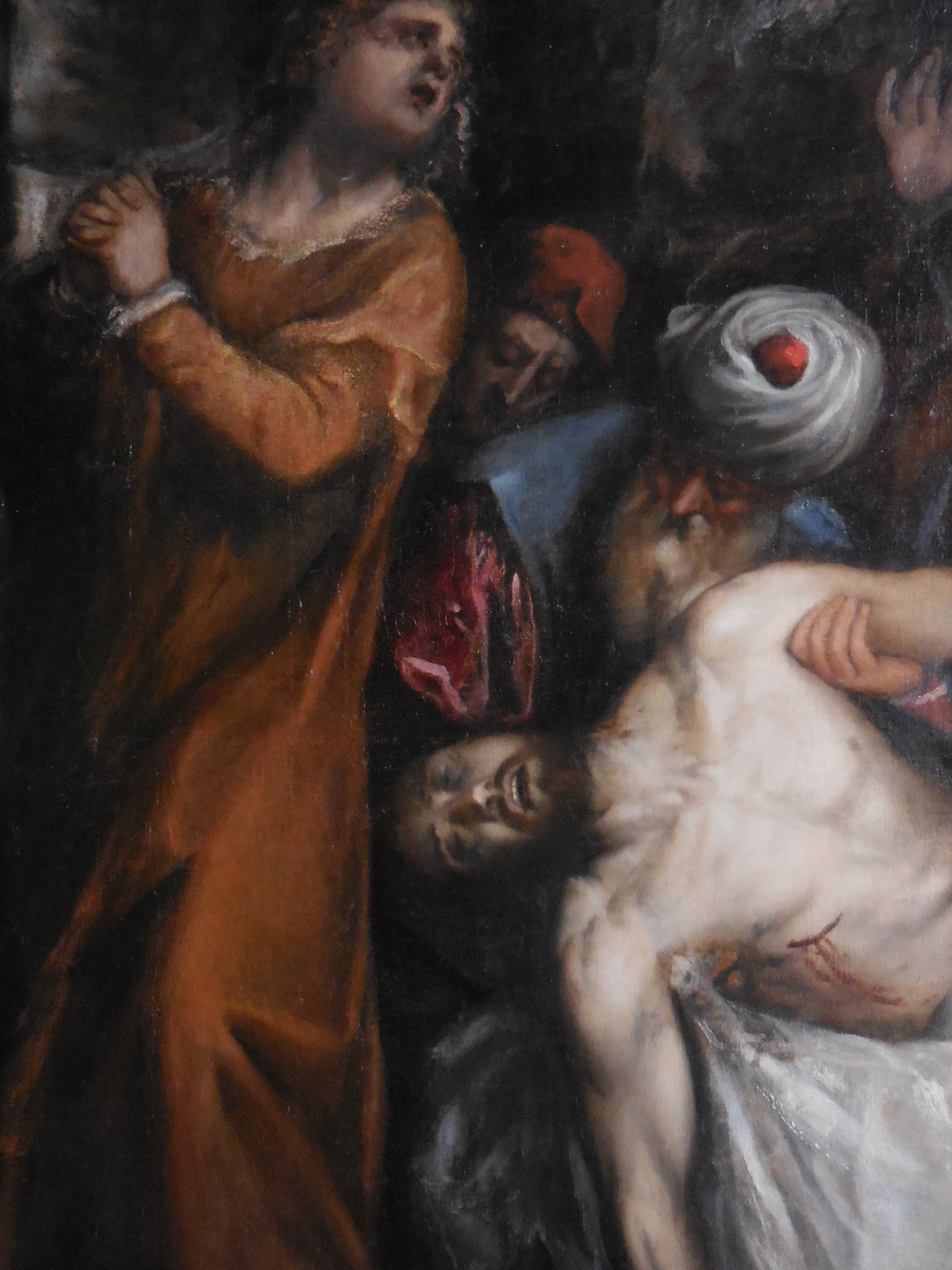
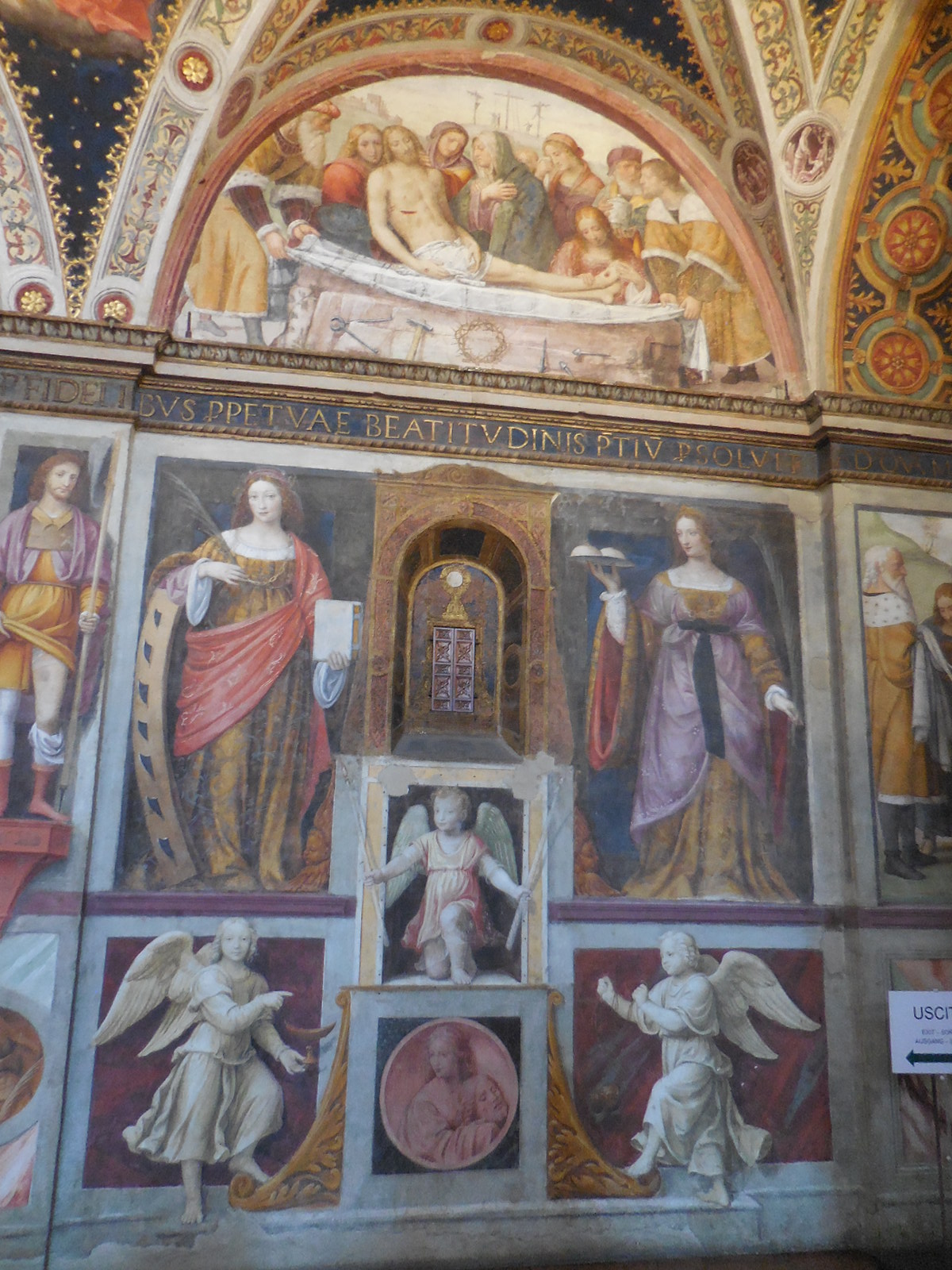
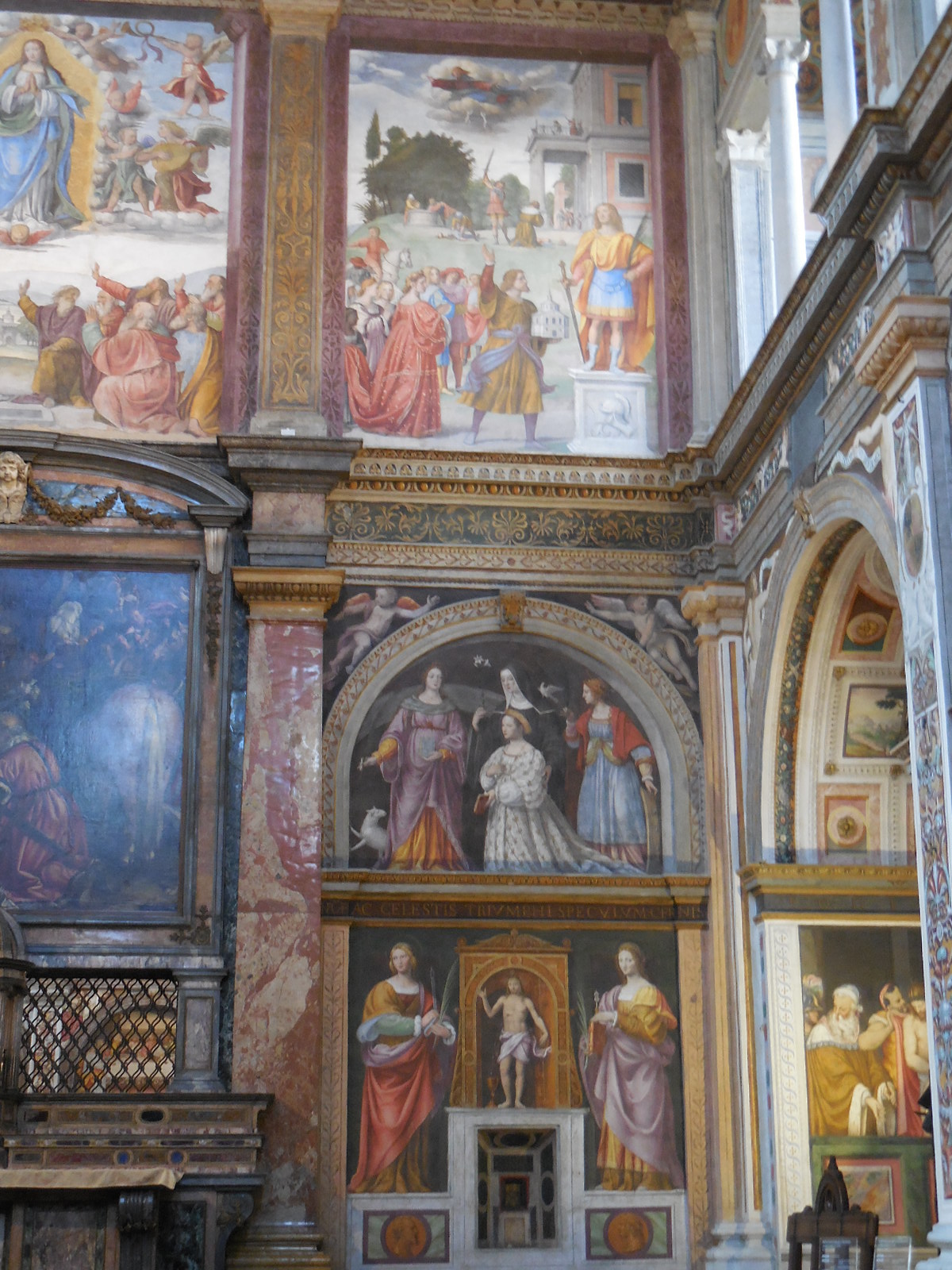
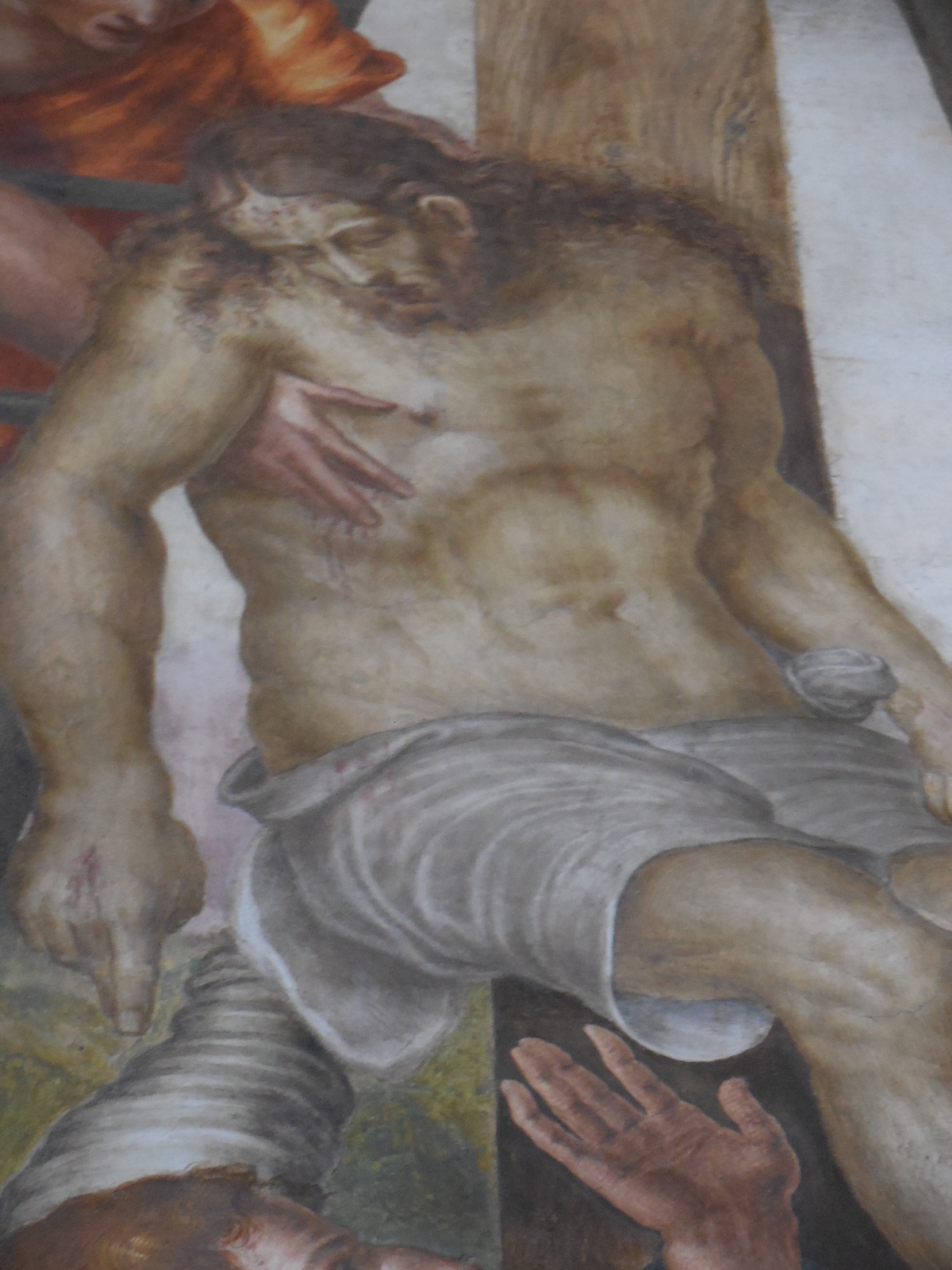
I saw a vaulted nave and vaulted chapels in addition to the Hall of Nuns on the other side of the partition. On the dividing wall in the Hall of Nuns, I gazed at Bernardino Luini’s creations from the 1530s – the figures of Saint Catherine and Saint Agatha as well as scenes from the Marriage at Cana and the Carrying of the Cross of Christ. I also saw his frescoes showing the life of Saint Maurizio. The Martyrdom of Saint Maurice and the Theban Legion, probably by Bernardino Luini, shows Maurice fervently praying as an execution is about to behead him. A decapitated body is seen nearby.

In one chapel, Bernardino Luini rendered the martyrdom of Saint Catherine of Alexandria. In the central panel, blood oozes from Jesus’ collapsing body. The masterful Luini renders the moment of the miracle when Catherine is about to be tortured, but is saved by God.

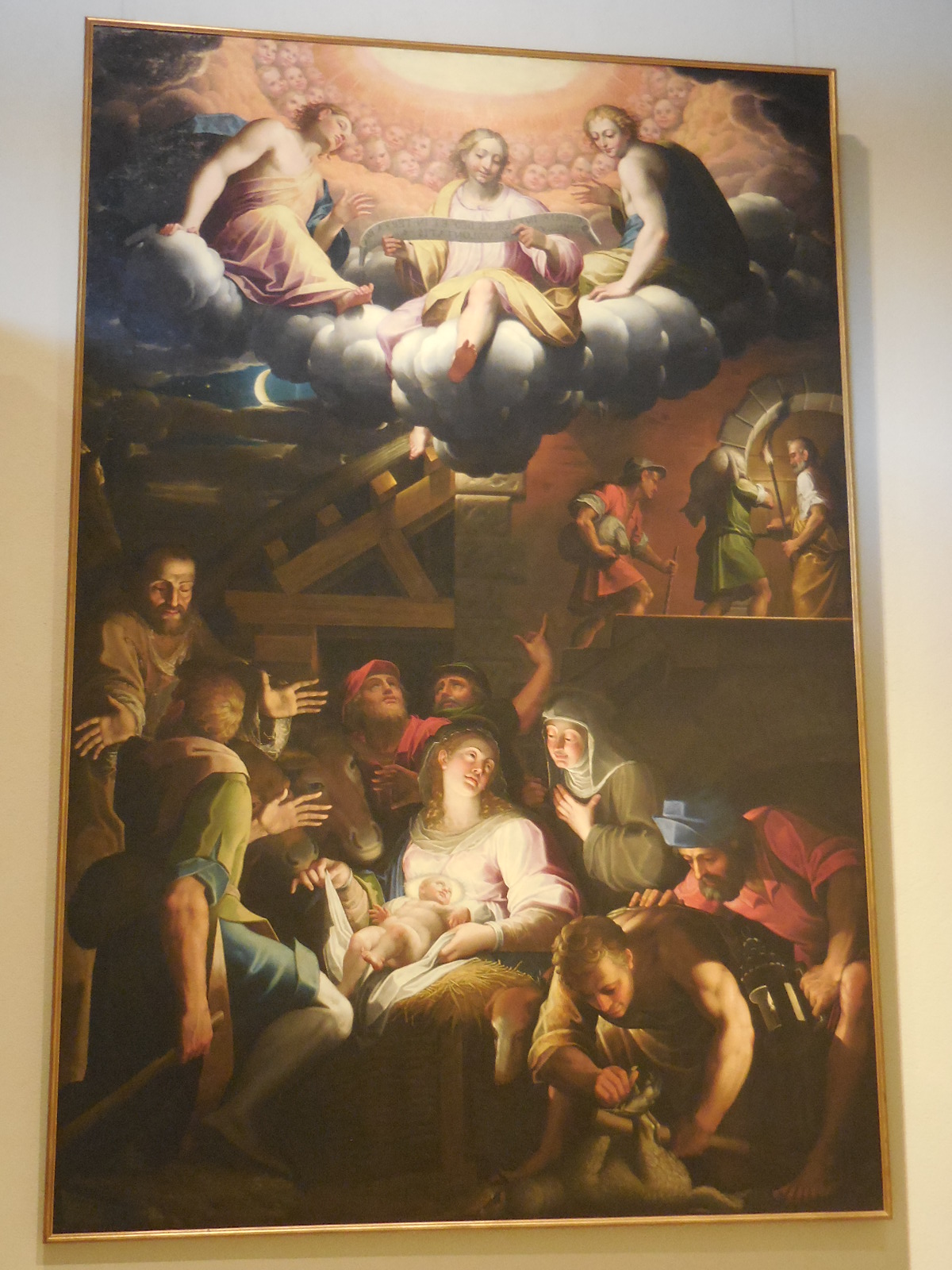
The main altar of the public area with the painting of the Adoration of the Magi by Antonio Campi took my breath away, too. The high altar dates from the second half of the 16th century. The rear end of a horse plays a prominent role in the foreground of the painting. I had never seen the backside of a horse dominating a canvas in 16th century art.

I especially liked the Chapel of the Flood by the Luini brothers. I gazed at the beasts making their way onto Noah’s Ark. A rainbow flitters across the sky. Yet the landscape is decrepit, in ruins.

Saints are rendered on lunettes of the chapels. For example, on two lunettes flanking the altarpiece, Saint Stephen, Saint Benedict and Saint John the Baptist make appearances.

The Eucharist Chapel boasts illusionist features as putti appear to open a canopy. The depiction deceptively looks three-dimensional.

I saw The Last Supper rendered above a door. It reminded me of the church not far away, where I had seen Leonardo’s Last Supper. I will never forget those masterful gestures and facial expressions of the protagonists as each gesture and expression told a story.

I noticed the organ with many 16th century features. It was a rarity as it had 12 pedals. The cornices of the case were richly decorated with fantasy-like figures, musical instruments and still lifes. Another depiction on the case included Saint Maurice holding a model of the church.

There were so many stories told on these masterful artworks that it was impossible to absorb them all during one visit. The church was one of the most beautiful I had ever seen. It was bewitching, enthralling. I vowed to come back because this church was one that beckoned the viewer to return, to experience its stunning beauty time and time again.

Tracy A. Burns is a writer, proofreader and editor in Prague.

Picture Gallery in Sforza Castle Diary

The Sforza Castle in Milan was built for Galeazzo II Visconti in the second half of the 14th century. It was destroyed in the mid-15th century, but the duke of Milan, Francesco Sforza, rebuilt it. Then the Sforza family inhabited the castle. The end of the 1400s was a time of splendor. During the 15th century, Leonardo da Vinci and Bramante created frescoes in the castle. The castle became one of the largest in Europe in the 16th century.

Later, the castle fell on hard times and was transformed into a citadel. The ducal apartments were used as barracks and stables under Spanish, Austrian, French and again Austrian rule. An armory was for a time also on the premises. At the end of the 1800s, the castle became the property of the city of Milan. The unification of Italy prompted the complex to be reconstructed and made into a museum. The castle took on the appearance it had when it had been under Sforza control. Though the central tower is not original, it is made to look like it had when built in 1521.

During World War II, the complex suffered much damage but was reconstructed. Now the castle includes museums and cultural institutes. Several of the other museums include those featuring ancient art and arms as well as one highlighting antique wooden furniture and sculpture. The Pieta Rondanini by Michelangelo is also a sight not to be missed.

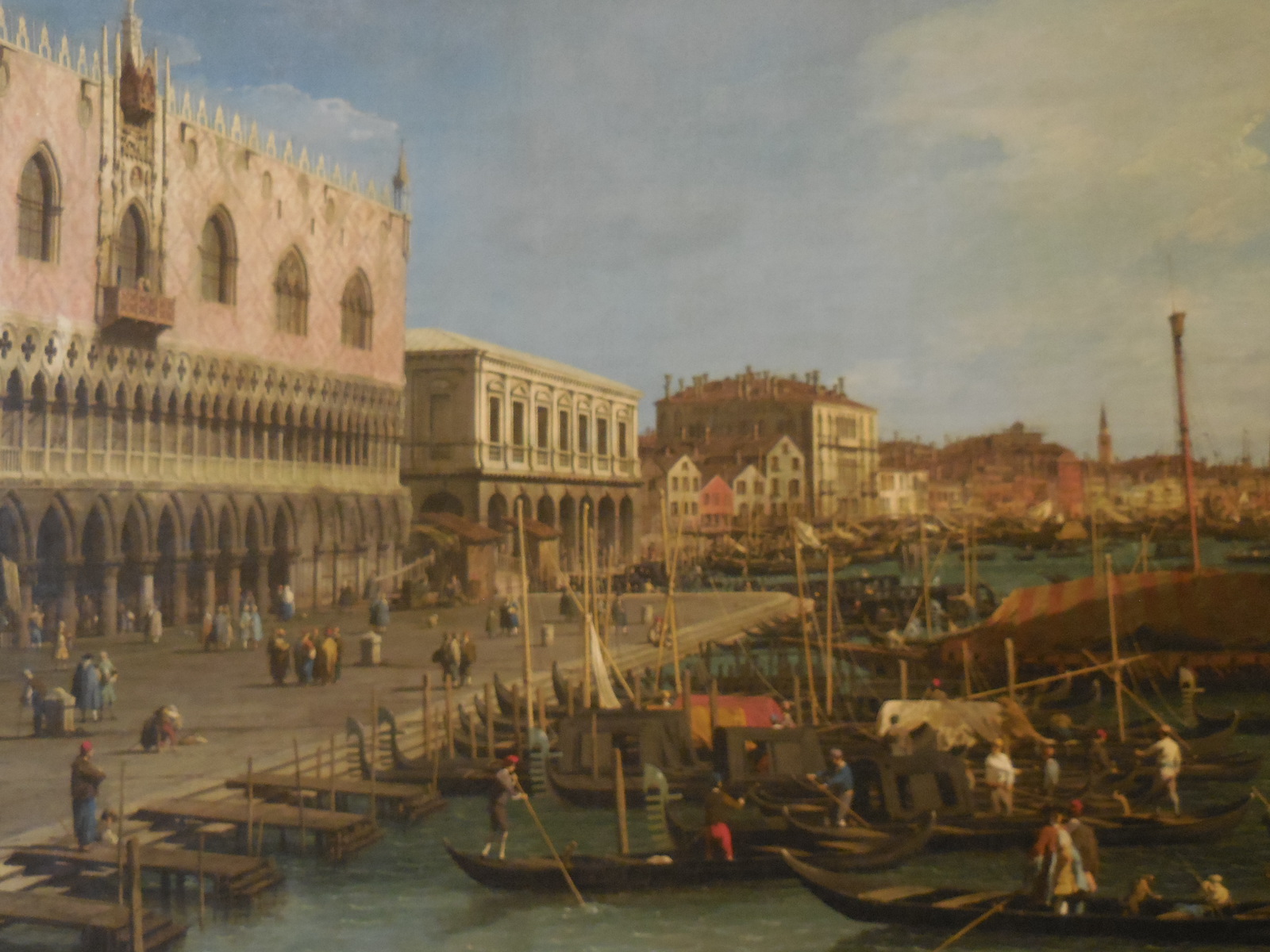
The Picture Gallery focuses on Milanese and Lombard paintings from the 15th to the 18th century with over 230 works on display. It also includes remarkable Venetian and 17th century Dutch and Flemish works. Some Lombard artists represented are Foppa, Bramantino and Bernardino Luini. Other artists whose paintings amaze are Andrea Mantegna, Bergognone, Giovanni Bellini, Lorenzo Lotto, Correggio, Tintoretto, Tiziano, Tiepolo and Canaletto. One highlight is the Trivulzio Madonna by Mantegna from 1497. This important work shows Madonna on a throne, flanked by saints. Angels sing, and cherub faces are included in the decoration. Yet the exhibition does not only contain paintings. Some sculptures, busts and medals are on display, too.

Tracy Burns is a writer, proofreader and editor in Prague.