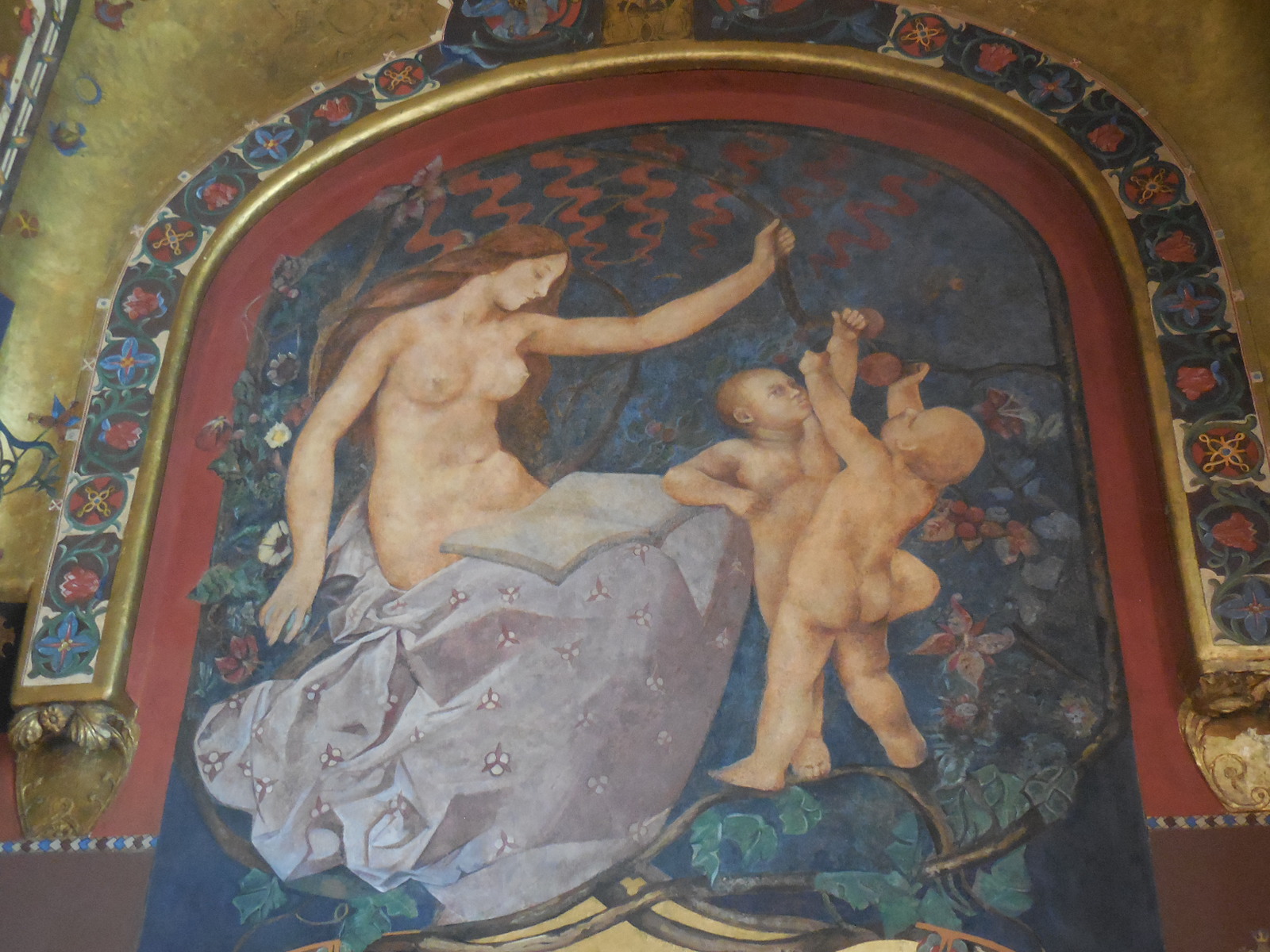
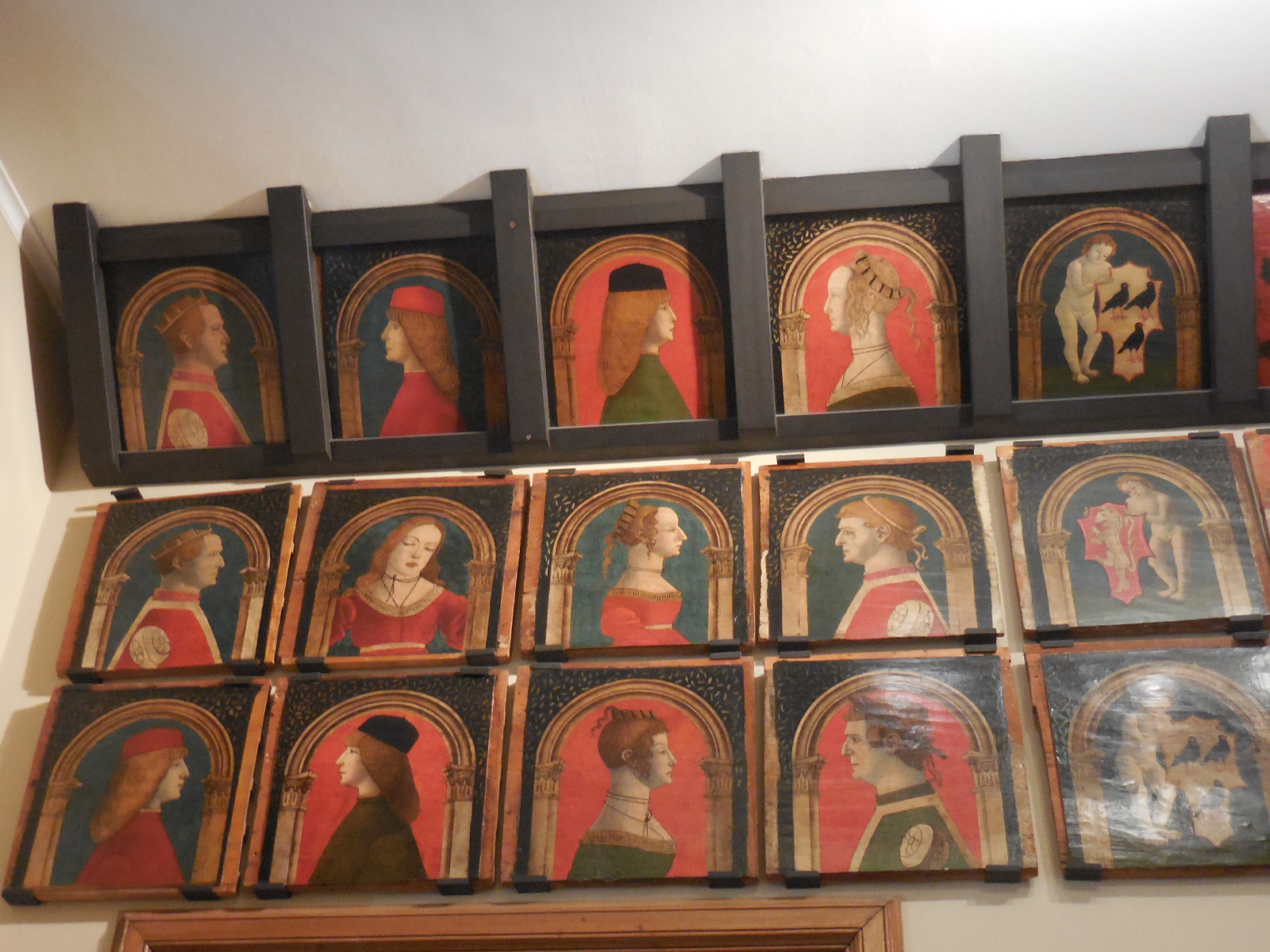
One of Milan’s four house museums, the Poldi Pezzoli was a highlight of my two trips to the city I love so much. The variety of art exhibited made this a top attraction for me. The collections include paintings, sculpture, weapons, tapestries, furniture, glass, ceramics, watches, clocks, goldsmiths’ work and jewelry, for instance. Artists whose works are represented include Andrea Mantegna, Giovanni Bellini, Sandro Botticelli, Michelangelo Buonarroti, Canaletto, Francesco Hayez and Lucas Cranach the Elder.
I favored the medieval paintings, but each space had something extraordinary to offer. The Golden Room with its 15th century collection enamored me as did the elaborate, superb furnishings of the Dante Room. The Black Room had six masterfully crafted mahogany and walnut doors. The Lombard Room dazzled with north Italian Renaissance paintings.
The collections were amassed during the 19th century by Gian Giacomo Poldi Pezzoli, who had inherited much money. The Austrians exiled Gian Giacomo from Milan for one year after he supported the revolutionaries during a Risorgimento battle in Milan. He spent that year traveling, but then returned to Milan. Sadly, Gian Giacomo’s life was cut short in 1879, when, at the age of 57, he passed away in the palace’s Dante Study. The museum was opened to the public in 1881. During World War Two the palace was severely damaged. For example, the Neo-Gothic armory was destroyed. Many artifacts were lost. The museum underwent much restoration, not opening its doors again until 1951. The new armory opened much later, in 2000.
Numerous artworks enthralled me, but I would like to concentrate on several of the many that were remarkable. Some paintings that caught my undivided attention included Sandra Botticelli’s The Virgin and Child (the Madonna of the Book), dating from 1482-83. Showing the Virgin and Child reading, the painting reminded me of how important reading and literature have been in my life. The scene had a mystical appearance due to the superb lighting. I could understand how the act of reading has a sort of mystical power. The painting also exuded elegance.
Another religious rendition that left me in awe was The Madonna of Humility with Musician Angels by Zanobi Strozzi, hailing from 1448 to 1450. In this painting the Christ Child is seated on the Virgin’s lap as I can almost hear the musicians playing a sorrowful tune. Strozzi masterfully portrayed the texture of the clothing, such as Virgin’s red garment with its green lining and blue mantle. I felt as if I could touch the fabric of the veil on the Virgin’s head as it was also superbly rendered. The background was dominated by a stunning gold material.
My admiration of medieval art in the Poldi Pezzoli continued as I became enthralled with Filippo Lippi’s The Pieta (1440) in which the Virgin and Saint John the Evangelist hold up the limp Christ figure who has a gray complexion reminiscent of death. In the distance I saw a mountainous landscape.
Antonio Vivarini and his brother-in-law Giovanni D’Alemagna captivated me with their work, The Virgin and Child Enthroned with Two Angels. In this painting, perhaps part of a polyptych, the Madonna and Child’s throne is pleasantly situated in a garden, giving off a tranquil vibe. The late Gothic and Renaissance features of the throne, figures and landscape were striking.
A sculpture that particularly caught my attention was labelled The Virgin and Child, a Florentine masterpiece from 1280 with many Byzantine elements. While Jesus’ body parts aren’t all proportional, the two figures are nevertheless masterfully sculpted.
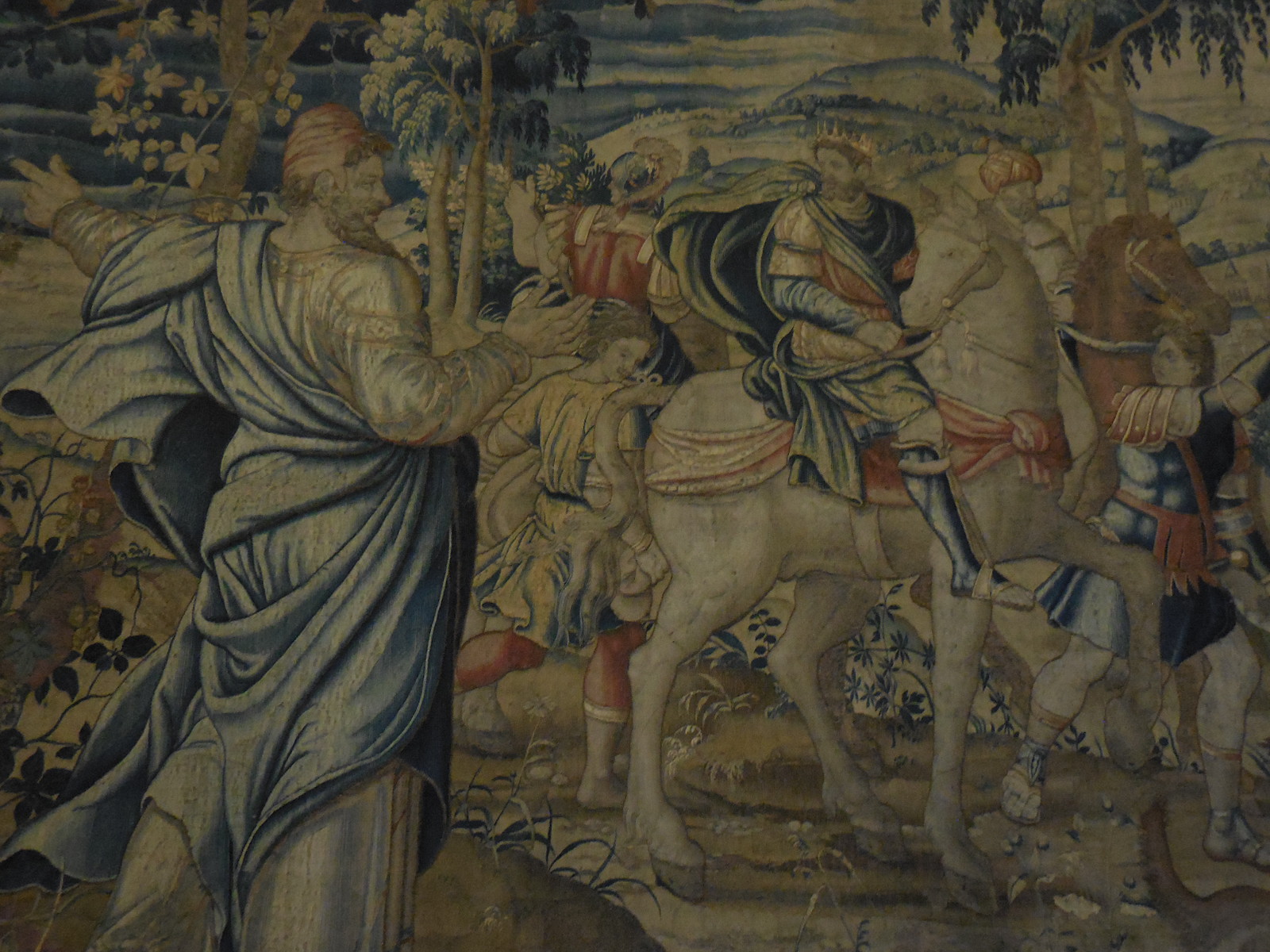
I was also enthusiastic about the tapestries. For instance, I saw the Tapestry with Esther Presented to Ahasuerus, made in Brussels in the late 15th and early 16th century. The stunning fabrics included wool, silk, silver and gold. One of the most significant Flemish tapestries in Italy, the masterful work takes its theme from the Old Testament. I noted the characters’ luxurious costumes, especially the king’s extravagant hat. The variety of colors also caught my attention.
I also admired the Canaletto landscapes of Padua and Venice with all the architectural features of the cities. Looking at Canaletto’s works gave me a sense of Italian history as if I could go back in time and look deep into the painting as a witness of the scene portrayed. I fondly recalled the extensive exhibition of Canaletto’s work I had seen in Aux-en-Provence a number of years ago.
The armory, refurbished in 2000, included many 16th century weapons, such as a Borromeo helmet from the 16th century. Its exquisite gilded decoration was made up of designs of a unicorn and Saint Justine. The Gonzaga Helmet, also from the 16th century, was also gilded and showed off adornment of a crescent moon, leaves and flowers. I loved the meticulousness and precision of the designs.
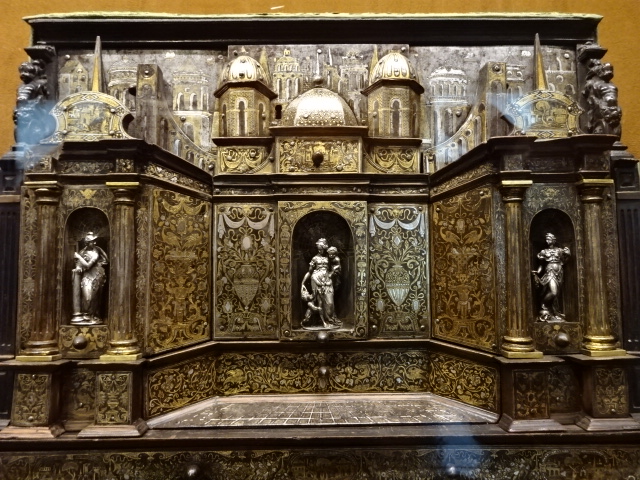
I admired the many stunning pieces of furniture, including the cabinets. One cabinet from the mid-17th century was made of ebony, bronze, silver and semi-precious stones. The small drawers were exquisitely decorated.
My favorite piece of porcelain was a Meissen called The Tooth-Puller from 1750. The woman looked terrified as the evil man held her jaw in an almost violent manner. The facial expressions of terror and evil were well-crafted. I liked the use of the color purple in the designs: the wig-clad tooth-puller was dressed in purple, and the woman wore a purple jacket. Her white skirt was decorated with a purple floral design. The collection included over 80 European porcelain pieces from the 18th century.
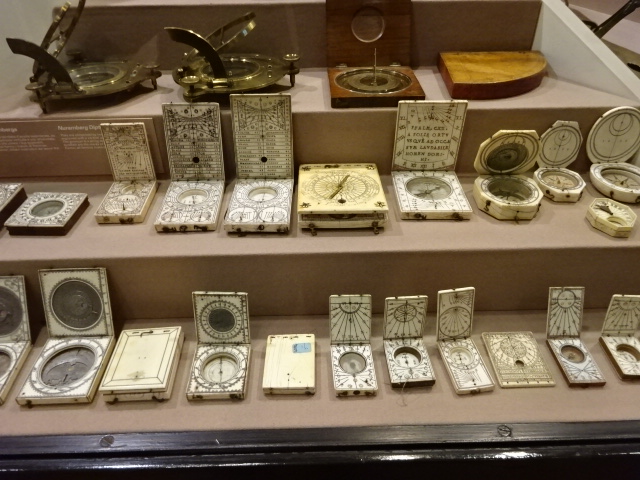
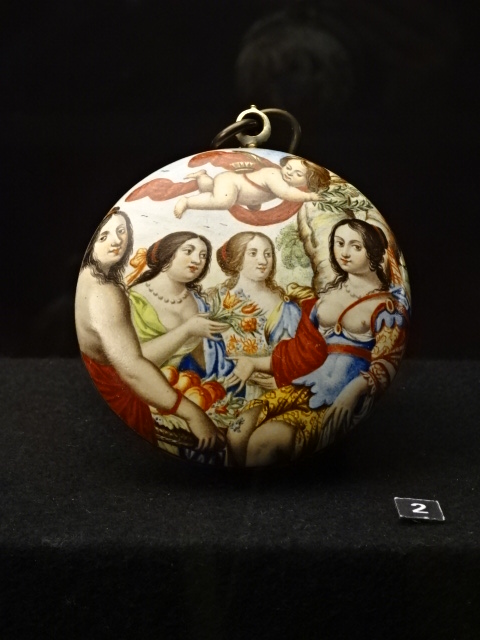
I also admired the decorations on the watches hailing from the 16th to 18th centuries and the various designs of the many clocks and sundials. The jewelry and Murano glassware also captured my undivided attention.
This museum housed such a wide array of stunning artifacts in an intimate setting. I loved the house museums in Milan, and visiting the Poldi Pezzoli was certainly one of my most treasured memories of the Italian city that I hold so dear to my heart.
Tracy A. Burns is a writer, proofreader and editor in Prague.
The Sforza Castle in Milan was built for Galeazzo II Visconti in the second half of the 14th century. It was destroyed in the 15th century, but Francesco Sforza rebuilt it. Then the Sforza family used it as a residence. The end of the 1400s was a time of splendor. During the 15th century, Leonardo da Vinci and Bramante created frescoes in the castle. The castle became one of the largest in Europe in the 16th century.
Later, the castle was changed into a citadel. The ducal apartments were used as barracks and stables under Spanish, Austrian, French and again Austrian rule. An armory was for a time also on the premises. At the end of the 1800s, the castle became the property of the city of Milan. When Italy was unified, the castle was in a very dilapidated state, but the complex to be reconstructed and made into a museum. The castle took on the appearance it had when it had been under Sforza control. Though the central tower is not original, it is made to look like it had when built in 1521.
During World War II, the complex suffered much damage but was reconstructed. Now the castle includes museums and cultural institutes.
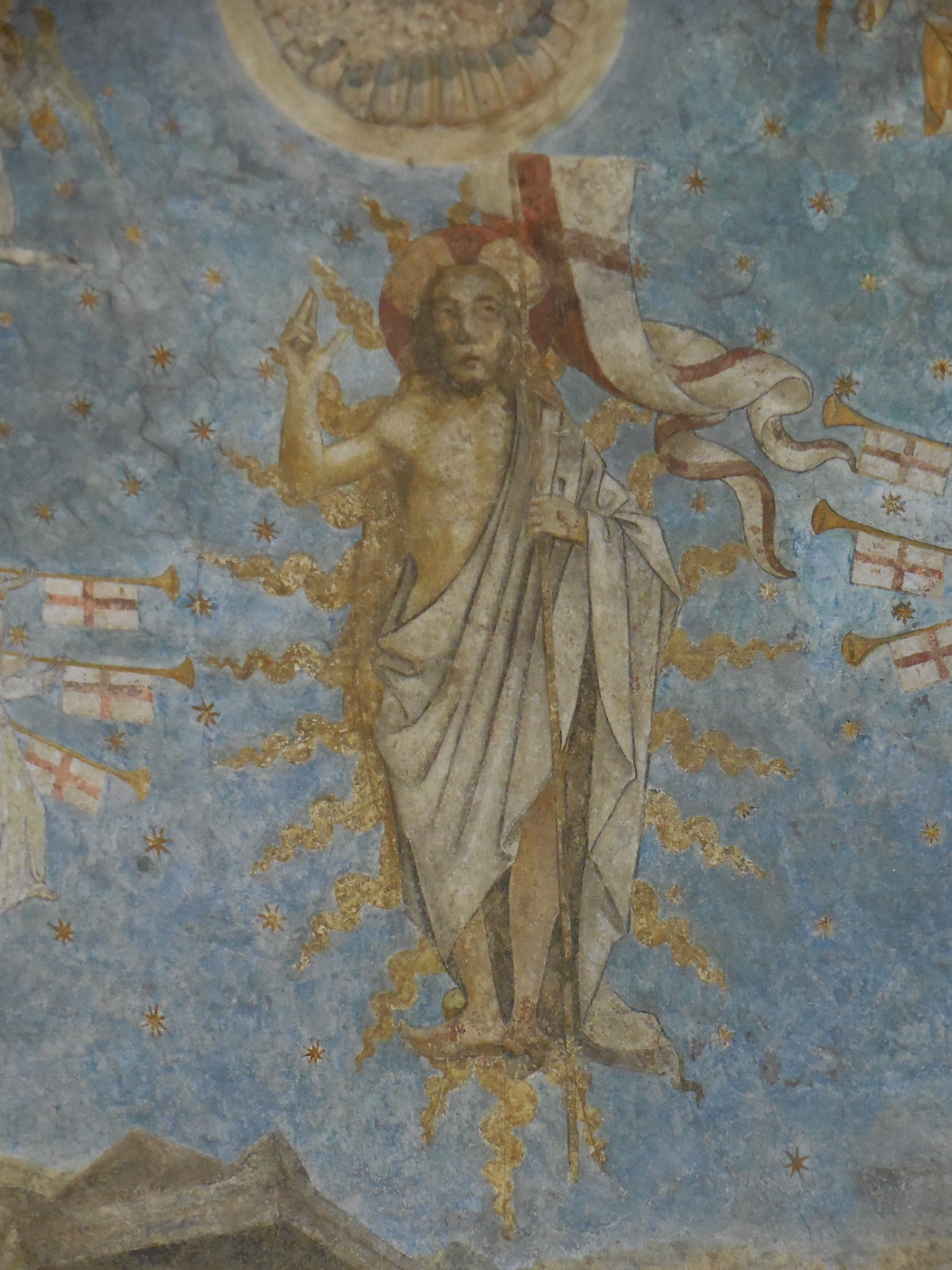
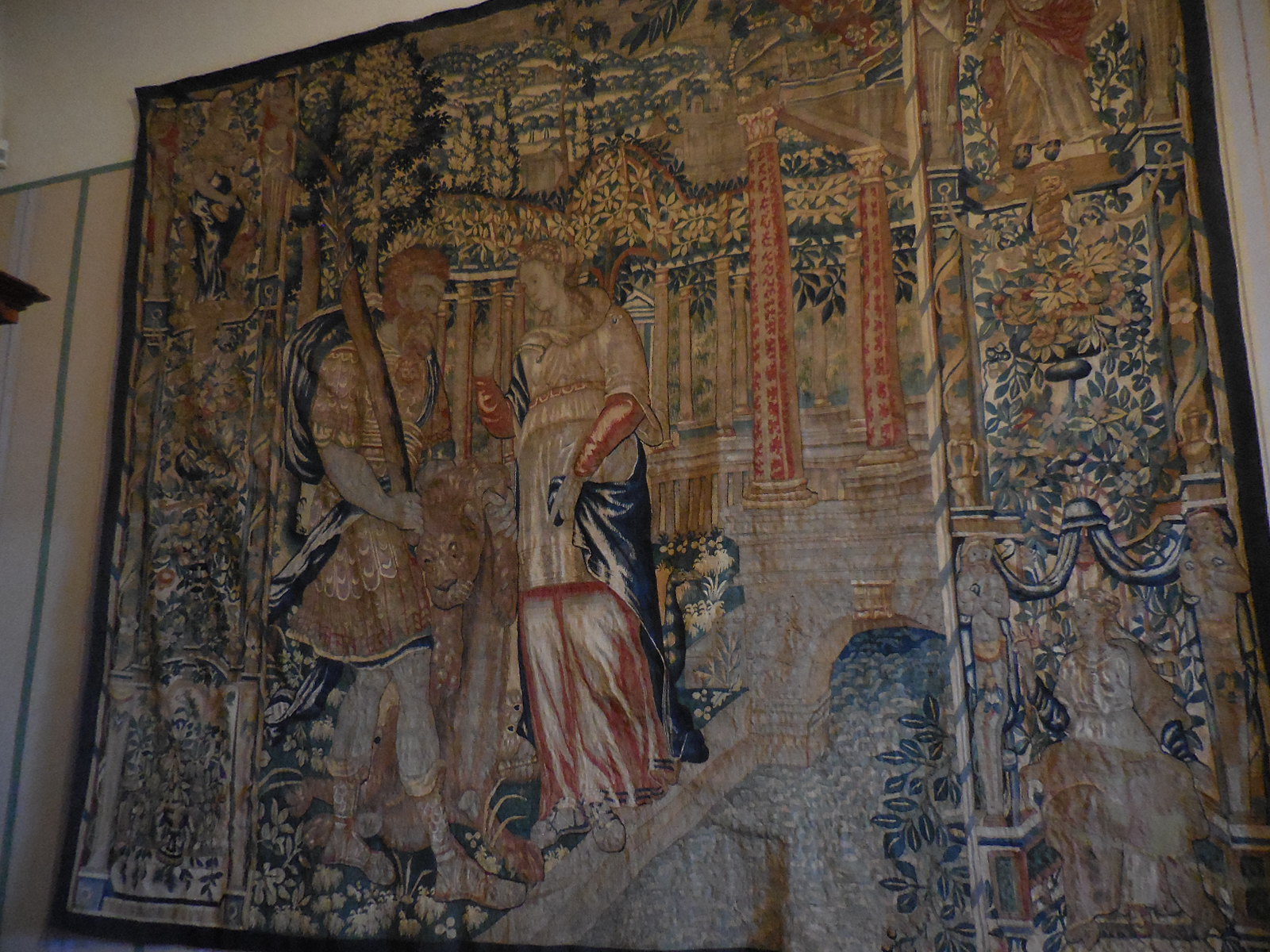
The collection of the Museum of Ancient Art and Arms features sculpture from the fifth to the 16th century, some from Lombardy and others from Tuscany. Some rooms are decorated with stunning frescoes. An armory containing European weapons from the end of the 14th to the 19th century and an impressive room of tapestries also make up the exhibition. Sixteenth century Flemish tapestries intrigued me. Saint Ambrose dominates another tapestry. Two medieval portals and tombstones are also on display.
Visitors walk through the ducal apartments decorated by Galeazzo Maria Sforza. I was especially impressed with the ducal chapel. Leonardo da Vinci designed and frescoed the Sala delle Asse (Room of Wooden Boards), which was being restored when I was there. I read that the walls and vaulted ceiling of this room are painted with trompe l‘oeil. The vault shows off branches leaves and berries that give the illusion that the space is outside instead of in a castle. In other rooms the Spanish domination is highlighted with sculpture and the remarkable funerary monument of Gaston de Foix, created from 1517 to 1522.
Tracy A. Burns is a writer, proofreader and editor in Prague.
For the first time in a long while I went on a trip by car. Since my friend did not have a highway sticker that permitted her to drive on the highways, we had to take side roads that made the trip to northern Bohemia’s Frýdlant Castle and Chateau more than three hours long but much more scenic and intriguing.
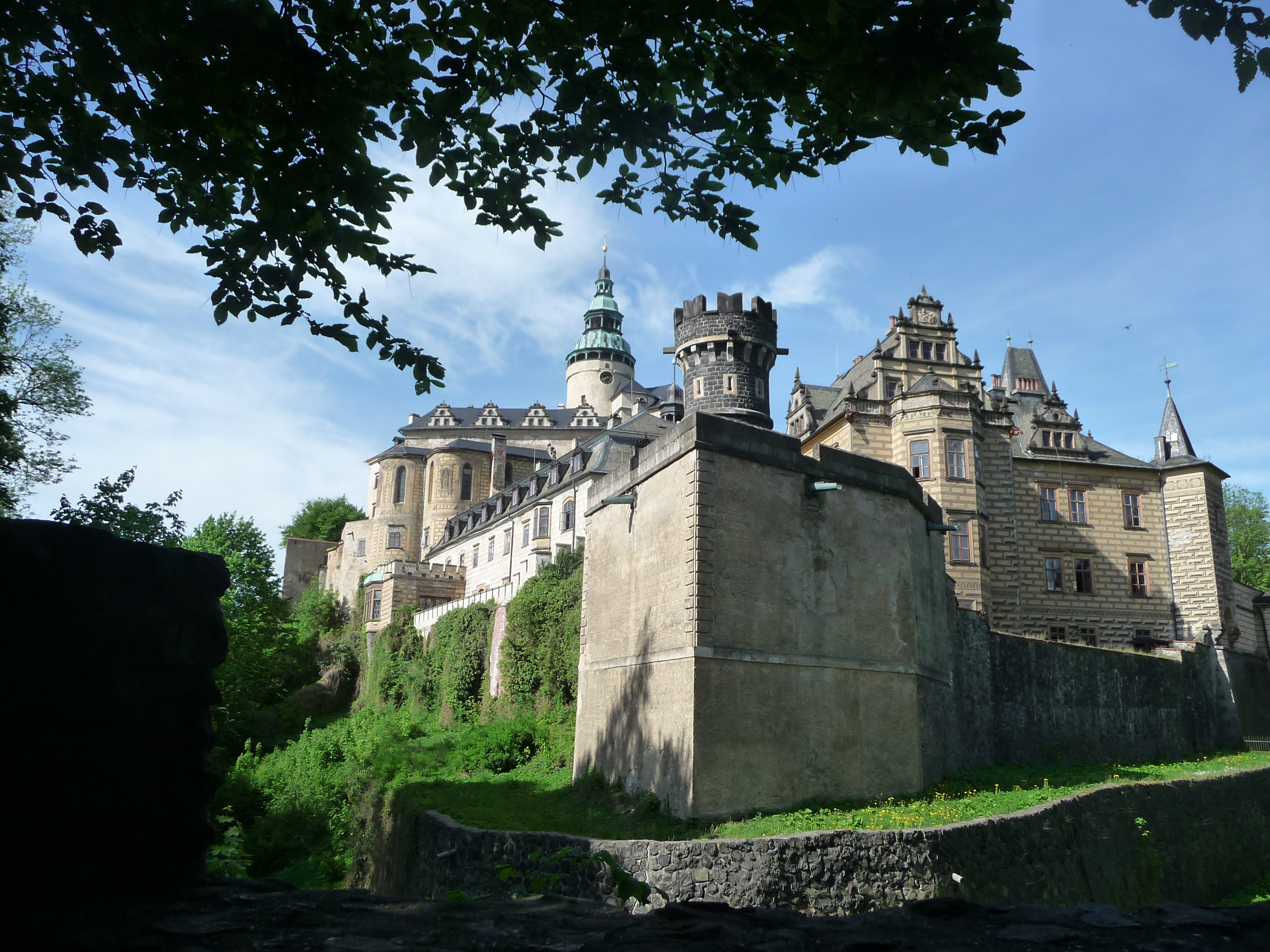
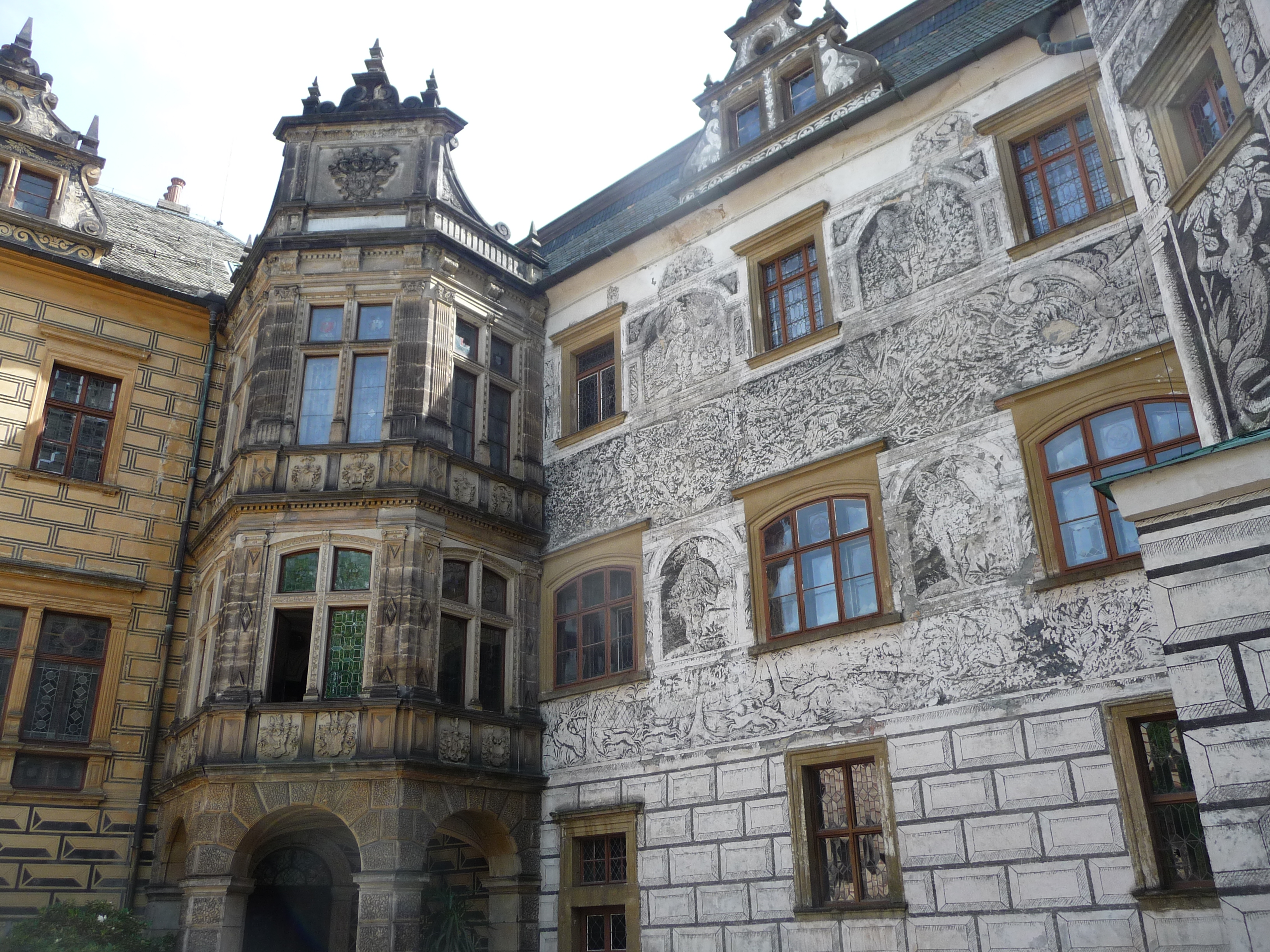
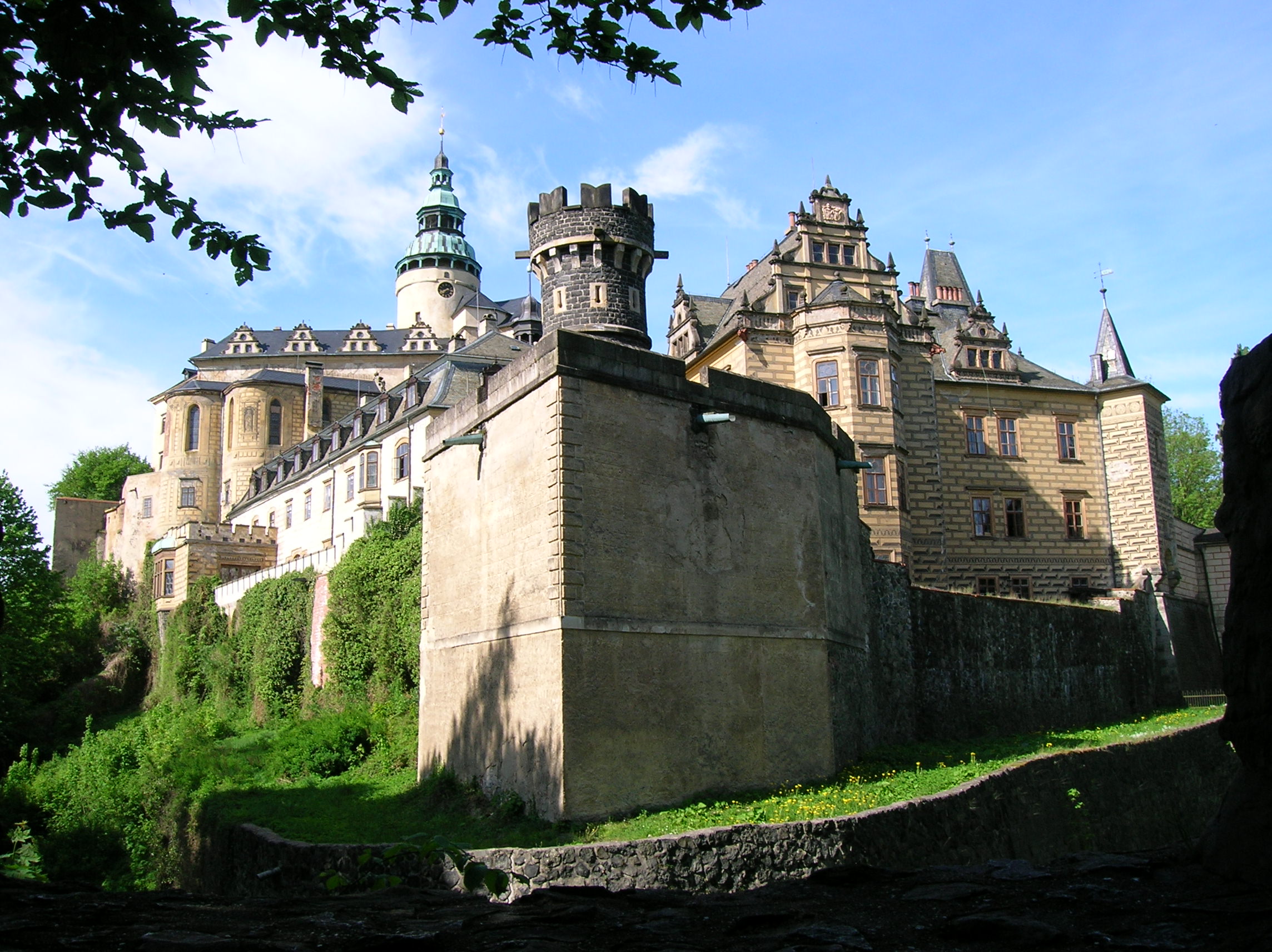
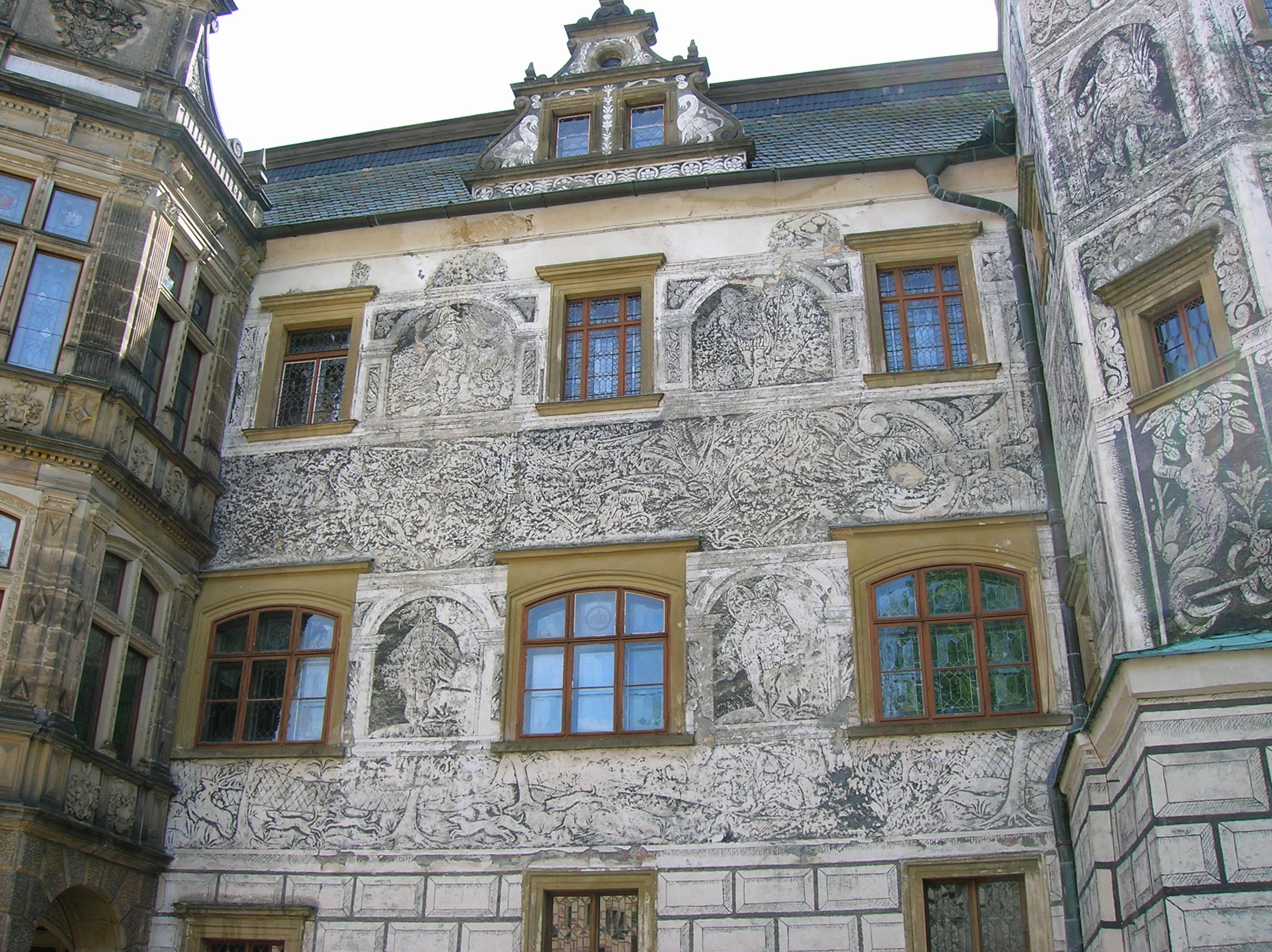
I already was familiar with the history of the mammoth castle and chateau complex, as I had visited it eight years earlier. The first reference to the impressive sight went back to 1278, when the castle was sold to the Bibrštejn clan who ruled here for 300 years. During the 15th century Hussite wars, the Hussites did not capture the castle, as it was spared the Hussites’ wrath that had destroyed so many sites throughout the Czech lands. The chateau came into existence at the beginning of the 17th century, when Catherine of Redern had it constructed with sgraffito decoration. She also was responsible for adding the exquisite church.
Protestant noble Kryštof of Redern participated in the uprising against the Catholics during the Battle of White Mountain in 1620, and after the Protestants lost, Frýdlant was confiscated. Albrecht von Wallenstein, commander of the Habsburg armies and a major player in the Thirty Years’ War, bought the place during 1622. However, Holy Roman Emperor Ferdinand II started to distrust him and in effect gave him a pink slip. When the Protestants notched some victories over the Catholics, Ferdinand asked him for help again, and help he did. Yet, when in 1633 Wallenstein did not attack the enemy during a battle, he was accused of high treason. Unhappy with the way the emperor treated him, he had also been thinking about joining the Protestants. But he would not have the chance. Emperor Ferdinand II had Irish army officer Walter Devereux assassinate Wallenstein in Cheb during 1634.
Then Wallenstein’s General Matyáš Gallas took over the castle. The Gallas family owned Frýdlant until 1759, when the Clam-Gallas family became the owners. The castle museum opened in 1801. In 1945 Frýdlant was confiscated due to the Beneš decrees that ceded all property held by Germans to the state, and it was nationalized.
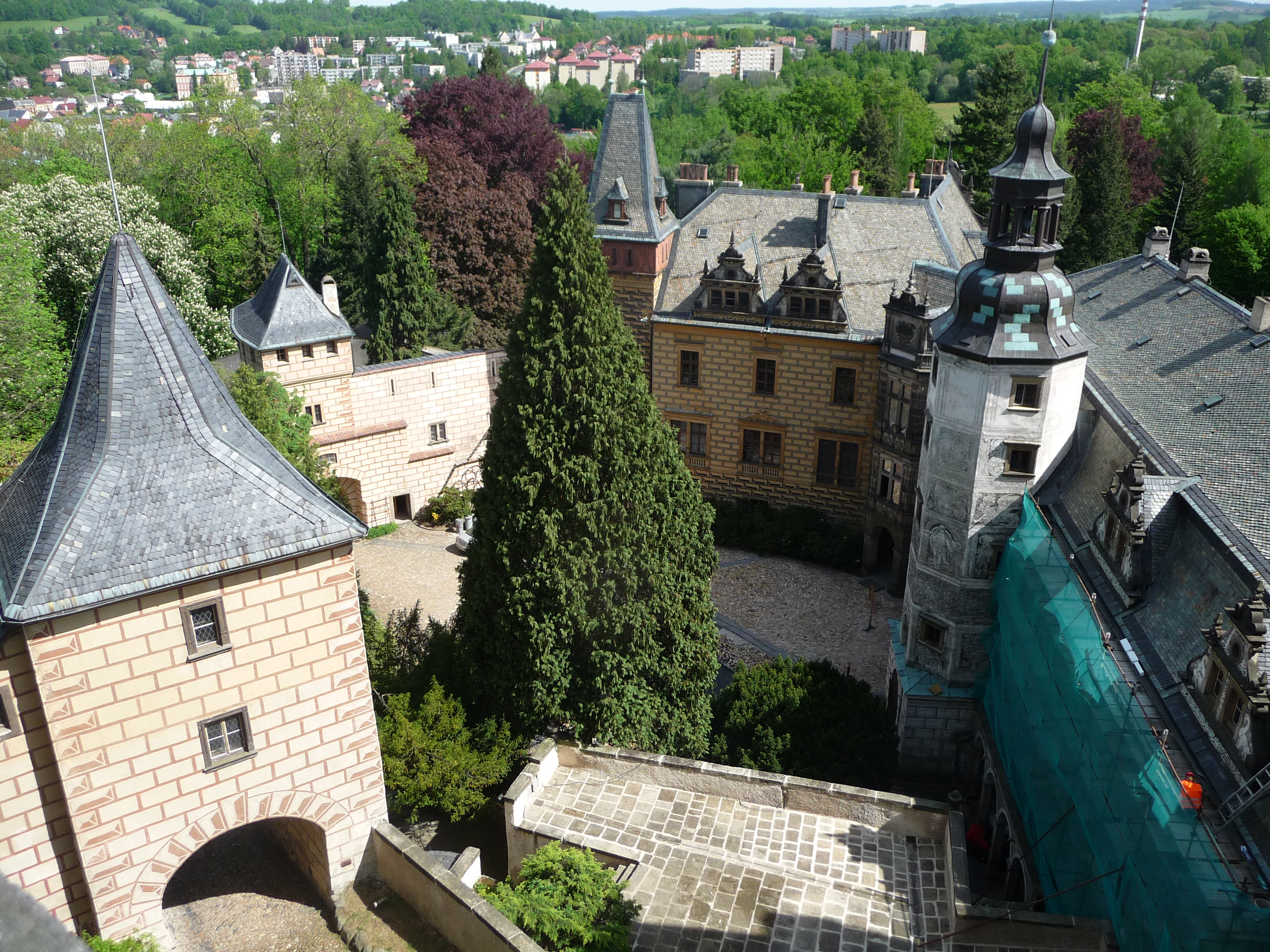
As we approached the castle, it was impossible not to notice the high circular wall that had been built by the Swedes in 1647. After entering the front gate, we walked over the drawbridge to what was called the Swedish courtyard, taking its name from the 17th century occupation by the Swedish army. Then we came to the courtyard of the chateau and negotiated a steep path to the castle. In the castle courtyard we peered at a 13th century round tower and saw Renaissance sgraffito on part of the castle’s wing. One part of the sgraffito portrayed a deer hunting theme.
I was glad that my friend and I were the only people on the tour. We went inside. What impressed me the most in the first room were not the huge portraits of the Redern family but rather the richly carved Renaissance chairs and the Renaissance chest. The green and white tiled stove also caught my attention. In the next room a portrait of Albrecht von Wallenstein showed a man with a serious expression, a small beard and moustache. One painting in the room depicted his assassination. In the dramatic rendition Devereux stabs the unarmed Waldstein in the stomach with a halberd.
Next came the Portrait Gallery, which boasted of huge paintings of Gallas family members. The Baroque fireplace astounded me with the Clam-Gallas coat-of-arms, cherubs and golden crowns adorning it. In the museum part of the exhibition, the legendary Czech nobleman and Austrian Marshall Jan Radecký of Radče was featured in several displays. His light blue uniform was on display as was a circular portrait of Radecký with gray hair and a gray moustache. A picture of Emperor Franz Joseph I’s wife, Empress Elizabeth (Sissy), who was assassinated in 1898, decorated a cup. A likeness of Emperor of Austria and King of Bohemia Franz Joseph I adorned a silver medal.
Then we entered a room featuring many uniforms for the servants during the 19th century. I was surprised that the summer clothing for the carriage driver was so warm and heavy. He must have been burning up inside that thick attire. The embroidery on the sleeves and shoulders for the estate’s clerks was detailed and exquisite as well.
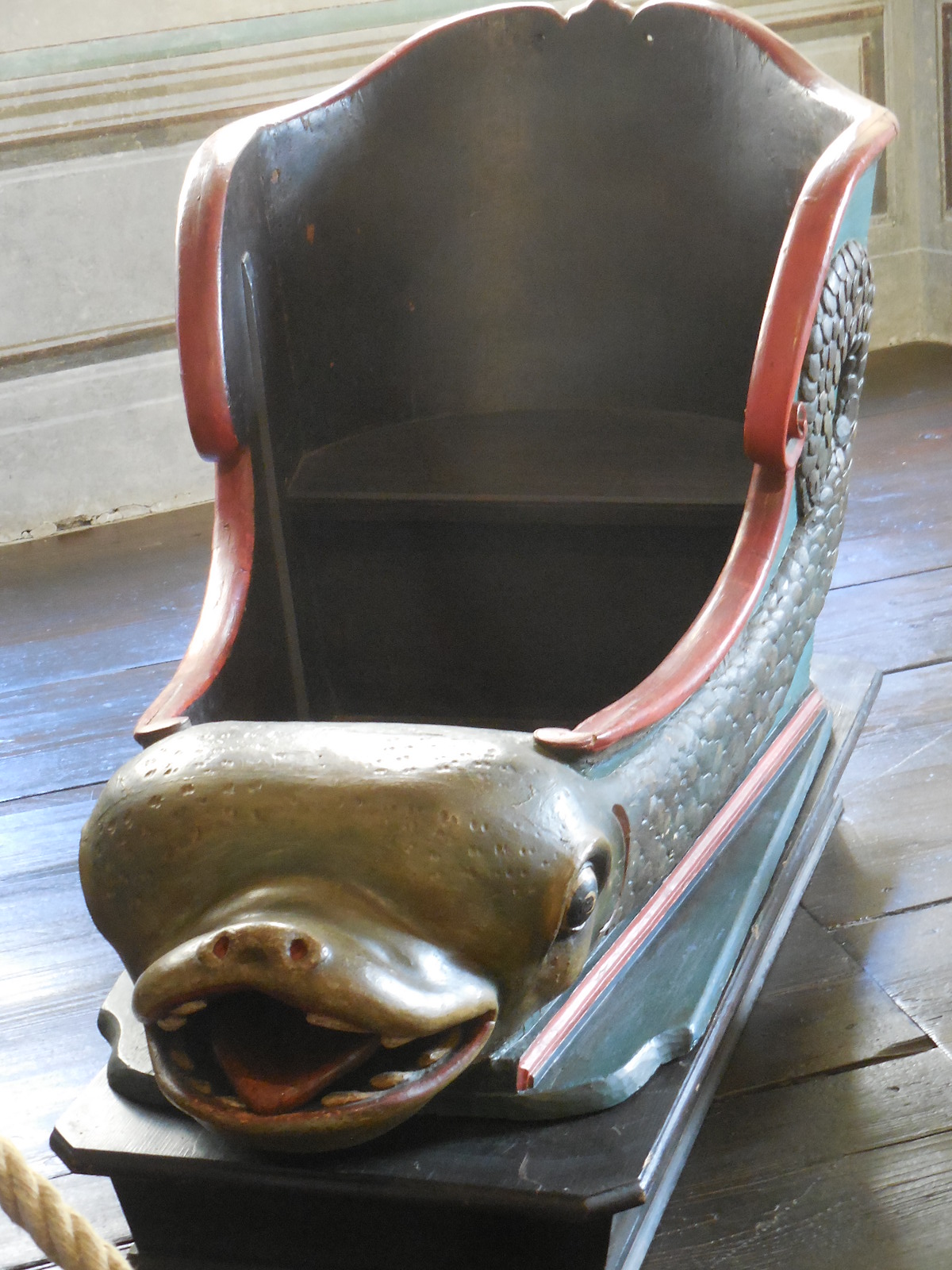
Following the guide, we saw a narrow, yellow women’s carriage. A Baroque sleigh was decorated with a dolphin that looked like a dragon – that was how the dolphin was rendered during those days. The Hunting Salon featured a table of 130-year old wood. In the Dining Room I saw a vibrant Baroque light green and yellow tiled stove. I particularly noticed the emperor’s eagle carved on the back of a black chair that also sported a golden crown.
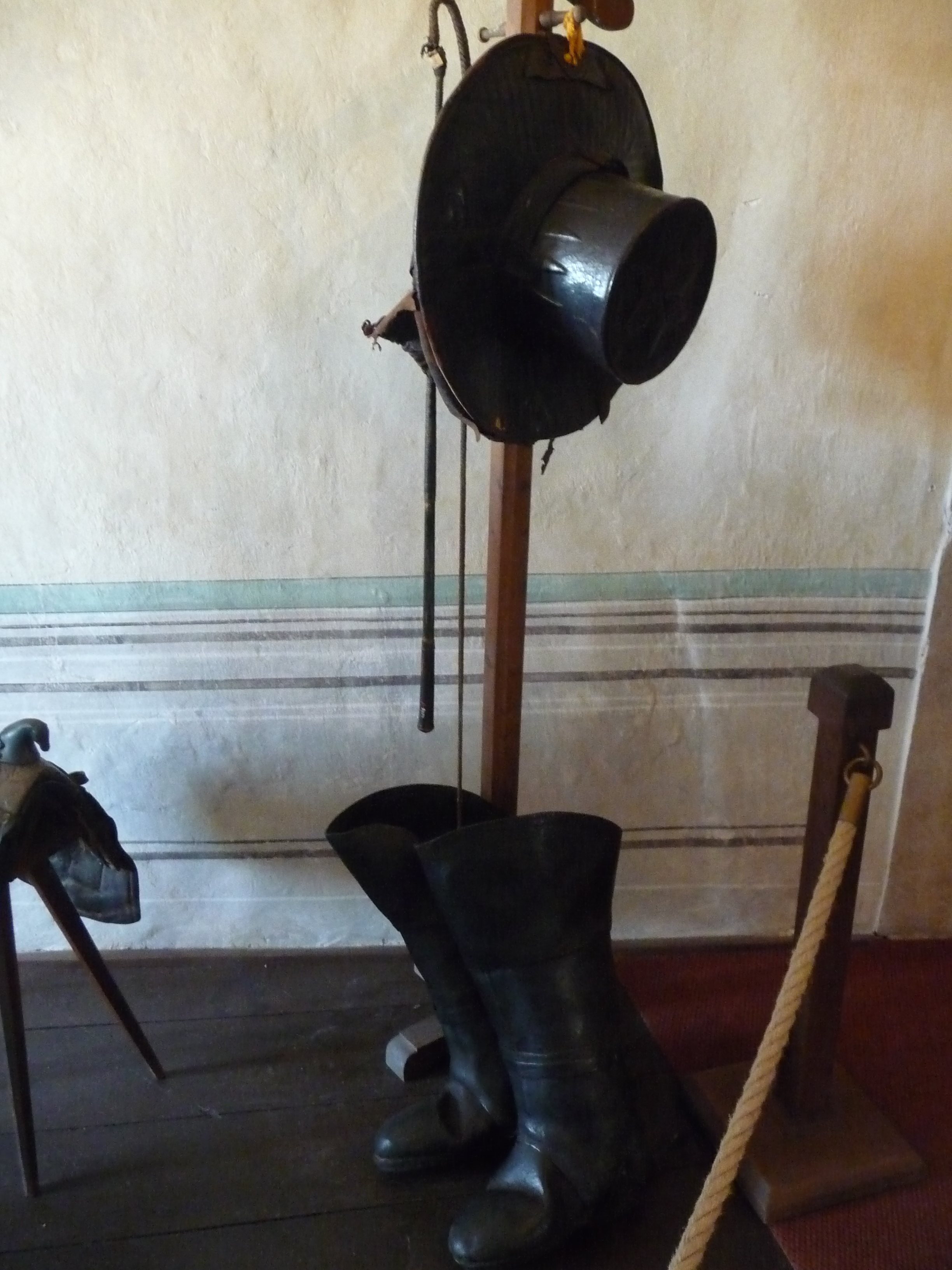
The armory was a treat for those interested in weaponry. Even I was enthralled by it, though weapons are certainly not my cup of tea. Helmets, cannons, spears and knights’ armor adorned the rooms. Some of the spears came from the 15th century Hussite wars; it was hard for me to grasp that I was looking at spears that were so old. Muskets also made appearances as did rifles from the 17th century Thirty Years’ War. What intrigued me the most in the spaces was not a weapon but rather the huge hat and large boots that couriers had worn. The hat was so big because the messenger needed to store the letters inside it in order to keep them dry when it rained.
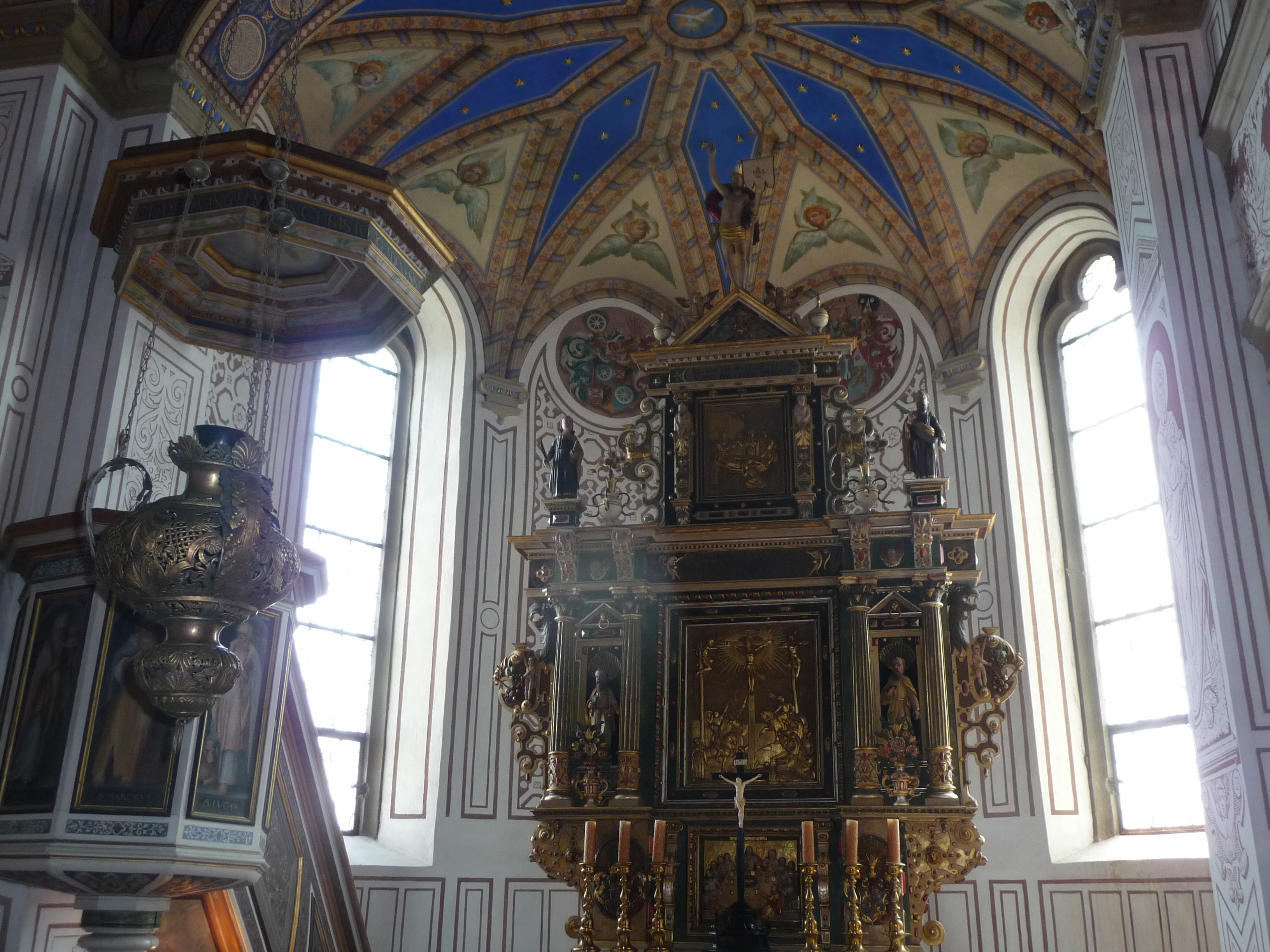
Soon we arrived at the exquisite, stunning chapel. The black and gold altar practically glimmered in the space. While the chapel was built in the 16th and 17th centuries, it now had a 19th century appearance. A gold Renaissance altar also greeted me with its ornate Renaissance pulpit. Saints were gathered around the Baroque altar. A stained glass window added even more ambiance to the room.
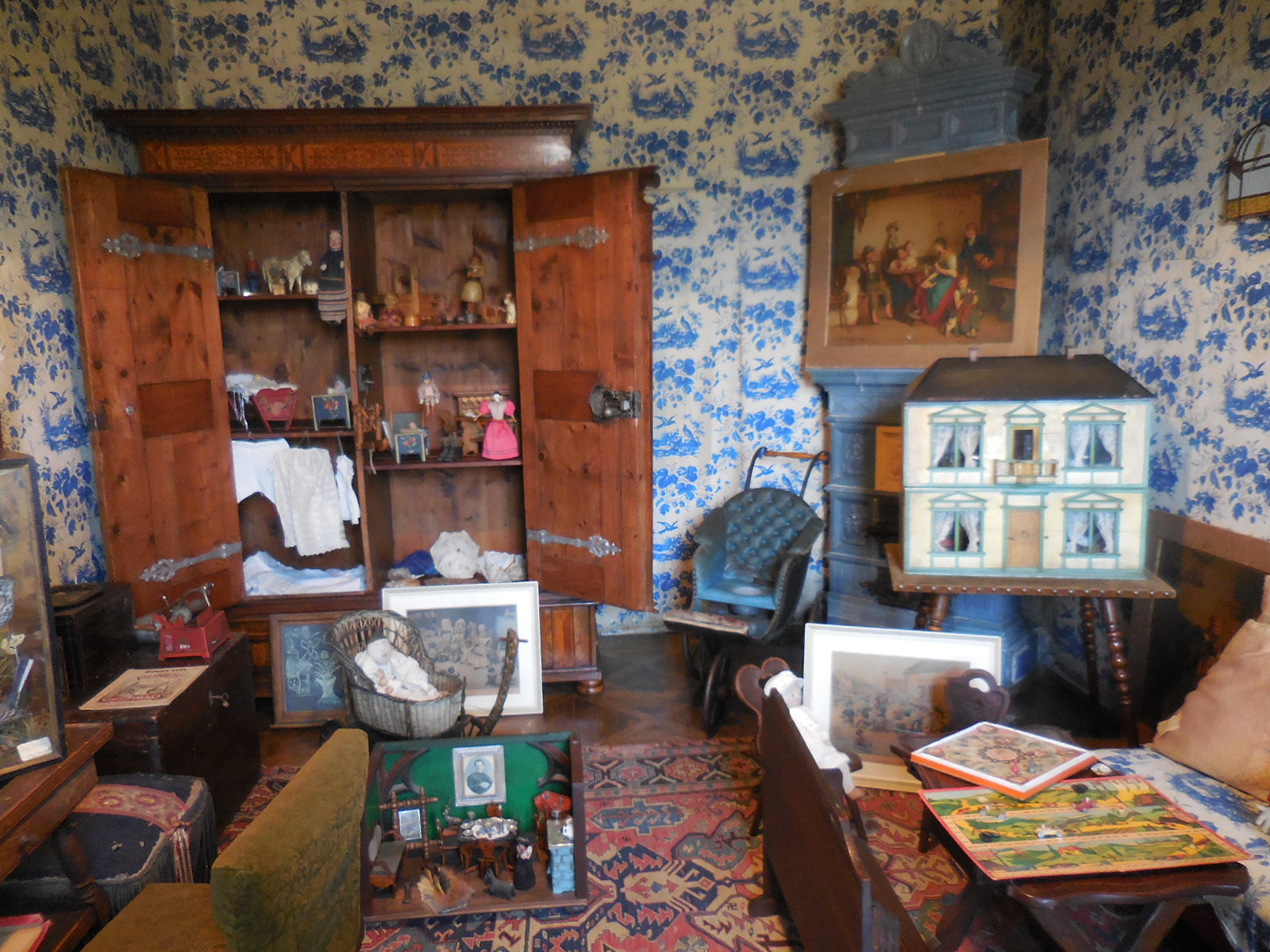
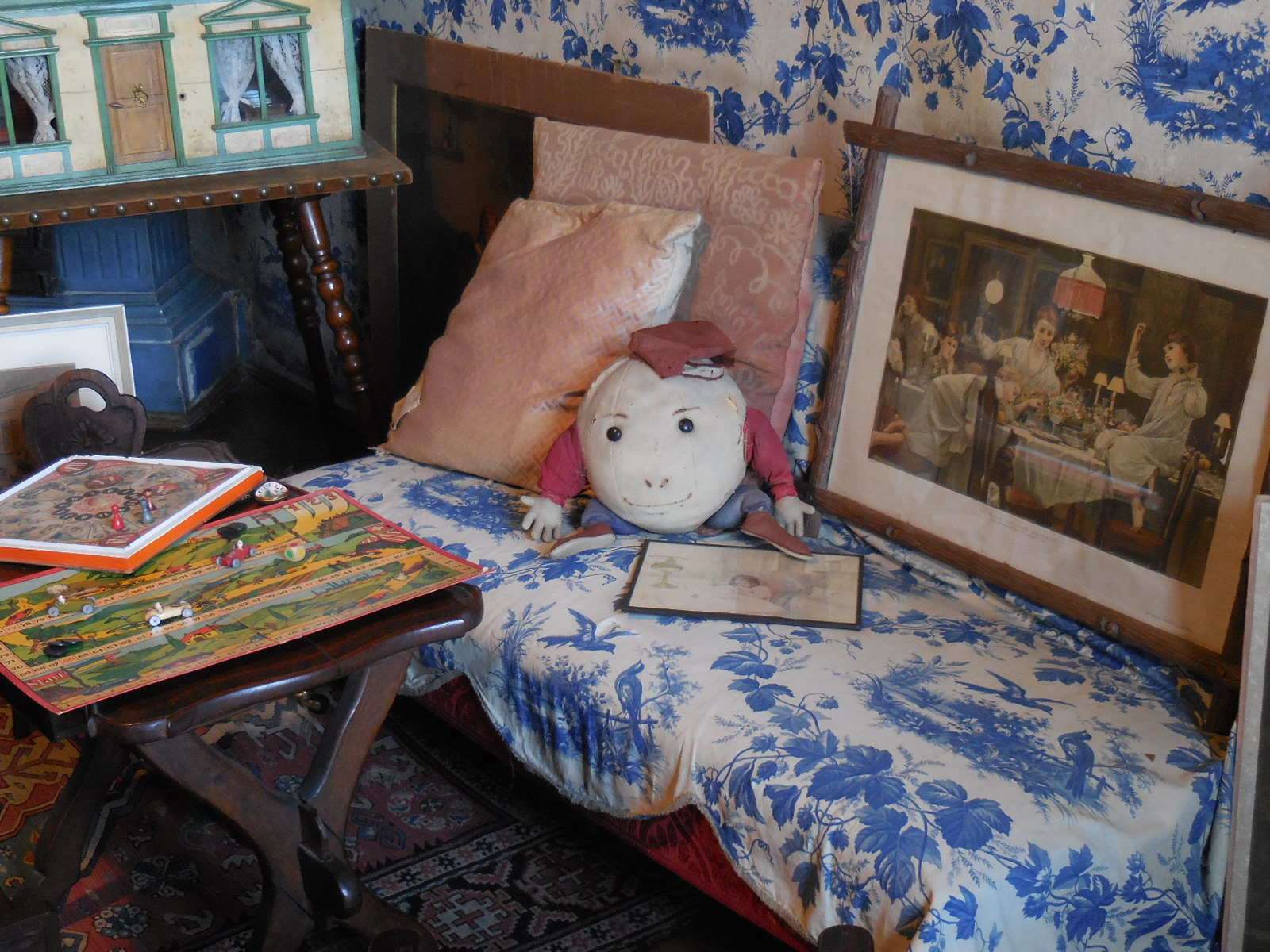
Next we came to the attic of the chateau, where rooms were designed as they had looked in the 19th century. In the servants’ room the 19th century suitcases looked more like bulky chests. The children’s room was intriguing. It included a model of the castle and chateau plus wallpaper made from the comics section of old newspapers, reminding me of today’s wallpaper featuring the Czech Little Mole character or Disney figures.
The space below was called the women’s floor, primarily decorated in blue because that was the color attributed to women during the 19th century. One room was fashioned after a military tent with a blue and white painted ceiling and wallpaper of the same design. A blue and white tiled stove also contributed to the atmosphere. A Baroque closet also adorned the space.
The Small Salon featured blue and white floral decorated furniture and a display case with women’s hats from the 19th century. What intrigued me most were the two Baroque cabinets with painted drawers. One drawer was decorated with pictures of animals while two others flaunted countryside scenes. The toiletry area was unique as well. There was a lounge chair that reminded me of a chair at a dentist’s office. I had never seen such a piece of furniture in chateau, let alone in a toiletry space. From the space in front of it, I could see all the rooms in the women’s section all the way down to the exquisite Flower Salon at the end.
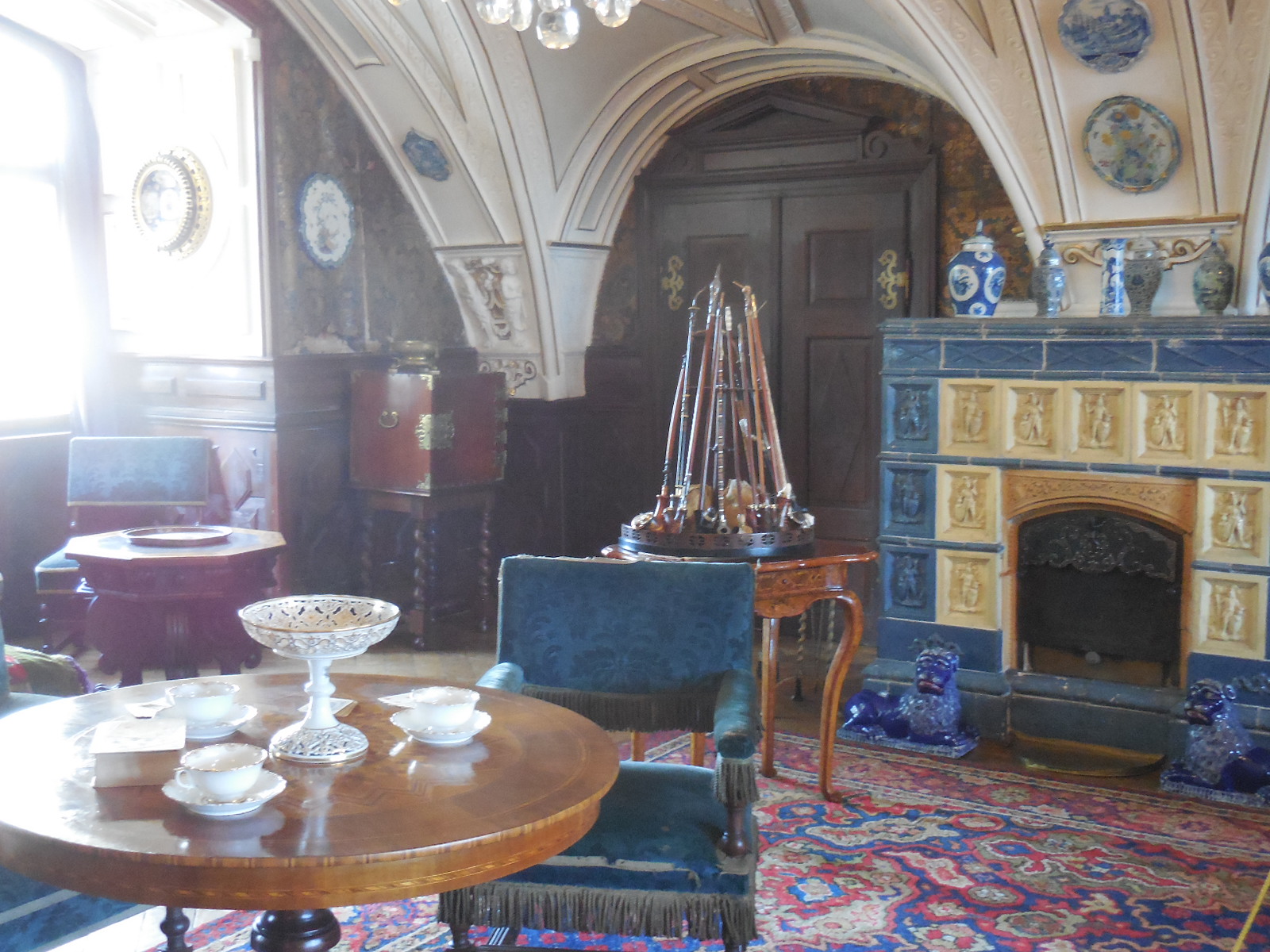
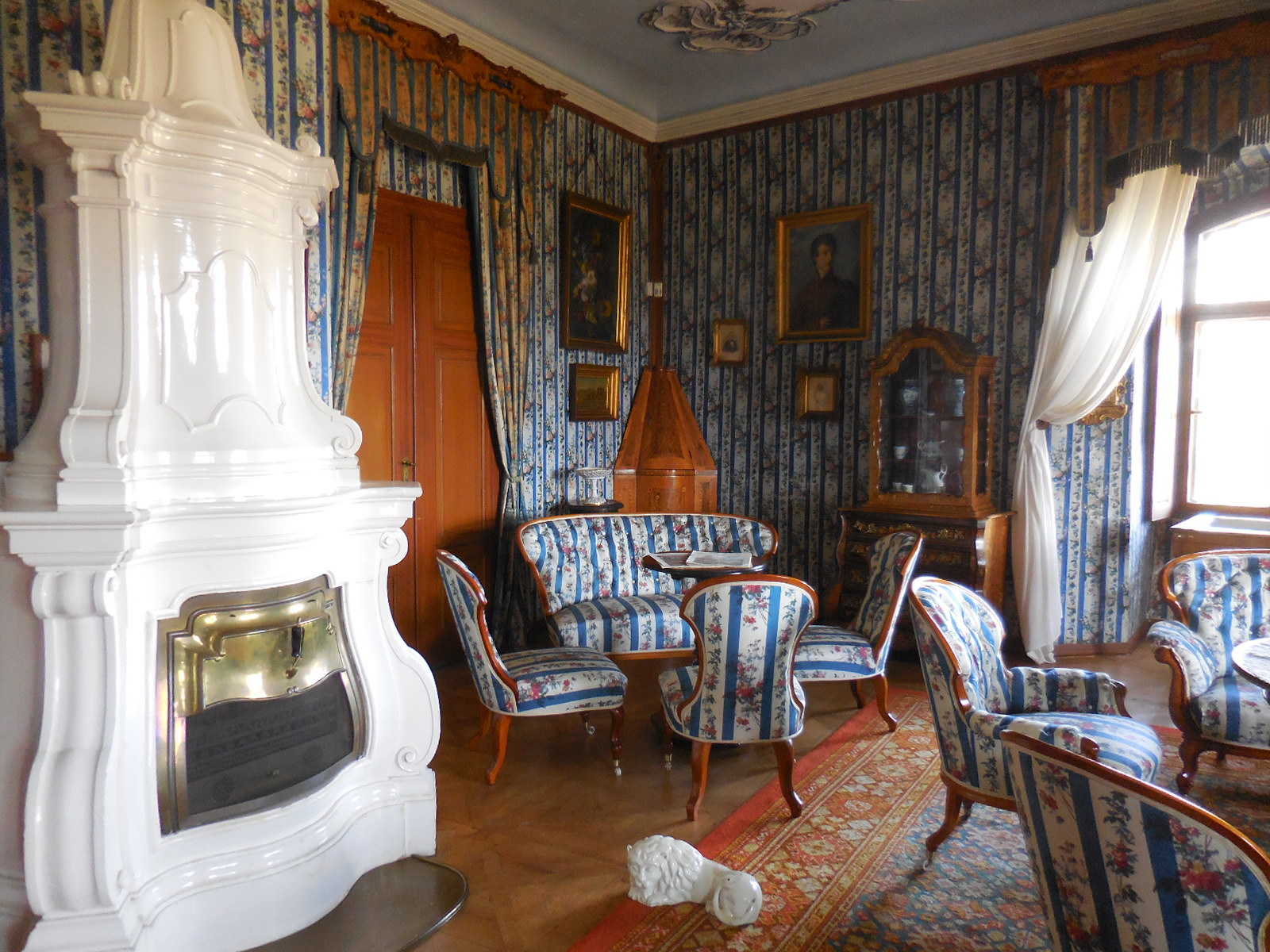
The Flower Salon made me practically dizzy with its blue and white delights. The blue and white floral wallpaper complemented the blue and white striped armchairs, making for an intimate and cozy decor. A while tiled stove also stood in the room. The lovely tea set was Rococo, hailing from the 19th century. To give the room an even more dignified touch, a violin was set on a chair. The marble brown table with white ornamentation also entranced. Plants decorated the room, too, bringing it to life, so that it became more than a museum space.
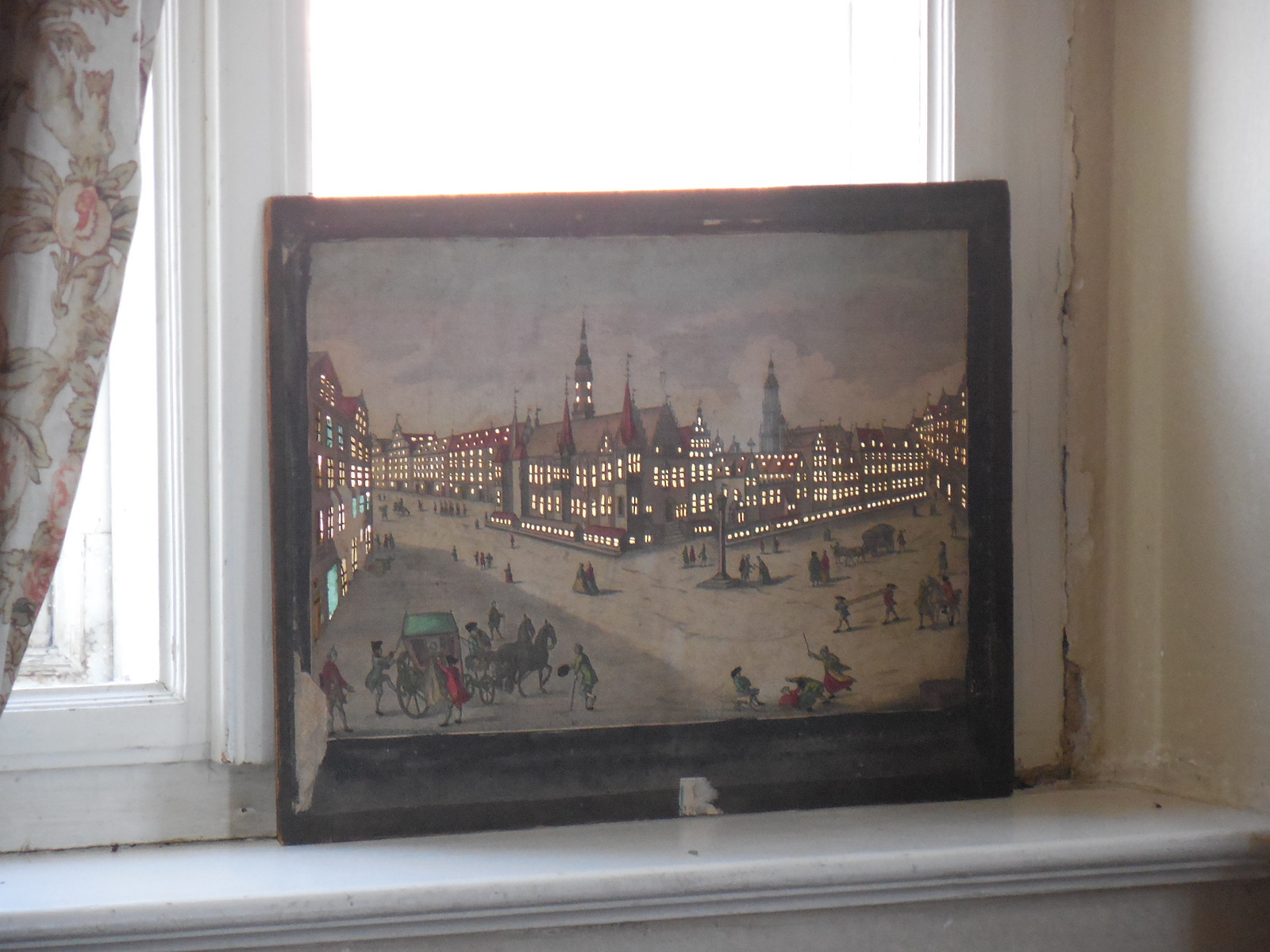
In the hallway of the Castellan wing, I noticed an engraving of Rome from the 18th century. I could see the Coliseum, which evoked fond memories of showing that sight to my parents a few years earlier. In the entertainment room hung two renderings of battles from antiquity.
The Morning Drawing Room would not have been my ideal place to spend my mornings or any other part of the day for that matter, because it was decorated with hunting still lifes that featured dead birds. Birdwatchers would no doubt be enthused, though, as some of the dead birds portrayed were no longer found in the Czech lands. Another painting that did not impress me featured a dead deer. Certainly not my idea of how to start off the day.
But the Women’s Bedroom did not disappoint. The intarsia table, jewel chest and Baroque dresser with intarsia charmed me. Yet another room was decorated with furniture from the 19th century in Biedermeier style.
Next was the men’s floor. The Men’s Bedroom featured a hidden door that led to the women’s floor above and a lovely Baroque closet. The leather wallpaper in the Smoking Salon was gold with green in a floral pattern. The next room was decorated with leather wallpaper and English style blue furniture. A red and blue carpet made the room cozy yet lively as well.
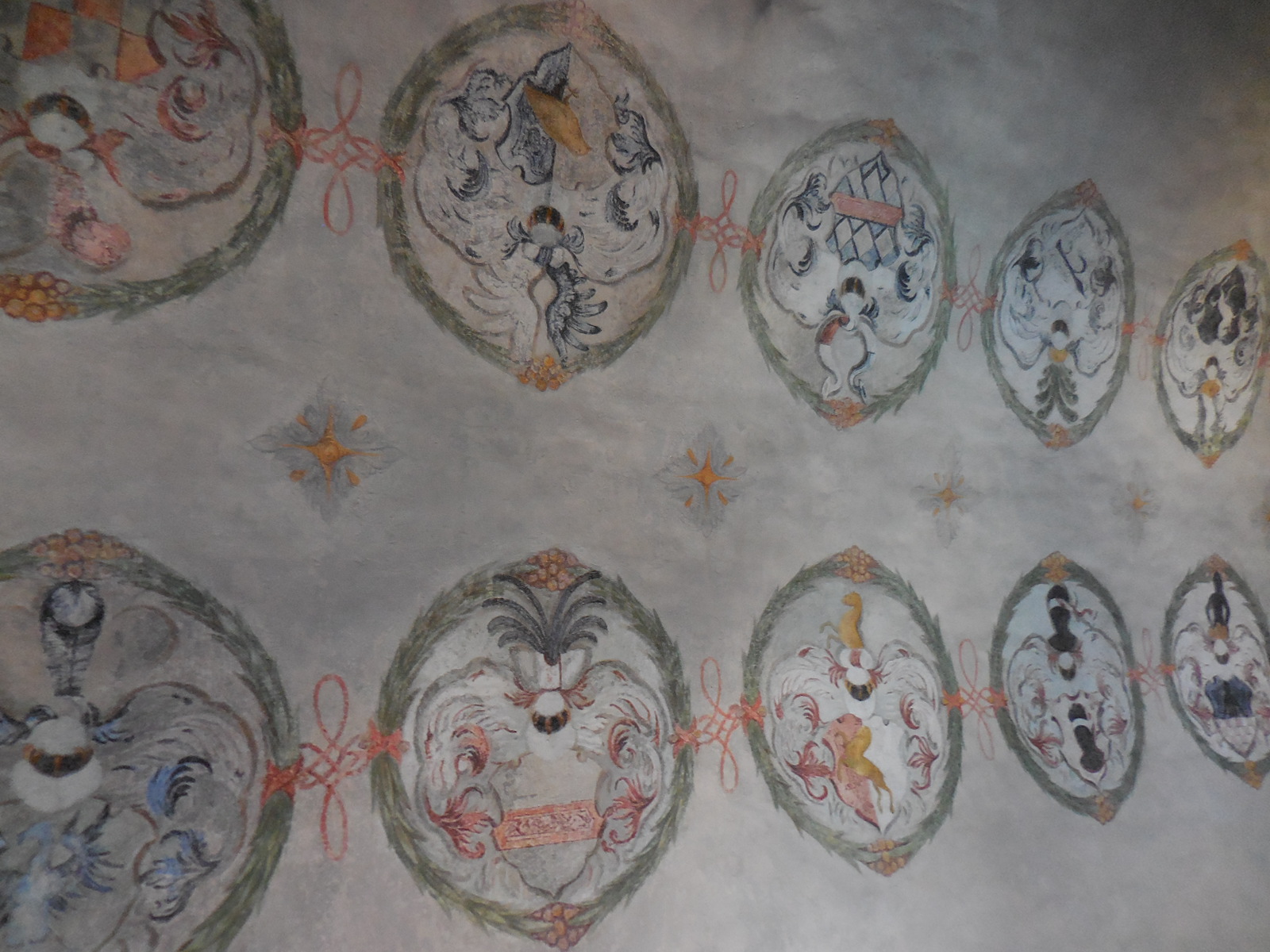
The Coat-of-Arms Salon enthralled me. The dark green fireplace with white columns had a dignified air. On the walls I saw the coat-of-arms of the families that had owned the castle and chateau from the Berka and Dub clan to the Clam-Gallas group. I noticed the blue and yellow wheel on the Redern dynasty’s coat-of-arms and the yellow and light blue stripes of the Gallas family’s coat-of-arms.
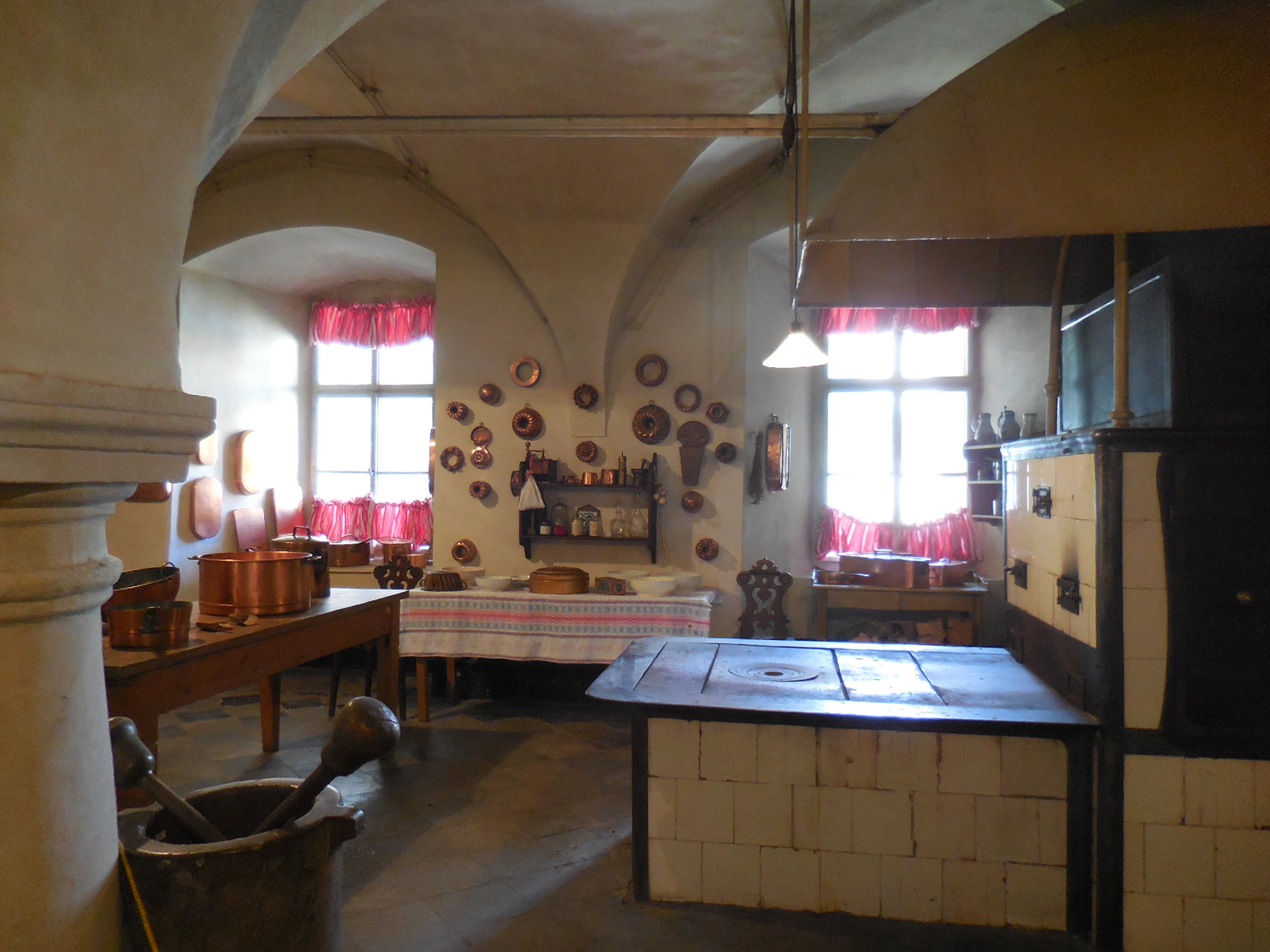
The Dining Room was one of the last rooms on the tour. Velvet chairs with comfortable cushions and a red and blue carpet gave the space a lush appearance. The ornate green tiled stove was decorated with blue and yellow figures. Blue and white porcelain hung from the top of the walls. What I loved most about the space, though, was the richly carved wood paneling. The Baroque bureaus with intarsia greatly impressed me as well. In the still functioning large kitchen areas downstairs I was enamored by what was the largest collection of copper dishes I had ever seen, perhaps the biggest in the Czech Republic.
The tour took almost two hours. I loved long tours of castles! I would be happy to be on a tour that lasted four or five hours! I could spend all day in a castle or chateau. Thanks to our knowledgeable guide, we enjoyed the tour immensely.
After visiting Frýdlant, we made our way to the basilica in a village called Hejnice, but we often got lost one-lane roads with two-way traffic. The scenery in the Jizerské Mountains was breathtaking. At one point we were driving down a narrow road flanked by trees, yellow and green fields surrounding us. It was so peaceful and tranquil, just as I imagined the road to Heaven. So relaxing, putting my mind entirely at ease –until a truck came straight at us on the one-lane road. We moved over to the side, partially on the grass and let it pass us. Still, we did not get much of a warning on that winding road whenever a car would come at us from the other direction.
Traveling through the Jizerské Mountains, I realized how devastated the area had been by the floods of the previous year. Whole villages had been practically destroyed, homes in ruins. Barriers put up along rivers were now bent and deformed. The roads were in awful shape, too. I thought back to the floods of 2002 in Prague and the devastation that the natural disaster had unleashed on the capital city. I felt as if I was riding through an area that had just witnessed a war.
It brought to mind the damaged chairs and tables littering the sidewalks of Prague during 2002, so many homes and businesses destroyed. And thoughts of my good friend’s flat decimated in Prague’s Karlín district. It was still hard for me to believe that the flat where we had spent much time discussing anything and everything over cups of Earl Grey tea had been destroyed. I thought of the damaged theatres where I had worked, too. And I thought of the damage in my own flat because workers had been repairing the roof when the downpour had accompanied the floods. Mold everywhere, wet, wool sweaters destroyed, my cat traumatized – at least my home had survived in one piece, and most of my belongings had been saved. Riding through the destruction wrought by those floods in the Liberec region made me realize how quickly we can lose something precious to us and how we have to value each moment in life because drastic change can come at any time, anywhere.
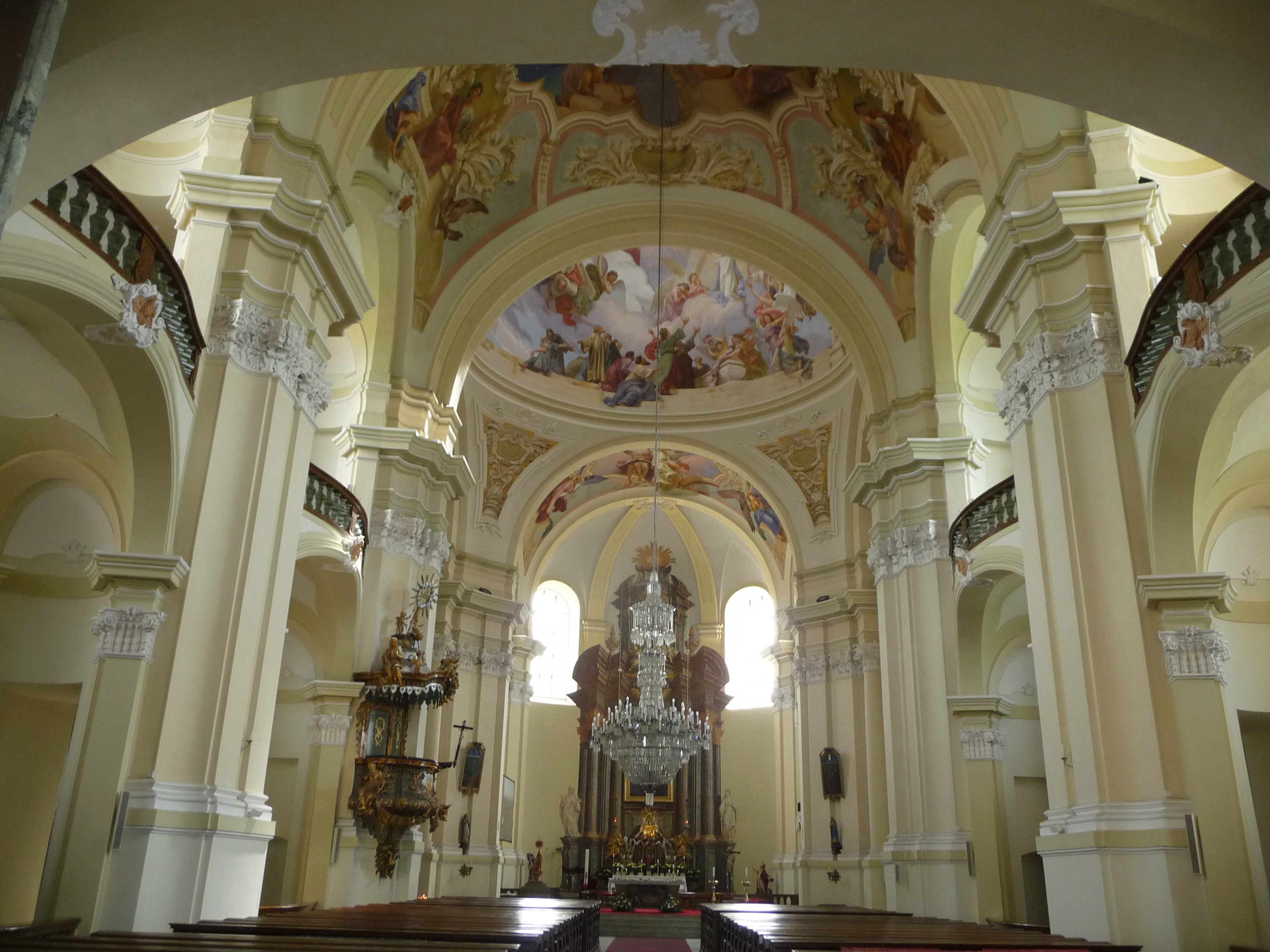
Hejnice Basilica seemed to magically appear in a village nestled in the Jizerské Mountains. The Baroque masterpiece used to be, back in the 13th century, a stone chapel with Gothic vaults. Ambulatories were built around the Gothic church in 1676. By 1725, the church was able to hold 1,000 pilgrims. Between 1699 and 1725 there were 1,381,176 people who came here to pray to Our Lady. After suffering a fire in 1761, the religious site was rebuilt during only 18 months. By the beginning of the 19th century, though, the church was plundered and all its valuable items stolen.
Interior of Hejnice Basilica
But restorations took place, and in 1936 the church was proclaimed basilica minor. After the war, however, Germans living in Hejnice were expelled from the country, including the Franciscans who lived in the church’s monastery. In 1950 all monks there were arrested and forced to leave the basilica, and the monastery became a concentration camp of sorts under the Communist government. Later, the monastery served as a school cafeteria and a kindergarten. Not surprisingly, the place that was once a glorious pilgrimage site found itself in ruins during the 1970s and 1980s. Thankfully, the church was renovated and restored after the Velvet Revolution of 1989.
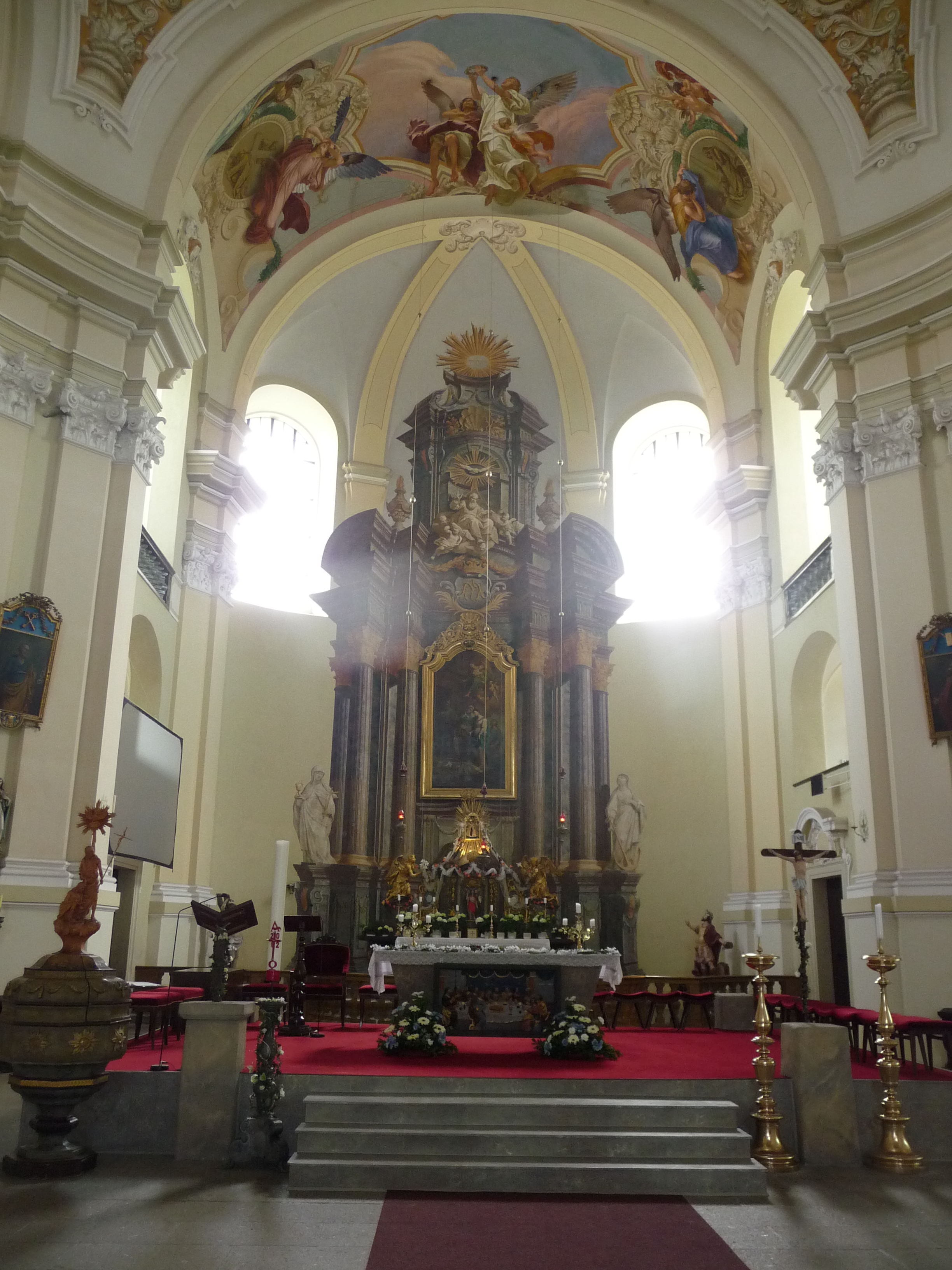
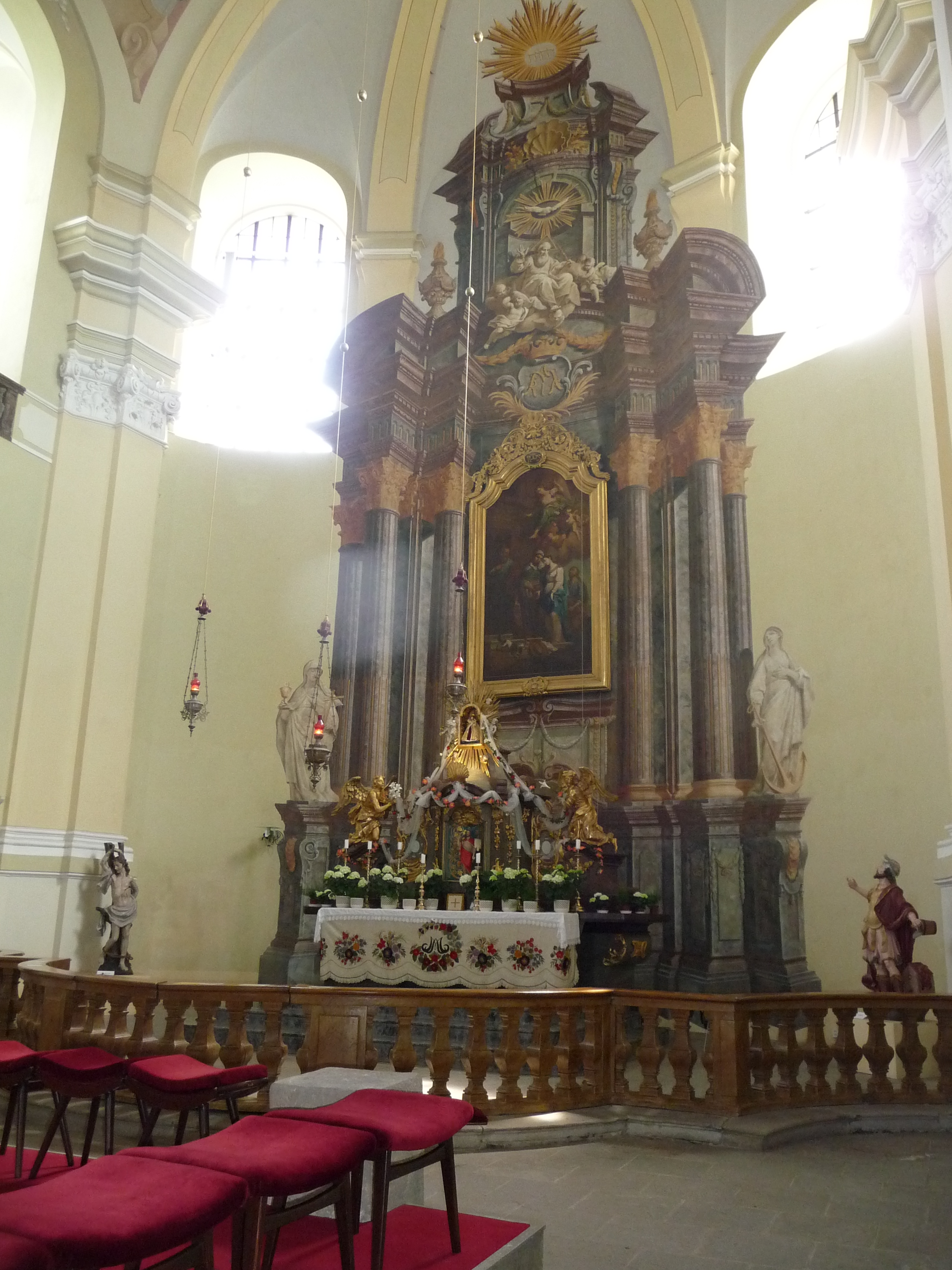
One step inside and the frescoes and main altar enthralled me with their beauty and charm. I could hardly believe that the main altar was illusionary. An architectural feat, it was painted onto the wall rather than three-dimensional. The ground plan of the basilica took the form of a long cross. At the entrance I admired the two towers with a central convex buttress. In a niche I noticed the statue of the Hejnice Madonna.
The vastness of the space awed me. The basilica is the biggest cathedral in northern Bohemia, measuring 50 meters long in its southward cross and 37 meters wide. The cupola is 35 meters high. The central cupola fascinated me. Supported by four Corinthian columns, it was decorated with frescoes portraying events in the life of the Virgin Mary and Jesus Christ. Above the main cupola scenes depicting the crucifixion and the Assumption bewitch the viewer with a swirl of movement of angels along with clouds and sharp light. A group of Apostles filled with awe watch the Assumption. Some angels raise the lid of the coffin while others carry the Holy Cross to Heaven.
The main altar in Hejnice Basilica
The main altar can be divided into parts. There is the fresco of the illusionary altar, which depicts allegorical figures representing belief, hope and love. In the middle of the altar, a large altar-piece portrays Saint Elizabeth and the Virgin Mother. The lower part is a stone altar that includes relics of saints and a tabernacle. A Madonna made from lime wood dominates, called the Mater Formosa or Sleek Mother. It was hard to believe that the Madonna hailed from as far back as the 13th century. I also took special note of the pulpit, dating from 1740. Along with evangelists there was a hand holding a cross with Christ. A large chandelier also hung from the rafters.
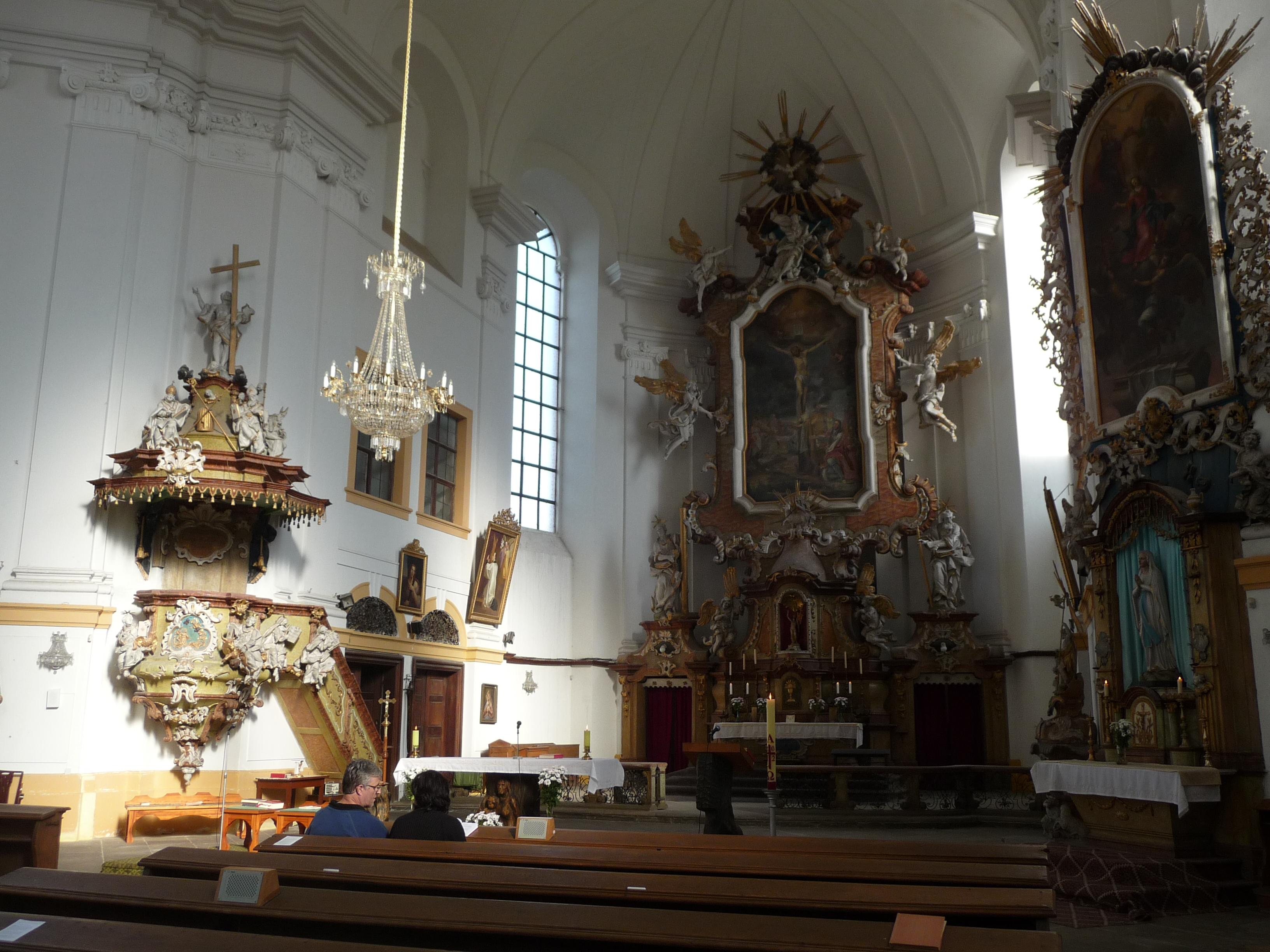
Going back through the Jizerské Mountains, along the narrow lane flanked by trees and surrounded by fields, I admired the fantastic scenery that seemed to belong in a film. We made our way to Dubá, where we stopped at an intriguing church and then to Mělník and finally to Prague. It had been a fantastic day during which I had learned how important it was to appreciate what I had in life, to not take anything for granted.
The interior of the church in Dubá
Tracy A. Burns is a writer, proofreader and editor in Prague. Some of the photos in this blog were taken by Lenka Hilbertová.
Some of my photos of Frýdlant from a 2022 visit, which includes pictures from the new Children’s Tour.



































 Tracy's Travels