This library and art gallery in Milan is named after the patron saint of the city, Ambrose. The library harkens back to 1609, when Cardinal Federico Borromeo founded it, and the same year it opened to the public.
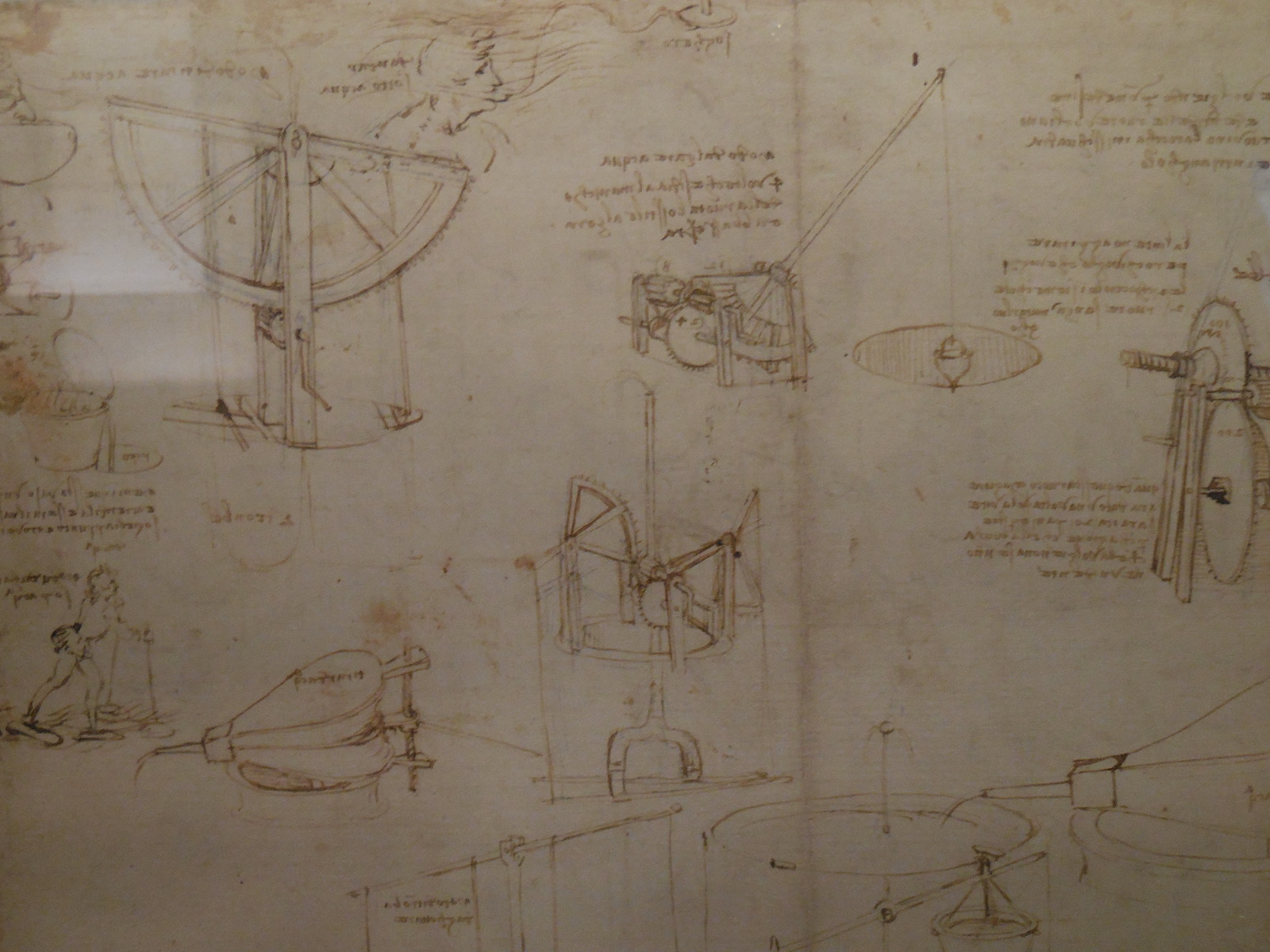
One of Leonardo da Vinci’s drawings of the Codex Atlanticus
The biblioteca houses the Codex Atlanticus by Leonardo da Vinci as well as many of his other manuscripts plus about 12,000 drawings by European artists, ranging from the 14th to 19th century. Raphael and Pisanello are represented in this collection of drawings, too. Many of its more than a million printed volumes hail from the 16th century. There are almost 40,000 manuscripts in numerous languages, including Italian, Latin, Greek and Arabic as well as some 22,000 engravings. Ancient maps, musical manuscripts and parchments also make up the collection. Some prominent guests included poet Lord Byron and novelist Mary Shelley.
Another of Leonardo’s drawings from the Codex Atlanticus
During World War II the library was damaged, and the opera libretti for La Scala Opera House were destroyed. The building was opened again in the early 1950s after undergoing renovations. More reconstruction took place in the 1990s.
When I visited, some of Leonardo’s works for the Codex Atlanticus, the largest collection of da Vinci’s drawings and writings, were on display in the library. The exhibition left me spellbound. I perused studies in aerodynamics and drawings of mechanical wings as well as various types of weapons. Leonardo rendered a large sling to throw stones and a machine to pump water from a well inside a building, for example.
I gazed upwards after studying the drawings by Leonardo, and I was filled with awe. I don’t know if I have ever seen such an incredible library. I just wanted to stand there all day, gazing at the wall-to-wall bookcases as I wondered about the titles and contents of each volume.
Established in 1618 with the collections of Cardinal Federico Borromeo, the pinacoteca was just as impressive as the library. The 24 rooms were dominated by Renaissance artworks but also boasted of renditions by 17th century Lombard artists, 18th century painters and 19th and early 20th century creators. I was especially struck by da Vinci’s 15th century “Portrait of a Musician” as it was the only portrait that he had painted. I noted the musical scroll in one hand of the sitter and was captivated by the detailed curly locks of hair, the musician’s brown eyes and his red cap.
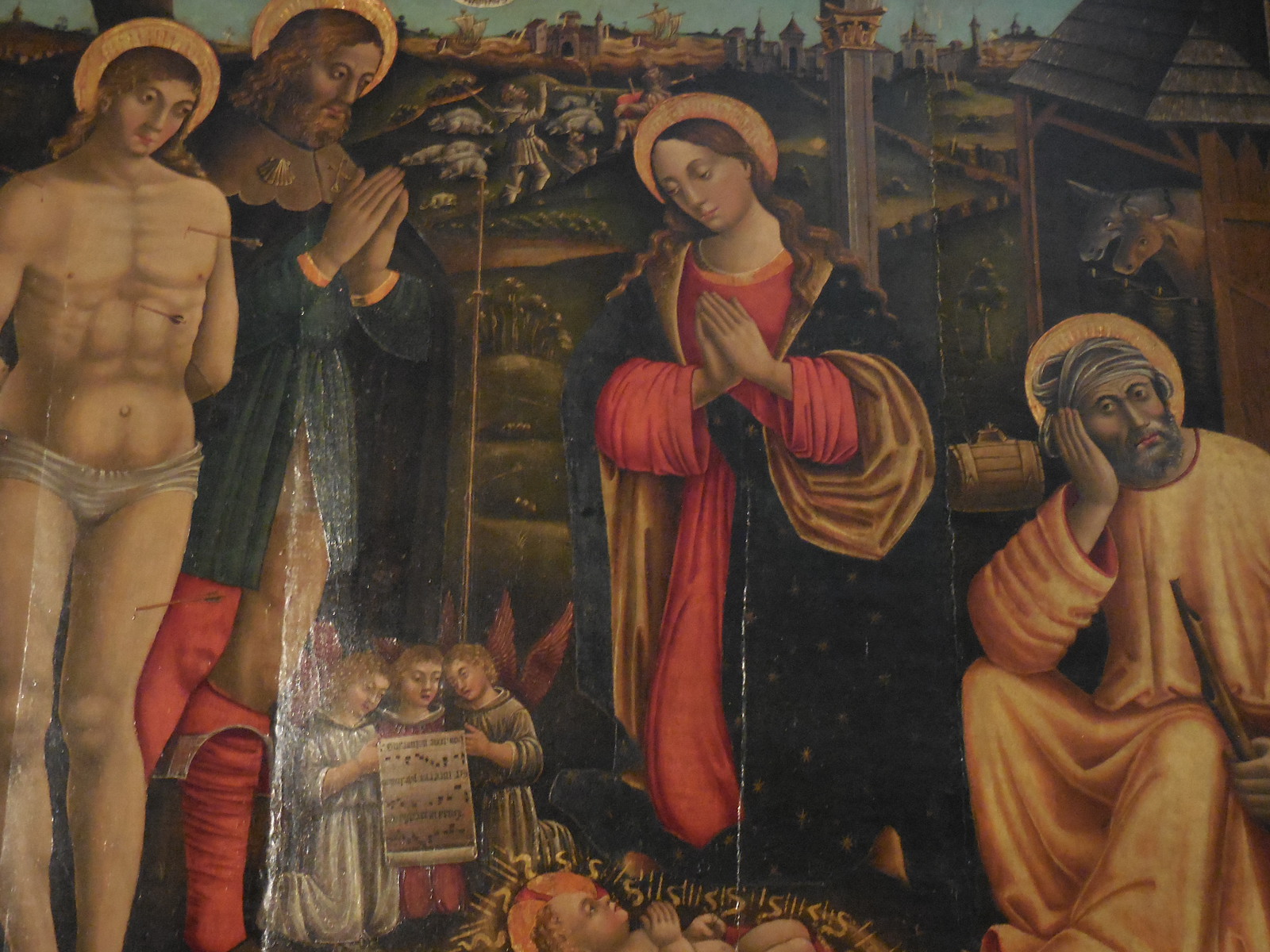
Caravaggio’s insect-infested “Basket of Fruit” tells a story of diminishing beauty by displaying rotting fruit. Bramantino’s “Adoration of the Christ Child” shows the kneeling Bernardino of Siena, Francis of Assisi, Benedict of Nursia and the Virgin Mary making an understandable fuss over baby Jesus. I loved the angels playing musical instruments behind those figures. Emperor Augustus also makes an appearance.
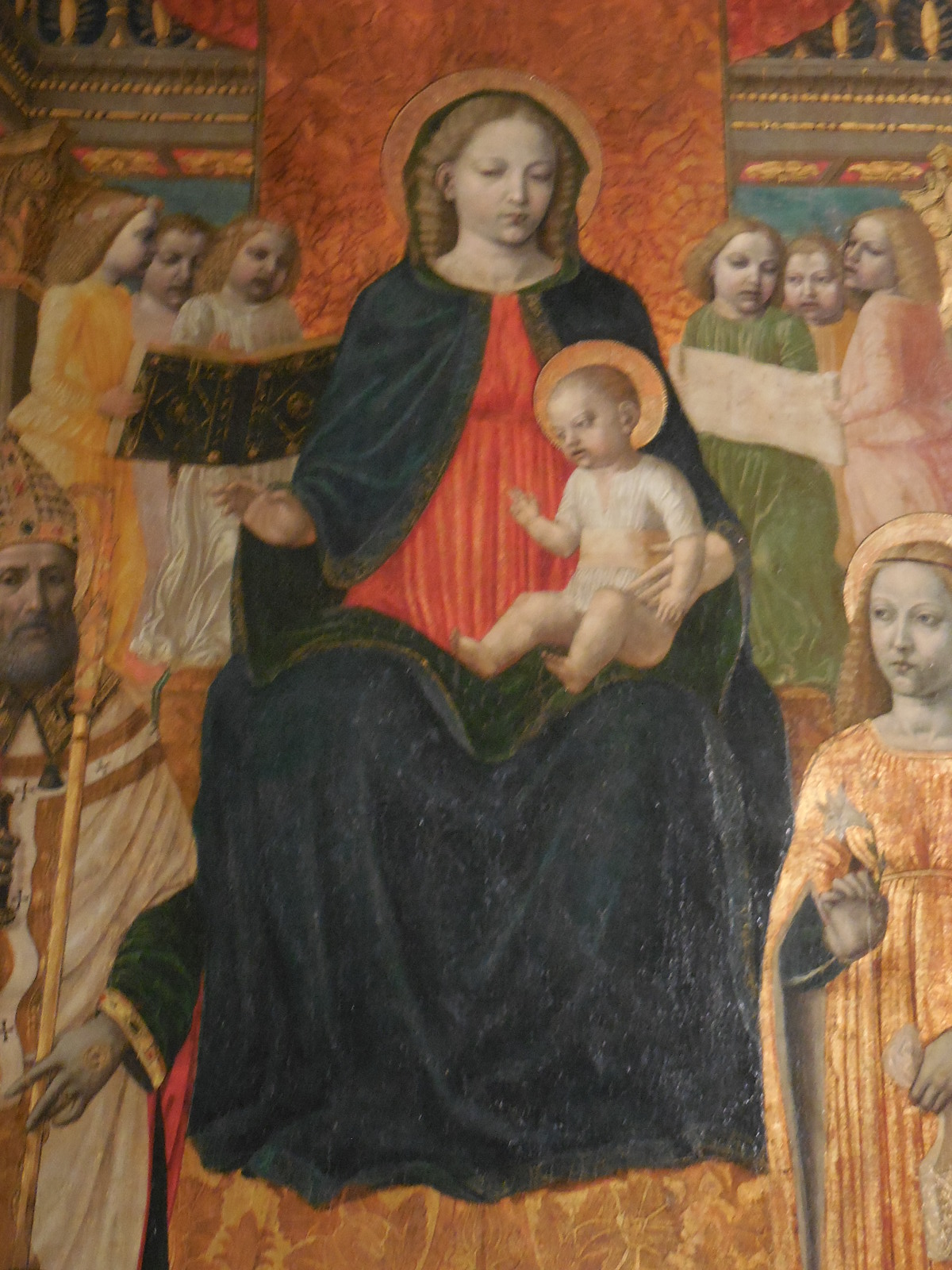
Bergognone’s “Sacred Conversation” shows the Virgin Mary and Christ Child on a massive golden throne, baby Jesus on the Virgin Mary’s lap. Solemn angels flutter in the background. I was struck by the details of the Virgin Mary’s hair and by the material of the clothing worn by the Virgin Mary and baby Jesus. The two were surrounded by saints with captivating headwear, including Saint Ambrose and Saint Jerome.
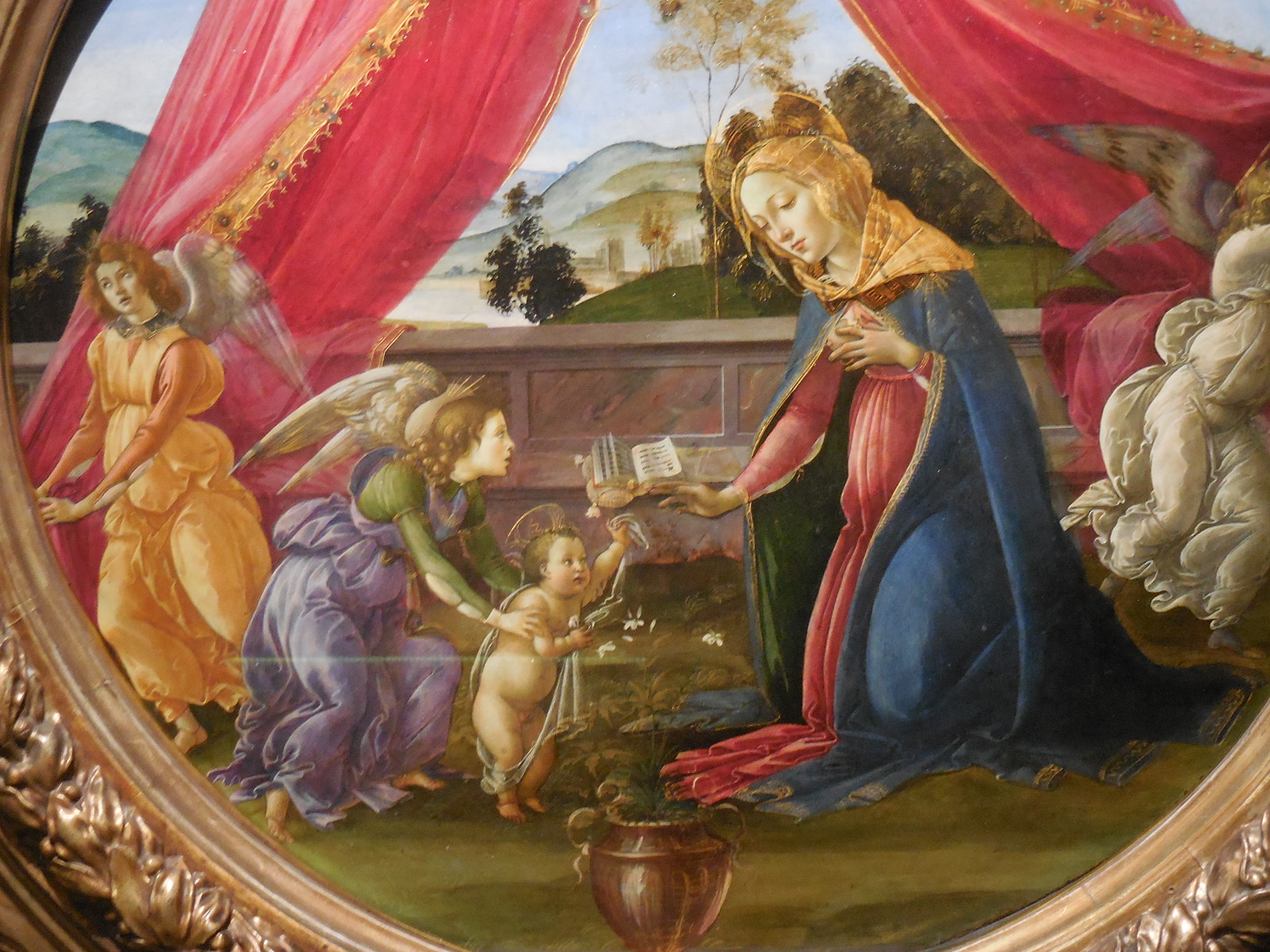
Another painting that left me speechless was Sandro Botticelli’s “The Madonna of the Pavilion.” The artist’s meticulousness was evident. The artwork shows the Virgin and Child with much symbolism. The pavilion that two angels open to reveal the Christ Child is rich in biblical meaning both in the Old and New Testament. I could almost feel the paper of the pages making up the open book in the painting.
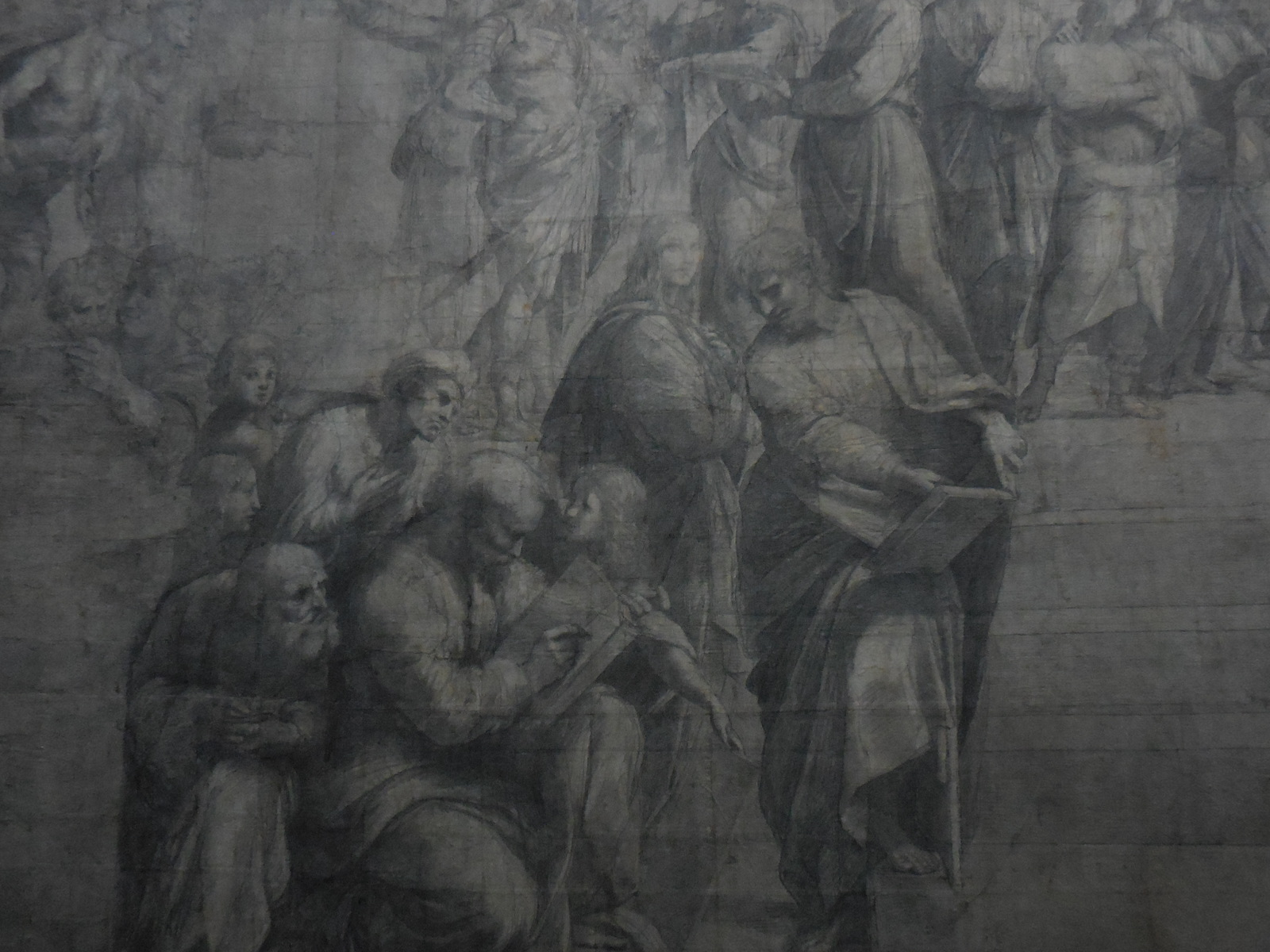
Raphael’s School of Athens
Raphael’s cartoon of the “School of Athens” is a study for the Italian Renaissance fresco painted in the early 1500s for the Raphael Rooms in the Vatican Museum. I recalled seeing the skillful rendition of philosophers and scientists from Ancient Greece at the Vatican on my 40th birthday as I mulled over the dominant role that perspective played in the artwork. Plato, Aristotle and Pythagoras appear in the fresco. Leonardo and Michelangelo are present as Plato and Heraclitus.
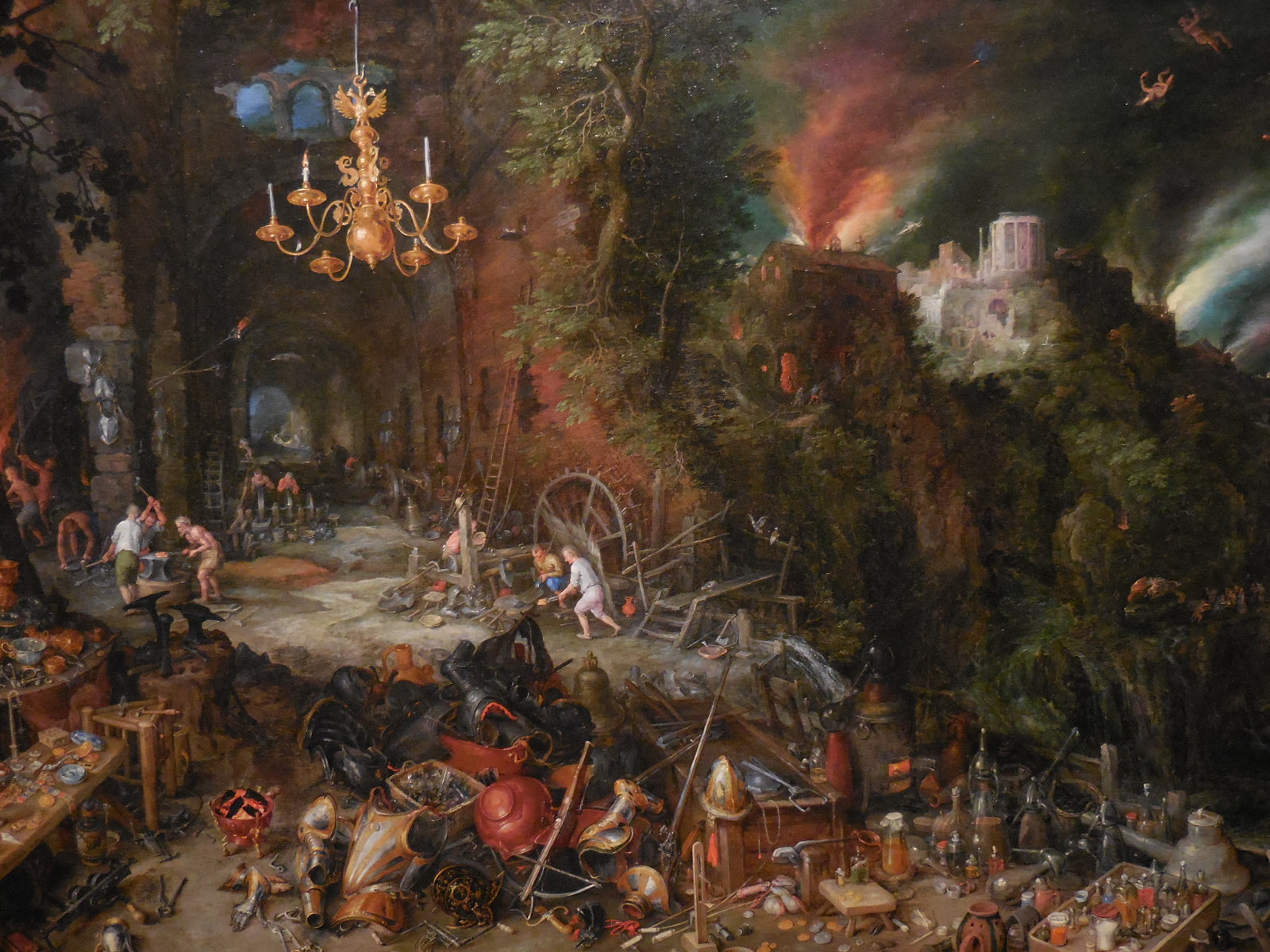
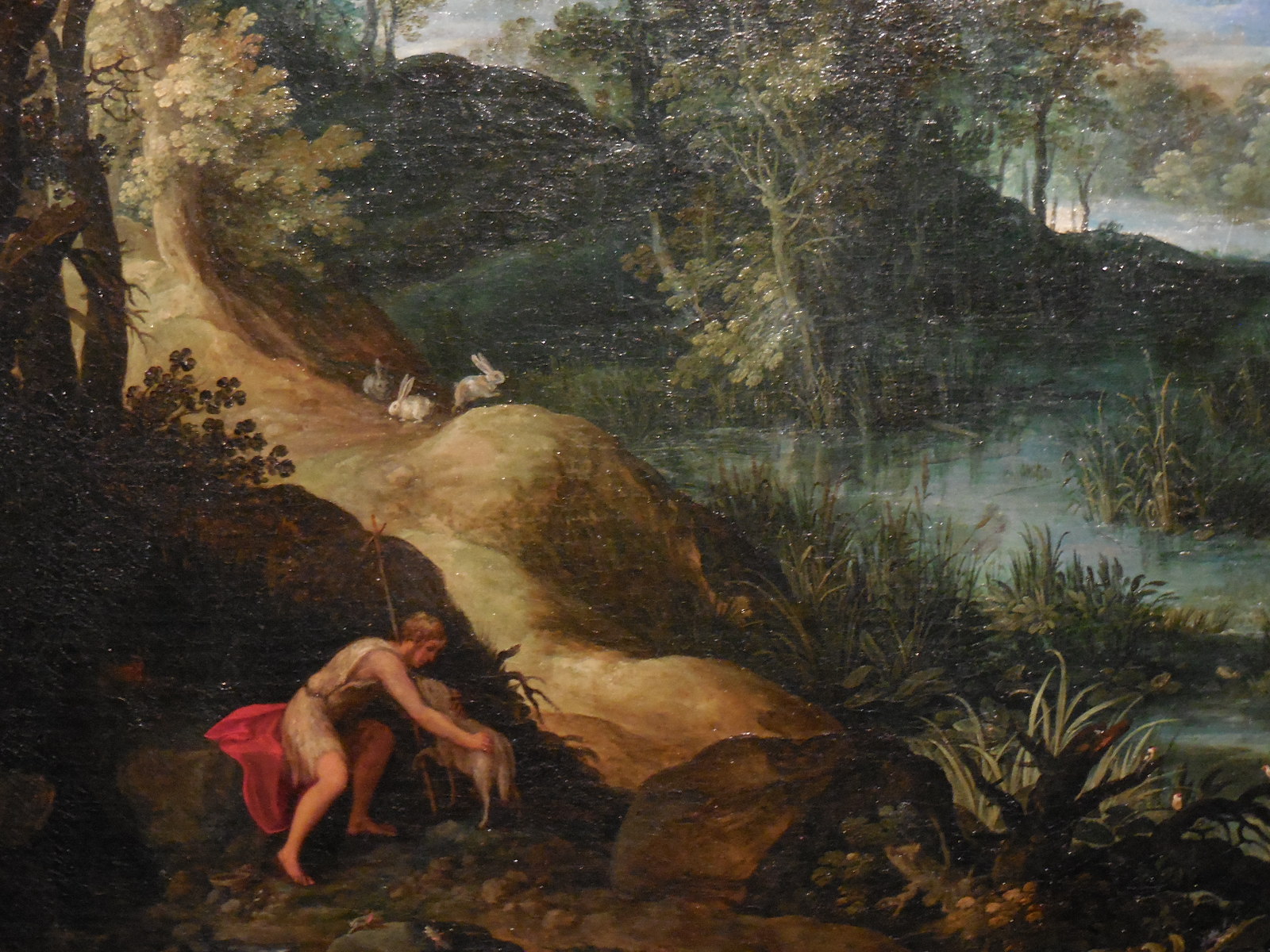
Other paintings that awed me were the fantastic landscapes of Paul Brill, whose works I had discovered some years earlier in Edinburgh. Jan Brueghel’s detailed landscapes and still lifes also are close to my heart, and I adored masterpieces from the Netherlands. I stared at these paintings, losing myself in the fantastical landscapes and details that were so masterfully rendered by both artists. I felt a special connection to these works featuring a dream-like quality as if I could be transported into a fantasy world by merely peering at the canvases.
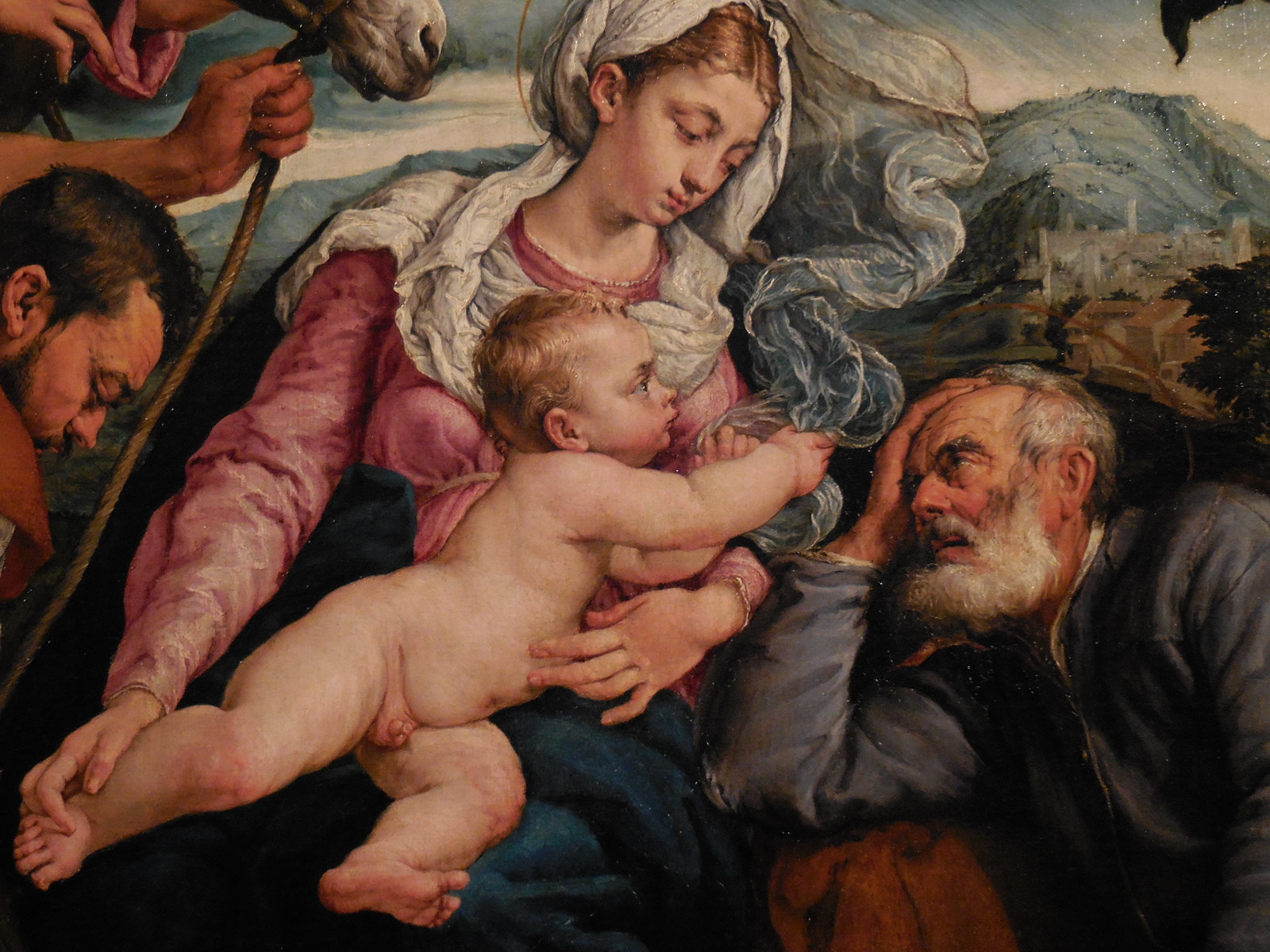
Other paintings that captured my undivided attention had been created by Bernardino Luini (I fondly recalled his paintings in Milan’s Church of Saint Maurizio), Tizian, Jacopo Bassano, Moretto and Daniele Crespi as well as Francesco Hayez, whose works I knew well from the Brera Gallery in the same city. Andrea Bianchi had created “The Last Supper,” imitating da Vinci’s masterpiece. Tizian’s “Adoration of the Magi,” Bramantino’s “Madonna of the Towers” and the locks of hair of Lucrezia Borgia all left me awe-struck.
The sculptures and frescoes from the second to 16th century in the Sala del Bambaia are very noteworthy. The Hindu art of the Berger Collection captivated me. The Flemish and German painting from the 15th to 17th century enthralled. Ceramics also play an intriguing role in the collection.
I was so awed by this gallery and library that I visited it twice during my first trip to Milan. I peered at every painting and sculpture, trying to take in each artistic creation, feeling so blessed to be able to see all these masterpieces with my own eyes.
Tracy A. Burns is a writer, proofreader and editor in Prague.
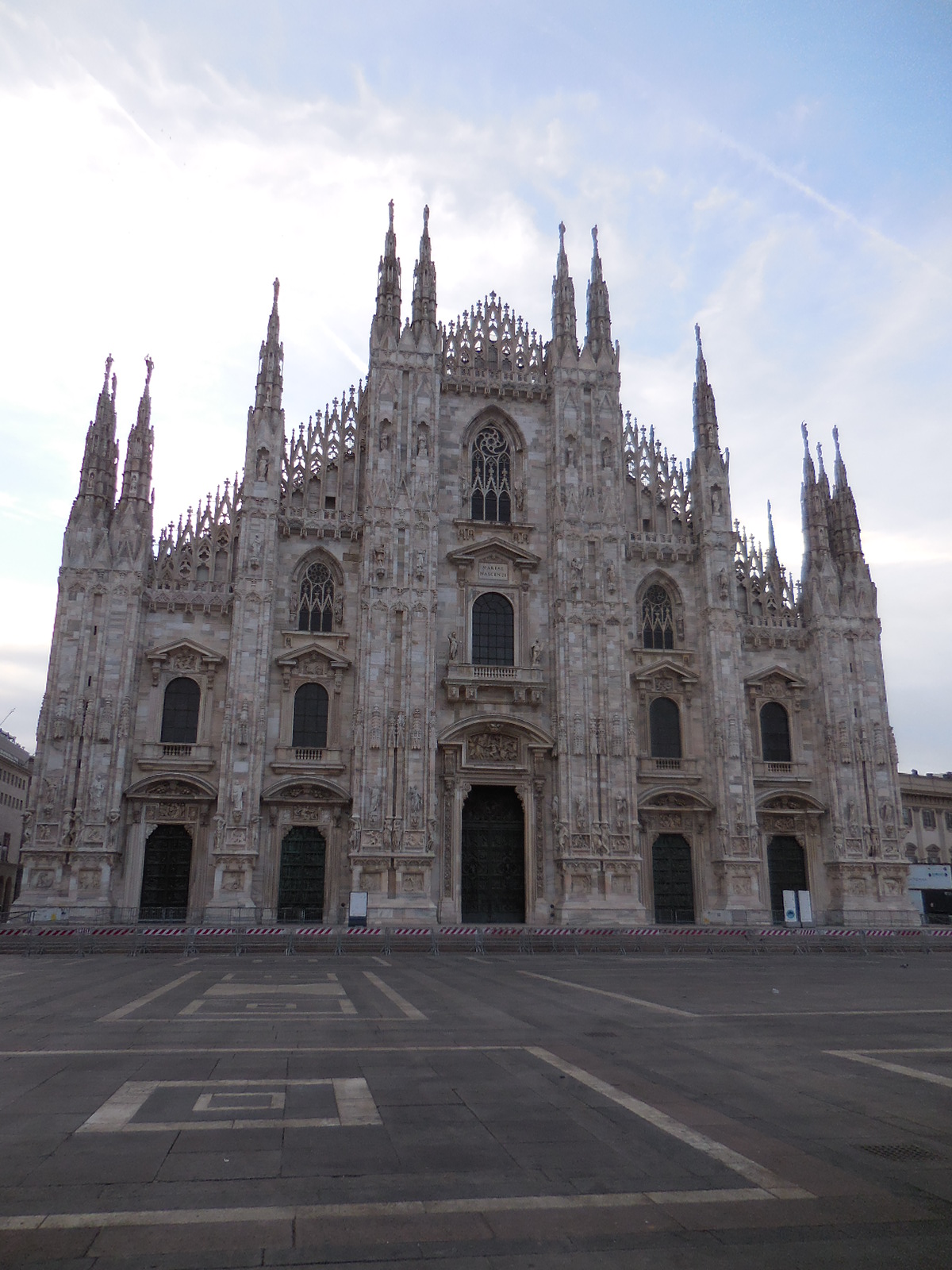
Milan Duomo, one of the highlights of my year of travels
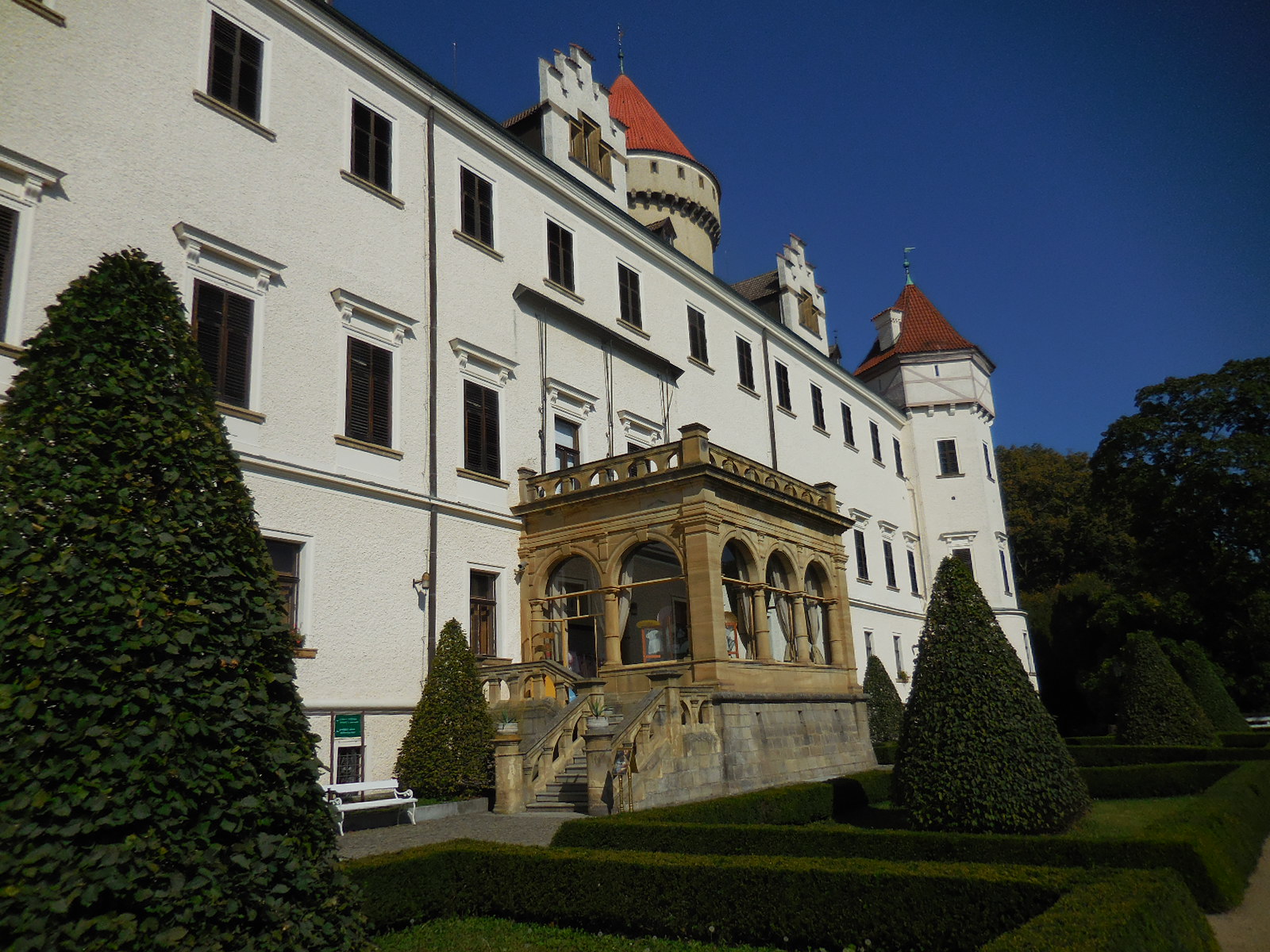
This past year was punctuated by trips to riveting sights in the Czech Republic and Italy. As usual, I went castlehopping on day trips during the spring, summer and fall. My jaunts took me to Sychrov, Mělník, Konopiště and Maleč, to name a few. I visited the former flat of a legendary 19th century historian called The Father of the Nation and his son-in-law, a politician nicknamed The Leader of the Nation. I also visited their chateau out of Prague. I toured the exhibition at the Strž Villa, where Karel Čapek and his wife Olga Scheinpflugová spent three years and three months in the 1930s.
Exterior of Milan Cathedral
I also enjoyed a week in what is probably my favorite Italian city, Milan, where I saw the most amazing art galleries and stunning architecture. From the Duomo to the Church of Saint Maurizio to the Poldi Pezzoli Gallery to the Ambrosiana to The Last Supper, I was overwhelmed by the incredible artistic creations the city had to offer.
The Last Supper, displayed in Milan
While I did not visit many temporary art exhibitions this past year, the ones I did go to left very positive and powerful impressions. I was lucky to be able to buy tickets for the Titian and Sorella exhibitions in Milan, both so comprehensive and exhilarating. I loved the way Titian masterfully created the material of his models’ clothing; it looked so real. You can almost feel the material just by looking at it. I loved Sorella’s beach scenes and landscapes. I had visited his former home, now a museum, in Madrid, so I was familiar with his work.
From the Kooperativa exhibition
In Prague I went to a few exhibitions. I saw a show at the Kooperativa featuring the theme of water in 19th and 20th century Czech landscapes. Artists such as Julius Mařák, Antonín Hudeček, Václav Špála and Josef Čapek were represented there. My favorite was a tranquil, snowy scene, seemingly out of a Bruegel painting. Čapek’s portrayal of two fishermen also captured my attention. Mařák’s forest landscapes were mystical and magical.
From the East Bohemian Gallery in Pardubice
I also went to Pardubice, where I was immersed in the 19th and 20th century Czech landscape painting at the East Bohemian Art Gallery. The works of Jan Zrzavý, Hudeček, Antonín Slavíček, Antonin Chittussi and Špála all captivated me.
By Peter Paul Rubens from the Prague Castle Gallery
I also saw the temporary exhibition of the Prague Castle Gallery’s permanent collection that had been started by Holy Roman Emperor Rudolf II. I learned about the history of the collection, which was fascinating, and I saw masterpieces by Peter Paul Rubens, Paolo Veronese and many others.
By Alphonse Mucha
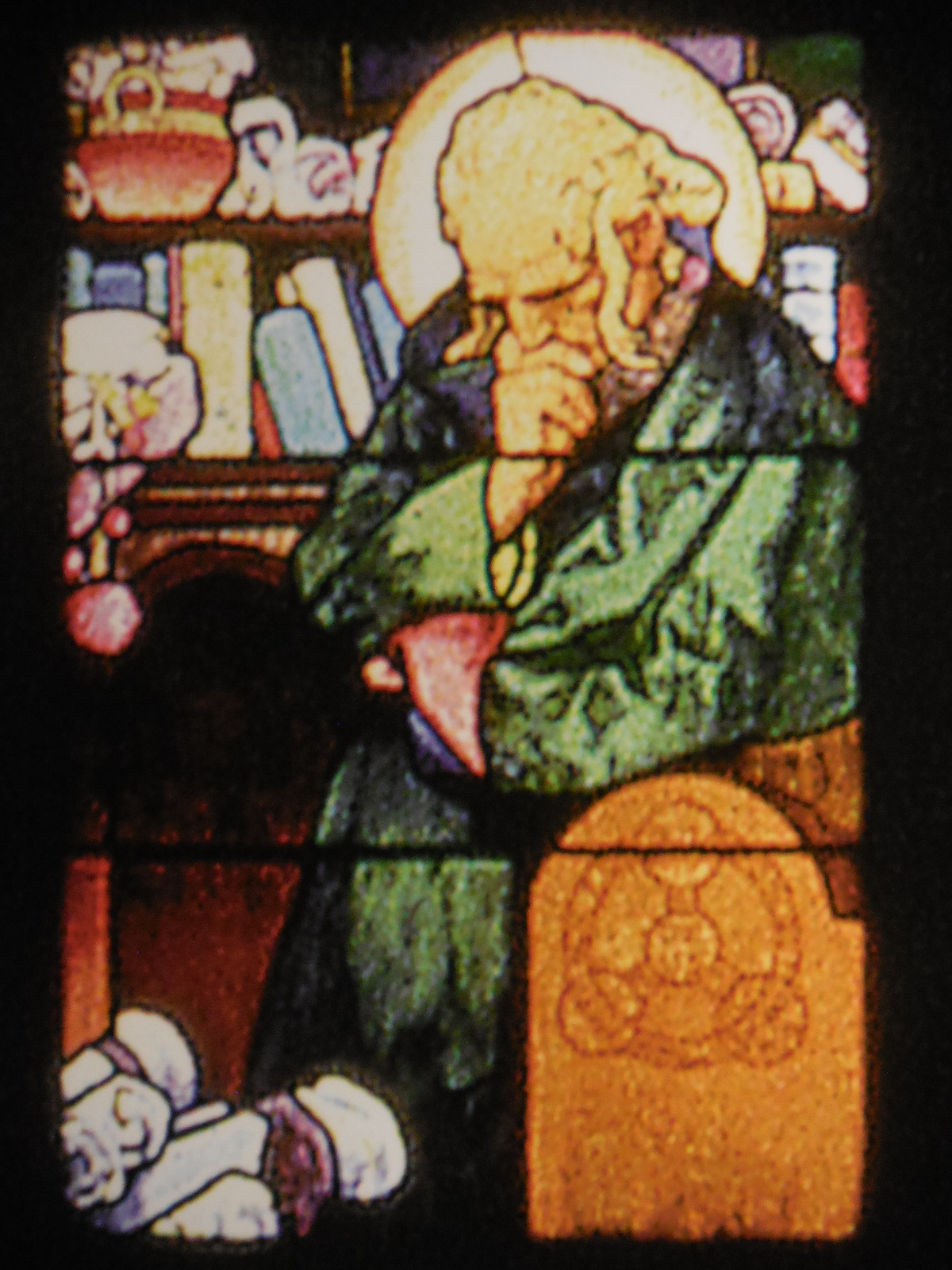
Copy of stained-glass window at St. Vitus’ Cathedral in Prague, created by Alphonse Mucha
I was enamored by the exhibition of Alphonse Mucha’s art in Mucha: The Family Collection at the Wallenstein Riding Stables. While Mucha is best known for his posters featuring Sarah Bernhardt, this exhibition also highlighted his drawings, paintings, sculptures, photos and jewelry. Some works were on display for the first time. I especially loved the reproductions of his stained-glass windows for Saint Vitus’ Cathedral in Prague.
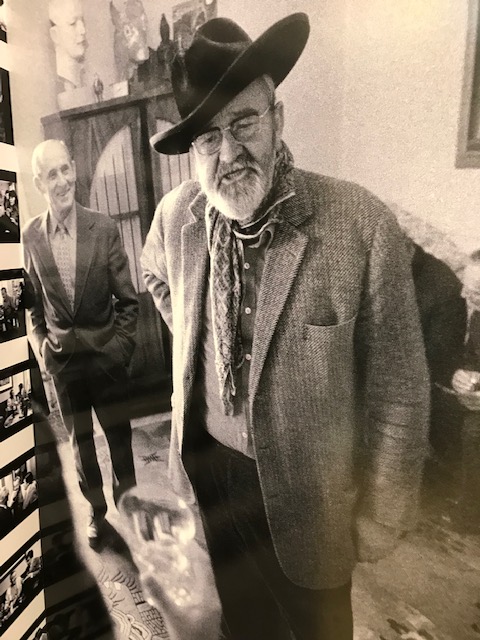
Jan Werich
From furnished rooms at Werich Villa
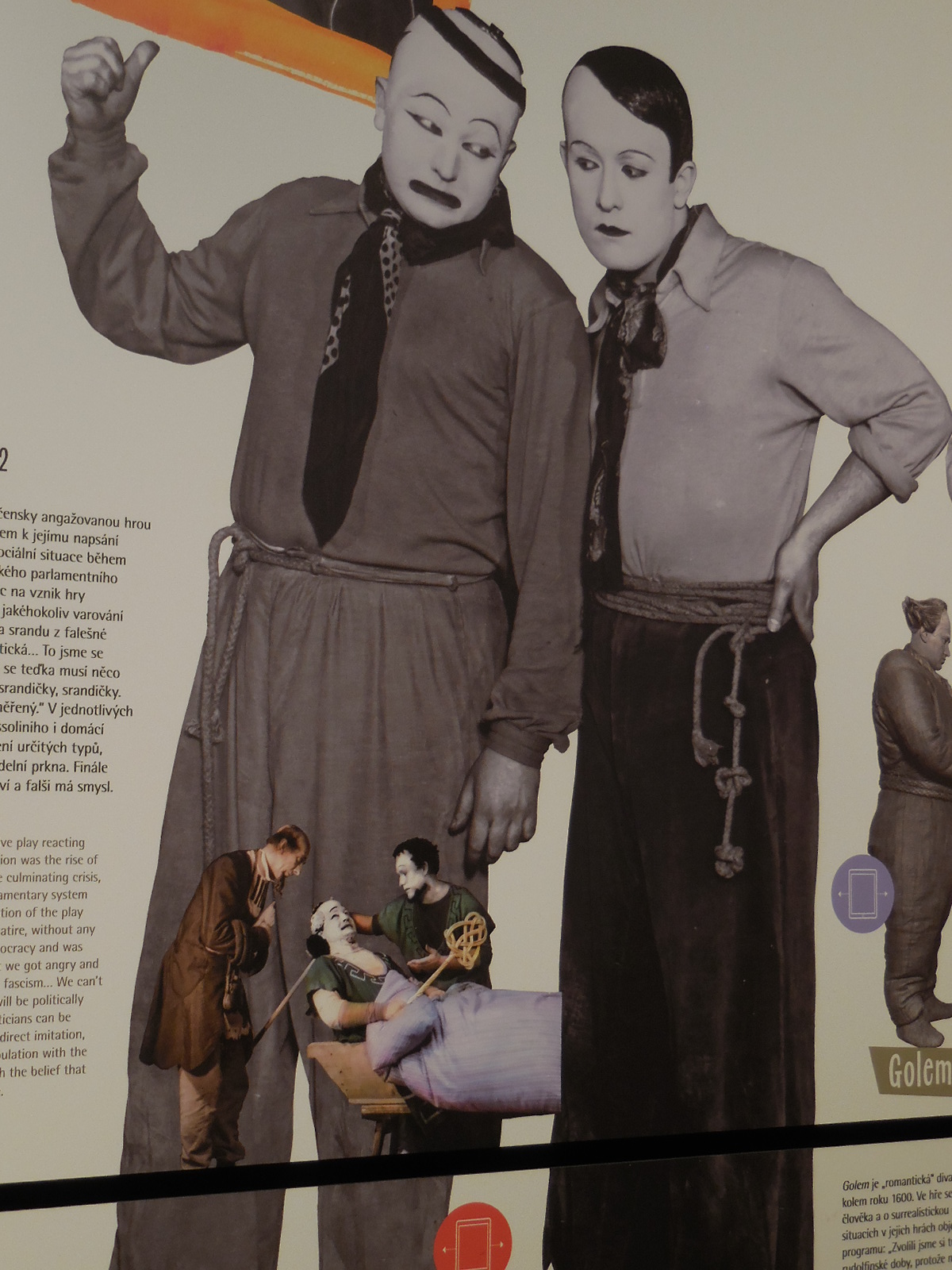
About my day trips: Let’s start in Prague. This year I visited the Werich Villa exhibition for the first time. Located on Prague’s Kampa Island, the villa was the home of actor Jan Werich from 1945 until his death in 1980. I liked the photos from the avant-garde plays of the Liberated Theatre best. The dramatic creations from the 1920s and 1930s were parodies of Dadaistic absurdity inspired by Charlie Chaplin and punctuated by jazz music. I also was captivated by the two rooms made to look as they did when Werich had lived there. Everything from the abstract painting of him and his colleague as actors at the Liberated Theatre to the Ballantine bottle of gin made me feel as if I got a sense of the atmosphere that had prevailed during the decades Werich had lived there.
The legendary Golem in the movie by the same name. Werich starred in the film.
Jan Werich and Jiří Voskovec at the Liberated Theatre
I visited the former flat of the first Czech historian František Palacký on Palacký Street in the city center for the first time in many years. I tried to imagine the bubbling conversations in the 19th century living room as the leaders of the Czech National Revival, who were promoting the Czech language and Czech culture, gathered there with Palacký’s family. I saw the desk where Palacký wrote his History of the Czech Nation as well as intriguing sculptures, paintings and portraits. The guide pointed at a box and told me that Palacký’s brain was inside. I wish the guide would have opened it!
Bust of František Palacký at Maleč Chateau
Bust of F.L. Rieger at Maleč Chateau
His son-in-law František Ladislav Rieger, who organized the first Czech encyclopedia and led a powerful political party, also lived at that address with his family as he had married Palacký’s daughter Marie. I saw the desk where he had labored over the encyclopedia volumes and paintings of his modest birthplace. I also saw the beds in which Palacký and Rieger died.
Piano that was often played by Antonín Dvořák
Funeral of F.L. Rieger
The Main Hall where the leaders of the Czech National Revival often gathered
Then I visited Maleč Chateau outside of Prague, a place where Palacký and Rieger had spent much time. The chateau hosted an exhibition about the two and the time periods in which they lived. There, I saw pictures of visiting Americans from Cleveland and Chicago gathered outside Palacký’s flat in Prague and another showing an American group at the chateau. I liked the portrait of Rieger by František Ženíšek and the piano once played by Antonín Dvořák, a frequent visitor to the chateau. The personalities of the Czech National Revival had once gathered in the main hall, which featured an exquisite chandelier, Renaissance stucco decoration and frescoes depicting landscapes. While looking at the picture of Rieger’s crowded funeral procession, I felt as if I was there among the masses dressed in black, mourning a national figure.
Konopiště Chateau
In the spring I took the third tour at Konopiště Chateau, a place I had visited at least eight or nine times. I hadn’t been on the tour of Franz Ferdinand d’Este’s private apartments for many years. I loved the portraits lining one hallway. The historical figures included Dante Alighieri, Titian and Christopher Columbus. In one room there were 1,307 hunting trophies. I enjoyed seeing the family’s photos from their travels in the late 19th and early 20th century.
View from Konopiště Chateau
We briefly visited the chapel, perhaps my favorite of all Czech chateaus with its gold stars dotting the blue ceiling, stained glass windows and Renaissance sculptures. Near the end of the tour, I was reminded of that tragic day in June of 1914, when Franz Ferdinand and his wife were assassinated in Sarajevo, an event that triggered the first world war. I saw a bloodied handkerchief, one of the bullets from Gavrilo Princip’s pistol and the death masks of the royal married couple.
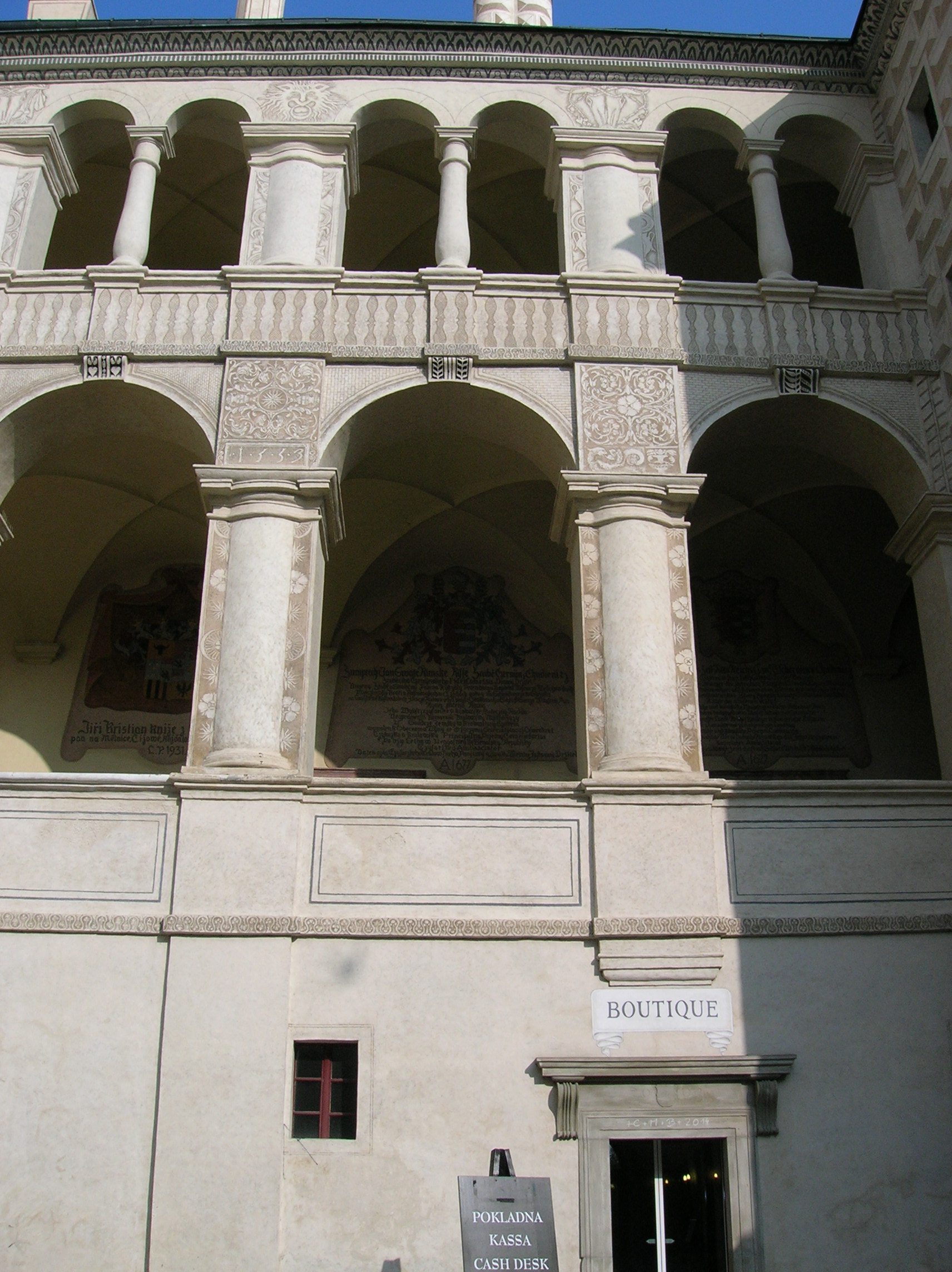
Arcades of Mělnik Chateau
At Mělnik Chateau I was once again overcome with amazement when I peered at detailed 17th century maps of European cities in the Big Hall and the small 18th century black-and-white vedutas of European cities in the Small Hall. The artwork at Mělnik was incredible. I saw paintings by Baroque legendary artists Karel Škréta and Petr Brandl and even a painting by Veronese. I yearned to show this chateau to my parents.
Front page of Lidové noviny announcing Karel Čapek’s death
Karel Čapek and his wife Olga Scheinpflugová
I also visited the museum of the legendary and versatile Czech writer Karel Čapek at what once was his villa in Stará huť. At the Strž Villa I saw 3-D diagrams of stage sets from his plays and the desk where he had written many works. The exhibition included photos of his childhood, pictures of his dogs and cat, and the front page of Lidové noviny newspaper with the large, bold headline announcing his death in 1938. Sections of the exhibition were devoted to his wife, a famous actress, and his brother, a prominent painter and writer.
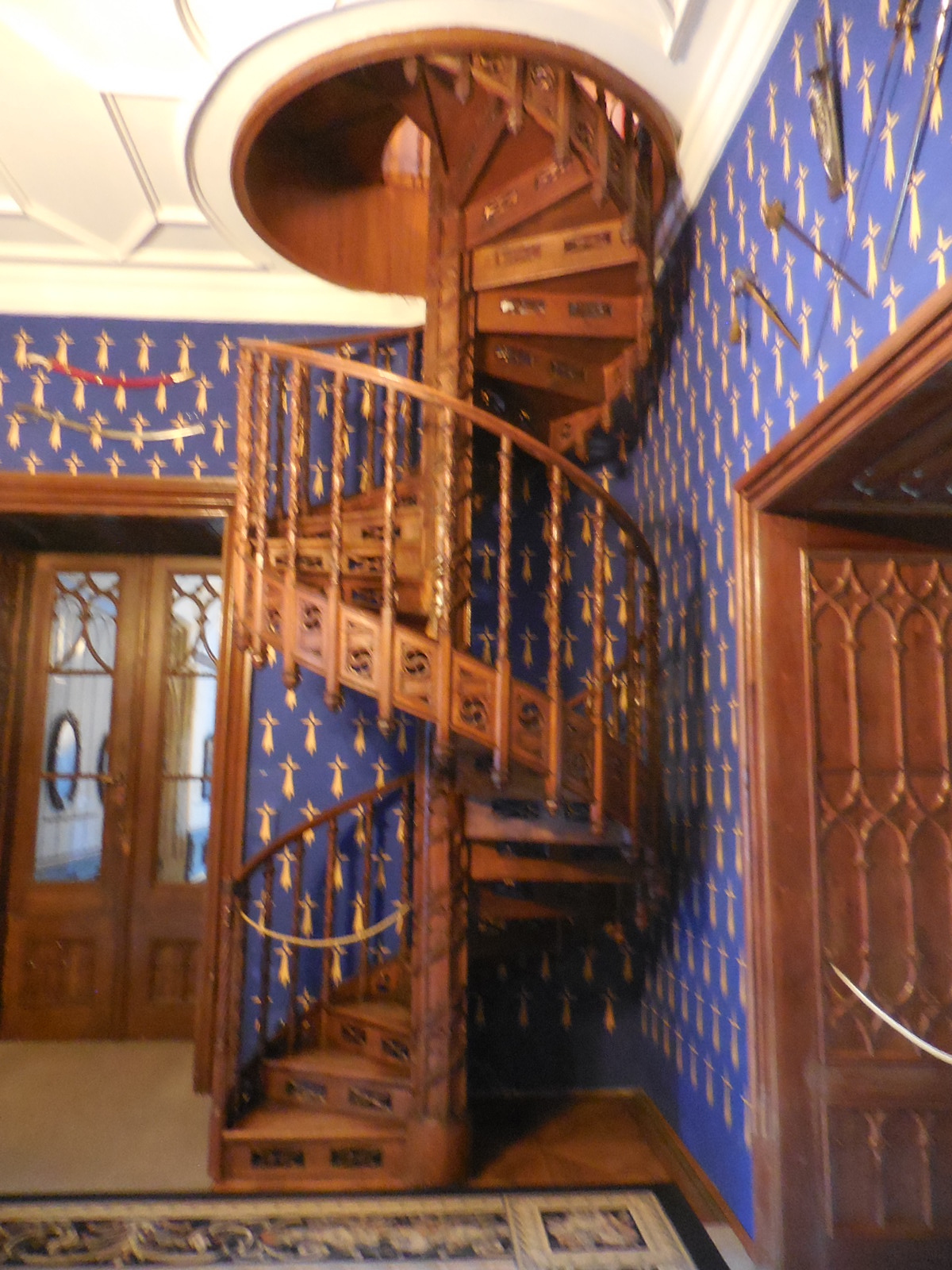
Staircase at Sychrov Chateau
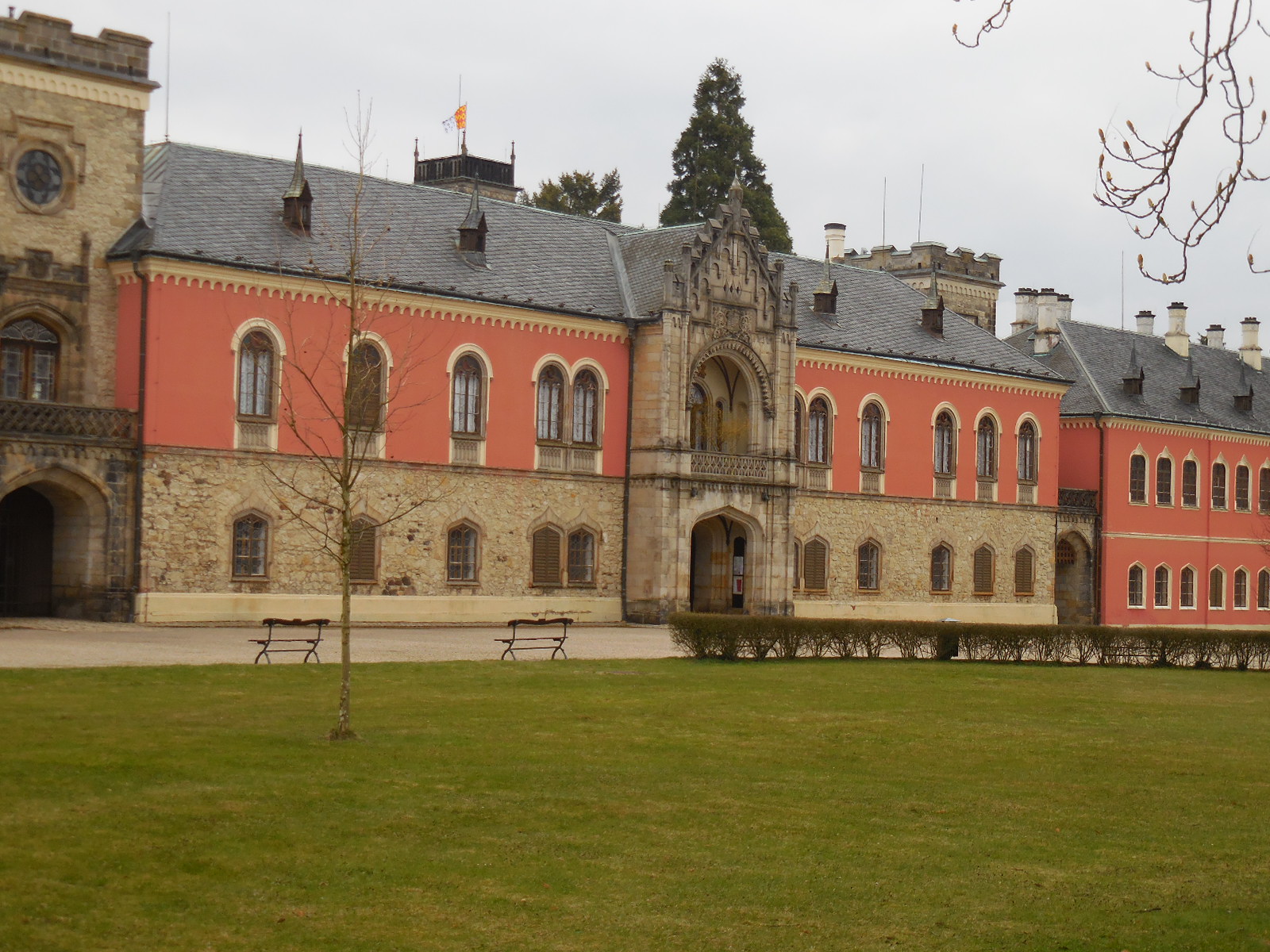
Neo-Gothic facade of Sychrov Chateau
Another chateau I visited for maybe the fourth time was the Neo-Gothic Sychrov in north Bohemia. The Rohan portrait gallery included 242 portraits of French origin, including French kings and queens as well as members of the Rohan family, who owned the chateau for 125 years. It ranks as the biggest collection of French portrait painting in Central Europe. A narrow, spiral, wooden staircase as well as rich wood paneling and leather wallpaper in many rooms also caught my attention.
La Scala Opera House
Finally, this past year I made it to Milan! In this magical city I had so many memorable experiences. I watched some minutes of a rehearsal of Giaconda in the royal box at La Scala Opera House. I finally saw The Last Supper with my own eyes, although we were only allowed to stay in the space for 15 minutes.
Stained-glass window at Milan Cathedral
I gazed at the mostly Gothic exterior of the Duomo at six in the morning, when the square was free of pedestrian traffic. The stained-glass windows inside and the views from the rooftop were other highlights. The artifacts of the Museo del Duomo, including the original stained-glass windows, tapestries and gargoyles, added more context to the tour of the Duomo.
The Basilica of Saint Ambrose
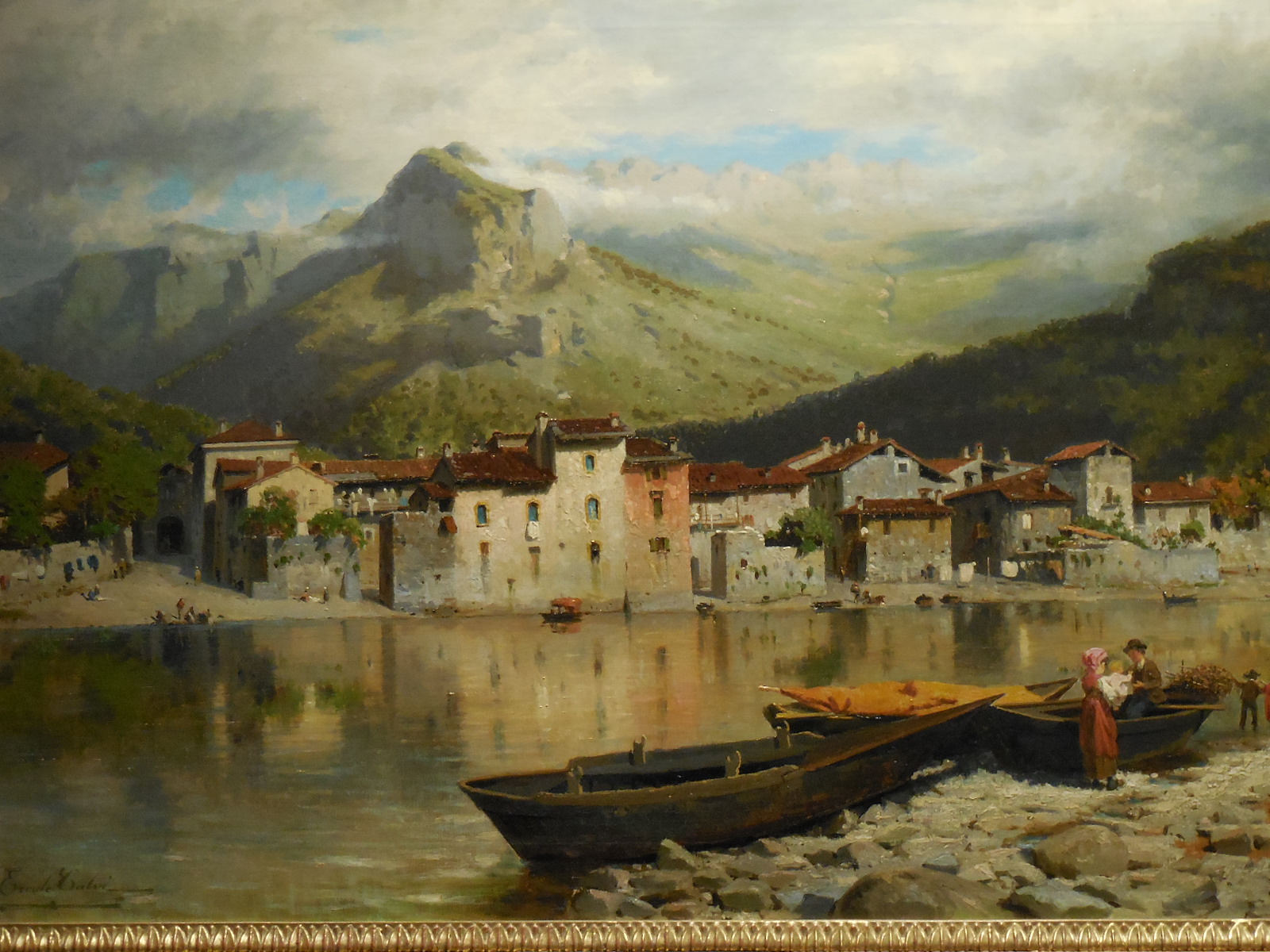
The Basilica di Sant’Ambrogio was one of the most beautiful Romanesque buildings in the world, originating in the fourth century AD and getting its current appearance from a 12th century makeover. The 19th century shopping gallery Galleria Vittorio Emaneuele II with its mosaics on the floor and near the dome was stunning. The bookstore in the shopping gallery was comprehensive and huge, just the way I liked them. I saw impressive vedutas of Milan Cathedral, Alpine scenes and paintings of the Navigli district of Milan as well as sculpture by Antonio Canova in the Gallerie d’Italia.
In the Ambrosiana
The Ambrosiana’s library stunned me. I gazed at the Leonardo da Vinci drawings of inventions in the Codice Atlantico exhibition as well as the library itself, such an overwhelming place. I loved the paintings in the Ambrosiana, too. Leonardo da Vinci’s The Musician, Titian’s Adoration of the Magi, Botticelli’s Madonna del Padiglione, the paintings by Francesco Hayez, Paul Brill’s fantastic landscapes and Jan Bruegel’s fantasy-tinged renditions all impressed me. Caravaggio’s superb depiction of a bowl of fruit was another highlight.
At the Brera Art Gallery
The Brera Art Gallery was another superb cultural venue. I was enthralled with the Italian paintings from the 13th to 20th centuries, including works by Raphael, Andrea Mantegna, Donato Bramante, Titian, Veronese, Caravaggio, Giovanni Bellini and Bernardino Luini. Flemish art also made an appearance. I was overwhelmed by the paintings by Rembrandt, Rubens, Jacob Jordaens and Anton van Dyck. And who could forget the vedutas of Venice by Canaletto and the famous painting The Kiss by Francesco Hayez?
Museum of the Risorgimento
Around the corner from the Brera, I stopped in the Museo del Risorgimento, which featured 14 rooms of paintings, prints, sculptures and artifacts depicting Italian historical events from the call for Italian independence to the Italian unification. I learned about Napoleon’s reign in Italy as well as the Austrian monarchy’s control of what would later become a unified and independent Italy. I spent a lot of time staring at the photos of soldiers in the Album of the Thousands, the volunteers in the Expedition of the Thousand. Portraits of the 1,089 soldiers in business card format made up this album. I loved the paintings that brought the turbulent era to life, such as those by Stragliati and Canella.
At the Bagatti Valsecchi Museum
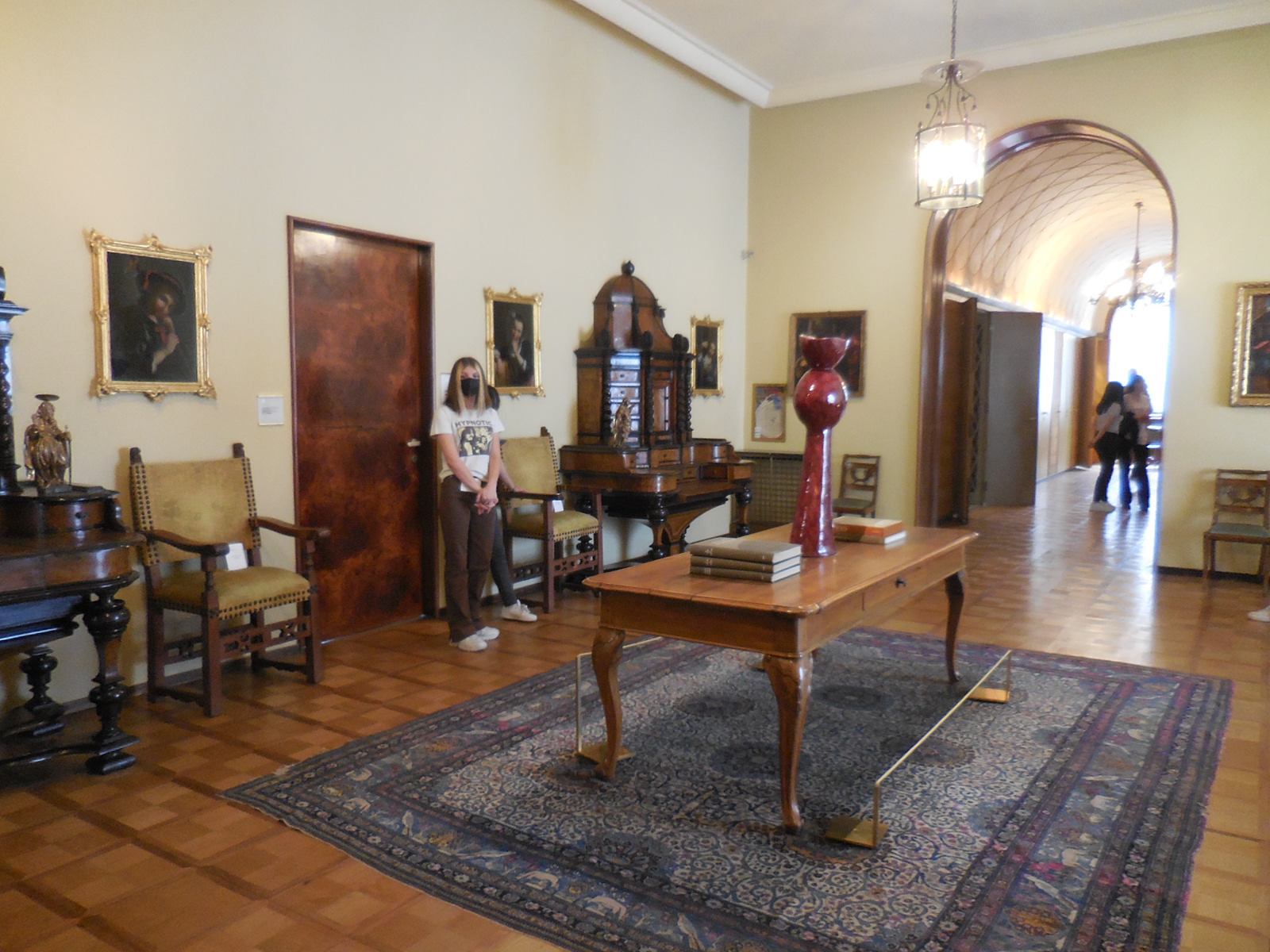
While I loved these museums, my two favorites had been former homes, the Museo Bagatti Valsecchi and Museo Poldi Pezzoli, the first located in an apartment, the second situated in a palace. Two brothers collected Renaissance and Neo-Renaissance art – tapestries, paintings, sculpture and weapons – at the end of the 1800s to decorate the interior of their apartment, which would later become the Museo Bagatti Valsecchi. It is one of the best-preserved house museums in Europe. The furnishings were diverse – Italian, British, German, French, Japanese and Spanish, for instance. It had a more intimate feel than the Poldi Pezzoli, though that was an amazing museum as well.
At the Museum of Poldi Pezzoli
The art collection in the Museo Poldi Pezzoli came into existence during the 19th century, when the Poldi Pezzoli noble family lived there. Artists represented there included Giovanni Bellini, Mantegna, Michelangelo Buonarroti, Hayez, Tiepolo and Canaletto as well as Lucas Cranach the Elder. Many Renaissance and Baroque works punctuate the collection. An armory, a glass collection, ceramics and tapestries also make up the superb objects on display.
The Villa Necchi Campiglio in Milan was another highlight. The villa, now a museum, was built from 1932 to 1935 and included an enchanting garden, the first private pool in Milan and second pool in the city plus tennis courts. The exterior is an example of Italian rationalism with a no-frills attitude of simplicity.
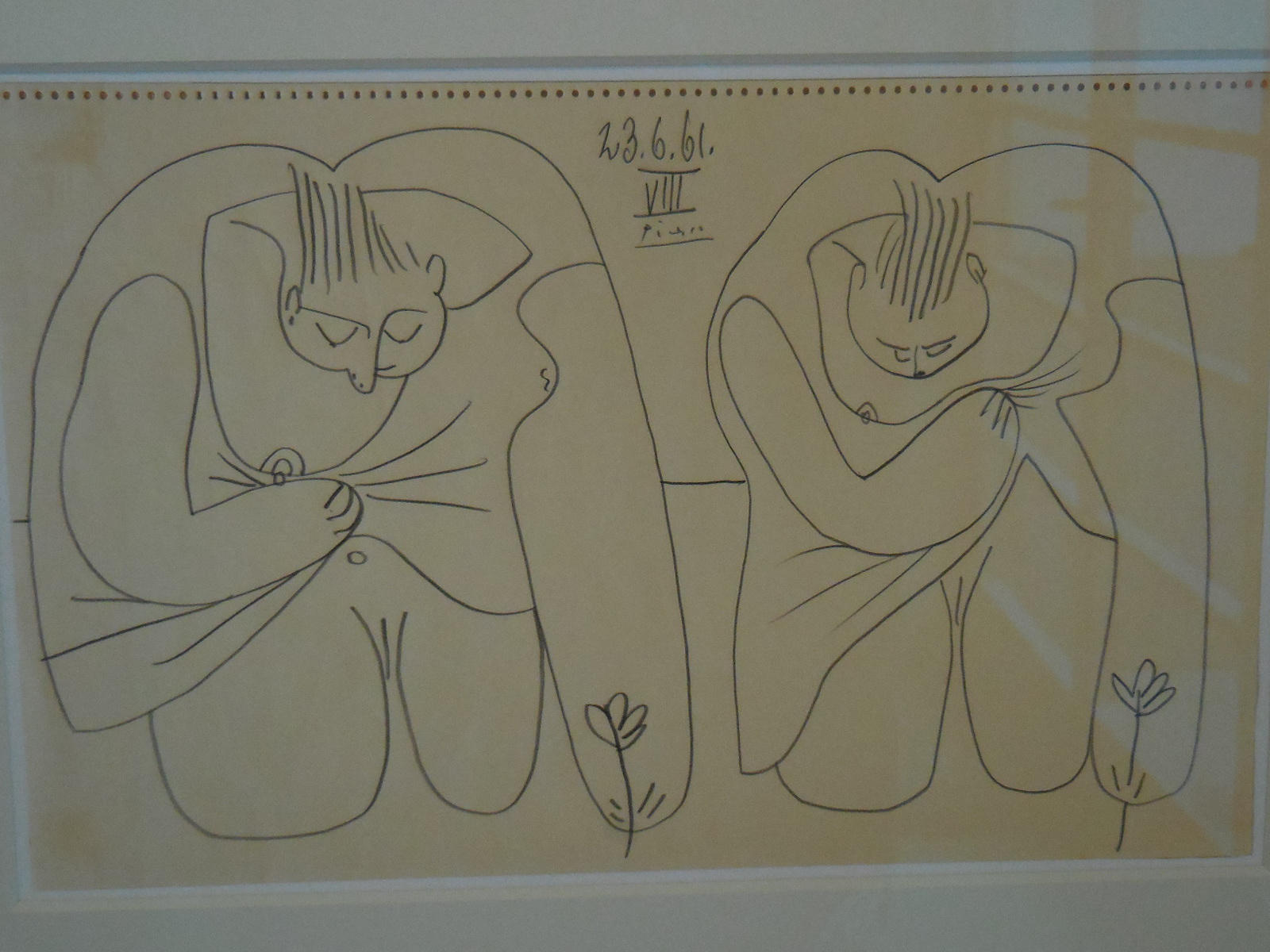
A work by Picasso in the Villa Necchi Campiglio
The interior included Art Deco décor. The Smoking Room featured a large Renaissance fireplace while many paintings and much sculpture from Italian artists in the early 1900s dotted the house museum. Paintings by Pablo Picasso, Giorgio de Chirico and Umberto Boccioni come to mind. Parts of the villa also exuded the atmosphere of the 1800s due to a reconstruction. Some 130 works of art hail from this period – Canaletto and Tiepolo were represented. I also saw intriguing ceramics and Chinese porcelain. The spaces themselves were architecturally evocative.
Main altar at the Church of San Maurizio
The interior of the church of San Maurizio al Monastero Maggiore was a work of art in itself. Divided into two parts, it included a vaulted nave and vaulted chapels plus the Hall of Nuns. The Renaissance church featured 16th century frescoes by Bernardino Luini, his brothers and his son. On the dividing wall in the Hall of Nuns, I gazed at Bernardino Luini’s creations from the 1530s – the figures of Saint Catherine and Saint Agatha as well as scenes from the Marriage at Cana and the Carrying of the Cross of Christ. I also saw his frescoes showing the life of Saint Maurizio. In one chapel Bernardino Luini rendered the martyrdom of Saint Catherine of Alexandria. The main altar with the painting of the Adoration of the Magi by Antonio Campi took my breath away, too.
The Last Supper
At long last I saw The Last Supper in the refectory of the Santa Maria delle Grazie Church. It was a dream come true. The moment following Christ’s assertion that one of those seated at the table would betray him was masterfully portrayed. The facial expressions and body language are works of art in themselves. As Christ utters those immortal words, all the dinner guests look riddled with horror except Judas, who clutches his silver ever so tightly. Even though we were only allowed to be in the room for 15 minutes, I was overcome with amazement at the Renaissance fresco in front of me. It told a complex story so clearly. I was in awe of those gestures and facial expressions.
Gallerie d’Italia in Milan
In the Czech Republic, I had mostly traveled to places I had been before, except for Maleč Chateau, the Strž Villa and the Werich Villa. I saw Milan for the first time, though the trip had been planned and cancelled during two years. I was in awe of the sights I rediscovered and those I experienced for the first time. The visits were eye-opening as I learned new information about Czech and Italian history and culture. The exhibitions of painting, sculpture and more also proved poignant and powerful.
Tracy A. Burns is a proofreader, writer and editor in Prague.





































 Tracy's Travels