Rychnov nad Kněžnou Diary


Image

My journey started at 6:30 a.m. on a bus from a Metro station on the other side of Prague, about an hour from my home. We arrived in the east Bohemian town of Hradec Králové, where I was to change buses, on time at 7:45. Then I had to wait. But for how long? The information on the Internet stated that the bus to Rychnov nad Kněžnou would leave at 10 a.m., but the woman at the information desk in Hradec Králové confirmed that the time of my next departure was 9:30 a.m.

It took another hour and a half to get to Rychnov nad Kněžnou, situated in the foothills of the Orlické (Eagle) Mountains northeast of Prague, near the Polish border. While it was a sunny day in Prague, in the mountainous terrain it was much cooler, though still pleasant. The bus station was only minutes away from the chateau, so I didn’t have to worry about getting lost on my way back to the 15:05 bus to Hradec Králové. (Actually, I did get lost. I was about two streets away from the bus station on my attempt to return there. I always seem to get lost!)

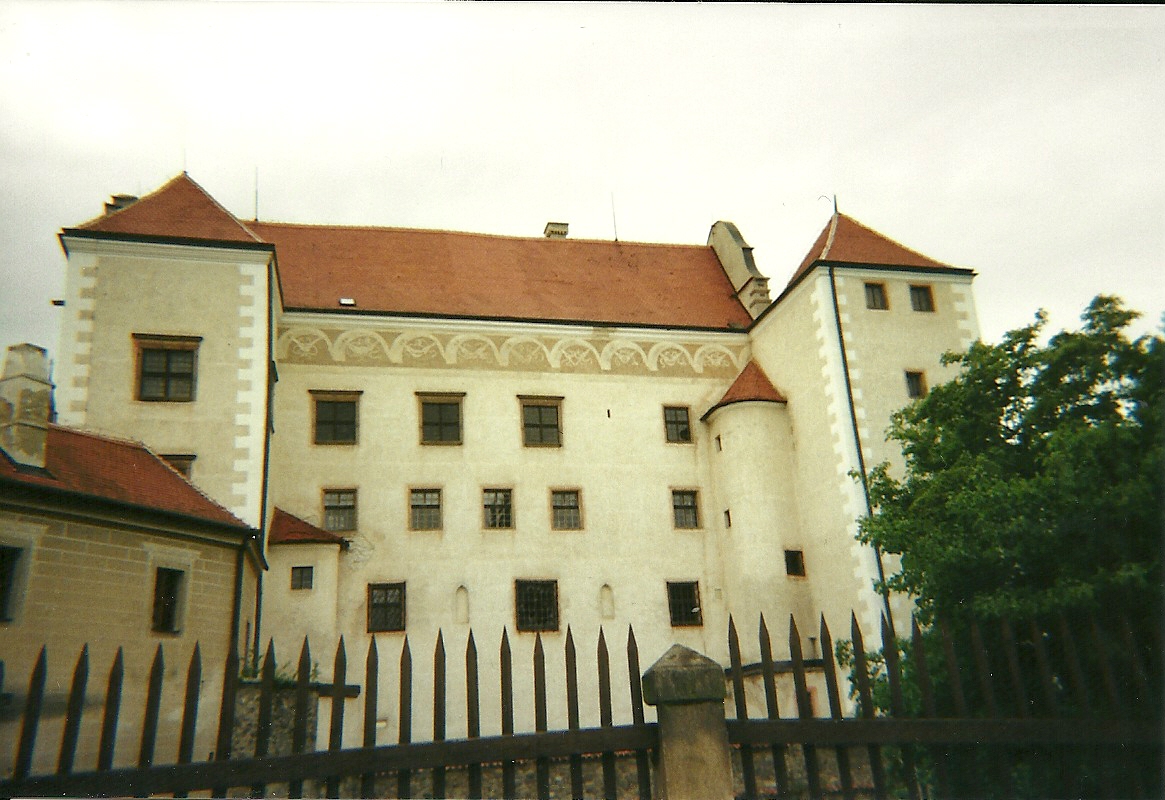
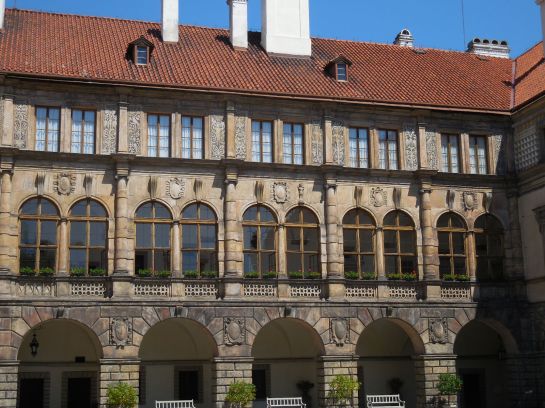
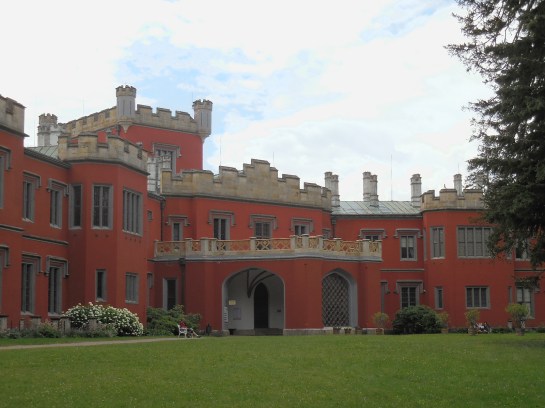
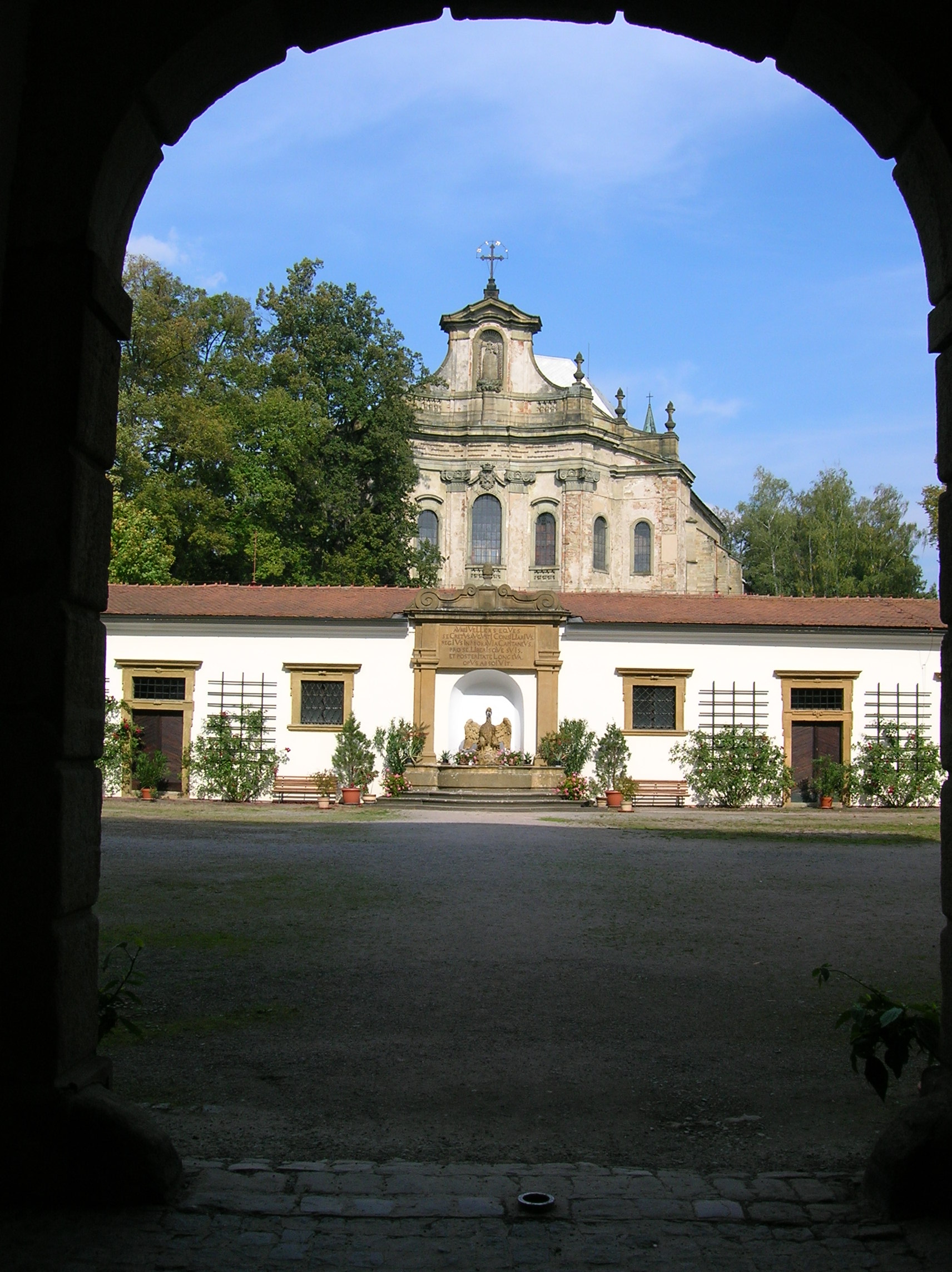
I had already visited Rychnov once, about 10 years earlier. While the chateau may not have outdone those nearby in Častolovice and Opočno, it certainly ranked right up there. The chateau had an intriguing past.  The town had been home to a castle or fortress as early as 1258, but it became a ruin, and a church was built over it in the late 16th century. This chateau was built between 1670 and 1690, under the guidance of František Karel Kolowrat. The well-known noble Kolowrat family had purchased the estate during the Thirty Years’ War in 1640, and their descendants even live in the chateau today. (It was returned to the family in 1992.) The residence underwent a Baroque transformation between 1713 and 1727. The architect of what was once the riding hall was the well-renowned Gothic Baroque master Jan Blažej Santini Aichel. In the late 16th century a bell tower had been constructed in the town. It was the third biggest in Bohemia, weighing almost seven tons.

As I approached the chateau, I noticed the column with the Virgin Mary, dating from 1692 to 1694. Soon I was one of three people on the 60-minute tour. The first thing I saw was the coat-of-arms of an eagle on the hallway floor. Above the red and silver eagle was the word “faithfully;” below it, the word “always.” I paid special attention to the crown above the eagle; Emperor Charles IV gave the Kolowrat family the crown on their coat-of-arms after one member of the family had saved the ruler’s life during an assassination attempt in Pisa, Italy.
ImageMy favorite room was the picture gallery. The chateau boasted more than 300 paintings on display and furniture from as far back as the 17th century.  The picture gallery’s collection of about 400 paintings consisted mostly of portraits of the Kolowrat family members, still lifes and hunting scenes by Dutch and Italian masters, and there were also landscapes. Some works took up religious themes as well. The dark-haired, tall man who was giving the tour mentioned that at one time, the collection held 1,218 paintings. This gallery also traced the development of the nobility in portraiture from the 16th to the 19th century. The biggest delight for me was the masterpiece by legendary Czech artist Karel Škréta – his portrait of Ignác Vitanoský of Vlčkovice. However, not only paintings abounded in the chateau; decorated ceramic stoves were situated in each room, dating from the 17th to 20th century.

Other paintings of note included “Esther before Ahasuerus” from the South Netherlandish School of the 16th century. I noticed the luxury of the palace, where the scene took place. In the background, through an open door, I could see greenish-blue mountains and a winding stairway leading up to a mysterious building. What intrigued me the most, though, were the loud, red stockings of Ahasuerus.

In one room a large painting showed the execution of noblemen on Prague’s Old Town Square during 1621, after the Protestant Bohemian States lost to the Holy Roman Empire, Spain and the Catholic League in the Battle of White Mountain during November of 1620. Edison light bulbs were featured in a chandelier decorating another space.

One of my favorite artifacts was a painting of a winter landscape with figures on the ice in a quaint village scene. Several people rode a sleigh, and another was falling down. It reminded me of the wintry creations by my favorite Dutch master, Pieter Brueghel the Elder.

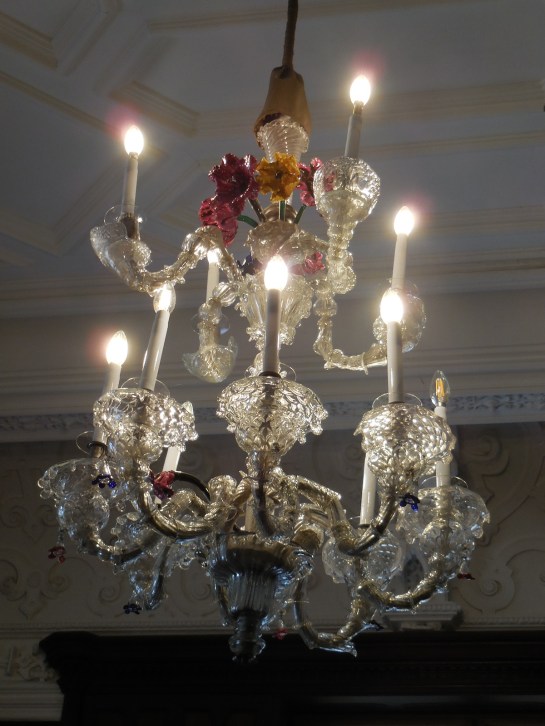
The Škréta portrait was certainly a highlight of the tour. Ignác Vitanovský of Vlčkovice had a gentle yet determined look in his eyes as he gazed at the viewer. I also saw Baroque furniture employing a green and tan leaf motif. In one space a pink and white Venetian chandelier greeted me. The guide pointed out that there was an engraving in the middle of one bureau. It showed Boleslav murdering his brother, the future Czech patron saint Václav (Wenceslas), in Stará Boleslav on September 28, 935.
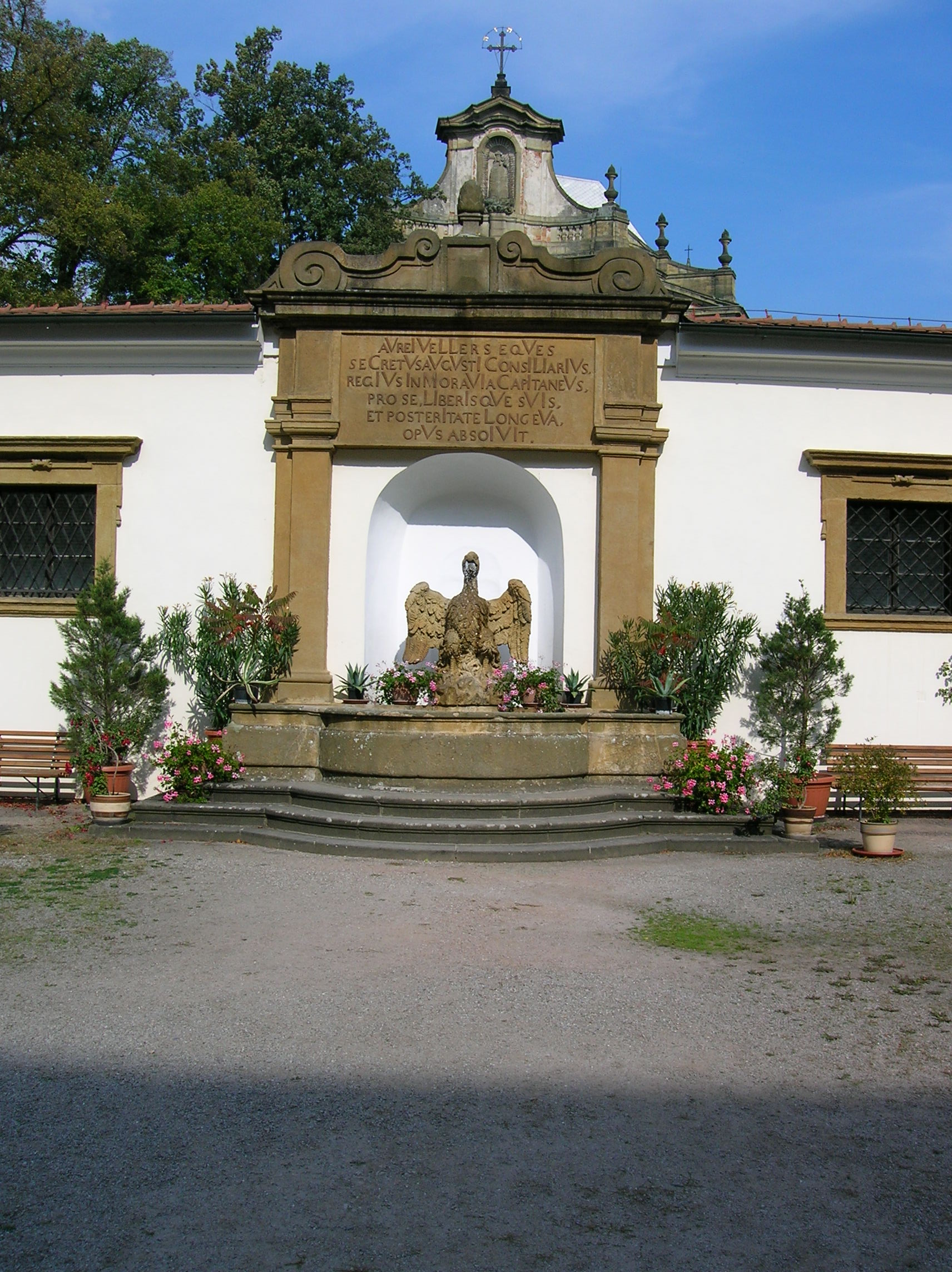
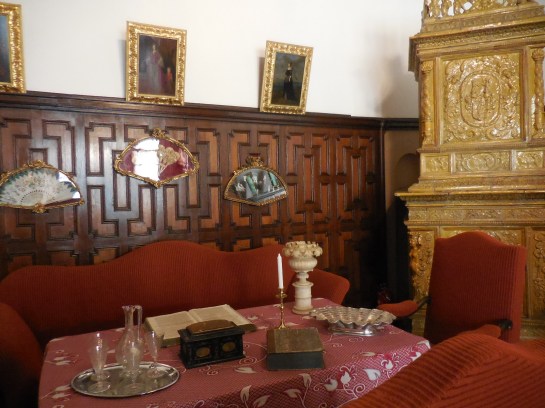
ImageThen we came to the Knights’ Hall with life-size portraits of members of the Kolowrat family. The chapel was quaint with its ceiling fresco and altar featuring a very pensive Saint Mary of the Snow. Another room was filled with various fans of different colors, some of them made of silk. The guide explained how fans had been used to set up meetings or ask someone out on a date. For example, a gesture with a fan could tell a man if the woman was single or married. A Buddha also decorated that room. The head and hands could move, and it stuck out its tongue at the viewer.

In the Dining Room I saw Viennese, Empire style, Meissen and other styles of porcelain. What interested me the most were the paintings of dead animals on the walls. It seemed to be inappropriate décor for a place where people ate. Looking at those paintings during dinner would certainly ruin my appetite.

The tour was over too soon. Then I went to lunch on the main square, where I had my favorite chicken with peaches and cheese. I also checked out the Holy Trinity Church, erected on the site of what was once a castle or fortress. The church was closed, but I did see an intriguing fresco on one wall.

There was even more to see at the chateau. The Hladík Gallery featured statues of former Prague professor of the arts Karel Hladík, who lived from 1912 to 1967 and hailed from the Rychnov area. I was impressed. His busts, torsos, decorated totem pole-like sculptures and figures in agony spoke to me as they relayed strong emotions. I felt as if I really knew the people whose busts I saw, as if I almost could understand them. Another intriguing work was his portrait of a gaunt Franz Kafka.

The upstairs portion of the Orlická Gallery awaited me. There I saw the landscapes by Jan Trampota. These were landscapes in bright pastels, mostly of scenes in the Orlické Mountains. One of Trampota’s works showed the beautiful countryside with gentle hills and lush trees. The terrain was sprinkled with a few cottages. This watercolor “At the End of Summer” was executed during 1928-29 in soothing pastels and greens and browns, and was my favorite of his paintings on display. In another room landscape paintings by one of my favorite Czech artists, Antonín Hudeček, were hung. I wanted to take Hudeček’s field of pink flowers home.

There were many rooms in the gallery, all boasting intriguing paintings, plus a temporary photography exhibition. By the time I got through the gallery, it was time to hurry back to the station to get the bus back to Hradec Králové. I did get lost during what should have been a five-minute trek, but I still made it in time.

On the bus I noticed a sign stating that passengers must fasten their seat belts. But I didn’t have a seat belt. In fact, the other seats near me didn’t, either. Both buses coming to Rychnov nad Kněžnou had been equipped with seat belts. Luckily, there was no accident and upon arriving to Hradec Králové, I immediately got on a 16:30 bus to Prague. Image
Vranov nad Dyjí Chateau Diary

Vranov1

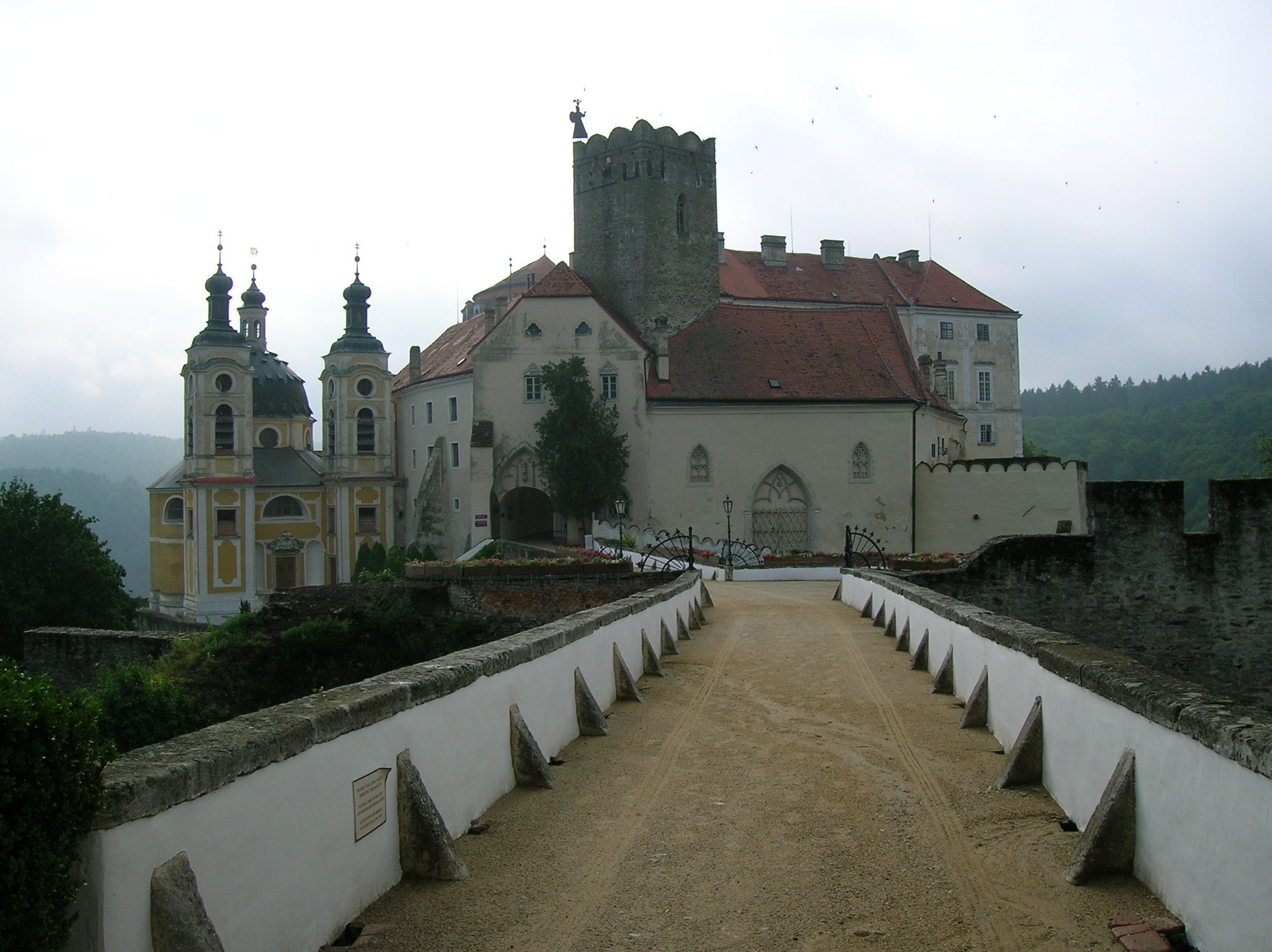
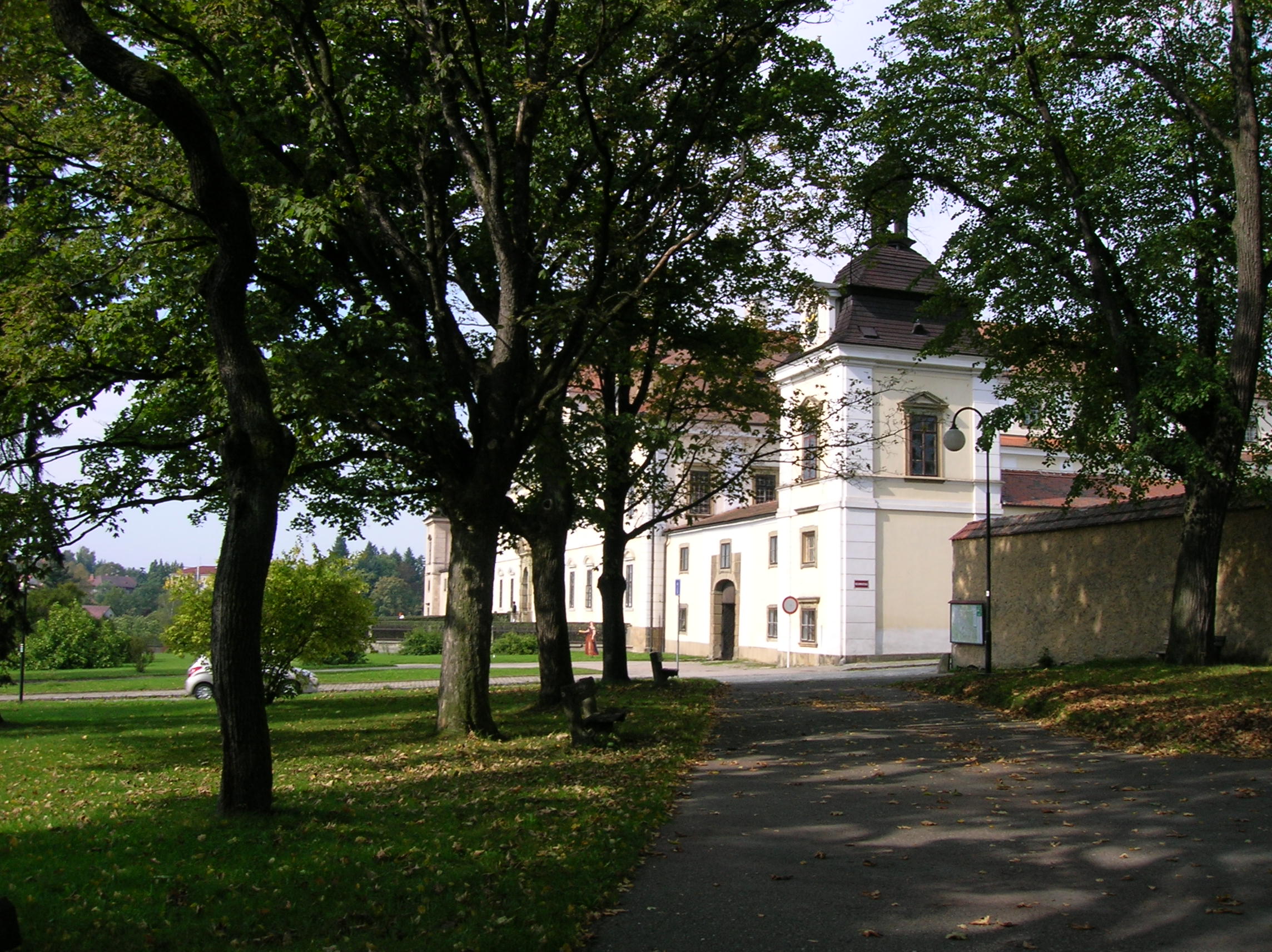
It was my second visit to Vranov nad Dyjí, one of my favorite chateaus, located near Znojmo in south Moravia. Its façade was a hodgepodge of at least three architectural styles. Some medieval elements of the Baroque chateau had been preserved. The Crow’s Tower and the building in the first courtyard harkened back to the Middle Ages. The Baroque fountain was spectacular. I had to stop to admire the garden bursting with color as I walked toward the chateau. The white and yellow Baroque church with belfries was perched on a cliff to the left and below the chateau. It looked to me that it was positioned precariously, as if it would fall off the edge at any moment.

The chateau, part of Podyjí National Park, blended in with the cliffs and picturesque countryside, a characteristic that I found attractive. Vranov nad Dyjí did not disturb nature but rather complemented it. I felt comfortable here in this stunning, natural environment. The rooms were small and intimate (except for the vast Ancestors’ Hall) and were filled with exquisite objects. All the items gave the chateau a unique identity without one artifact overwhelming the others.

I was already familiar with the history of the chateau. Vranov was first mentioned in the Kosmas Chronicle during 1100. Originally, it served as a fortress made of wood and became a stone castle at the end of the 13th and during the 14th century. There were additions made in the 15th century, but in 1665 it succumbed to flames. When Michal Johann II von Althann bought it in 1680, the chateau stayed in the family for more than a century. Michael Johann II made it into a Baroque chateau. Under his guidance the astounding Hall of Ancestors and the chapel were built. Later, the chateau became a three-wing residential palace. Neo-Gothic and Romantic style elements were added during the 19th century. During that century, it was the property of two Polish clans – the Mniszek counts and the Stadnickis. The state took control of the chateau after 1945.

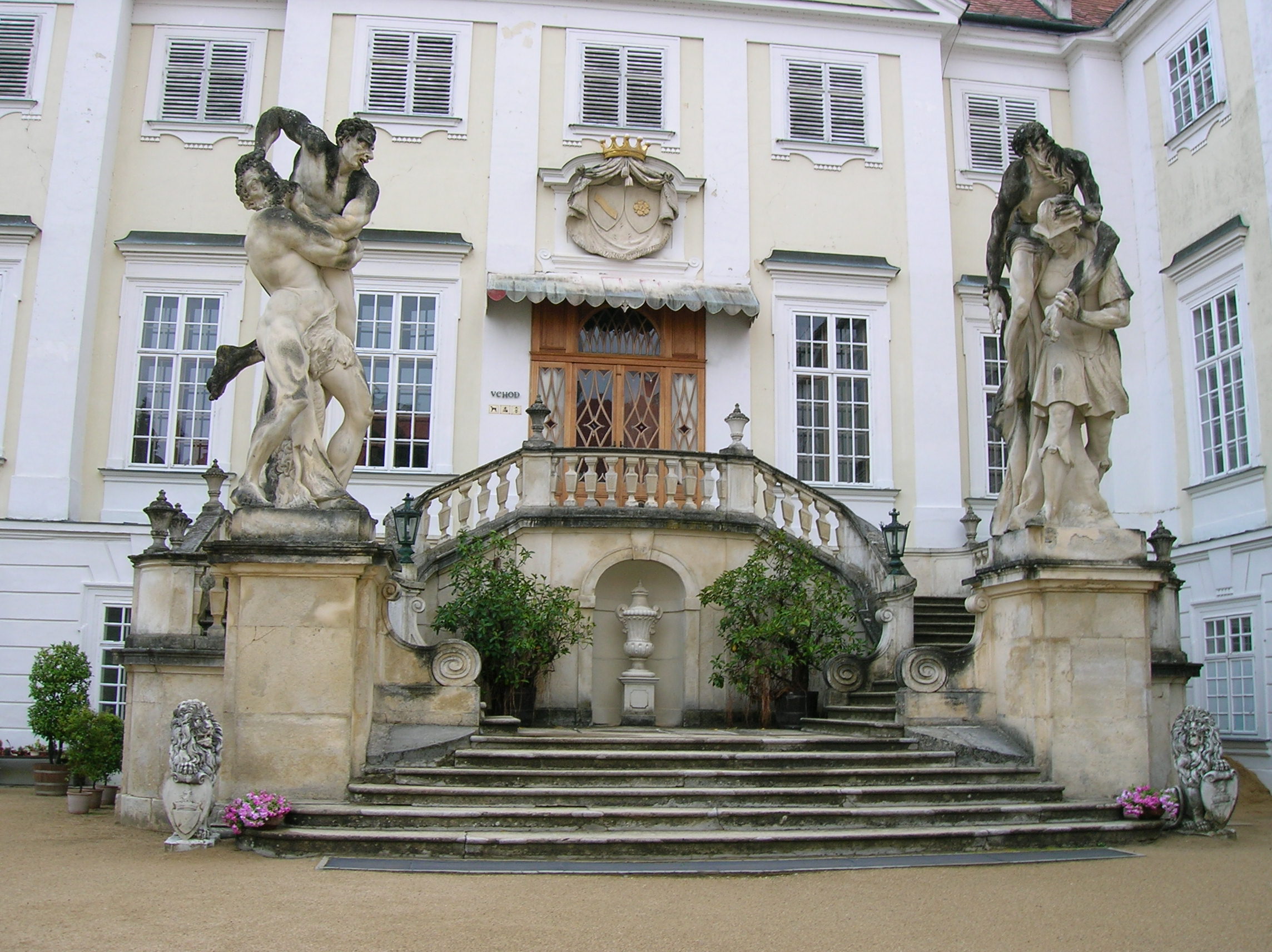
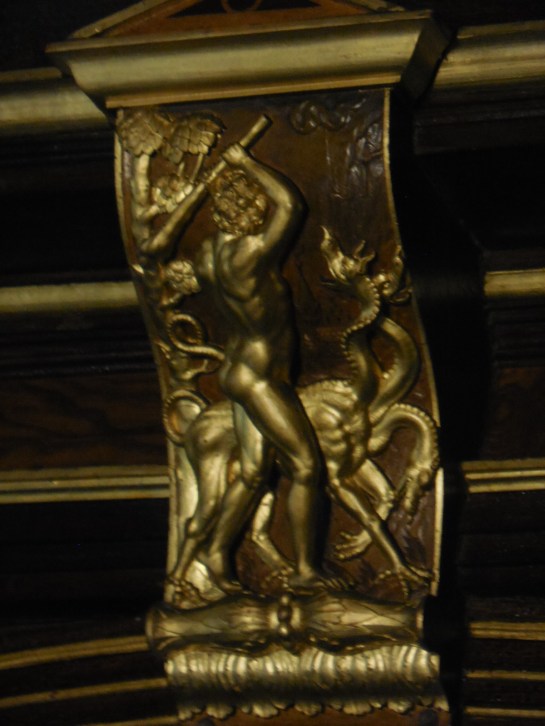
Vranov7Waiting for the tour to begin, I was overwhelmed by the two-flight Baroque main stairway decorated with sculptures. Hercules battled the giant Antaeus. Prince Aeneas carried his feeble father from burning Troy. Then 15 young children scampered toward me. It was my worst nightmare. I was worried that all these children would accompany me on the tour of my beloved chateau, and I would not be able to hear the guide over their cries. At least that had been my experience when visiting other chateaus with groups of young children.

Finally, the tour began. The guide, a tall, lanky, serious blond woman in her early twenties, ushered me and the children as well as a few other adults into the Hall of Ancestors. It took eight years to complete the lush décor of this space with its walls and ceiling covered in breathtaking frescoes celebrating the Althann family. Its stunning beauty made me dizzy. I looked up and noticed a golden chariot floating on the clouds. The female charioteer symbolized the Earth’s fertility, the guide explained. Between the oval windows I could make out the figures of Hercules, Orpheus, Theseus, Odysseus and Perseus praising the Althann ancestors. The family members’ statues decorated the niches of the hall. I was amazed by something else, too. None of the children were misbehaving. Some mumbled to themselves, but they were all fairly quiet and seemed interested in the guide’s descriptions. Maybe they would not be so badly behaved, after all.

Next we went outside onto the terrace, created at the end of the 18th century. The children loved the cannon balls there. The guide explained that the Swedes tried to take over the chateau twice during the Thirty Years’ War in the 17th century, but failed to do so. I peered at the valley and romantic landscape that surrounded the chateau. The scenery was postcard perfect. It was so peaceful and tranquil. I could have stared at the landscape forever. Standing there, looking at the countryside of south Moravia, I found inner peace. Perhaps that is why I loved this chateau so much. Here, I found a sense of inner peace, calmness and strength to take on future trials and tribulations.

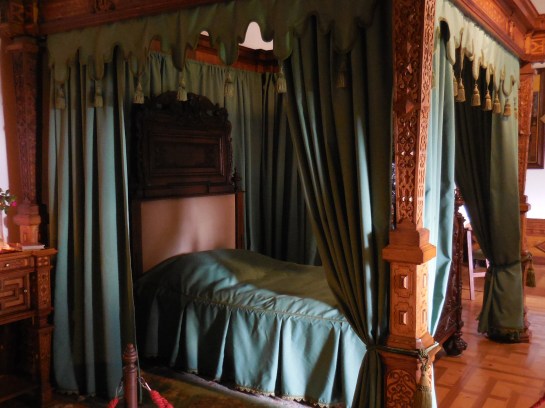
Then it was time for the residential rooms, furnished as they were at the end of the 18th century and throughout the 19th century. In the tiny entrance to the Pignatelli bedroom, a space that could not fit all the children, I saw a painting of Vranov five years before it was engulfed by flames in the 17th century. I was especially drawn to the scraggly cliffs and the meandering river in the picture as well as to the stone bridge that I walked on earlier today. Then we entered the main room, which was once the private chapel. A moustached man told a few rambunctious children to be quiet. The room exuded a sense of symmetry so typical of the Classicist era.  I noticed the exquisite fabric texture of the wall hangings, decorated with hunting themes and picturesque landscapes. Two statues inspired by antiquity flanked a canopy bed and stood on pedestals. I was enamored by their exquisite green leaf motifs.

The next space had been a dining room since the 1720s. The printed stoneware on the table featured the Italian town of Ferrara and came from the prominent Vranov earthenware factory founded in the 19th century. I was filled with awe as I took in the pictures on the wall. The hand-painted canvas showed landscape views of a park with ancient, medieval, Chinese and Egyptian structures. The guide pointed out a scene showing the Park Monceau in Paris. Holy Roman Emperor Charles VI, whose tenure on the throne lasted from 1711 to 1740, made an appearance in the scene. No stranger to the Althann family, Charles VI was a close friend of Marie Anna, who was an owner of the chateau in the second half of the 18th century. The emperor had even visited Vranov. Two children were scolded for pushing each other.

In the Family Salon the owner’s relatives and guests would discuss private and public topics after a meal. They played cards or chess, read books, listened to music and sipped coffee, tea or hot chocolate. A samovar tea urn from Russia’s Tula town attested to this ritual. The white-grey and pistachio colors of the wall fabrics entranced me. They showed Pompeii and other ancient towns. A young girl with bright blue eyes giggled.

The Blue Salon, the ladies’ living room, exuded a Classical style with its blue wall hangings and two sculptures of Aphrodite on white stoves. The furniture, an elegant blue mahogany, hailed from the 19th century and was made in Empire style. There were various kinds of porcelain – Viennese and Meissen, for example – in the room as well. The children began to appear restless, no longer paying much attention to the exhibits.

Vranovview2The Respirium was where the family relaxed after taking a bath. The wall and ceiling décor fascinated me. The Classicist relief stucco and ornamentation featuring carved wood was so elegant, and I felt so comfortable in this space. The white columns had hidden compartments where toiletries were kept. I loved the stucco decorations above the door. In one scene, Artemis, goddess of the hunt, was being watched by Actaeon, who happened to be hunting in the forest when he saw her naked. Artemis turned him into a deer that her dogs devoured. I was glad that I was able to hear the guide as the children talked and argued among themselves. One girl with long chestnut-colored hair who would someday turn into a very beautiful woman began to cry.

Next we saw the Classicist bathroom, hailing from the 18th century. Artificial marble lined the walls. I loved the four black columns that appeared so elegant without being extravagant.  The guide, her voice a bit hoarse now, explained that the central pool had been used as a bathing area, but now visitors threw coins in the water for good luck. The children became excited and pleaded with the adults to give them some change. The chaperones shook their heads.

Hailing from the 18th century, a Rococo screen with Chinese motifs took precedence in the Oriental Salon. On the screen I could make out oriental gardens with bodies of water and paths. An aristocratic couple was celebrating around exotic figures. I was fascinated by the three unique sections of a 19th century Chinese scroll preserved in three rectangular frames. The scroll depicted a poet who had lived in the third century. The scribbler was coming home after being captured by the Huns. The scrolls showed her Hunnish escort, musicians and a general riding under a canopy while the poet held a child under a royal standard. This time a few of the children appeared interested in the scenes on the scroll as they talked among themselves about ancient battles.

Next came the Pompeii Salon with graphics on the walls depicting interiors of ancient palaces and villas. Vranov stoneware made a prominent appearance here. My eyes wandered to a pink vase with green décor. How I would love for my mother to be able to see that! She would love that vase! Maybe some day she would, I told myself. I wanted to show my parents so much of this country, but I would never have the chance to show them everything. The children showed no interest in the space.

The Althann Salon was another delight. Many of the paintings depicted members of this family, so significant to the development of the chateau. I admired the Baroque traveling altar. Brightly colored Vranov stoneware from the 19th century could also be found throughout the salon. By now the children were whining, restless, ready to leave.

The Gentlemen’s Salon hailed from the 19th century, and the decorations were inspired by spiritual alchemy. The scene above the door showed two female figures sleeping. Naked figures above four landscapes held torches. The symbols under the landscapes were focused on the Freemasons. The compasses and the square represented the meeting of heaven and earth, the guide remarked over a din of children’s cries. I admired the four landscapes on the walls, especially the depiction of the waterfall. I could almost hear the cascading water. The youngsters were not able to sit still.

The Swiss Rooms with 19th century landscape paintings on the walls were the next stops. I recognized Hercules in the midst of a battle. A black-stained cabinet was inlaid with marble depicting castles, towns, and rocks. The Picture Gallery included paintings by Dutch and Austrian artists from the 17th to 19th centuries. The Study was decorated with 19th century symbols of alchemy.

Last but not least came the library rooms. Created at the beginning of the 19th century, they now housed some 10,000 volumes. The black cabinets with geometrical designs looked sleek. Most of the books were written in French, German and Polish and hailed from the 18th and 19th centuries. The volumes consisted of both fiction and non-fiction that included subjects such as philosophy, mathematics, geography, theatre and history. I gazed at Voltaire’s collected works in cabinet 13.

Soon the tour was over. The children and their escorts scrambled away, and I took off toward the Chapel of the Holy Trinity in its romantic setting on the edge of the cliff below the chateau.  It was hard for me to believe that this impressive structure was completed within two years (1699-1700). Relieved that the children were not going to the church, I turned out to be the only one on the tour. I overheard a couple above the stairs leading down to the chapel.

“Do you want to see the chapel?”

The answer: “No, it does not seem so interesting.”

Vranovchurch1That couple did not know what they were missing. Architecturally, the interior had a central cylindrical nave with six oval rooms. There were three altars. Notably absent from the main altar was a picture or any kind of centerpiece. I had never seen a main altar like that before. I liked it because it was unique. I could see the Holy Trinity, and a pigeon represented the Holy Spirit. Angels also appeared in the Baroque creation, and golden rods shot out of the work.

The fresco in the cupola celebrated Archangel Michael, the defender of the Catholic Church, wielding a sword as he defeated Satan. Victorious, he placed his foot on his opponent’s chest. Angels danced and swirled around him. One side altar showed Saint Sebastian struck with arrows and Saint John the Baptist accompanied by sheep. The other altar portrayed Saint Barbara with a tower and Saint John with an eagle, holding a book. The Virgin Mary wore golden, flowing drapery.

Oval panels above the altars dealt with themes such as Heaven, Paradise and the Last Judgment.  The panel depicting the Last Judgment featured skeletons. One skeleton’s gesture seemed to be saying, “What? Me?”

After the tour of the church, I gazed at the romantic countryside and at the elegant chateau that blended with its surroundings, becoming a part of nature yet still retaining its own identity. Yes, I felt at peace here, even when among the rambunctious children on the tour. This place gave me strength that I often lacked. In the countryside here I also found a sense of hope.  The panorama gave me energy and a sense of optimism.

I left, reluctantly, to walk down the steep hill to the village below. From there the bus would take me back to Znojmo, where I would see a castle with magnificent interiors, a stunning rotunda, a spectacular church and several picturesque squares. I would stay in that intriguing south Moravian town overnight before heading back to Prague.Image

Tracy A. Burns is a writer, proofreader and editor in Prague.

Trója Chateau Diary

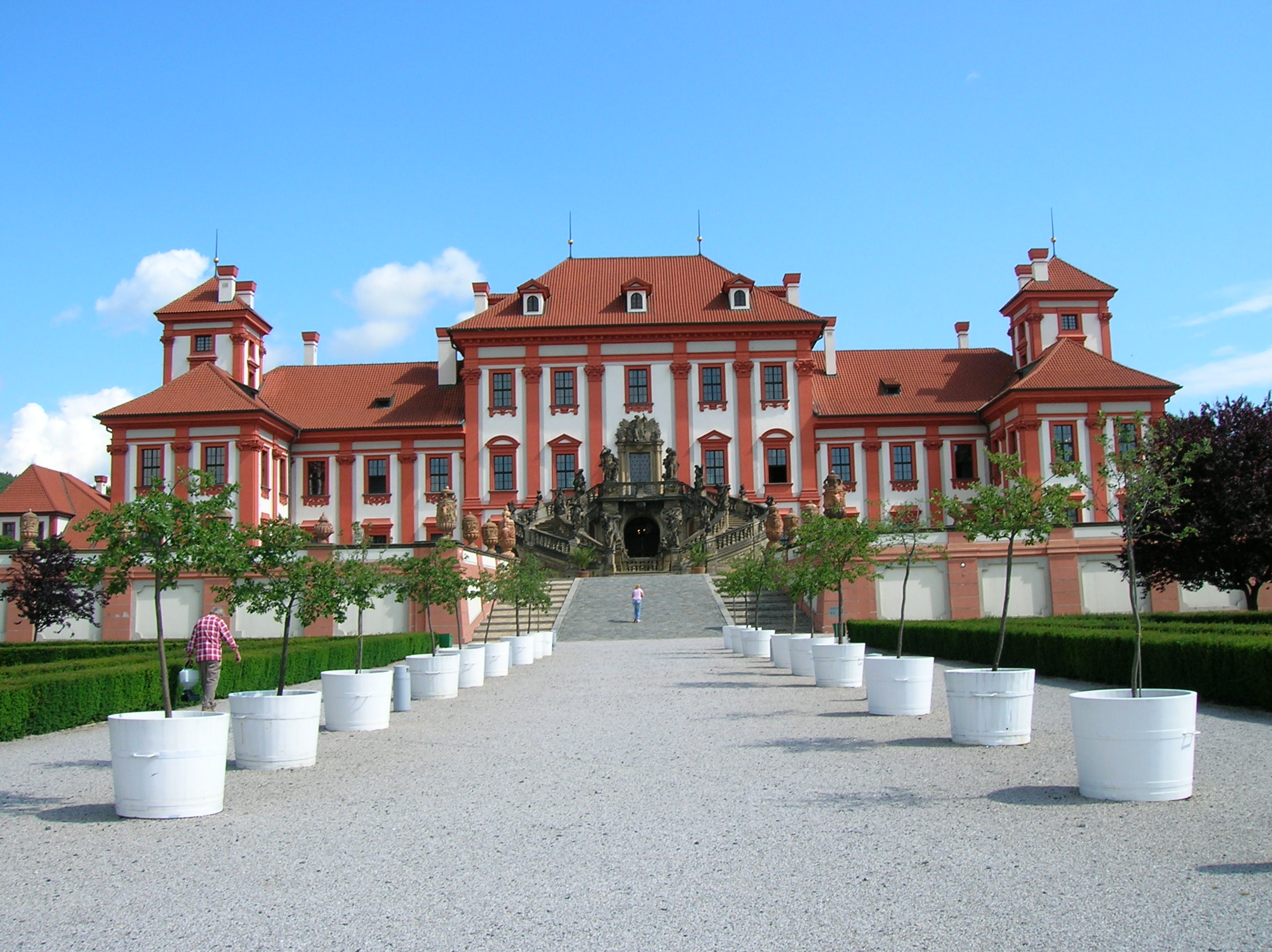
Troja10One of my favorite places in Prague is Trója Chateau, located across from the zoo in the Trója district. Built in Baroque style for Václav Vojtěch from Šternberk and his family from 1679 to 1685, it boasts a unique, captivating exterior as well as a richly decorated interior.

On this particular day I arrived at 10 am, but it was Friday, and a sign on the door informed me that the chateau did not open until one in the afternoon. As I peered at the Baroque gem, I recalled that some major historical figures had stayed here. Empress Maria Theresa had owned the place for a while but only spent the night for short periods of time, and Czech historian František Palacký – one of my heroes – stayed here on several occasions.

After spending time in the zoo watching monkeys swing from trees and polar bears wade in water, I had a leisurely lunch and returned to the chateau before 1 pm to take in its remarkable exterior and stroll through the incredible garden.

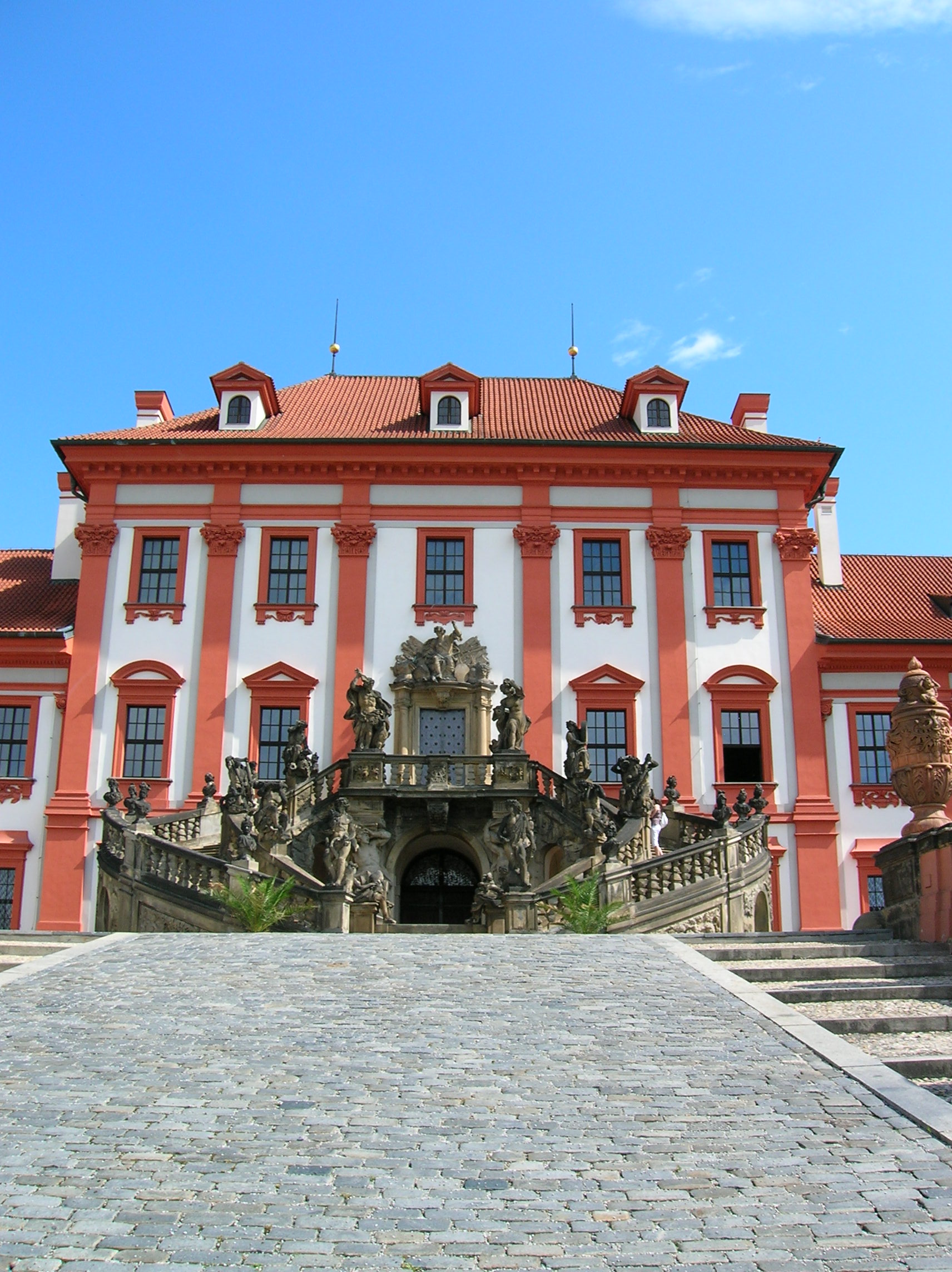
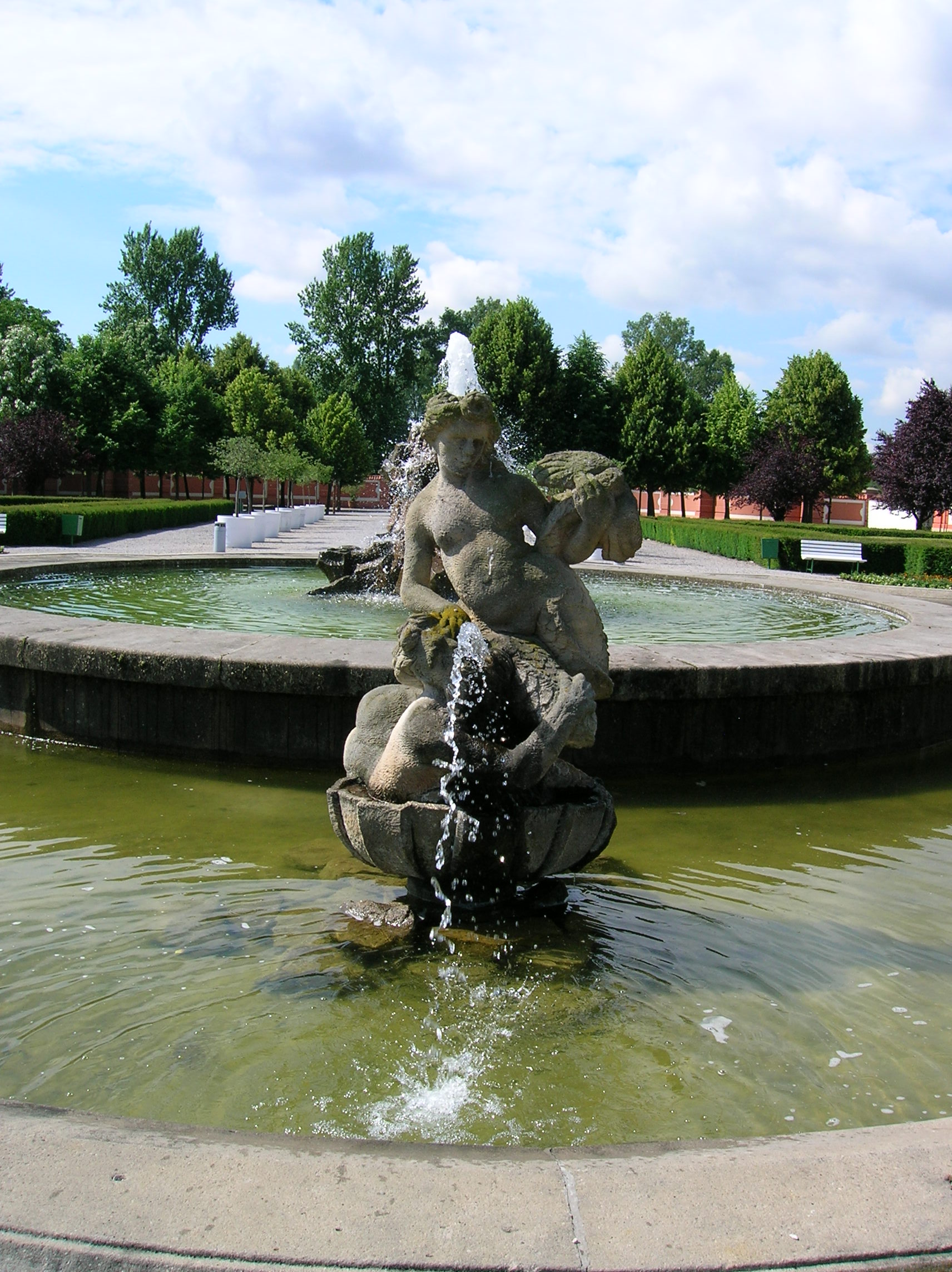
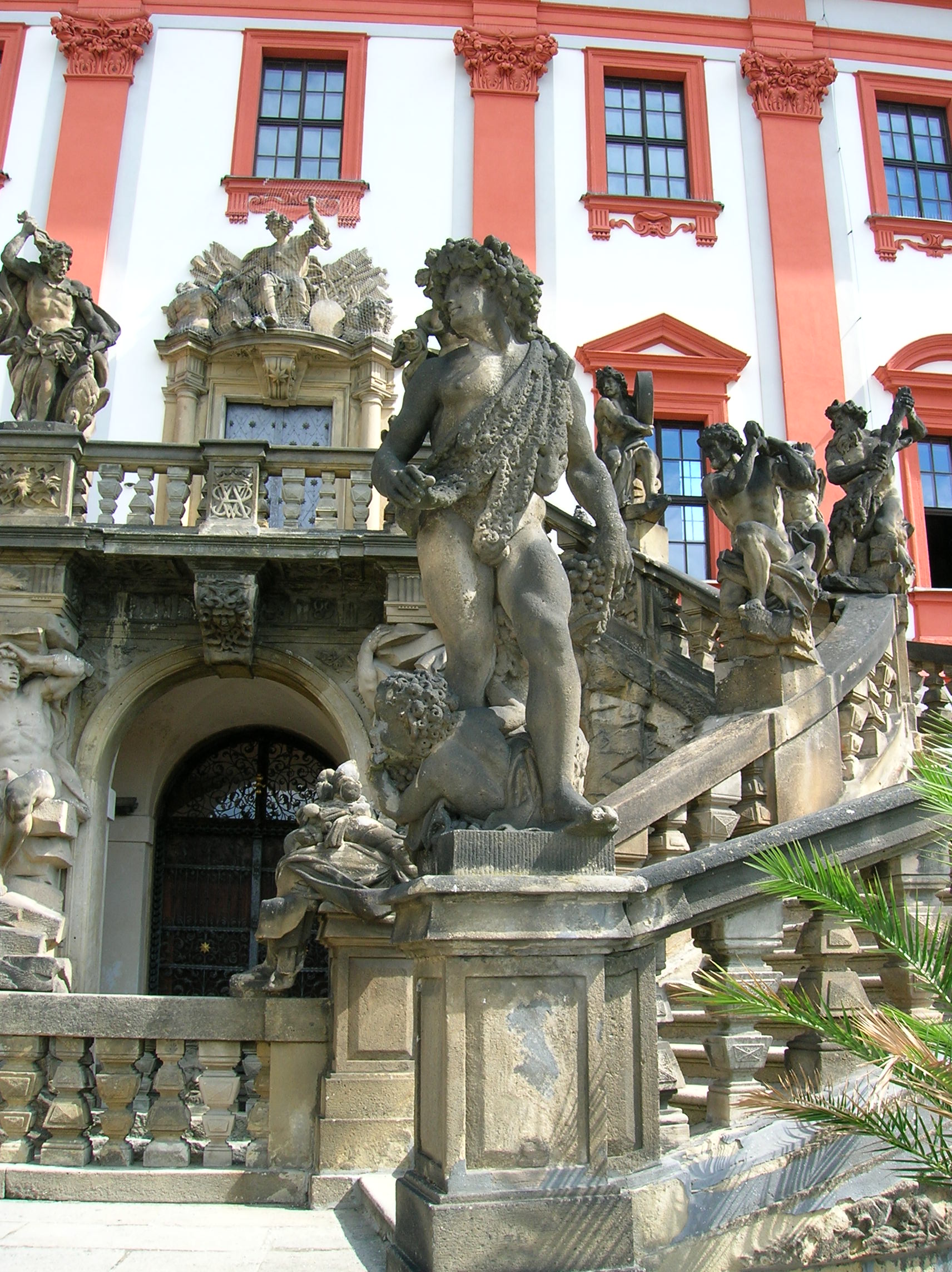
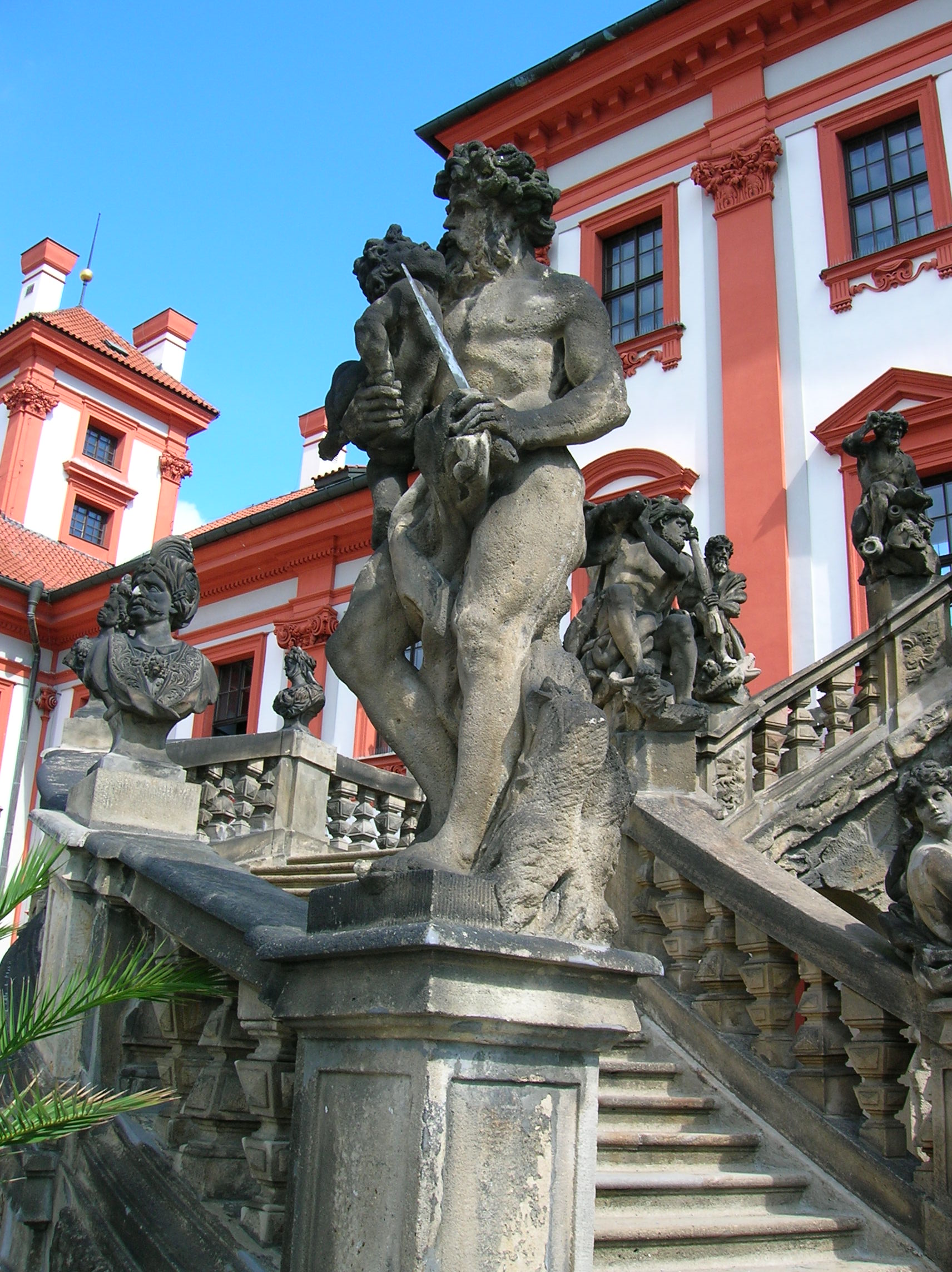
Troja2Inspired by the Roman villas he had seen during a stay in Italy, French architect Jean Baptiste Mathey designed the unconvential building with its main entrance facing the French garden. I loved the statue-flanked, two-sided staircase leading to the front doors. From the statuary created by George and Paul Heermann, I picked out the gods Hercules, Pallas Athena and Jupiter as the deities defeated the Titans.  I also was enthralled with the pilasters that displayed stars symbolizing the Šternberk clan as well as the grapes and rabbit heads that decorated the ornate façade. In the garden I took note of the busts of emperors and the fountains. The large terracotta vases added an elegant touch to one of my all-time favorite gardens.  I photographed the fountain depicting Neptune with a dolphin at his feet. I wished I had no pressing engagements that day and had time to sit on a bench near the chateau and read for hours.

Troja5When the chateau opened, a large group of more than 30 seniors marched through the entrance, and I had to wait for the second tour at 1:30 pm because the seniors had booked a tour in advance. I liked it better when you could walk through the rooms by yourself without a guide. I preferred to take my time and soak up the atmosphere of each room, reading the clear descriptions carefully and taking note of all the symbolism. I waited on a bench at the box office, noting that even this room was richly decorated with a frescoed ceiling of galloping, white horses pulling a golden chariot and a green and white tile stove.

Soon it was time for my tour. As usual, the space that impressed me the most was the Habsburg Hall, where frescoes on the ceiling and walls have a Baroque tromp d’oeil effect, and painting pretends to be plastic with illusionary statues, reliefs and busts. I gazed at the swirling scenes on the ceiling that depicted the Christians’ victory over the Turks and almost became dizzy. It was too much to take in at one time. I noted that the golden triangle in the center stood for the Holy Trinity and saw the three theological virtues of Hope, Faith and Love take a trip on a cloud.

Troja13When I looked at the western wall, I was immediately drawn to the defeated Turk flying through the air. I turned around, facing east, and took in the fresco of Justice celebrating victory over Injustice. Vice, Folly, Egoism and Avarice gathered around a fireplace, unsuccessful in their pursuits. I lifted my gaze and could hardly catch my breath as Holy Roman Emperor Conrad appeared with Albert Habsburg.  I had read that the blood on Albert’s robe and the white color that is only under the belt inspired the Austrians to make red and white their flag colors.

I had yet to absorb the scenes on the northern side, where a story focusing on Count Rudolf Habsburg, who later became emperor, played out. While hunting, he ran into a priest who was hurrying to the sick, and the count gave him a horse. The priest foresaw that Rudolf would one day be crowned emperor. Because I had visited so many castles and chateaus, I easily identified the very physically unappealing Holy Roman Emperor Leopold I with his long, dark mane of hair and ugly features. I tried to focus on each illusionary statue. I wanted to fully appreciate the reliefs of Habsburg emperors and Spanish kings, but my head was overflowing with too much visual information.

Troja8My other favorite rooms were the three Chinese-decorated spaces, dominated by remarkable wall and ceiling frescoes. I noticed boats, a meandering river, bridges, a town in the background and a rocky landscape as well as Chinese people, exotic birds, curved roofs and palm trees. A bridge with black marble pillars caught my attention.  I sensed that the gushing waterfall was about to tumble into me and took a step backward.

I could not forget the chapel, which ties with the Chinese rooms for my second favorite space. The black Madonna always took my breath away. A crowned Virgin and Child were clad in clothing with golden swiggles, draped around them as if they were wrapped tightly in a blanket. I was especially entranced by the details of their curly hair on the original statue.  I turned my attention to the large paintings of Christ’s last hours alive. The rendition of the crowning of Christ with thorns was especially moving.

Troja9There was also a new art exhibition in the chateau, which was one of the reasons I had chosen this time to visit the chateau.  The gallery of Czech landscape painting from the 1880s took up several rooms and illustrated how Classicism had given way to Modernism. I spotted some 20th century art as well.  Antonín Hudeček’s painting “The Sea” fascinated me. Composed of dark blues and greens, the work amazed me because I could almost hear the waves crashing on the rocks that were reflected in the water. Hudeček’s “Wooded Landscape” evoked optimism and delight as the trees were depicted in bright, airy colors under a pink, white and blue sky. It was altogether different than the dark and brooding creation, “The Sea.”  

Troja11Another painting that spoke to me was Václav Špála’s “Plakánek Valley,” a vibrant mixture of greens and pinks, simple shapes that created a dynamic whole. In Jindřich Prucha’s “Under the Tree” a solitary woman, clad in blue, sat under a big tree, surrounded by lush, green scenery. The guide explained how the painting depicted the darkness of the days leading up to World War I, but I only saw loneliness and emptiness. The sense of solitude and the sense of the figure being swallowed up by the environment did not evoke darkness for me. On the contrary, the green scenery gave me a positive feeling. In Zdenka Braunerová’s “Landscape After the Rain Viewed from Tábor,” I was smitten by the dark skies looming over the two small cottages in the green landscape.  I liked the works of Antonín Slavíček in the rooms as well.

There are many intriguing ceiling and wall frescoes in the chateau. One that I particularly enjoyed looking at portrayed Bacchus, the god of wine, with putti flying around him as he chugged down wine. The other side showed the morning after the drunken escapade. The putti had to hold each other up, and Bacchus was carried on the shoulders of several figures.

Finally, I left, wishing I had been allowed more time in each room. I knew that before long I would be back again to see one of the most captivating and underrated places in Prague.

Tracy A. Burns is a writer, proofreader and editor in Prague.

Troja12

Velké Losiny Chateau Diary

ImageDuring an Easter vacation in Olomouc, I decided to pay a visit to the chateau in Velké Losiny, which was a two-hour bus ride away. I was enthusiastic about seeing the chateau as I had recently read Václav Kaplický’s Witch Hammer, based on the witch trials that took place in northern Moravia from 1678 to 1692. In both the book and real life, Deacon Kryštof Alois Lautner tried to protect those branded as witches from a cruel fate, but even he wound up on the stake. I thought it was interesting that the witch trails in what is now the Czech Republic had been confined to two regions of northern Moravia, where there was a mostly German-speaking population.

It terrified me that people could believe such terrible superstitions and that because of those superstitions they could torture and kill fellow human beings. For 15 years, when the emperor’s inquisitor Jindřich František Boblig from Edelstadt occupied the chateau, more than 100 people from the regions were killed, 56 of them from Velké Losiny. The opportunity to see a place where such religious intolerance was carried out sent a chill up my spine. The very idea of people being burned as witches terrified me; yet I just had to see this place with my own eyes.

It made me sad that, although there are no longer witch trials, religious intolerance in such extreme forms still exists today. There were so many examples of religious intolerance in the modern world that it frightened and disgusted me.

As the bus took me north, I saw more and more snow on the ground, even though it was spring. I was the only person on the bus without skis.  Many were even standing in the aisle because all the seats were taken. When the bus came to Velké Losiny, it passed the white three-winged Renaissance chateau with beautiful arcades but didn’t even slow down at the stop. The driver evidently thought he only had skiers on board, and no one was waiting at that particular stop. I spoke up frantically that I needed to get off the bus, and a skier quickly told the driver. Finally, the bus let me off. About 15 skiers had to disembark from the bus in order for me to get out. Luckily, even though the driver hadn’t stopped where he was supposed to, I still wasn’t far away from the chateau.

VelkeLosinycloseupWhen I approached the chateau, I noticed the exquisite sgraffito on one wall of the Renaissance wing from the 1680s and discovered that the chateau was really made of two parts: the Renaissance palace with arcaded courtyard and a Baroque two-storey building. The arcades in the courtyard gave the chateau a dignified look, I thought.  They dated from the 17th century, and the Baroque arcades were decorated with sculptures of dwarfs. It wasn’t until the tour that I realized the Renaissance windows were the oldest in Central Europe.

The guide explained that the Žerotín family had owned the chateau for more than 300 years, until 1802, and that Jan the Younger of Žerotín had built the Renaissance palace, a project that was finally finished in 1589. Also, this particular Žerotín, in 1596, founded the paper mill nearby, where paper was made by hand even today. It holds the distinction of being the only paper mill in Europe that makes paper by hand. During the Thirty Years’ War, the Žerotíns did not lose their property even though they did not convert to Catholicism. The Lichtenstein family took over the chateau from the Žerotíns in the 19th century because the Žerotíns were experiencing financial difficulties. The Žerotín portrait gallery in the chateau dates as far back as the 17th century, the guide pointed out.

Lake at Velke LosinyOn the tour, which consisted of only the guide and me, I stood on a parquet floor that was 400 years old. One 400-year old door was beautifully decorated with intarsia. In the Knights’ Hall I marveled at a majolica tiled stove, the third oldest in the Czech Republic, dating from 1585. The white, brown, blue and green colors intrigued me. The leather wallpaper also caught my attention. One of the two oldest leather wall coverings in the Czech Republic, it was decorated with floral ornament and a joint coat-of-arms of the Žerotín and Oppersdorf families. It dated from 1660. I especially liked the griffin with elaborate wings that stood for the Oppersdorfs. I looked up and thought I saw a panel ceiling, but it was only an illusion. The ceiling was, in fact, painted  in magnificent blue and gold colors. I also saw a Renaissance cupboard that was 400 years old, from the last quarter of the 16th century.

The guide informed me that above this space was a large room with a beamed ceiling where the witch craft trials took place in 1678, but the room was not open to the public. What a pity, I thought. That would be something to write home about! And to think I was standing in the room right below it!

In the library founded by Jan of Žerotín, the books ranged from the 15th to 19th century and were written in Latin, German and Czech, for example. They covered topics about horses, astrology and law, to name a few. In the center of the room, I saw a Renaissance reading pulpit made of ebony inlaid with ivory. I was especially intrigued with a leather wall covering that featured golden arabesques. Lions figured in some corners on the borders of the wallpaper.

In another room I saw the thrilling painting, “Night Festivity in Sienna,” which depicted firecrackers going off over a square. I liked the elements of fantasy in the picture that most likely dated from the 18th century.  I set my eyes on beautiful Baroque tapestries with motifs of a legend about Cupid and Psyche. They were woven around the middle of the 14th century. One tapestry illustrated a scene with Cupid and Psyche. A second tapestry showed Psyche and her two sisters. A third portrayed Mercury, Zeus and other gods at Cupid and Psyche’s wedding.  I saw even more tapestries in the chateau, and the guide proudly explained that this chateau had the second most tapestries in Moravia.

A set of four more tapestries decorated another room. The first showed Antony meeting Cleopatra; the second was titled, “A Torchlight Feast”; the third elaborated on the theme of Cleopatra’s and Antony’s love for each other; and the fourth, dating from 1560, dealt with Roman history as it portrayed the heroic young Roman Mucius Scaevola, who tried unsuccessfully to assassinate Etruscan king Lars Posenna. Because of his courage, he was not killed, though his right arm was badly burned. This particular tapestry dated from the second half of the 16th century.

In another room an early Baroque cabinet from Spain was inlaid with ivory. The drawers featured pictures made of tortoiseshell and ivory. I was enthralled by a small carved altar from Peru or Chile. It dated back to the 17th century, most likely. I saw even more leather wallpaper, this time from 1640, and a Baroque panel ceiling. I also took note of a Spanish bureau dating from the 17th century; it was called a vargueno. One particular painting fascinated me. It carried an inscription in an old form of the Czech language and showed a woman praying and Christ on the cross. Hailing from 1566, it was the funeral picture of Magdelene of Zástřizl, marked with the date of her death, the same year the painting was executed.

Then the guide and I came to a room where a copy of the official, thick book about the witch trials was displayed. She mentioned that among the 56 victims had been a Catholic priest. I imagined Boblig flipping through that fat volume, feeling pleased with himself, choosing which woman to torture next. Those thoughts both angered and terrified me. The atrocities of that period were too much for me to fathom.

In the two chapels, decorated by Jan Kryštof Handke and dating from the 1740s, I set my eyes on an astounding ceiling fresco featuring allegorical figures representing the four continents. A man with a parrot stood for America. Why Handke had chosen this particular symbol for America, I did not know.  Other figures included a kneeling woman with a crown to represent Europe, a man with a turban to denote Asia and a bowing black man as Africa.

The big chapel also featured a marble Rococo altar and a Renaissance altar of Madonna with child. The organ from 1723 still worked, the guide claimed. The fresco ceiling painting in the small chapel was the inspiration of Handke as well, and Baroque elements had been added to the late Renaissance altar. A copy of a Gothic statuette of Madonna of Altotting, from the Bavaria region of Germany, dated from the 14th century. Silk paintings also decorated the space.

The Empire Wing, where the Lichtensteins had lived, featured light wood Beidermeyer furniture. The porcelain was from Slavkov in the Czech Lands and from Vienna, Austria. The park, from 1802 in the English style, included eight sandstone sculptures of dwarves from the 1830s and a fountain decorated with a sculpture featuring fish and putti.

I left the chateau, astounded, unable to take in all I had seen, and set off for the paper mill nearby, where I went on a one-hour tour of the place. Founded in the 16th century, it was one of the oldest paper mills in Europe and was now the only existing one. Even the wife of a stationer who had worked here had been burned as a witch during Boblig’s reign. The handmade paper was made from cotton and flax. Some items in the museum included examples of Japanese handmade paper and a model of a paper crusher. I saw how paper was dried by hanging it on poles and learned about press compaction and the drainage of paper, among other things.

Then I found a restaurant in a hotel, ate a big meal of chicken, peaches and ham, wrote some postcards and soon left for the bus stop. This time, I hoped the bus would stop at the designated place.

It did.

Tracy A. Burns is a writer, proofreader and editor in Prague.

Arcades of Velke Losiny Chateau 2

Nelahozeves Chateau Diary

Nelahozeves courtyard

A comfortable 40-minute ride in a new, clean train. That’s all it took to get from Prague’s Masaryk station to Nelahozeves chateau in the village by the same name as it is a mere 30 kilometers from the capital city. Then it is only a short walk to the two-storey chateau. It was my third time here. I especially love the plethora of art work in the Italian Renaissance three-winged structure. Even from the train I could see the chateau, appearing as a sort of fortress looming above me, with its enchanting sgraffito-decorated northern wall facing me. I crossed under the oldest railway tunnel in Bohemia, dating from 1851 to 1855 and constructed in Neo Romanesque style, and then wound up gazing at the beautiful sgraffito on the façade.

Floral motifs decorate the northern wall as do scenes from The Old Testament. For example, on the wall Judith holds the head of Holofernes, Hercules fights the giant Antacus and Isaac is sacrificed. Virgil Solis, a follower of the master artist Albrecht Dürer, is responsible for the design. After crossing a stone bridge, I went through a gateway flanked by Ionic columns and arrived at a rectangular courtyard. The box office was straight ahead.

Nelahoz22

The history of the chateau intrigued me, as it had become intertwined with the Lobkowicz family, who bought the chateau in 1623. Bavarian aristocrat Florian Griespek of Griespek constructed it, and his successor Blažej put on the finishing touches in 1614. It took 60 years to build the chateau. Griespek had an interesting background. A former court official of the Holy Roman Emperor and King of Bohemia Ferdinand I, he had spent time in Prague’s White Tower for charges of high treason. Thanks to Ferdinand I, though, he became a free man again. It was his granddaughter Veronika who sold the chateau to Polyxena of Lobkowicz. The intriguing history does not end there. Not at all. During the Thirty Years’ War, the chateau was occupied by Swedish troops and those of other nationalities as well. Then it served as a military hospital during the Austrian-Prussian War. Later it was the home of a girls’ boarding school. During World War II and under the Communist regime the items in the chateau were scattered in various locations.

Restoration did take place after World War II when it became the property of the Czechoslovak state. Then, finally, in the early 1990s, the Lobkowicz family became its owners once again. The current owners live in the USA, while their son William takes care of the noble residence. To be sure, many of the Lobkowicz clan had been active in Czech politics and culture. For example, Polyxena’s son Václav Eusebius worked as an advisor to Holy Roman Emperor and King of Bohemia Ferdinand III and Holy Roman Emperor and King of Bohemia Leopold I. Also, Max Lobkowicz focused his energy on the Czechoslovak exile government in England during the Second World War. During that time he also served as Czechoslovak ambassador to Great Britain.

NelahozevesMay176

Perhaps the chateau is best known for its paintings.  In the Gallery of Portraits I saw paintings of members of the Lobkowitz family from the 19th and early 20th century. In my favorite, a woman in a stunning blue dress holds a budding pink rose. An admirer of Lucas Cranach the Elder’s works, I spent some time gazing at his “Madonna with Child, Saint Barbora and Saint Kateřina” from around 1520. I noticed the calming green and blue colors in the horizon as a saint in the foreground read a black book. The Madonna looked pensive while the child appeared defiant. I liked the detail of the baby’s little fingers.

There is a Peter Paul Rubens’ masterpiece on display as well. It is called “Hygieia feeds a sacred snake” and dates from circa 1614. The Baroque gem shows a snake with its mouth open, appearing famished. I could almost see its tongue flicking in anticipation.

NelahozevesMay17

My beloved Bruegel clan is among those represented in the chateau’s art work, too. Pieter Bruegel the Elder’s “Haymaking” dates from 1565 and depicts women walking in the foreground, gripping hoes, while others carry baskets on their heads. Horses, used for carting hay, drink from a bucket in the middle of the foreground as people toil in a vast field. The gigantic cliff to the left in the background caught my attention just as the blue and green mountains and river did. The painting depicted two months of the year, illustrating June and July. Then there’s a winter village scene, idyllic and calming, by Pieter Bruegel the Younger around 1615.

NelahozevesMay1712

But that’s not all. In Canaletto’s “Thames with Westminster Bridge” from 1746 I noticed the gentle frolicking of the waves and appreciated the details of the boards, sails and oarsmen. Hundreds of black-and-white prints depicting hunting themes also line the walls of a hallway.

My favorite three paintings, though, made up a satirical series of cats posing as female nobles and monkeys representing the male nobility. They are located in a small room filled with 47 paintings. The works by Sebastian Vrancx, who lived from 1573 to 1647, include one depiction of monkeys sword-fighting. I was drawn to the bright red clothing with the stiff collar of one particular monkey as he lunges forward to strike another monkey that had fallen onto the ground. A cat on the sidelines flails her arms, as if saying, “Enough already!”

NelahozevesMay172

Another shows cats and monkeys at a banquet. Two monkeys working as waiters had a well-ironed cloth over one arm. A plain chandelier is overhead while one monkey brings a kettle to a table full of chattering cats. I could almost hear the chit-chat of the seated felines.

In the third rendition cats and monkeys are on a boat in a river. A palace or manor house and another boat make up the background. One monkey reads aloud from a book while another plays the piccolo. I thought it was intriguing that the painter chose to place a monkey with his back to the viewer in the center of the foreground.

On the tour I saw much more than paintings. For example, the library contained 65,000 books, written in German, Latin, Hebrew, Italian, German, French, Spanish and Czech. There were 679 manuscripts, and 114 of them date from the Middle Ages. Subjects ranged from history, medicine, architecture, literature, law and travelogues. However, only a small portion of the books are on display in the chateau. Still, I was fascinated by the 1696 French first edition of The Art of Swimming, which ranked as one of the earliest books on the subject.

NelahozevesMay1711

In the Drawing Room I set my eyes on a gold Empire-style table, made with gems and decorated with intarsia. On the black table were pictures of apples, birds, and fruit and flowers in ornate bowls. In the room where the prince welcomes guests, I saw a black cabinet from the 17th century, decorated with pictures of biblical themes, birds and flowers.  In the chapel there was a three-winged altar with pictures of an angel, a man on a chariot with a skeleton to his side and a man in a long robe pointing at a manuscript on a podium.

The Dining Room exhibited exquisite Venetian decoration encased in glass. I was also impressed by the desk made out of antlers, located in the armory. In the middle of the room was a rifle for bird-hunting, decorated with a grotesque brown mask, a black ball in the creature’s mouth. Then there was the beautiful Knights’ Hall with paintings of knights on the walls and a sandstone fireplace from the 16th century. Stucco reliefs adorned the ceiling. At one time, many centuries ago, this room used to be the social center of the chateau, with its Renaissance décor.

Nelahoz23

After the tour I wanted to get something to eat in the delightful restaurant upstairs, but it was open only to groups who book it in advance. In past years, it had been open to the public. I made my way back to the train station- a small, brick building that was more of a stop than a station. I passed Antonín Dvořák’s birthplace, a white house that was open odd hours. It was a pity the house-turned-museum was not open; I would have liked to have visited the place again as I had not been there for many years.

A comfortable, clean train came on time, and I headed back to Prague in the early afternoon.


Image

Hrádek u Nechanic Chateau Diary

HradekuN2020ext3

On a hot Friday morning in August, I went to one of my favorite chateaus, the small yet enchanting Hrádek u Nechanic, situated west of Hradec Králové, a major town in east Bohemia. Once again, I changed buses at Hradec Králové, a station I now felt I knew intimately. (Note: I would visit it again in July of 2020 and be just as amazed by its exterior and interior.)

HradekuN2020ext4

When I reached the chateau, I was struck by its cheerful, romantic, dark orange façade that made it look like it belonged in a fairy tale. After getting my ticket, I walked to the back of the chateau and noticed that this part of the park bordered on a golf course. What struck me most, though, was how the back side was not a playful orange but a mundane grey that was badly in need of a paint job. It even looked a bit dilapidated. A wire fence was set up in front of this side of the chateau. To the far left, though, I climbed a few stairs that led up to the chateau as another wing was painted that dynamic dark orange.

HrádekuN7

At the beginning of the tour, the guide pointed out the lantern lamps hanging on the walls. They harkened back to the 16th and 17th centuries and had been created in Venice. Hunting trophies also adorned the walls. Then the guide acquainted the group with the chateau’s history. While the village dated back to at least the 14th century, the chateau was young, a 19th century construction built in the Neo-Gothic style of English aristocratic homes reminiscent of the times when Queen Elizabeth I and King James I reigned during the 16th and 17th centuries.  Count František Arnošt Harrach of the prominent Harrach family was responsible for building this intimate chateau in 1839. A patron of the arts, he also supported the construction of the National Theatre in Prague.

HrádekuN4

From the July 3, 1866 battle of Hradec Králové during the Prussian-Austrian war to November of that year, the chateau served as a military hospital for the Prussians and was subsequently heavily damaged. Tents had been set up outside the chateau.  In 1884 František Arnošt’s son Jan Nepomuk Harrach took over. A distinguished Czech politician, he also was keen on the arts, giving his support to Czech artists such as Karel Jaromír Erben and Bedřich Smetana.

HradekuN2020ext11

When Jan died, the property was passed on to his brother Otto and then on to Otto’s son Jan, who lived there until 1945, when the Beneš decrees declared the property be handed over to the state. The controversial Beneš decrees declared Germans, Hungarians and collaborators living in the Czech lands and Slovakia would have to relinquish their Czechoslovak citizenship and property without compensation. Approximately three million ethnic Germans and Hungarians were expelled from the country from 1945 to 1947. The chateau was open to the public as early as 1953. It did not become a National Cultural Monument, though, until 2001.

HradekuNint1HradekuNint2

After putting large slippers over my shoes, I followed the group into the Knights’ Hall, a small room that happened to be the biggest in the chateau. I noticed that the floor had a black-and-white diamond pattern. Coats-of-arms decorated the space above the two doors and just below the ceiling. Portraits of Harrach family members dotted the walls. I noted the exquisitely carved backs of the chairs – there were nine of them. I remembered how this entire chateau had always enchanted me with superbly and ornately carved wooden furniture. That was one of the reasons I liked it so much. I found the dark wood appealing, and it made the small rooms feel cozy, perfect for a cup of hot ginger tea on a windy, wintry night. This is definitely a chateau I would not mind living in, if it were not so far from Prague. In the center of the room stood a stone table from the 16th century, decorated with writing and coats-of-arms. Looking up again, I spotted the Lobkowitz family’s coat-of-arms just below the ceiling near the door we had come through. It boasted two black eagles complemented with red and white colors.
HradekuNint55ceilingHradekuNint56HradekuNint57wallpaperHradekuNint60HradekuNint51

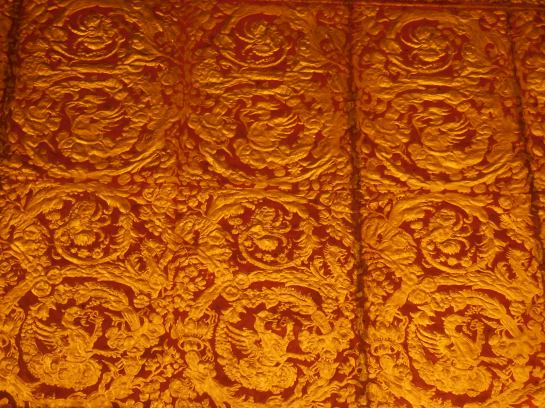
The Golden Hall next on the list was the most riveting space in the entire chateau. Its gold-plated leather wallpaper that featured golden swirls on a dark red background astounded me. The marble fireplace weighed 11 tons, and the tableware was 16th century, from Italy. What looked like a roll-up desk was revealed to be an upright piano. The guide lifted the lid to reveal a keyboard. Opening the two doors above the lid revealed the piano strings. But that was not the only object in that room that amazed me. A figure of a black eagle with a crown had a golden clock on its breast. It used to be able to wave its wings, too. This was the clock of Emperor Leopold I from the 17th century, the one a Russian tsar had given him. It is one of two in the world; the other graces the Hermitage Museum in Saint Petersburg.

HradekuNint63chandelierHradekuNint65

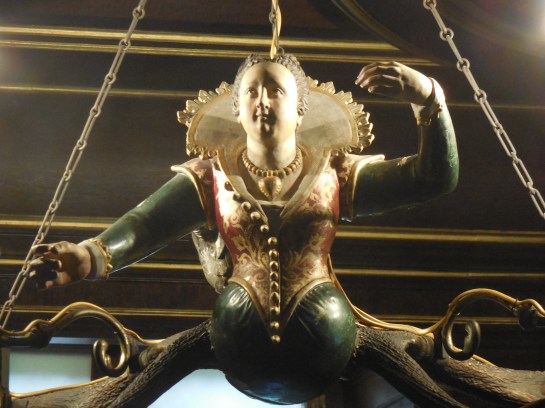
I was also entranced by the chandelier in the Breakfast Room. It featured a figure with a head and body. Its legs had been replaced by antlers that branched out to all sides. It reminded me of a creature from a fairy tale, one that was on the side of good rather than evil. Again, I admired the richly carved backs of the chairs.

HradekuNint72HradekuNint66HradekuNint68HradekuNint70

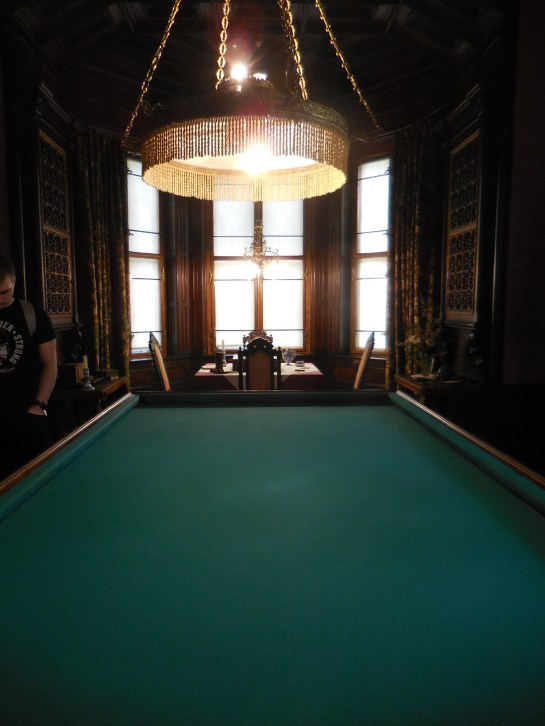
The Dining Room featured plates and ceramics situated on high shelves around the walls. They hailed from 16th and 17th century Italy and Germany. What looked like a brown and white water fountain once had been used to pour wine on tap. Predictably, in the Billiards’ Room there was a big pool table. Yet the holes had been covered over. A brown with gold décor grandfather clock hailed from 18th century Berlin. The dominant 16th century painting “Celebration in the Spa” by Dutch artist Lucas van Valckenborgh featured hills and a forest dotted with people. The picture was so detailed that if you looked closely, you could see a couple holding hands far in the background.

HradekuNint79libraryHradekuNint75libraryHradekuNint76libraryHradekuNint77chandelier

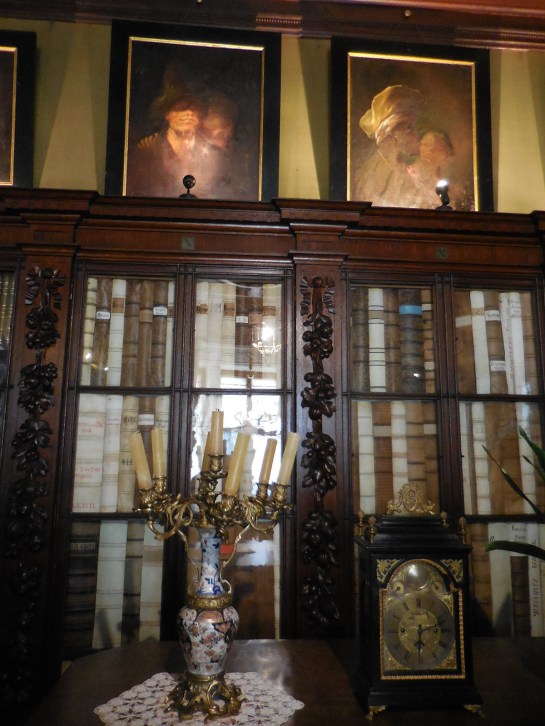
I marveled at the next room, the library, which housed an impressive collection of 19th century Czech and Slovak books. Usually chateau libraries held few, if any, books in Czech, and I had not heard of any carrying works in Slovak. The room was also home to many publications in English, French, Latin and Greek. There was even one book in Hungarian. But the books were not what caught my undivided attention in the library: The portraits hanging high on the walls did. There were 12 portraits of people’s faces, all with various diseases that resulted in deformities. I had to turn away when I saw the swollen warts on one man’s neck. Another had evil, demented eyes, his mouth open as if screeching in pain and anguish. The portraits also reflected the anti-Semitism and racism of those times by portraying an Arab, a Black man and a Jew. I was relieved that society no longer condoned such revolting prejudices. At the same time, I knew that society still had far to go in the anti-Semitism and racism departments. (When I visited in 2020, seeing the portrait of the Black man reminded me of the systemic racism in America and the murder of George Floyd as well as many others. Even though I was living in Prague, I had watched part of the protests and the moving funeral of Floyd on TV.)

HradekuNint9wallpaperHradekuNint10

Now on the first floor, we came to the Count’s Hall. The gold, blue and green leather wallpaper immediately caught my eye. The guide pointed out a faded pink armchair that was adjustable, able to move up and down. When the back of the chair was in the down position, it looked like a coffin. It so happened that František Arnošt died in that chair.

HradekuNint35HradekuNint36HradekuNint11


The Count’s Study featured a chandelier from Murano and a Renaissance desk. The guide showed our group what looked like a golden miniature telegraph but was really an alarm clock. Even the trash can was elaborate; it was made of carved wood.  How I would love to have a garbage can like that!

HradekuNint15ptngHradekuNint14chandelierHradekuNint16bed

We continued to a bedroom with an icon from the 15th century, the oldest object in the chateau. I liked its bright colors; it had a distinctive vibrancy.  The guide showed us a chandelier that was electric; electricity had been installed in the chateau in the early 20th century. It hung from a flexible band that could be pulled up and down.

HradekuNint18wallpaperHradekuNint20HradekuNint22

We walked through the guest rooms, where historical personalities such as Czech ethnographer and patron Vojta Náprstek had stayed. The exquisite carving on the doors also drew my attention.  On one wall I noticed the black-and-white engravings of an ancient city’s ruins – was it Rome? I saw a lovely, light blue bed frame with floral decoration in one of the rooms as well. Finally, we entered the Family Halls. Landscapes covered one wall. I noticed an impressively carved jewelry box with detailed wooden drawers. On the walls were black-and-white engravings of portraits of Habsburg generals. One of the earliest digital clocks was on display, too. It had a white square and a number in black on top of one other. The top number read two, the bottom one 59.

HradekuNint28HradekuNint31HradekuNint32HradekuNint25

Almost last but certainly not least was the Oriental Hall, which I don’t seem to have pictures of from my 2020 visit. I could hardly believe my eyes when I saw the ornate, detailed craftsmanship of the wooden furniture from China. I could not recall being more impressed by any other wooden furniture in all of the chateaus I had visited.

HradekuNint85chapelHradekuNint86chapelHradekuNint88chapel

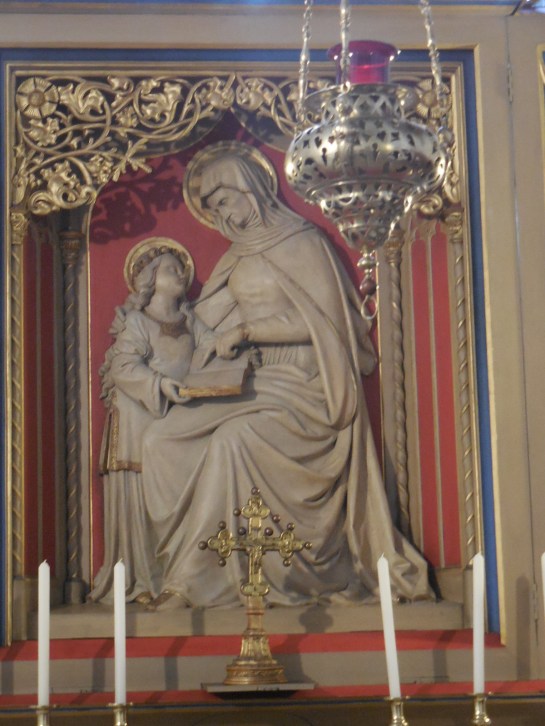
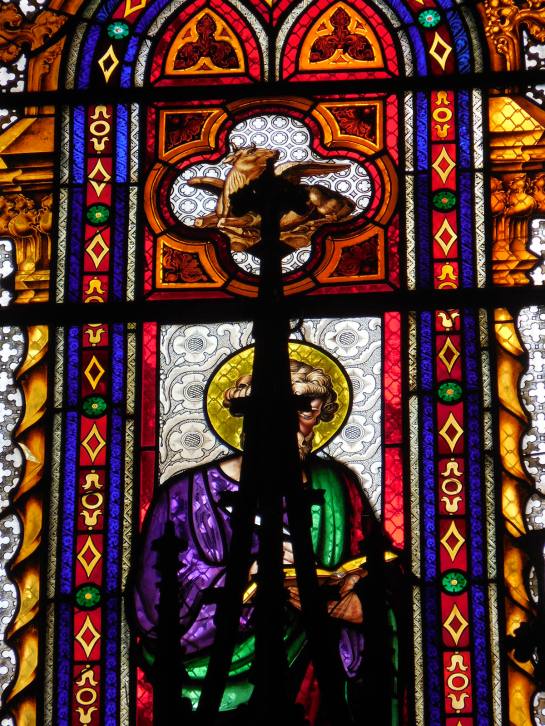
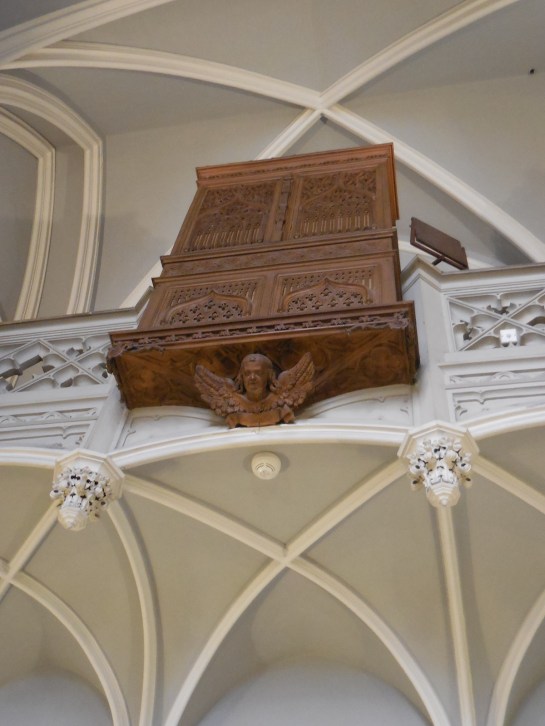
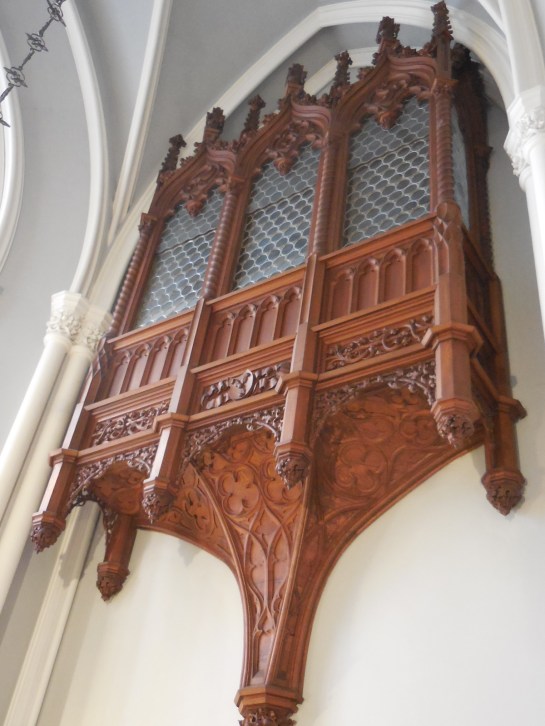
The chapel was dedicated to Saint Anna, who was depicted reading to a child in the altarpiece that consisted of lively, red, blue and tan colors. The stained glass windows were also a sight to behold. The men’s oratory was made of finely carved wood.

HradekuNint89chapelHradekuNint90chapel

The tour ended as a thunderstorm ensued. I wanted to take refuge in the cozy rooms of the chateau with dark wood lining. Yes, this chateau was still one of my favorites. I ventured outside and into the downpour, unable to get the images of all that exquisitely carved wooden furniture and lovely leather wallpaper out of my mind. (By the way, during my visit in 2020, it rained as well, but was an awe-inspiring trip nonetheless.)

Tracy A. Burns is a writer, proofreader and editor in Prague.

HradekuNint93chapelHradekuNint91chapel


Opočno Chateau Diary

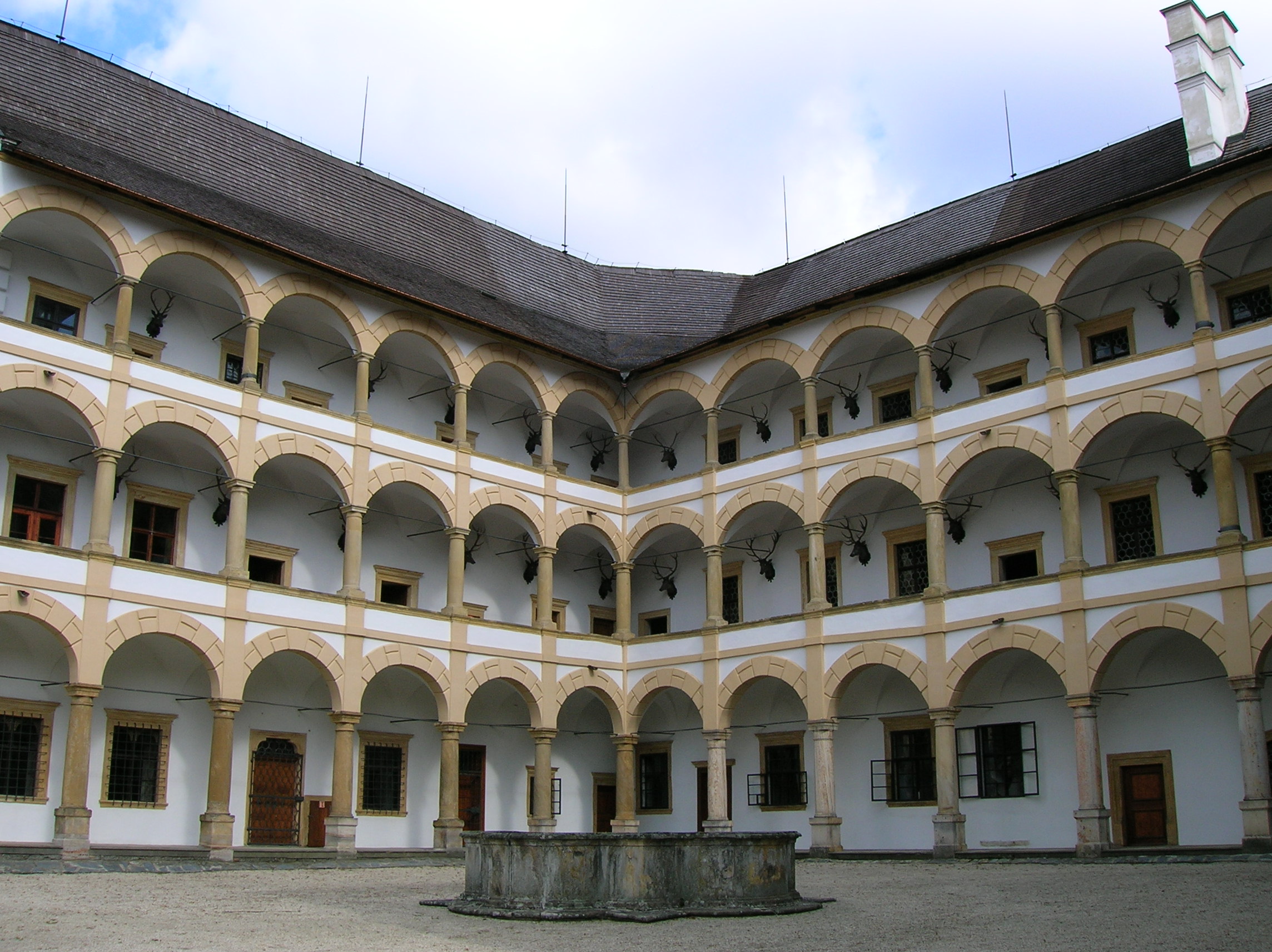
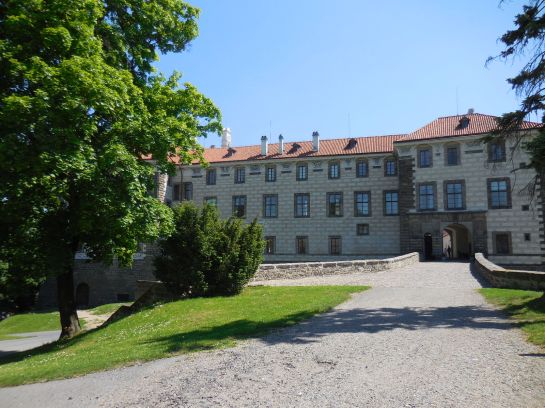
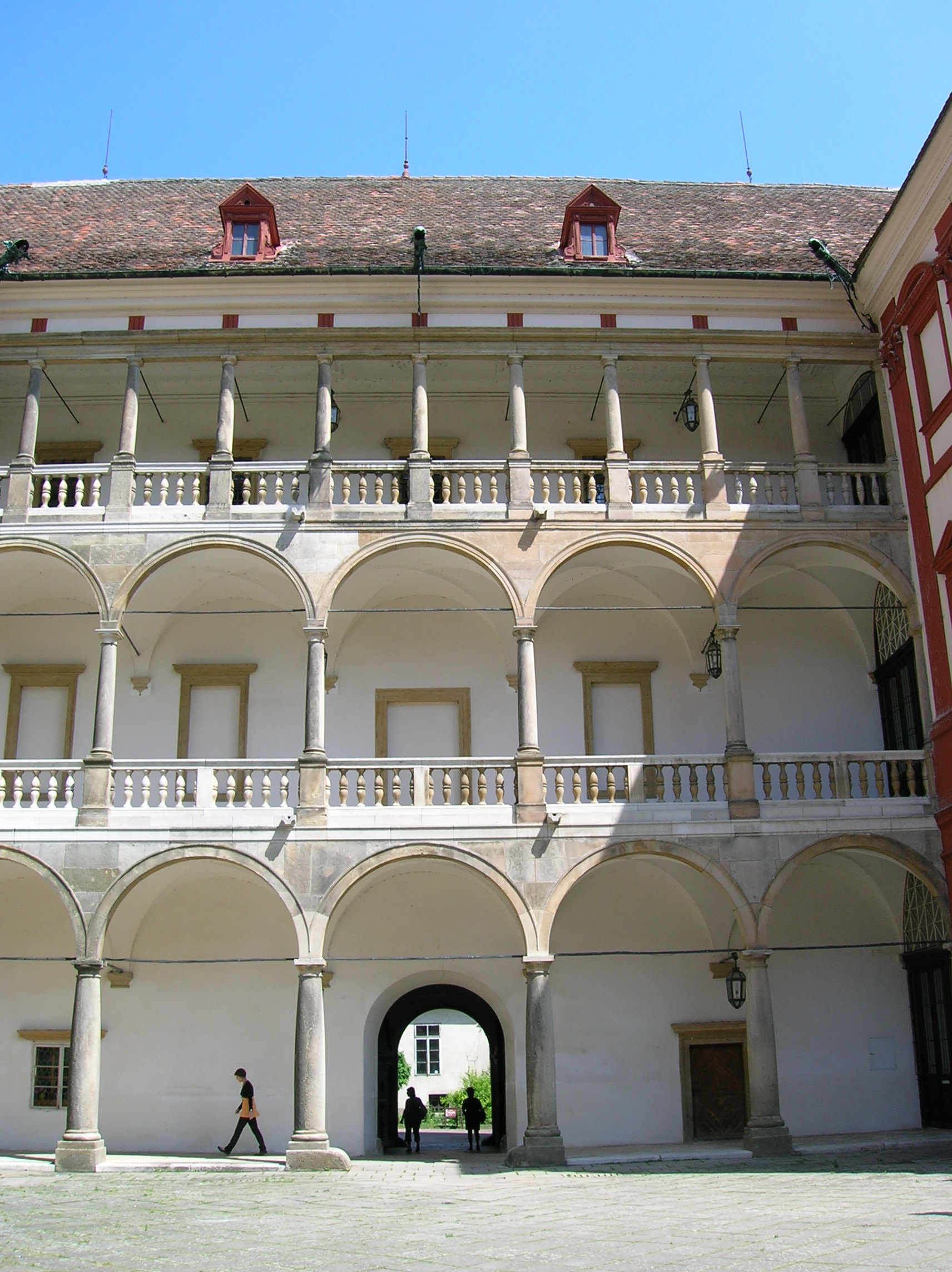
Opocnochateau3The trip went well. I changed buses at Hradec Králové after a little over an hour’s ride and then took another bus for almost an hour to the main square of the small town in called Opočno, where there is a chateau of the same name. I was in northeast Bohemia, near Poland, not far from the Orlické Mountains.  It didn’t take long to find the chateau as it was only 300 meters from the bus stop. After I bought my ticket, I walked through another courtyard and found myself staring at a façade with two-tiered light and airy arcades and a columned balcony on the third level. Flanking the arcaded façade were adjoining buildings of a pleasing red brick color complemented by white. Neatly trimmed circular hedges added color to the courtyard.

I had done enough reading about the chateau to know that the name Opočno conjures up a few intriguing stories connected with the chateau’s history. In the second half of the 15th century, the owner, Jan of Drslavic, protested against the legendary preacher and martyr Jan Hus being burned at the stake. Then he changed his mind and supported those who did Hus in. Jan Žižka, Hus’ successor with the Hussites, razed some of the surrounding villages and partially destroyed part of the chateau. Jan of Drslavic even hired a hitman to murder Žižka. He was unsuccessful.

When, during the 16th century, the Trčka family retained ownership of the chateau, Mikuláš Trčka Jr. not only reconstructed the chateau but also had his wife immured alive because she was unfaithful to him. Her lover was beheaded.

A significant historical event took place here as well. From June 16 to June 23, 1813 this was the setting for meetings dealing with the strategy to defeat French Emperor Napoleon Bonaparte. Austrian Chancellor Klemens Wenzel, Prince von Metternich; Russian Czar and Emperor Alexander I; and the King of Prussia, Friedrich Wilhelm III, were the main players in this historical drama.

Perhaps the 16th century is better known for the Trčka family’s work on the chateau. Jan Rudolph Trčka constructed a summerhouse and had built a garden and orangery with a Renaissance park and ponds. During the 18th century the façade took on a Baroque appearance.

The most significant changes, though, probably came about when Rudolph Joseph Colloredo-Mannsfeld became the owner in 1807. A greenhouse was built, and the English style park was filled with ponds and many types of plants, some of them exotic and rare. In 1896 the family moved their impressive picture gallery to the chateau.  At the beginning of the 20th century, Joseph Colloredo-Mannsfeld transformed some interiors into Rococo style.

His successor, though, was not so lucky. The Nazis overtook the chateau and grounds in 1942. After the war the chateau became the property of newly independent Czechoslovakia. The chateau underwent much restoration during the late 1980s and early 1990s, but disaster hit in 1998, when floods ravaged the park. It took two years to clean the mud out of ponds, bridges had to be rebuilt, and rare species of plants had to grow anew.

Although the Colloredo-Mannsfeld family asked for the property back during 1992, they did not get their wish granted until 2003. Some legal disputes have yet to be settled, though.

Opocnochateau1It was soon time for the tour. The first room I entered was the Ethnographic Hall, where I saw various objects from Sudan, Egypt, Central Africa, and South America. There was an Arabic sword and breastplate armor as well as a tonton drum.  Arabic furniture and the apparel of the Sioux and Apache Indians were also on display. The Central American Indians were also represented.

Swords, shields and armor from the 16th to 19th century adorned the staircase as did paintings of the chateau as it had appeared at the beginning of the 18th century. Colloredo-Mannsfeld family portraits also hung here.

The Chapel of Saint Anne, dating back to the early 18th century, took up two floors. It was adorned with a fresco showing the coronation of the virgin, a painted ceiling showing swirling figures and also images of patrons of the Czech Lands. It boasted rich wooden décor.  It was breathtaking to look up at all those swirling figures. I felt gripped by their beauty.

The Study boasted Italian commodes from the 16th to 17th century and a Neo-Renaissance wardrobe. One painting, called “The Twelve-Year Old Jesus in the Temple,” was executed by a follower of Hieronimus Bosch around 1550. The bright pink robe of one of the rather static figures caught my eye.

In the Smoking Room I was impressed with the glass – there was a collection of Venetian glass from the 16th century as well as Czech cut glass. German guild goblets, German pottery and Empire style Viennese porcelain also made the room intriguing. I spotted an ashtray shaped as a horn and made out of brown leather. I especially liked the hand painted vases and the glasses sporting coats of arms. I recognized pictures of Dobříš Chateau, near Prague, and Opočno Chateau on two glasses.

A Hapsburg dynasty portrait gallery called the Dining Room home. I spotted Empress Maria Theresa of Austria in a blue dress as well as Holy Roman Emperor and King of Bohemia Leopold I and his first wife, Margaret Theresa of Spain. I had visited enough chateaus to know that the pair was considered the ugliest and most faithful couple, according to legend. Somehow the curly, long black hair and moustache didn’t suit Leopold I’s disproportionate face, only making him more displeasing to the eye. Elaborate candlesticks were 200 years old, dating from the 18th and 19th century.

The chateau park

The chateau park

Flemish tapestries and hunting trophies from North America and Africa dotted the Game Room, which was also fit with a pool table. While I was always entranced by Flemish tapestries, I did not like hunting trophies, as I do not approve of killing animals for sport.

The Changing Room was distinguished by the 18th century Flemish tapestries with a hunting theme as well. Baroque still life paintings also adorned the walls. The guide told us that during the 18th century women could not show their ankles because it was considered the most erotic part of the body.

The Ladies Bedroom had a small bed because women remained in a sitting position while asleep so they wouldn’t mess up their elaborate hairdos. That was how the guide explained it. But I had also heard on many tours that people back then were afraid they would die if they lay down at night. I was particularly drawn to one black-and-white painting showing Empress Maria Theresa of Austria with 13 of her 16 children. Why only 13? Because three had already died before the painting was executed. The colorful chandelier made of Venetian glass will fall if an unfaithful man steps under it, the guide told us. I hoped there were no unfaithful men on the tour.

The Guest Rooms exhibited various styles of furniture, from Renaissance, Early Baroque and High Baroque to Classicist and Empire. In the Classicist room I noticed an intriguing stand for candles with three-tiers, one with figures of people, another with ravens and a third with what looked like cherubs.

Then we came to my favorite rooms, the small and large picture galleries. There were so many swirling Baroque figures in the paintings that it was overwhelming. I was dizzy with awe. The paintings were side-by-side, so close to each other. The small gallery featured Italian paintings of the Venetian and Ferraro Schools, to name a few, ranging from the 16th to 18th century while the large gallery was dominated by the work of the Neapolitan School and others during the 17th and 18th centuries. Three large paintings also depicted the history of the Italian town Mantova. I noticed a rendition of a hilly landscape, in calming blue and green, with a man in the foreground kneeling in front of some water. In the large gallery some seascapes caught my eye. One painting depicted a man with six toenails. On a hall there was a map of the area around Opočno with a legend of various places depicted on the painting. Yet another showed a battle scene with ruins in the background.

Opocnopark3I would like to point out some of the paintings that particularly enthralled me. In Luca Cambiaso’s “The Holy Family,” I took note of how Mary gazed so lovingly at the baby Jesus as she tickled his foot. The darkness contrasting with light caught my attention in Francesco Trevisani’s “The Assassination of St. Wenceslas.” While angels congregated in the light sky above, a helmeted man decked in blue gripped a dagger in the lower portion of the painting, almost complete darkness enclosing him as he was ready to strike an almost lifeless, chained Saint Wenceslas. Rays of light streamed into the darkness at a right angle. In “The Battle,” by a follower of Salvatore Rosa, one fighter on horseback shoved his sword into his foe, who began to slide off his horse. The wounded lifted up one hand toward Heaven as if asking God to stop time. I was moved by the helplessness of such a gesture.  The atmosphere was totally different in Giacomo Po’s “Victor’s Apotheosis II,” as I saw a swirling figures and horses carried out in Baroque style. The clear, light blue sky melting into the horizon and the dark green color of the trees in the foreground had a calming effect on me in Jan Frans van Bloeman’s (known as Orizzonte) “Landscape in Campagna.”

The library became another of my favorite rooms as I was entranced by its rare books. Martin Luther’s German 16th century translation of The Bible was here, and I knew how much that book had influenced the evolution of the German language. There was a French encyclopedia dating from 1765, too. Altogether there were about 7,000 books, bound in what looked to be gold, written in languages such as Latin, French and Italian. The subjects ranged from religion to history to linguistics to philosophy. One manuscript was called The Czech Chronicle of the World – this was my favorite – and it had been printed before 1423 in Nuremburg. I loved old, fragile manuscripts. The ancient, crisp paper with the neat, careful, fancy script always caught my eye. Each page seemed to have a life of its own, to tell its own story. To me such manuscripts seemed magical.

I wasn’t keen on weapons, but the three rooms – the Asian Armory, the Hunting Hall and the Knights’ Hall – were impressive, no doubt about it.  The Asian Armory featured weapons from the Near East and Far East, from countries such as Turkey, India and Japan.  Perhaps the highlight of the room was the 2,000-year old small bronze drum from the Dongon culture of what is today North Vietnam.  I took note of a sword from Thailand with beautifully carved handles. What intrigued me the most, though, was one object from Japan. It consisted of poles with spikes that had been used to catch the kimonos of thieves in the market.

The Knights’ Hall portrayed the development of weapons and armor from the 15th to 18th century, some pieces harkening back to the 15th century Hussite Wars and the 17th century Thirty Years’ War, for example. The guide showed us one sword that had no sharp point because it was used for executions. A Roman helmet was 2,000 years old and found in what is now Moravia. Another unique object that caught my attention was a painting of Opočno. It looked nothing like the chateau because the painter had never been there

Opocnopark1After the tour I went to the park. It was a very hot, sunny day. I sat on a bench not far from the entrance, under a tree in the shade and stared at the pond and leafy trees that looked like enchanting scenery from a postcard. This was my favorite park, I was certain. I felt so at ease here. I couldn’t exactly explain why. I didn’t need to go to the sea to relax. I just needed to go to Opočno’s chateau park. When I first visited Opočno 10 years earlier, I had thought that I would like my wedding to be here, so I could walk with my new husband through this park, through this fairy tale of natural wonders. Ten years later, still with no husband, I sat on the bench and read The Death of the Beautiful Deer by Czech author Ota Pavel. I stayed there for about two hours, content, not wanting to leave. But I had to get something to eat before I caught the five o’clock bus back. The closest restaurant was reserved, so I found a pub with attractive seating on the main square and chose my favorite – chicken with peaches and cheese plus a diet Coke.

I got to the bus stop on the main square about 20 minutes before five o’clock. According to the schedule on the Internet, the bus was supposed to come a little after five. I wanted to check it on the schedule on the bus stop, but I couldn’t. It was June 12, and the bus schedule changed June 13. Tomorrow’s schedules were already posted; today’s had been taken down already. I could only hope my information from the Internet was right. Then two teenage girls showed up at the stop. The bus came about 10 minutes before five o’clock.

I had been lucky. In early August, when I looked up the times of buses from Hradec Králové to Opočno, according to the web site, no such connection existed.

Tracy A. Burns is a writer, proofreader and editor in Prague.

Image