
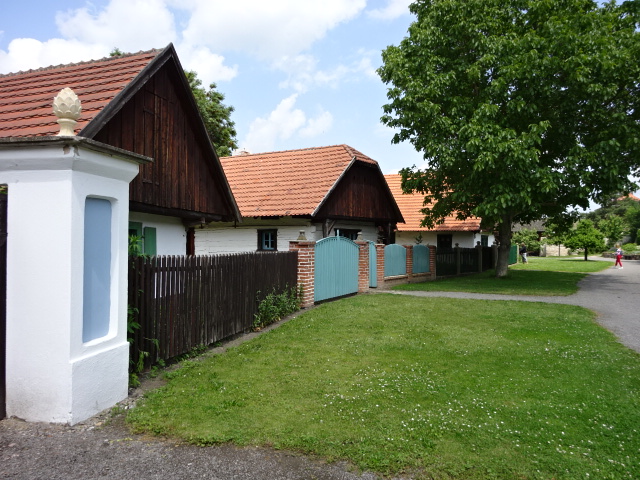
I have visited many open-air architectural museums, dotted with historical, rural buildings and structures, throughout my time in the Czech Republic as well as during my many trips to Slovakia. They serve an important ethnographical purpose. Přerov nad Labem’s skanzen, as they are referred to in Czech – was the first of its kind founded in Bohemia as the complex was set up in 1967. It is composed of buildings from the Central Labe Valley area. The structures were constructed in the 18th or 19th century and together make up a sort of village that has long since disappeared.

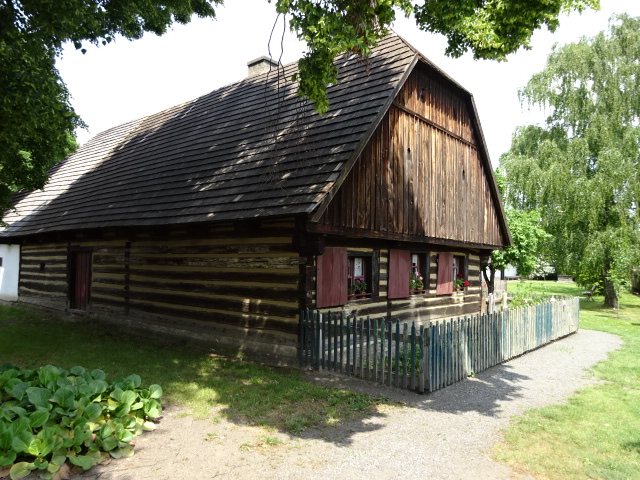
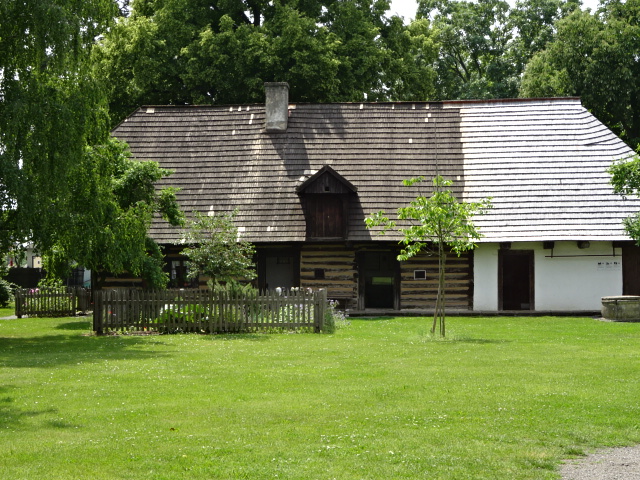
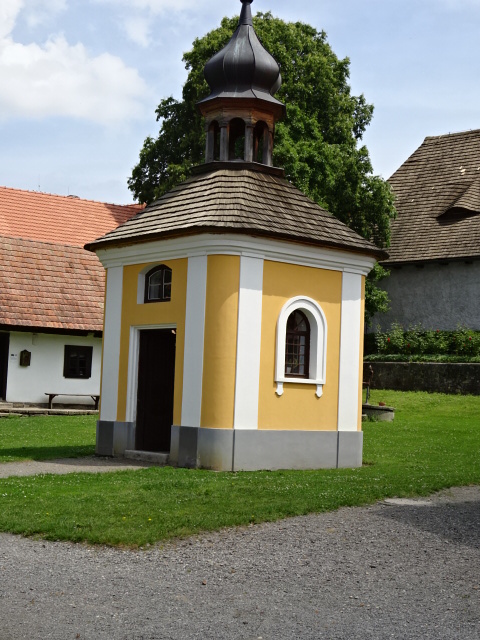
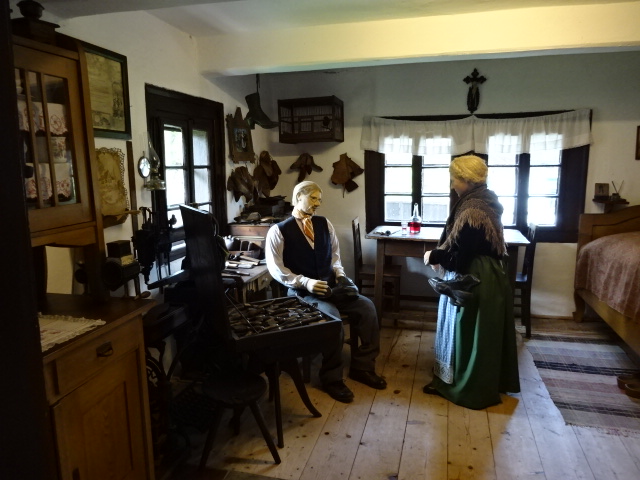
I saw many quaint and idyllic-looking log-built cottages as well as granaries, winch-operated wells, a small garden, a gateway with stucco, Baroque decoration and a sun motif, a gamekeeper’s lodge, an outdoor beekeeping display and more. A fruit drying kiln and belfry also made appearances. A dovecote had five floors and a hexagonal shape. I peered at a shoemaker’s, a seamstress’ and a basket weaver’s workshops.


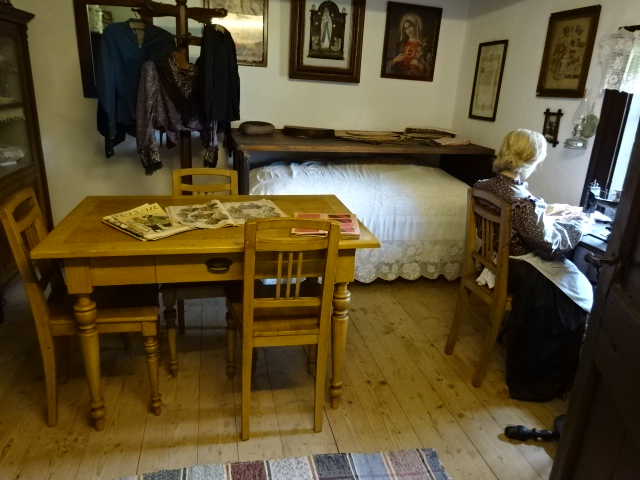
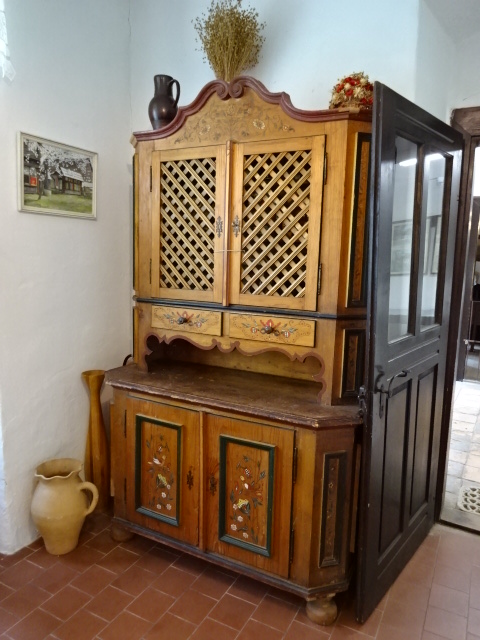
The World War I Memorial plaque touched me emotionally as I perused the names of locals who had perished in The Great War. The other building that made a distinct impression on me was the old school classroom, with boys seated on one side and girls on the other. What I liked best about the buildings in which mannequins were dressed in 18th or 19th century clothing was the colorfully painted folk art closets, beds, cupboards, chests, the backs of chairs and other furnishings. Pictures painted on glass in a rural cottage also captivated me. I was dazzled by the folk costumes with delicate embroidery on display. In one cottage I peered at hand-painted prayer books and admired a gable with Baroque features. I also noticed that the folk art sculptural rendition of Saint John Nepomuk hailed from 1746.

I saw how the kitchens were set up for baking bread. Some had large open fireplaces with big chimneys. Tiled stoves were located in some kitchens. Spices were important for the cuisine, too. There was a collection of historical washboards and washing machines as well as irons, which, I found out, were first used in the Czech countryside only 100 years ago. A collection of various stoves stood out in one space. Many wheels and farming tools were present, too.
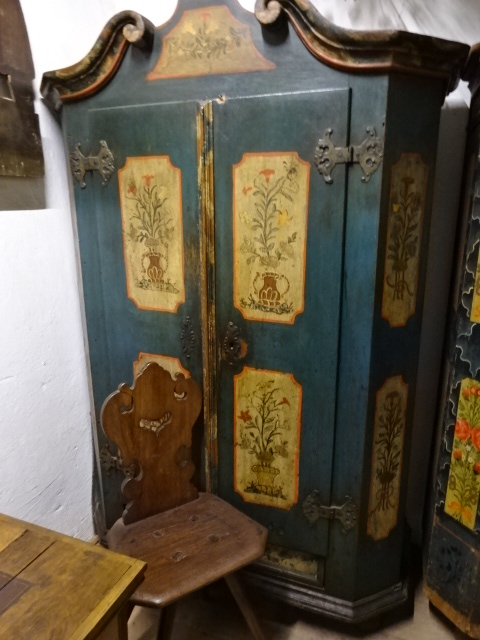


The history of the Old Czech Cottage, which dates from the 18th century, is intriguing. During Czechoslovakia’s First Republic, which lasted from 1918 to 1938, Bedřich Smetana’s opera The Bartered Bride was performed in front of the building that contains much folk art furnishings. When the Nazis were in control, evacuees were housed there after all the historical furnishings had been taken out. This is probably my favorite structure because folk art plays such an important role in the displays.
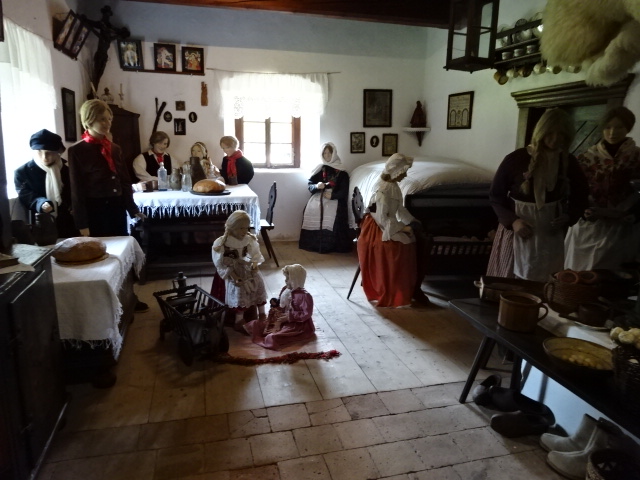

Skanzens always make me better appreciate the technological advancements of the modern world. In 18th and 19th century village life was so much more unbelievably difficult. I admire the idyllic cottages constructed with logs and old equipment utilized in the 18th and 19th century. The folk art displays have always been my favorite aspect of open-air architectural museums. Seeing kinds of villages that no longer exist except as museums is a real treat. I always am enthralled by the architecture specific to that area and by the architecture in general.

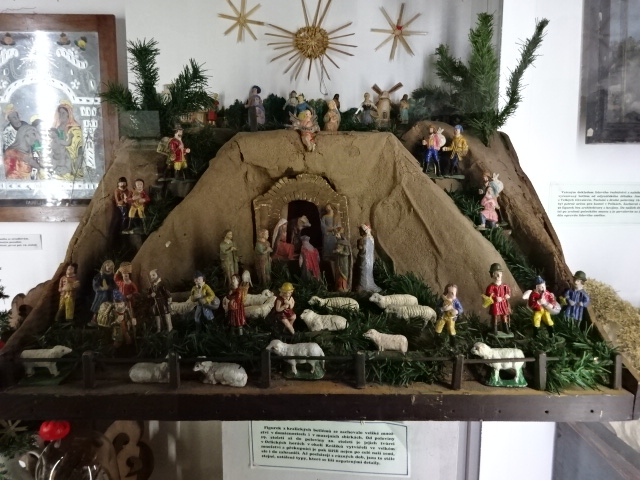
A Nativity scene, popular at Christmas time
While I love visiting chateaus and castles, I always appreciated skanzens. Open-air architectural ethnographical museums of long gone rural life provide an important purpose in the history of the country and serve as valuable historical landmarks.
Tracy A. Burns is a writer, proofreader and editor in Prague.




 Tracy's Travels