Through the Eyes of Franz Kafka Exhibition in Pilsen Diary

During the summer and fall of 2024, the West Bohemian Gallery in Pilsen showed off the riveting exhibition “Through the Eyes of Franz Kafka: Between Picture and Language.” It focused on the ways in which the visual world around Kafka had been influential in the language Kafka chose for his writings. There was a direct connection between the visual world and the literary world in Prague, Kafka would have seen the works on display in his everyday Prague life that boasted of a multilingual society immersed in the languages of Czech, German and Hebrew. Kafka resided in Prague his entire life – from July 3, 1883 to June 3, 1924, when he died at the age of 40 from tuberculosis. He spoke German as well as Czech and wrote in German. His parents spoke German mingled with Yiddish.
At the end of the 19th and beginning of the 20th century, posters were displayed all over the city. Designed in the Art Nouveau style, they showed off art exhibitions, cabaret shows, literary events, advertisements and much more. Japanese art played a role in the decoration of these posters. Later, the artistic focus was Cubist features. German-Czech spiritualism also was influenced by the time period. Silent films, both European and American, were popular in Prague. Going to the cabaret, ballet and theatre were pastimes of Praguers.

Exhibition Wordwede in Kinská Garden, Prague, 1903.

Modern French Art exhibition, Kinská Garden, Prague, 1902.

I would like to highlight several of the artists represented in the show, including the posters of Jan Preisler, a Czech painter and university professor. For a while his works promoted the Art Nouveau style, which is evident in this poster for an art exhibition. He also decorated Art Nouveau buildings in Prague. For example, the Hotel Central in Prague features his ornamentation. The triptych Spring was made for the Peterka building in the capital city. Preisler made a name for himself as a Secession artist, even though he would take on a different style later in his career.

Girl in Flowers, 1922, by Anton Bruder

Many of his works could be designated as Neo-Romantic, punctuated with allegorical Symbolism. His art often showed a fondness for fairy tales or moods characterized by depression and sadness. Preisler attempted to reveal the depth of one’s soul. Early in his career he became friends with Czech landscape painter Antonín Hudeček. Preisler was also influenced by the art of Edvard Munch as he helped plan the 1905 exhibition of Munch’s depictions in Prague. Preisler also had developed friendships with painters Bohumil Kubišta and Vincenc Beneš. He was very inspired by the poetry of Otakar Březina, a Czech artist who wrote in a complex, symbolist style and was nominated for the Nobel Prize eight times. Vitezslav Nezval and Josef Suk were other poets who made an impression on him. Perhaps his best known painting is the triptych “Spring,” from the turn of the century. It depicted the complex feelings of someone entering the 20th century. Man experienced a nostalgia for the past, but, at the same time, was looking forward to adventures awaiting him in the new century. A person’s connection to nature was another theme promoted in this triptych.
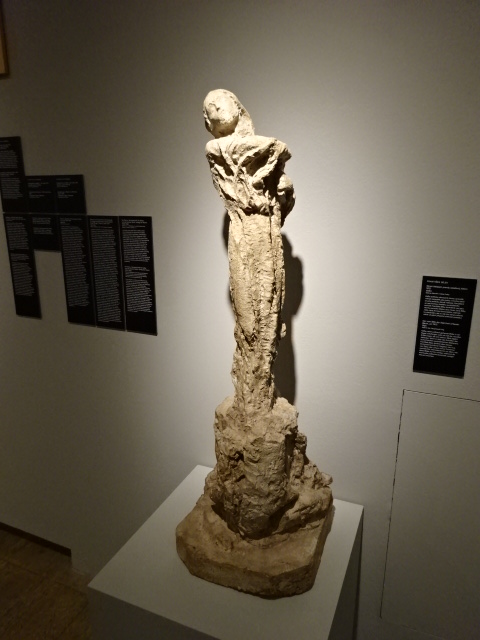
Sculpture by František Bílek
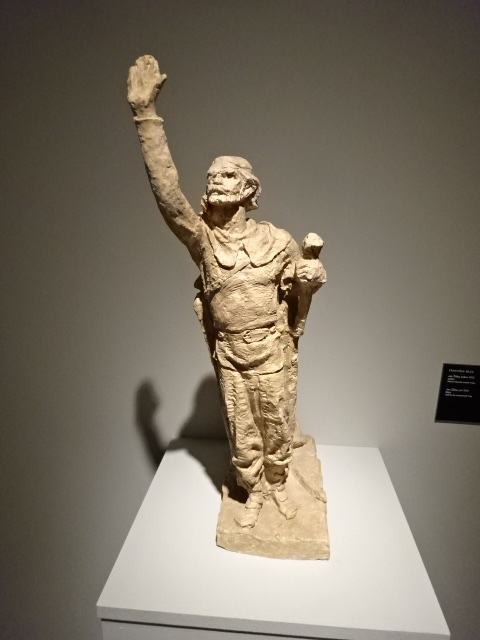
Jan Žižka, by František Bílek, 1912

Sculpture that permeated the exhibition included that of Art Nouveau symbolist František Bílek, whose Secession homes in Prague and Chýnov I had visited. Miniature versions of several of his sculptures were on display. He utilized mostly religious themes with a sense of mysticism. While Bílek was best known as a sculptor, he also designed furniture and created graphic art, drawings and illustrations. An architect as well, he designed cemeteries and made gravestones, for instance. His woodcarving skills were astounding, too. A year later, in 2025, I would see Bílek’s amazing works in the former flat of Czech poet Otakar Březina, incorporated into a museum for the symbolist poet in Jaroměřice of the Vysočany region. To be sure, Bílek’s creations caught the attention of society during the Art Nouveau age.
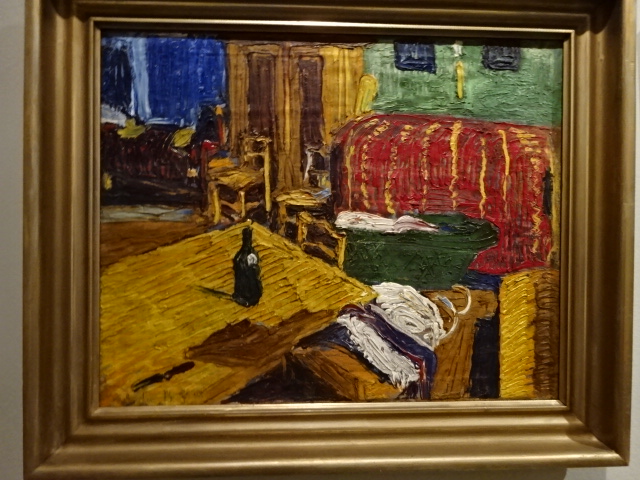
The Interior, by Bohumil Kubišta, 1908

One of my favorite Czech painters of this period, Bohumil Kubišta played a role in the exhibition. One of the first to paint in a modern Czech style, Kubišta created a new path for artists as he helped establish the significant Osma group of painters who were oriented toward Munch’s style. In Kubišta’s paintings, bright color played a large role as did mysticism and symbolism. At times he took up religious themes. Kubišta often concentrated on the spiritual as the symbolism of life and death featured in many of his works. He emphasized the spiritual meaning of the countryside, too. The styles that made an impact on his work included Fauvism, Futurism and Surrealism. Self-portraits and still lives were common in his repertoire, too.

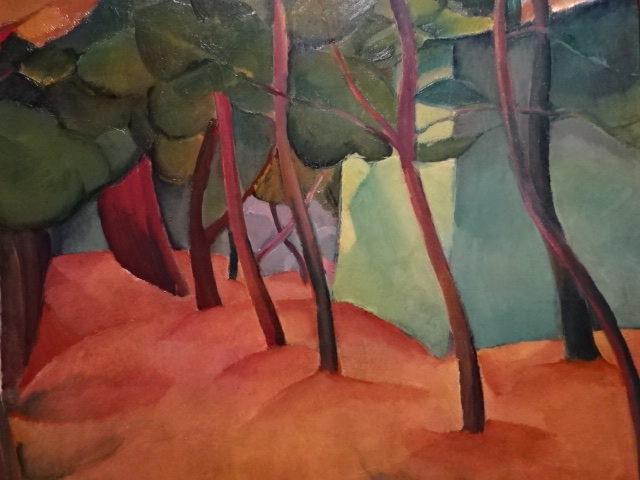
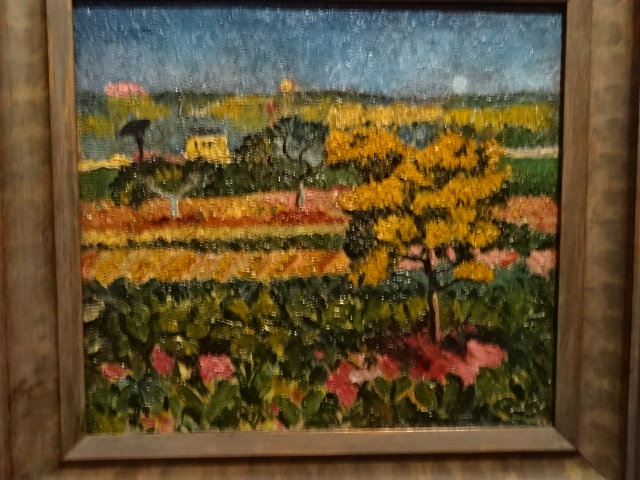
Landscape, by Georges Kars, 1910

I knew the name Czech-French painter Georges Kars from a Prague exhibition of Czech artists in Paris between the wars. While initially taken with Impressionism, Cubism and Fauvism, he found his own path with dynamic and vibrant compositions. He made a lot of women’s portraits, self-portraits, nudes and half-nudes in his figural works. Sometimes he rendered still lifes and landscapes. Kars utilized the neoclassicist style for his portraits, nudes and still lifes. His paintings were world-renowned, displayed throughout Europe, the USA and Japan.

During World War I he served for the Austro-Hungarian army and even was captured by the Russians. He survived the experience and continued painting after the war.

A Walk in a Park in Florence, by Bohumil Kubišta, 1907

Of Jewish origin, Kars escaped France during 1942 and settled in Switzerland. However, he was so traumatized by the persecution of the Jews that he took his own life, jumping to his death from the fifth floor of the Geneva Hotel. During 1949 he was buried with his family in Prague’s New Jewish Cemetery.

Brindisi, by Otakar Kubín, 1906

Another artist who was well-known while residing in Paris between the wars, Otakar Kubín, who also went by the name Othon Coubin, worked as a painter, sculptor and graphic artist, mostly living in France. Holding citizenship from France and Czechoslovakia, he made a name for himself rendering landscapes, mostly of Provence but also of Moravia. I loved his landscapes of Provence in the exhibition of Czech artists between the wars. These paintings were perhaps the highlight of his career.
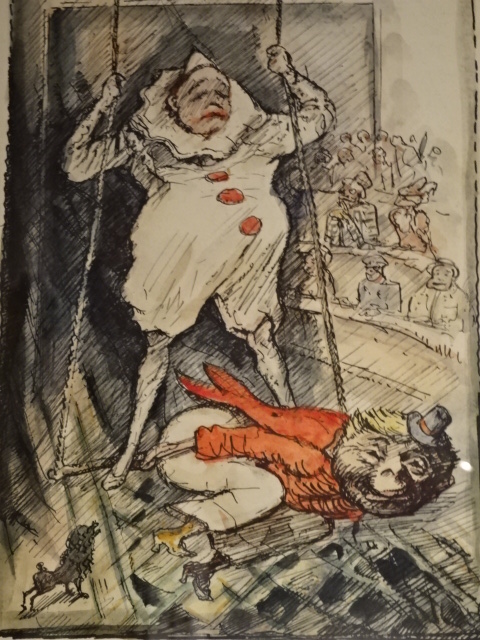
While living in France during World War I, Kubín and his wife were interred in a camp imprisoning foreigners in Bordeaux. However, they were not held for long. In the 1920s, he held exhibitions in Paris with Pablo Picasso and Henri Matisse. Kubin was impressed with the Expressionism of Vincent Van Gogh. His depictions with figural motifs often were influenced by the death of his wife and son. His works were also seen in Japan, Switzerland and the USA. Some of his praiseworthy portrayals include a portrait of Kubišta, House in the Countryside, Cemetery Chapel in Boskovice, Imaginary Likeness of Edgar Alan Poe, Moravian Landscape and Auvergne Landscape.
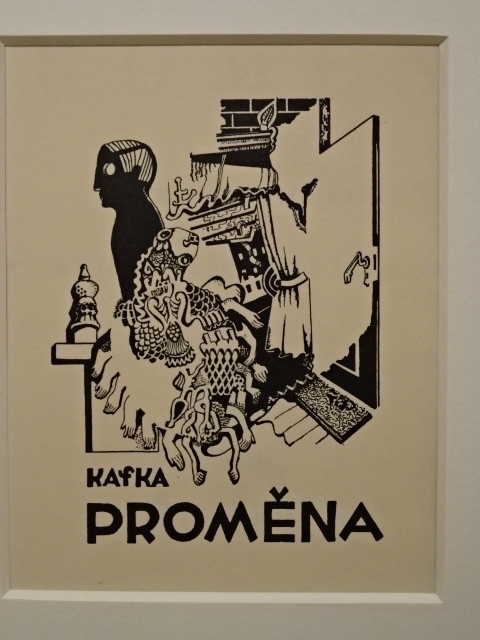
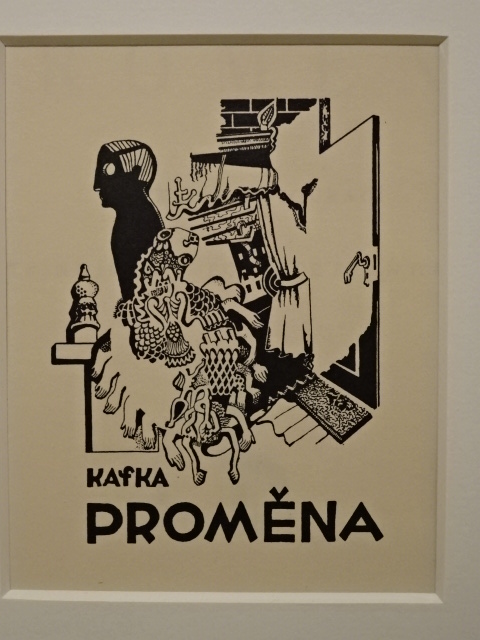
The Metamorphosis, by Otto Coester, 1920

One of Kafka’s small black-and-white drawings as a young child was on display, and art promoting his various books also had a prominent place in the exhibition. Artistic renditions of The Metamorphosis were represented, for instance. German art and literature at this time also played prominent roles in society. An antisemitic attitude was seeping into some of the publications.  The exhibition did not only concentrate on works in Prague but also art that had immersed itself into European society as well, providing a European context for these powerful renditions.
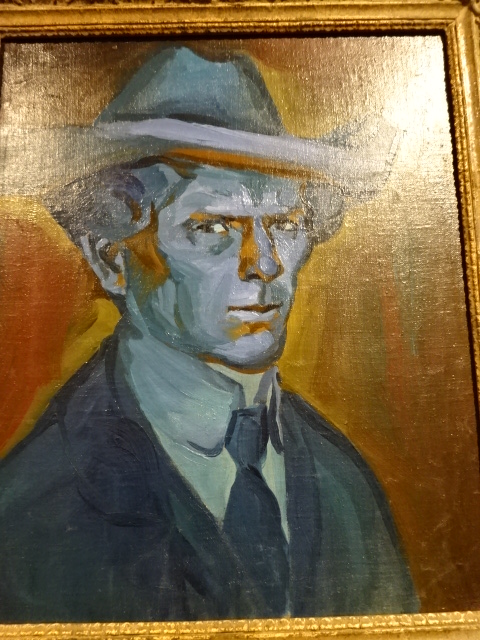
The Metamorphosis, by Wilhelm Wessel, 1924.

This exhibition took up my favorite Czech era of art – the end of the 19th and beginning of the 20th century. The Art Nouveau and symbolic nature of the works greatly impressed me as did emphasis on color in many paintings. I loved the expressionistic qualities of Munch’s artistic creations. Several paintings were by Japanese artists, and I saw a direct connection between the Czech Art Nouveau and the Japanese style. I could see the influence of Cubism in some paintings with many geometrical traits. I loved the Art Nouveau posters advertising exhibitions. The multifaceted visual experience of a person living in Prague during that era reminded me of the mixture of languages that had permeated culture and society.

The exhibition was thrilling as I thought back to that age and the various cultures people were experiencing. I felt that time period come alive through the artistic creations. Some of my favorite artists were represented, such as Bílek and Kubišta.

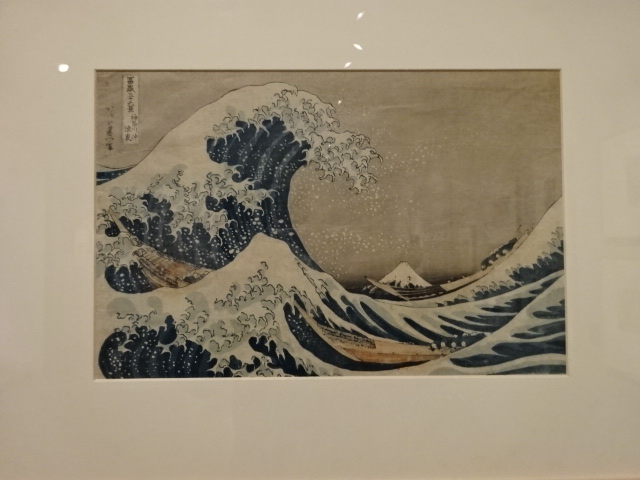
A Wave at Kanagawy, by Hokusai Kacušika, 1831

I also was enamored by the building in which the West Bohemian Gallery was housed. It had been used as a market place during the Middle Ages and boasted of a unique architectural style. I longed to learn even more about the end of the 19th and early 20th century as I left the exhibition and made my way to my favorite restaurant in Pilsen, U Salzmannů.

Tracy A. Burns is a writer, proofreader and editor in Prague.

Restaurant U Salzmannů, Pilsen

The Great Synagogue in Pilsen Diary

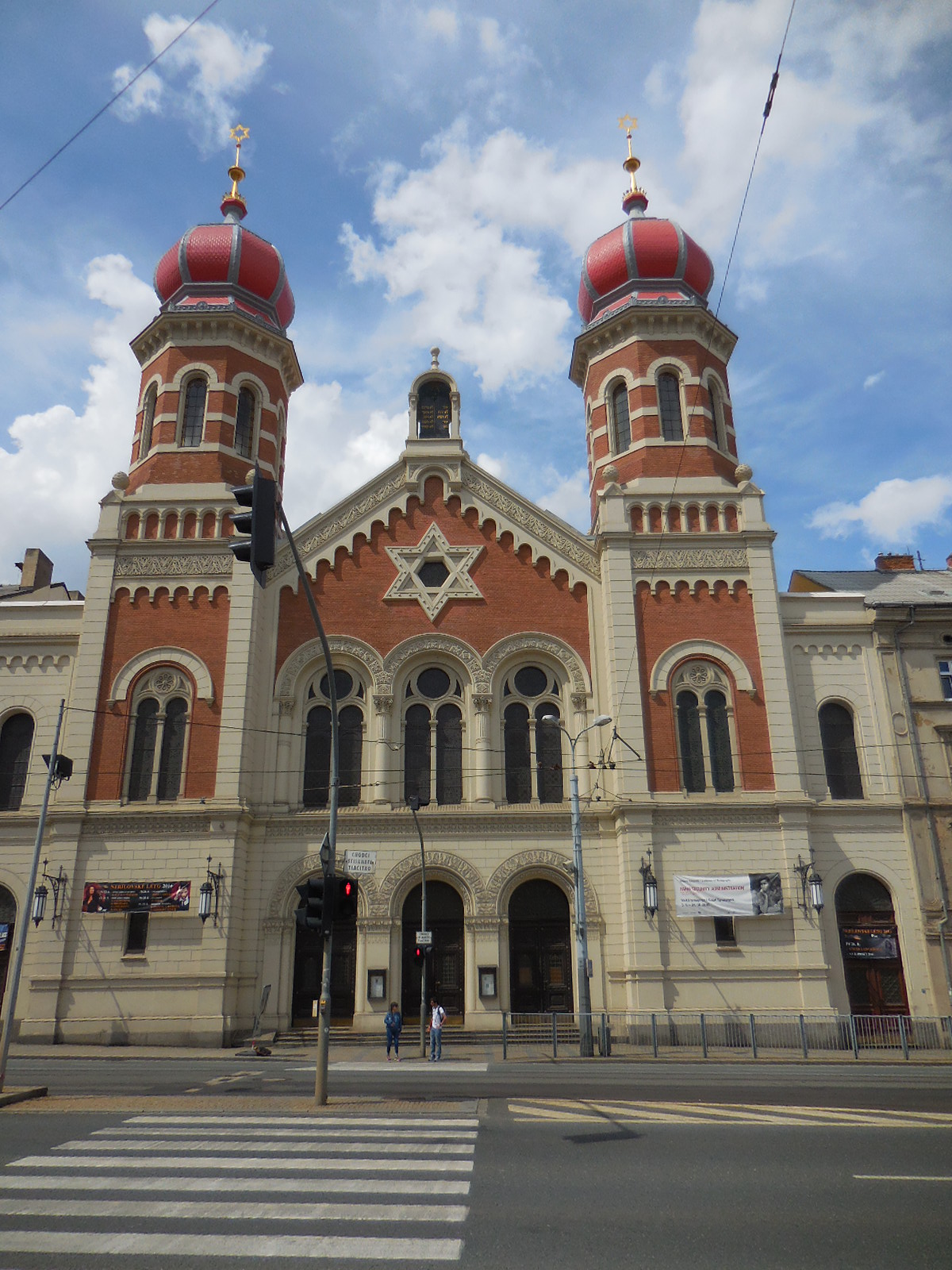
It is very easy to get to Pilsen from Prague – only a one-hour bus journey, courtesy of the Student Agency bus company. From the bus station I took a tram three stops to Republic Square. The synagogue was within walking distance. I was curious about the second largest synagogue in the world and the third largest in the world with a capacity of 2,500 people.

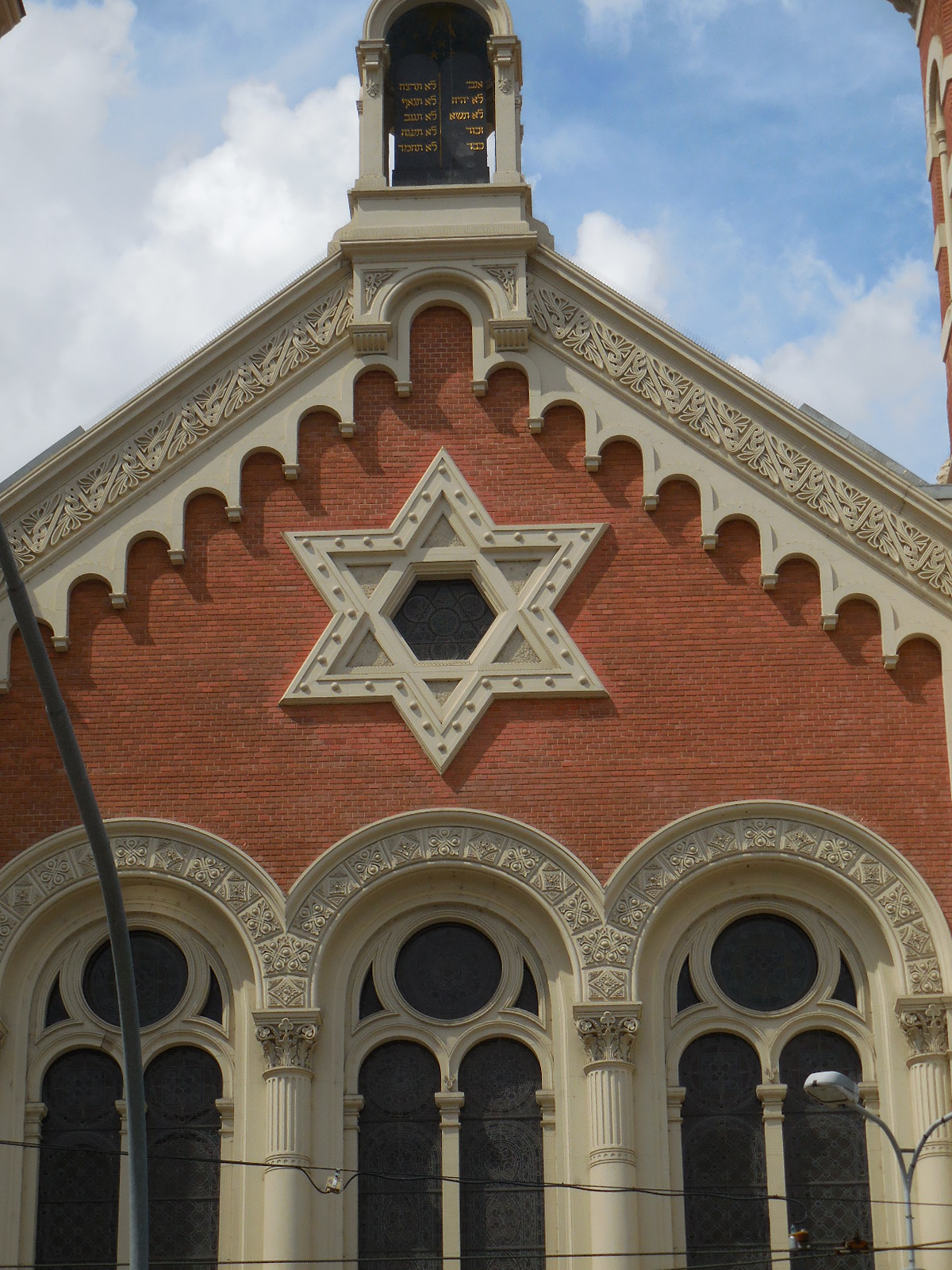
I was very impressed by the façade and two towers. Under the gabled roof of the structure of capping brick and stone blocks is a large Star of David. The two towers flanking the middle portion of the building have imperial domes and a belfry as well as a crown and the Star of David. The onion-shaped domes reminded me of some of the churches I had seen in Saint Petersburg, Russia.

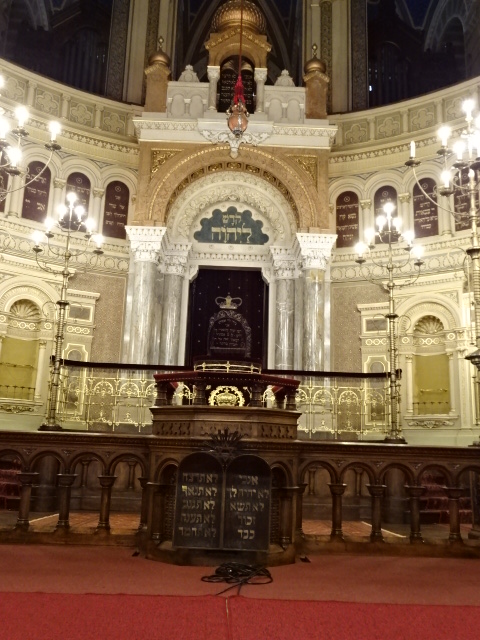
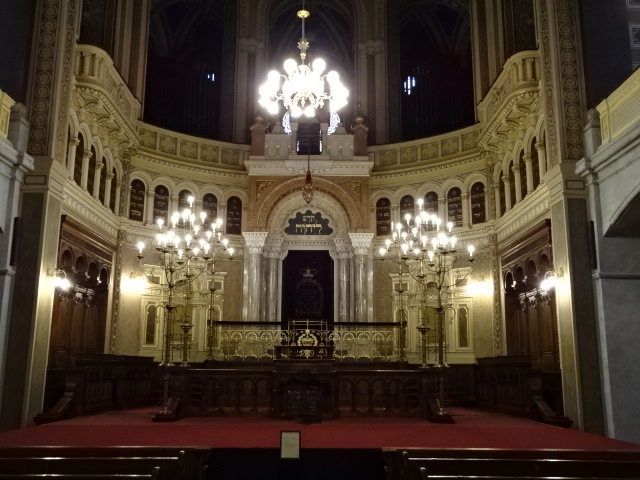
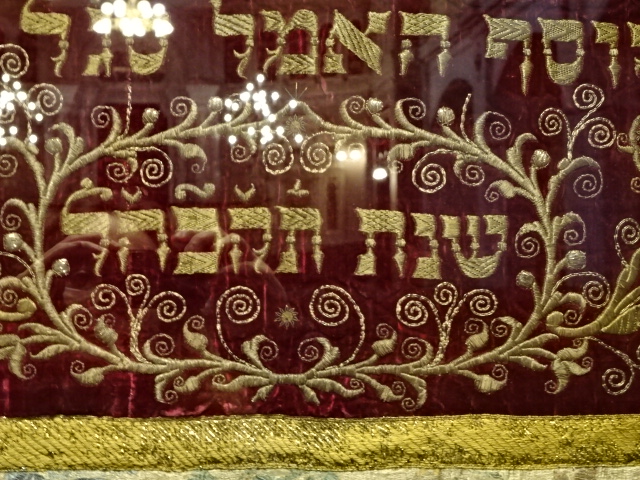
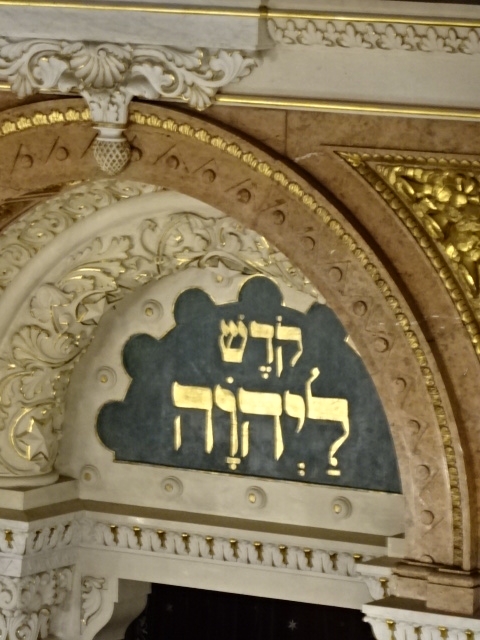
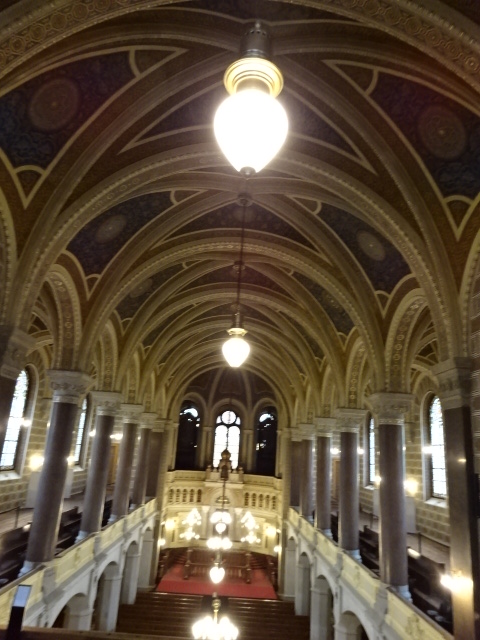
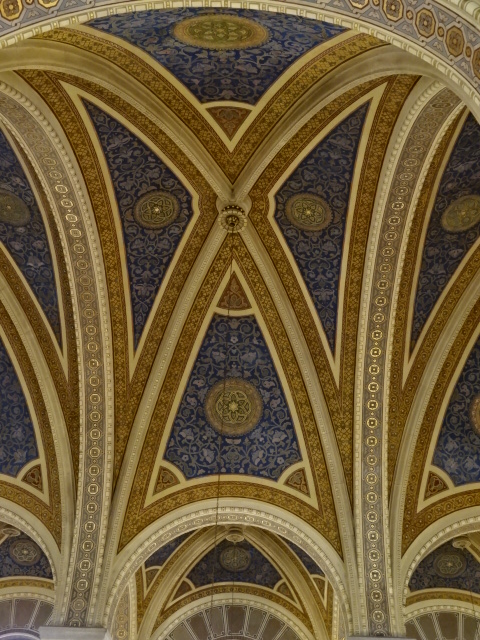
I gaped as I perused the spellbinding features. Built in 1892, the synagogue combines an Oriental interior with elements of Neo-Renaissance, found mostly in the corridors.  The carved rostrum of the three-aisled ground floor has a simple, yet dignified design. Two stairways lead up to the platform with the rostrum. One of the things I admired most was the vaulted ceiling decoration of blue with gold painting with plant motifs. The use of gold for decoration throughout the synagogue was very pleasing to the eye. The staircase had a metal, golden balustrade. The vestibule included beautiful stucco decoration with gold as well. I also noticed the stucco décor with motifs such as David’s Star on the balustrade. I saw the organ, dating from 1890. I remembered reading that there had been a big choir here until World War II.

What entranced me the most, though, was not the exquisite vaulted ceiling, but the three stained glass windows above the cornice in the western side of the synagogue. Dating from 1893, the three windows show a design of circles and oblong shapes, geometric figures in bright colors. They seemed to glisten in the dim lighting. I walked to the upper gallery, where I could have touched them if I had wanted to. Instead, I just stood there, fascinated at their beauty.

I sat down in the balcony, where women had sat for generations because they were not allowed to sit with the men, and I pondered over the history of Jews in Pilsen. It all began in the 13th century when Jews first came to this city, and King Přemysl Otakar II allowed them religious freedom. At the start of the 15th century, most Jews bartered in spices, pepper and ginger, and two synagogues existed here during that time period. Yet during the reign of King Vladislav II, in 1504, Jews were expelled from Pilsen, and they didn’t return until 1584. Other hardships occurred.

Then things got better. Jews obtained more freedom during 1848-49, when the ghetto that had been created due to the reforms of Holy Roman Emperor and ruler of the Habsburg Empire Joseph II was destroyed. (Emperor Joseph II had been a devout Catholic and an enthusiast for Germanization.) Jews no longer had to pay special taxes. Then, finally in 1867, a constitution was passed, stating political and religious equality, allowing Jews to move house as they pleased and to own property. They were even offered state citizenship. It is no wonder, then, that many Jews headed for this city in the 1860s. The Jewish community of Pilsen thrived during the 19th and beginning of the 20th century, and Jews ran significant businesses in the city.

After World War II, the synagogue was returned to the Jewish community, but the last regular service took place in 1973 as the building became more and more dilapidated. Finally, it was closed down.  Reconstruction occurred from 1995-97, and it reopened to the public on February 11, 1998. A service was held here once again, after 26 years, on September 20, 1998, celebrating the Jewish New Year. The first wedding in 61 years was held at this synagogue on June 6, 1999. There was extensive renovation during the 21st century, too.

Before heading back to Prague, I took advantage of the beautiful, sunny weather and sat outside at a café on the main square. I also visited an art exhibition called Through the eyes of Franz Kafka, focusing on art in the Czech lands during the time period Kafka was in Prague. There I gazed at Kafka’s drawings, paintings by Czech artist Bohumil Kubišta and sculpture by Czech master František Bílek. I also saw some Japanese art that was popular during that era. I ate lunch in U Salzmannů, the oldest pub in the city and my favorite restaurant in Pilsen. The Czech food at that establishment is top-notch. I also stayed at the restaurant’s pension upstairs for several nights many years ago, during a theatre festival. I was very pleased with the accommodation. Since I only rarely drink alcohol, though, I did not try the legendary Pilsner Urquell beer brewed in this city.

Tracy A. Burns is a writer, proofreader and editor in Prague.
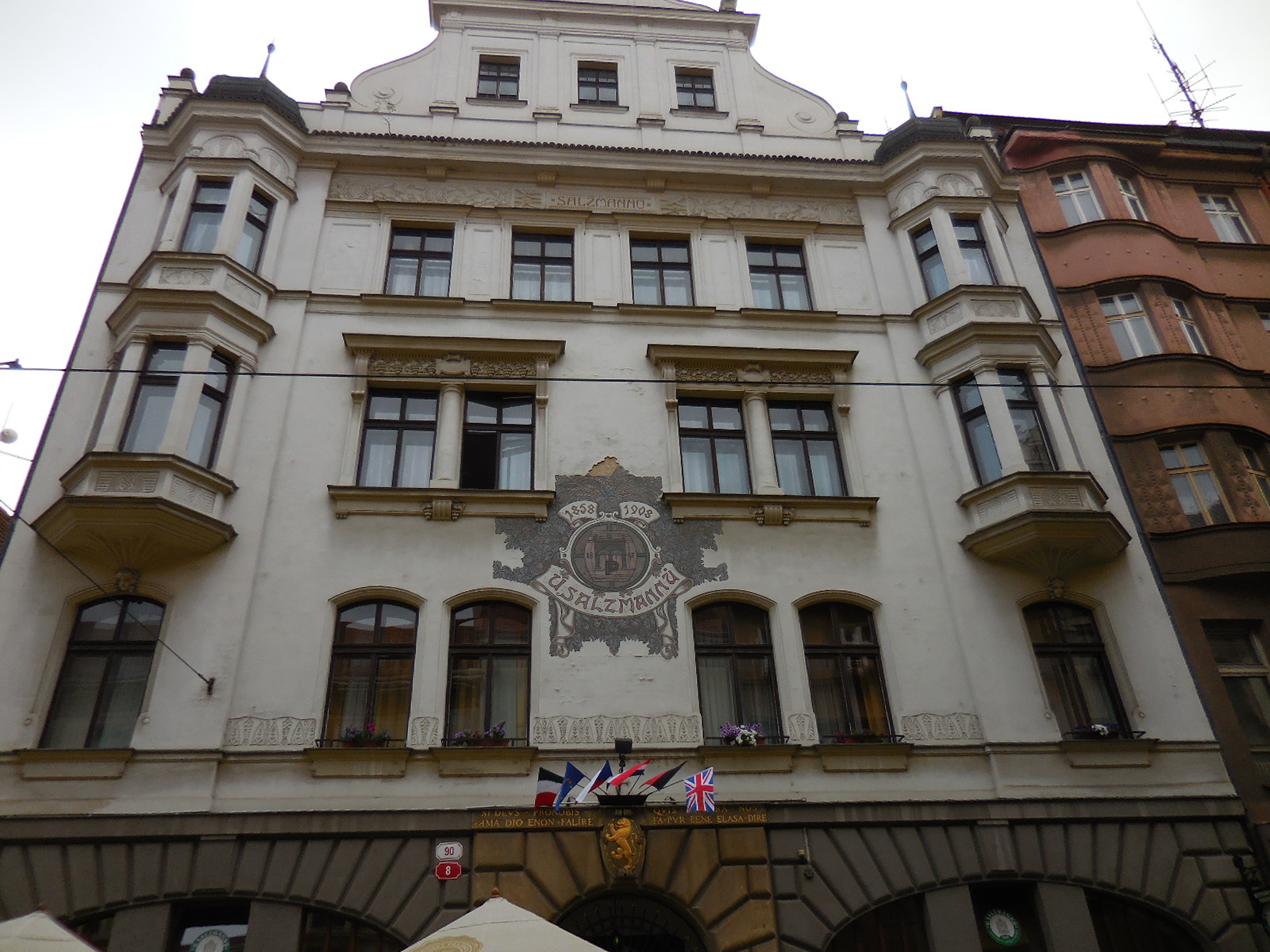
My favorite restaurant in Pilsen – U Salzmannů

From Pilsen art gallery exhibition Through the Eyes of Franz Kafka

From Pilsen art gallery exhibition Through the Eyes of Franz Kafka
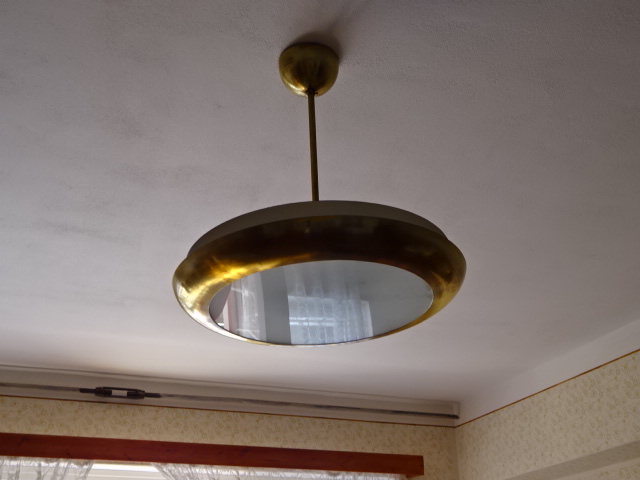
From Pilsen art gallery exhibition Through the Eyes of Franz Kafka

Museum of the High-Rises Diary

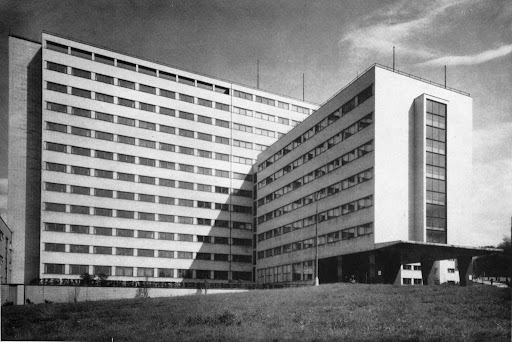
The six buildings designed by Josef Havlíček in Kladno, photo from Vysehradskej.cz

In Kladno, not far from Prague, I visited the Museum of the High-Rises, located in one of the tall buildings designed by Czech functionalist architect Josef Havlíček during the 1950s. The tour consisted of the minimalist lobby and mailboxes, a small museum room, an atomic shelter, roof terraces and a flat that was considered to be luxurious during the 1950s, housing for high-ranking Communist families.

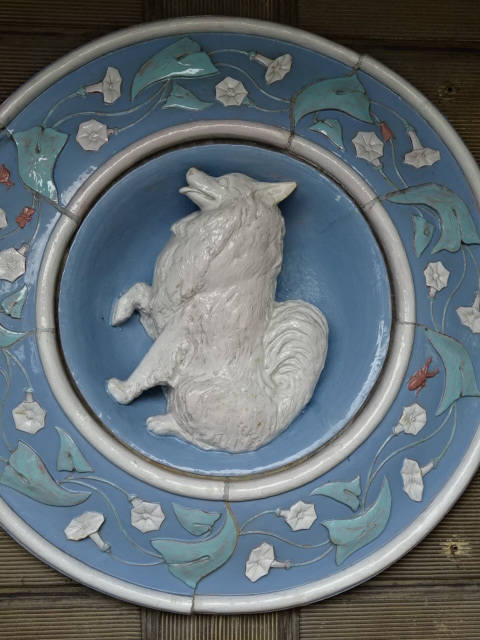
House sign by Marta Jirásková-Havlíčková

In the Rozdělov neighborhood, the high-rise’s exterior was decorated with two ceramic house signs, one of a cat and the other of a dog, showing circular blue backgrounds with the animals in white. I learned that they had been created by Havlíček’s wife, a sculptor named Marta Jirásková Havlíčková, who originally had made 12 of them for the six buildings in the complex. Other ceramic house sings had featured a hawk, an owl, a rooster, a turkey, sheep and a ram. In the small museum space I saw more of Jirásková-Havlíčková’s work, including a statue of a dignified-looking white cat. She certainly had been talented. Models of some of Havlíček’s designs were also in the space.

I also noticed that the façade consisted of ceramic materials. The use of intriguing materials was a reason that this one-time complex had caught international attention. The French especially were interested in the structures, as Havlíček had been inspired by the architecture of neoclassicist French guru August Perret, who was known for utilizing reinforced concrete in fascinating ways without eliminating the harmony of the design. Perhaps Perret is most renowned for the rebuilding of the port town Le Havre after World War II. His reconstruction helped make Le Havre into a World Heritage Site. Another of his most prominent designs involved the first Art Deco edifice in Paris, the Theatre des Champs-Élysées. 

You can see the various house signs behind the sculpture of the cat.

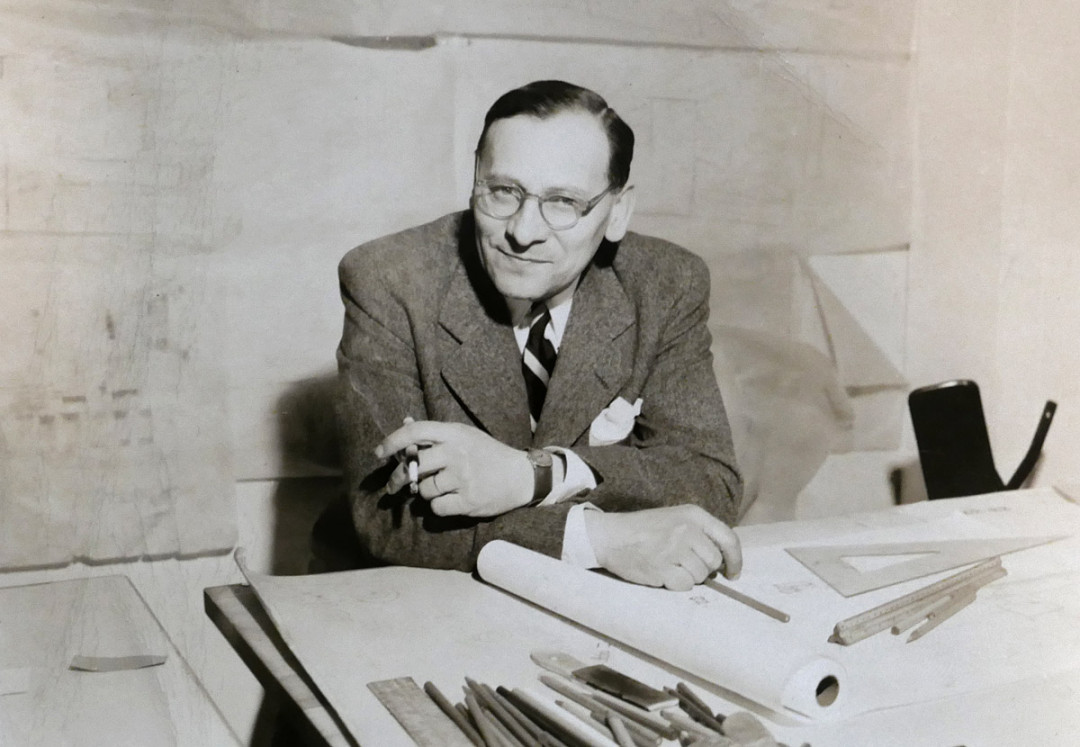
Who was Josef Havlíček? That question was answered in the small museum under the ground floor. Havlíček lived from 1899 to 1961, when he died from exhaustion. As a prominent architect, he was a member of Devětsil, Artěl and SVÚ Mánes, the most influential artistic groups of the time. His mentor at school during the Czechoslovak First Republic of the 1920s was Czech architect Josef Gočár, who designed many important Cubist works in Prague, Hradec Králové and other places. Gočár took Havlíček under his wing and employed him in his studio until 1928.

Josef Havlíček, photo from Muzeum věžáků Kladno webpages.

While Havlíček was given the title of director of the architectural Stavoproject in 1948, he left two years later due to frustration with totalitarian politics. For a while his plans were not realized due to his political stance, but later he used Stalinist social realism architecture that pleased the authorities, even though his style combined creativity while fulfilling the ideology of the times.

Havlíček’s building constructed in Žižkov

Some of his other accomplishments included a building in Prague’s Žižkov, built from 1932 to 1934 with the help of Karel Honzík and dubbed “the first Prague skyscraper.” He also designed the residential development Labská Kotlina in Hradec Králové from 1946 to 1959 and residential buildings in Ostrava. He presented designs for a United Nations building in New York City and a town hall in Toronto, though they were not carried out.

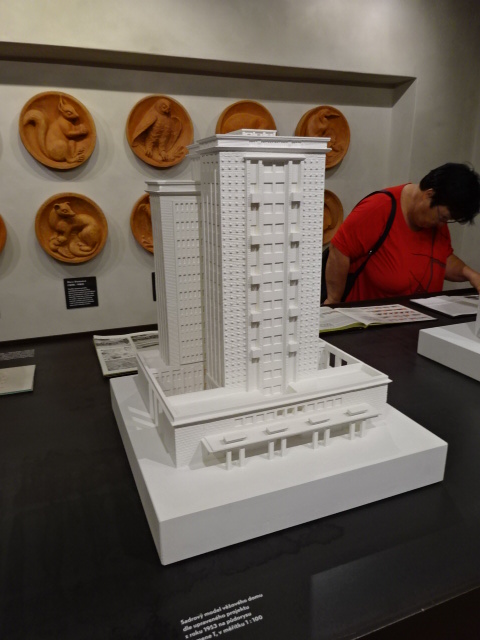
Some models of Havlíček’s creations were on display in the museum.

In the museum space that presented a large timeline and much information about the life and career of Josef Havlíček, we stood around a detailed model of the Rozdělov high-rises in Kladno as they had been planned. In 1946 Havlíček had intended for the project to appear differently – with six buildings of 10 floors each in a Y pattern, flaunting a functionalist style. Due to the political changes in the country during and after 1948, these designs never came to fruition.

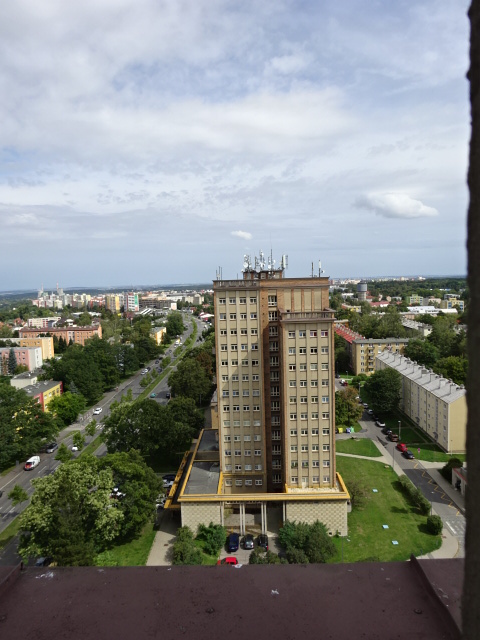
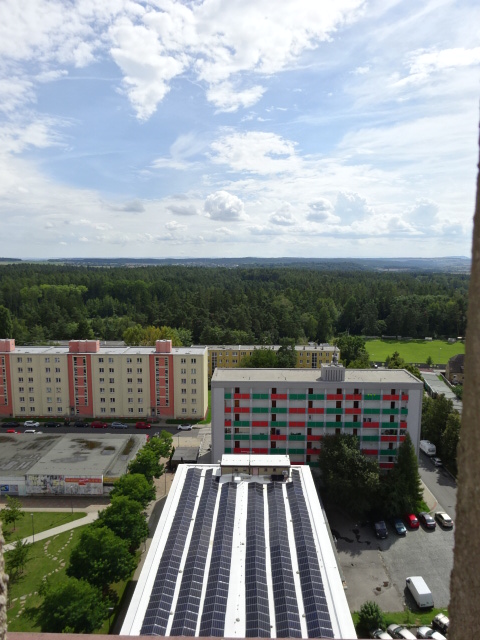
From the roof terrace looking down on another of Havlíček’s designs

During the late forties and fifties Kladno was in dire need of more housing. The city had become much more industrialized after the Communist coup of 1948. For example, Kladno was the prominent home of the Poldi steelworks. Construction of new buildings was necessary to accommodate the new workers who were toiling in the black coal industry.

View from the roof terrace

In 1951 Havlíček redid his conception of the suburb, pressured to conform to social realist architectural regulations. He received permission that year. He came up with something that was accepted by the authorities but was also modern and authentic. From 1952 to 1958, Havlíček worked on the design along with Karel Filsák and Karel Bubeníček. Construction began on the project with the first and second buildings. Tenants moved into the first building at the end of 1956 and into the sixth building at the end of the following year.

You can see some of the suburb’s high-rises from the roof terrace.

The six buildings that formed the letter T were inaugurated as the Victorious February suburb to commemorate the February Communist coup of 1948. The building we were in had 13 floors, not including the ground floor and upper ground floor. Each floor consisted of six apartments, two much bigger than the others. The more luxurious flats of that era had balconies.

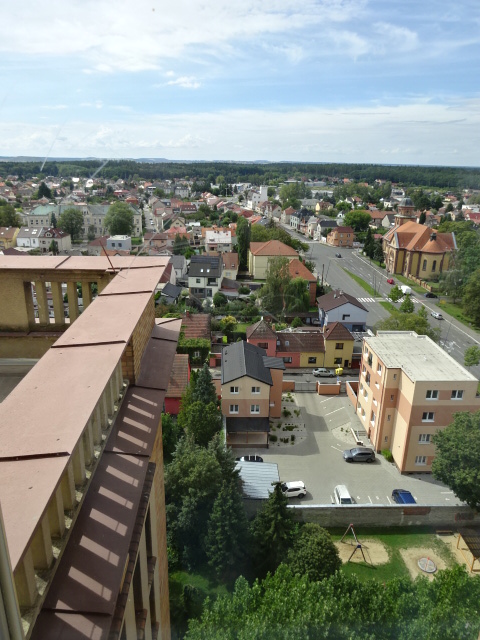
Another view from the roof terrace

The project was planned to be much more elaborate than the 48-meter high residential buildings. Havlíček and his colleagues envisioned the suburb to flourish with cultural and shopping centers. It was slated to become a major hub for cultural activities, such as theatre, and to have much needed impressive stores. While the shopping center plans were carried out, the theatre was never built. Financial problems and other barriers did not allow the designs to be fully developed. From the model it was possible to see how Havlíček had proposed that the suburb become a leading place for activities as well as original housing made from inventive materials.

We went down to the second basement floor, the atomic shelter. I saw many gas masks and rows of hard, wooden benches in several spaces. It would certainly be depressing and frightening to be trapped down there for any reason let alone a nuclear war. Many buildings were constructed with atomic shelters during the 1950s in Czechoslovakia.

Then we visited the roof with impressive terrace, which was a prominent component of the project in its day. Even though now ugly high-rises surrounded the building, during a clear day it was possible to see the historic Říp Hill and the mountains of central Bohemia, even some of the mountains at the German border.

The living room of the flat

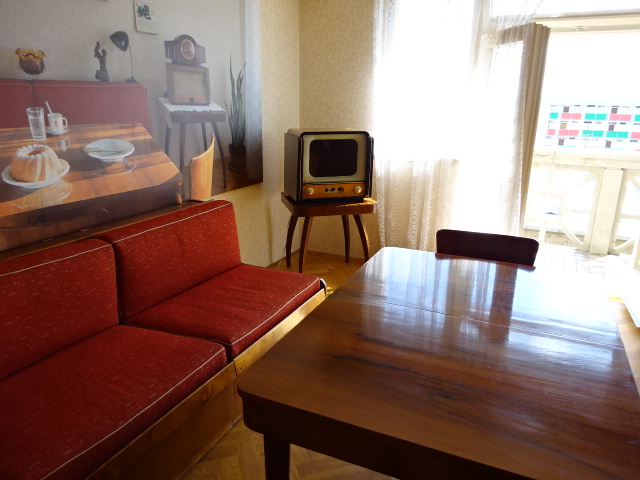
Then we went into a 55 meters squared flat preserved with 1950s furnishings and equipment, looking as it had during its construction as a luxury home for high-ranking Communist families. The living room had a couch and table on which were a cake and mugs. I noticed one cup was adorned with a red Communist star and the other sported a Communist symbol. On the table there was also an open pack of cigarettes and an ashtray filled with cigarette butts. A lace tablecloth covered part of the table. A large radio and a black-and-white TV with three buttons under the screen also stood out in the room. Social realist-styled statuettes decorated cabinets.The bedroom was dominated by a big double bed. On each nightstand was a framed photo. A large mirror adorned the wall above the bed.

The bedroom

The kitchen included a gas stove, a counter and pantry with shelves for storing food as well as cabinets. Although it looked small to me, at that time this type of kitchen had been luxurious, only available to the most prominent families. The flat featured a big balcony, too, something that not many apartments in the building had.

Now the museum, which opened in 2020, is a cultural monument to an innovative style designed during Stalinist times. This was Havlíček’s last big project to be carried out as he died of exhaustion in 1961, exasperated by his discomfort with the country’s Communist ideology of which he had been a critic. It had taken a toll on his physical and mental state.

The kitchen

This is the first Czech museum showing off suburban Czech architecture. The museum was something totally different than the kind I usually visited. I had never been to a museum focusing on a suburb of a city. I had thought of the suburbs of Kladno as eyesores with socialist high-rises that scarred the landscape. This one was different. During the period of its construction, the architecture had forged a new path in suburban appearances. It was a pity that only two of the buildings survive today and that fate had intervened and prevented the project from being completed.

The gas stove in the kitchen

I took all the necessities such as the stove and kitchen space for granted. I thought the flat seemed relatively small. At one time, though, a flat this size had been a luxury. I could see the accomplishments in modern architecture as I viewed all the spaces through a 1950s lens. I could better appreciate the modernity of the present by immersing myself into the past.

The simple chandelier in the living room

Tracy A. Burns is a writer, proofreader and editor in Prague.