
One of my dreams was to visit the romantic towns on Lake Como, so I took a day trip to Como, Bellagio and Menaggio when I was in Milan during May of 2023. Unfortunately, the tour did not go to Varenna, a place I longed to see. Maybe next time. The tour only took us to one villa’s grounds, which were open to visitors. I saw the exteriors of many villas from the boat, but it was drizzling, and I was seated on the wrong side to get pictures. I hope to go back one day and visit Villa Carlotta, an architectural gem that includes a botanical garden with 150 types of azaleas, rhododendrons, tropical plants, cedars, palms and more. I heard that its interior is filled with superb art. Antonio Canova and Francesco Hayez are two of the artists represented in the villa’s art-dotted spaces. Maybe next time.

First, we visited the charming town of Como, located only 40 kilometers from the Swiss border. Our guide pointed out that former Fascist Prime Minister Benito Mussolini and his mistress had gone through Como while trying to flee to Switzerland and eventually to Spain. However, in April of 1945 he was arrested in Dingo, a town near Como and a day later shot in Giulino di Mezzegra.
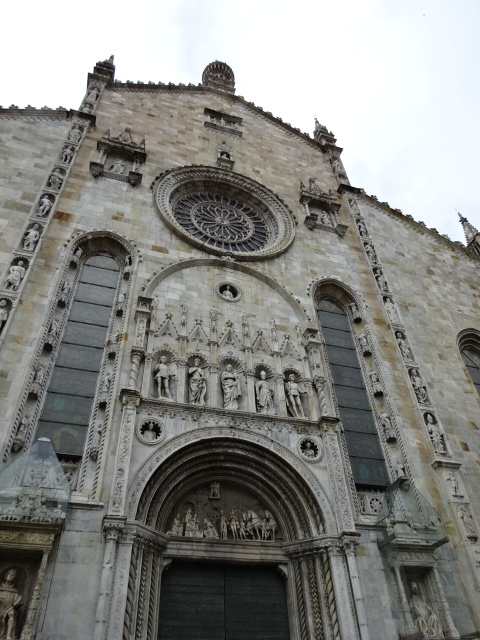
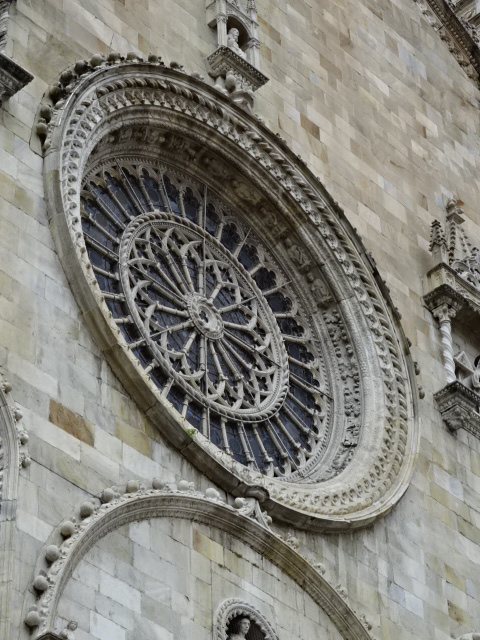
Upon reaching the center, I first noticed the cathedral, dedicated to the Assumption of the Blessed Virgin Mary. It had an impressive Late Gothic façade with sculptural decoration. The construction took a considerable amount of time; in fact, it took four centuries to build. I took note of the statues of writers Pliny the Elder and Pliny the Younger, natives of Como.

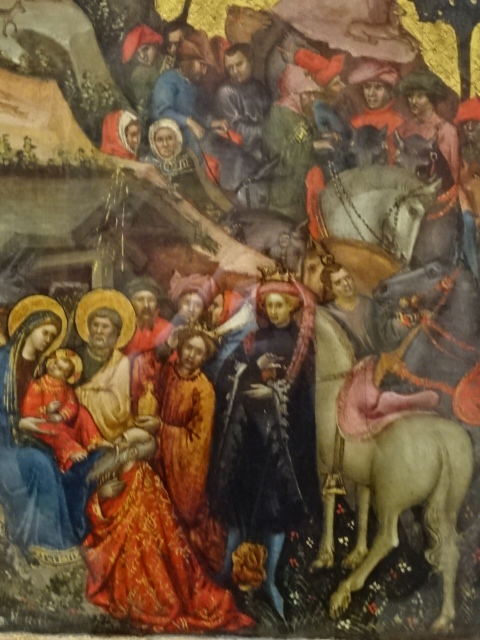
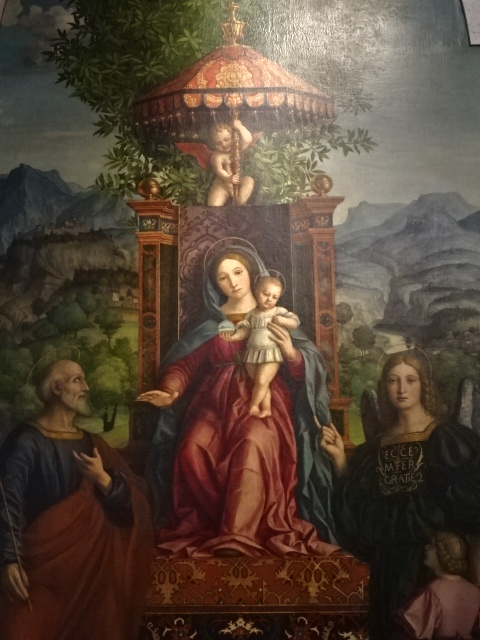
Inside, the cathedral had a Latin cross configuration with three naves divided by pilasters. The Romanesque sculpture was noteworthy. Three of Bernardino Luini’s paintings from the 16th century hang inside. Stained glass windows hail from the Gothic and Renaissance eras. The stunning cupola is Rococo while the main altar harkens back to the 14th century. What impressed me the most were the nine tapestries woven in the 16th century. They focused on themes such as the Eucharist, the Sacrifice of Isaac, the Adoration of the Magi and the Pentecost, for example.
The Basilica of Saint Abbondio is another sight worth seeing in Como. This Romanesque edifice included 14th century frescoes. Como also boasted of a very unique building designed during totalitarian times, the Caso del Fascio, which was erected from 1933 to 1936. The functionalist structure lacked any ornamentation. The Caso del Fascio served as an example of Italian architecture designed during totalitarian times. The Como-based building had four geometrical and opaque facades. Designed by Guiseppe Terragni, the place was occupied by the National Fascist Party until 1945, when various political parties had their offices there. Now the Finance Police calls the curious structure home.
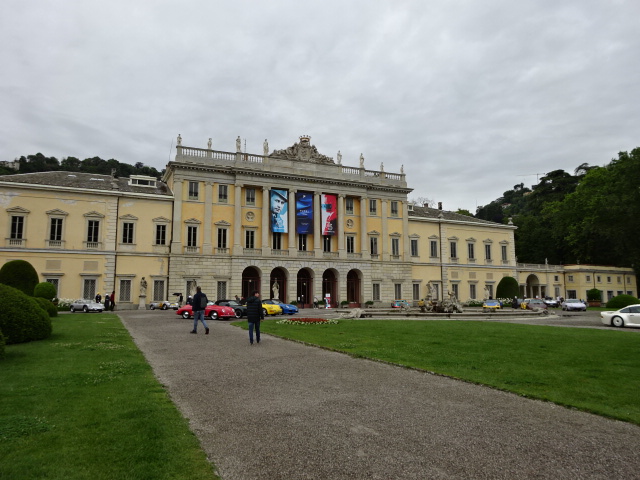
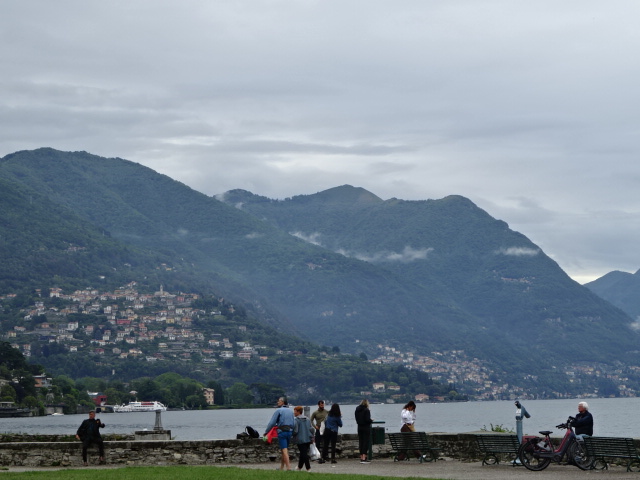
Walking around the center of Como, taking in the romantic atmosphere, was a real thrill. We also visited the grounds of the Villa Olmo, an impressive neoclassical structure dating from the 18th century. The lake views were outstanding, and the English style garden was beautiful.

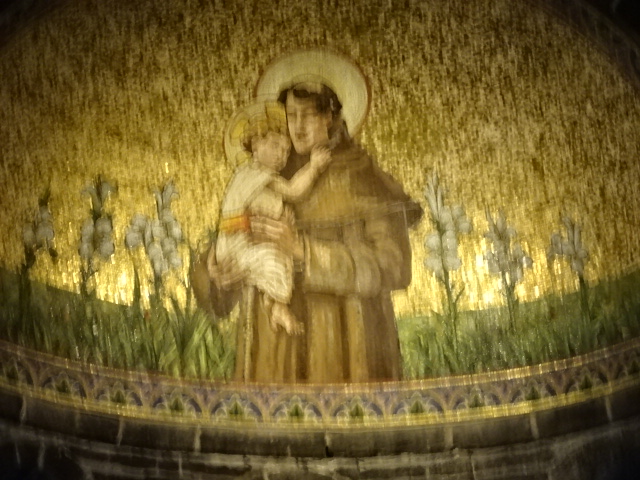
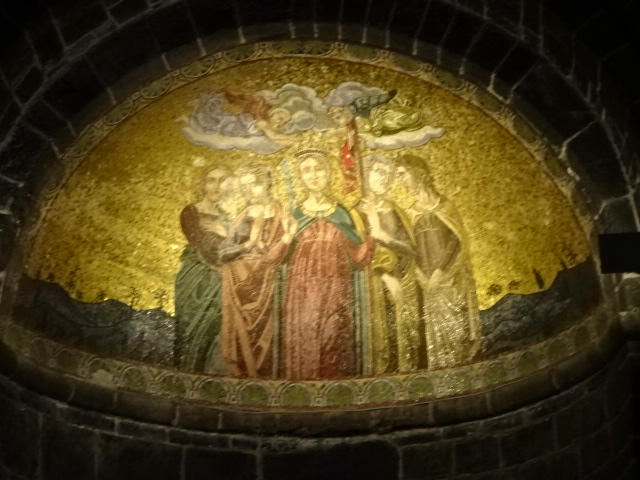

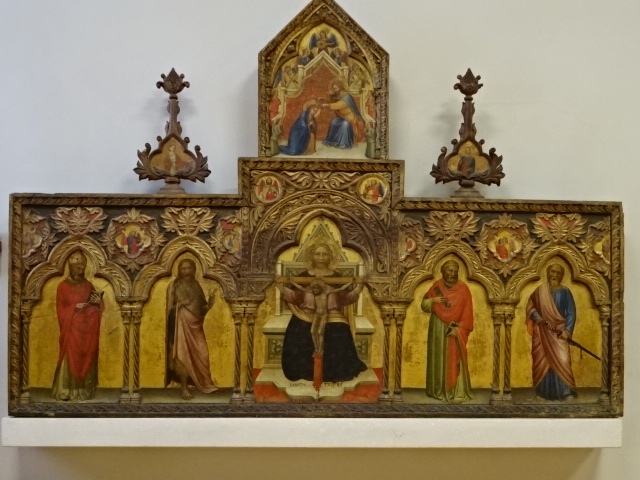
Bellagio was next on the itinerary. I ate a delicious lunch in an costly restaurant in this charming town with steep cobblestoned lanes dotted with some expensive shops. The historic center was made up of only three streets but also sported a park and marina. I walked up one steep street that had a medieval aura and found myself on the main square looking at the Basilica of San Giacomo and a tower. The basilica hailed from the Romanesque days of the 11th and 12th centuries and featured a Romanesque cross and Gothic triptych.
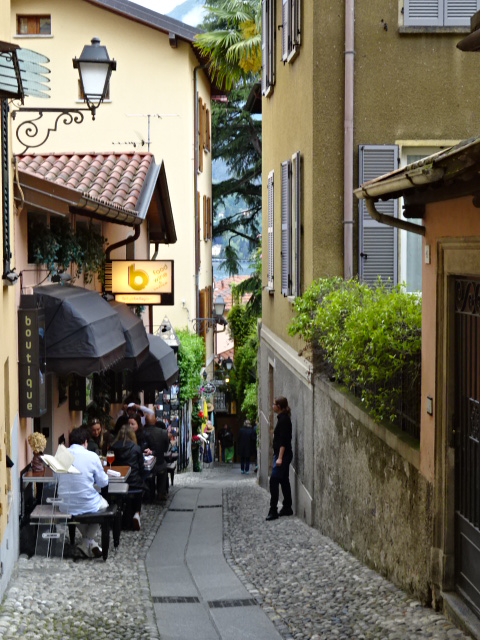
While I didn’t have the chance to visit any of the villas there, the Villa Melzi with its English style garden is worth mentioning. The luxurious structure inspired many of the rich to build villas on Lake Como during the 19th century. Franz Liszt composed many piano works there, inspired by the romantic atmosphere.


We also visited the quaint town of Menaggio with its quaint waterfront square. The three-naved Church of Santo Stefano Protomartire, built on a Paleochristian site, showed off frescoes from the 16th and 17th centuries. The Chiesa di Santa Maria had a neo-Gothic façade and included an artistic rendition of Saint Ambrogio as a young man. Other churches in the town are noteworthy, too. There are many villas in Menaggio, including the neoclassical Villa Vigoni. Goethe often traveled to that villa.

I did get a look at some villas where movies and some episodes of the show Succession had been filmed, and I saw a hotel where Greta Garbo had made a movie. Unfortunately, it wasn’t possible to take good pictures due to the rain slivering down the window and the location of my seat on the boat. I did like Richard Branson’s villa with its fairy-tale appearance, though.

Even though it rained often while I was exploring the towns surrounding Lake Como, I enjoyed the romantic atmosphere that had inspired Liszt, Goethe and so many more. The towns were very crowded even on a rainy day. I could only imagine how crowded they must be in the summer on sunny days. I hope to return to Lake Como sometime, heading to Varenna or Villa Carlotta.
Tracy A. Burns is a writer, proofreader and editor in Prague.









 Tracy's Travels