
I regretted not having time to visit the house museum Boschi Di Stefano the first time I visited Milan. It was far from the center, where I spent much of my introductory days in the city. During my second visit the following year, I made sure I did not miss this museum.

I got off the metro at the Lima station, in which felt to me like a dangerous area. Yet, five minutes from the metro, I walked down a street lined with elegant buildings, which gave off an altogether different atmosphere – one of calmness and grandeur. The museum was on the second floor of a majestic building built between 1929 and 1931 by Piero Portaluppi, whose name was familiar to me because he had designed Milan’s Villa Necchi Campiglio, a former home with dazzling Art Deco adornment inside. I recalled the works by Pablo Picasso and the lush garden with pool and tennis courts at the Villa Necchi, one of the highlights of my first visit to this remarkable city.

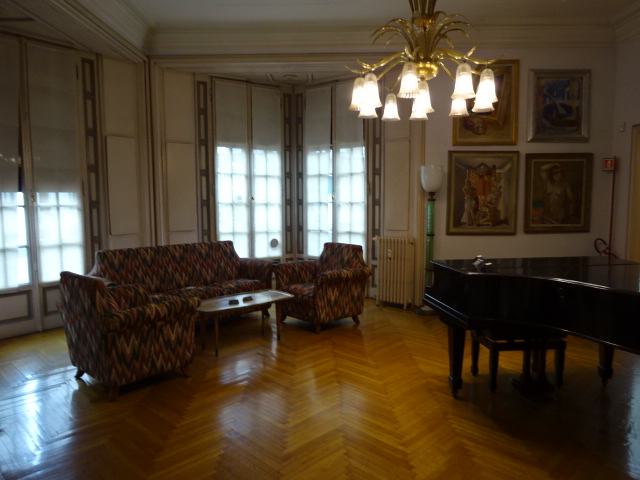
I loved house museums because they had a more intimate quality than bigger, impersonal art spaces. I could sense that these house museums had once been somebody’s home. Trials and tribulations of daily life had taken place here. Private conversations had been voiced here. This particular house museum had once been the home of Antonio Boschi and Marieda Di Stefano, a married couple who had amassed a collection of some 2,000 pieces of art, mostly Italian in origin. They tied the knot in 1927 as Boschi, a veteran of World War I, went on to become a successful engineer. Marieda was an artist herself who had an affinity for ceramics. Many of her artistic creations can be seen here, too. A school of ceramics was situated a floor below.

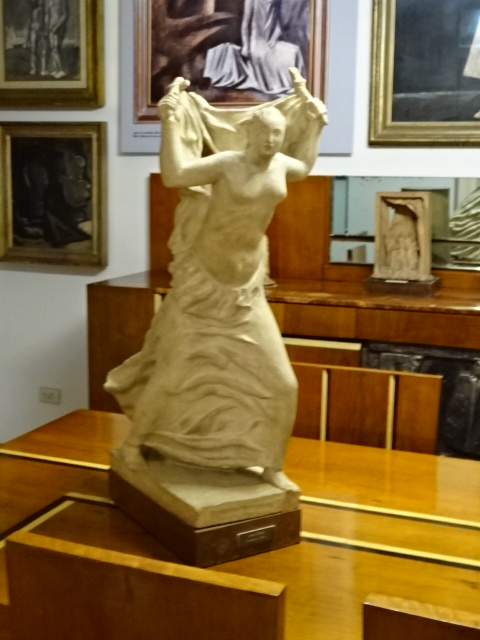
The Caso Museo Boschi Di Stefano includes 11 spaces and focuses on 20th century art dated from 1900 to 1960 – mostly paintings but also drawings, sculpture and furniture. About 300 works are on display. The museum has been open to the public since 2003.
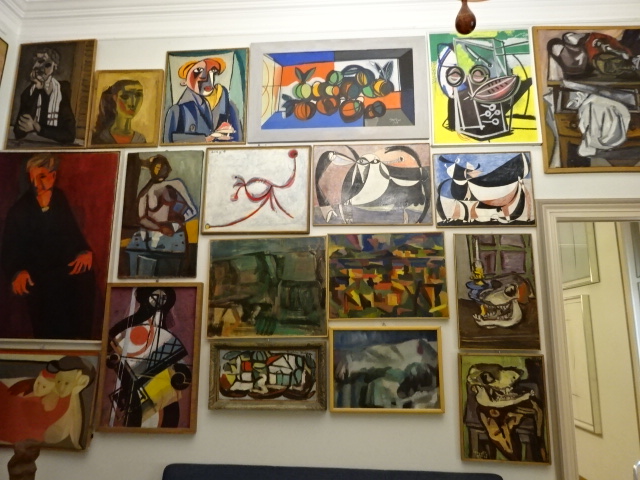
I felt overwhelmed as I contemplated the paintings that covered the entirety of the walls from the bottom all the way to the top. I was almost dizzy with delight, gazing at all the paintings, some falling into the category of modern art while others showed off a contemporary style. The works were displayed in a chronological fashion, so I could see how styles developed during those 60 years.

I recognized paintings by Giorgio De Chirico, Pablo Picasso, Amadeo Modigliana, Lucio Fontana and Raoul Dufy. Other pictorial treasures included 66 works by Roberto Crippa; 129 renditions by Gianni Dova; and 57 creations by Cesare Peverelli. Giuseppe Ajmone, Piero Manzoni, Arturo Martini and Sandro Martini, among others, were also represented there. I recognized Joe Columbo’s distinct style from an exhibition at the Museum of Modern Art in Milan the previous year.

What once was a guest room is now filled with furnishings for a study, the pieces dating from the 1930s. The dining room was a delight, too. I was fascinated with the Agena ceiling light, a unique round structure with what look like yellow cups protruding from the ball-like form. I didn’t understand what the style of the ceiling light meant, but it was fascinating to see it with my own eyes.
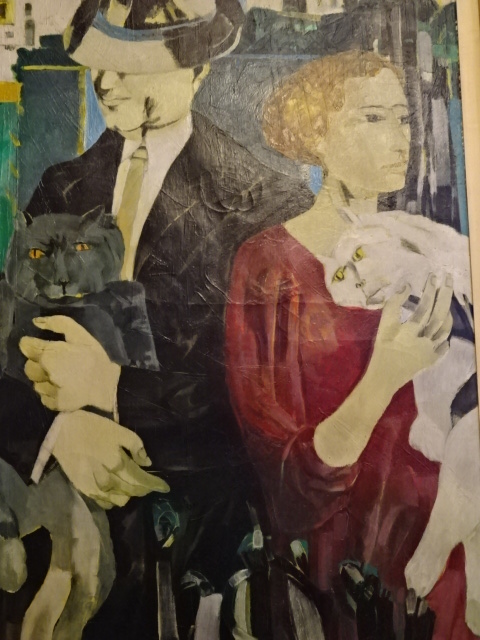
I went through the flat twice to try to take in all the art that surrounded me. It was a mesmerizing and breathtaking experience. The development of 20th century art was on display, each work speaking volumes about artistic creations during a time period in which I had not lived but could now better appreciate.
Tracy A. Burns is a writer, proofreader and editor in Prague.


 Tracy's Travels