Kuks Diary

Kuks7It was almost 6:30 a.m., and the music on the bus was funereal – so depressing that I felt as if a heavy weight had descended upon my shoulders. It had taken me almost an hour to get to the Černý Most Metro and bus station, after leaving home on the 5:04 tram.

We made it to the Hradec Králové bus station in about an hour and 15 minutes. There, I had enough time to get the 8:20 to Kuks, a village where a former hospital, Baroque in style, was surrounded by 24 statues by legendary Czech sculptor Matyáš Braun. It also housed one of the oldest and most valuable pharmacies in the land.

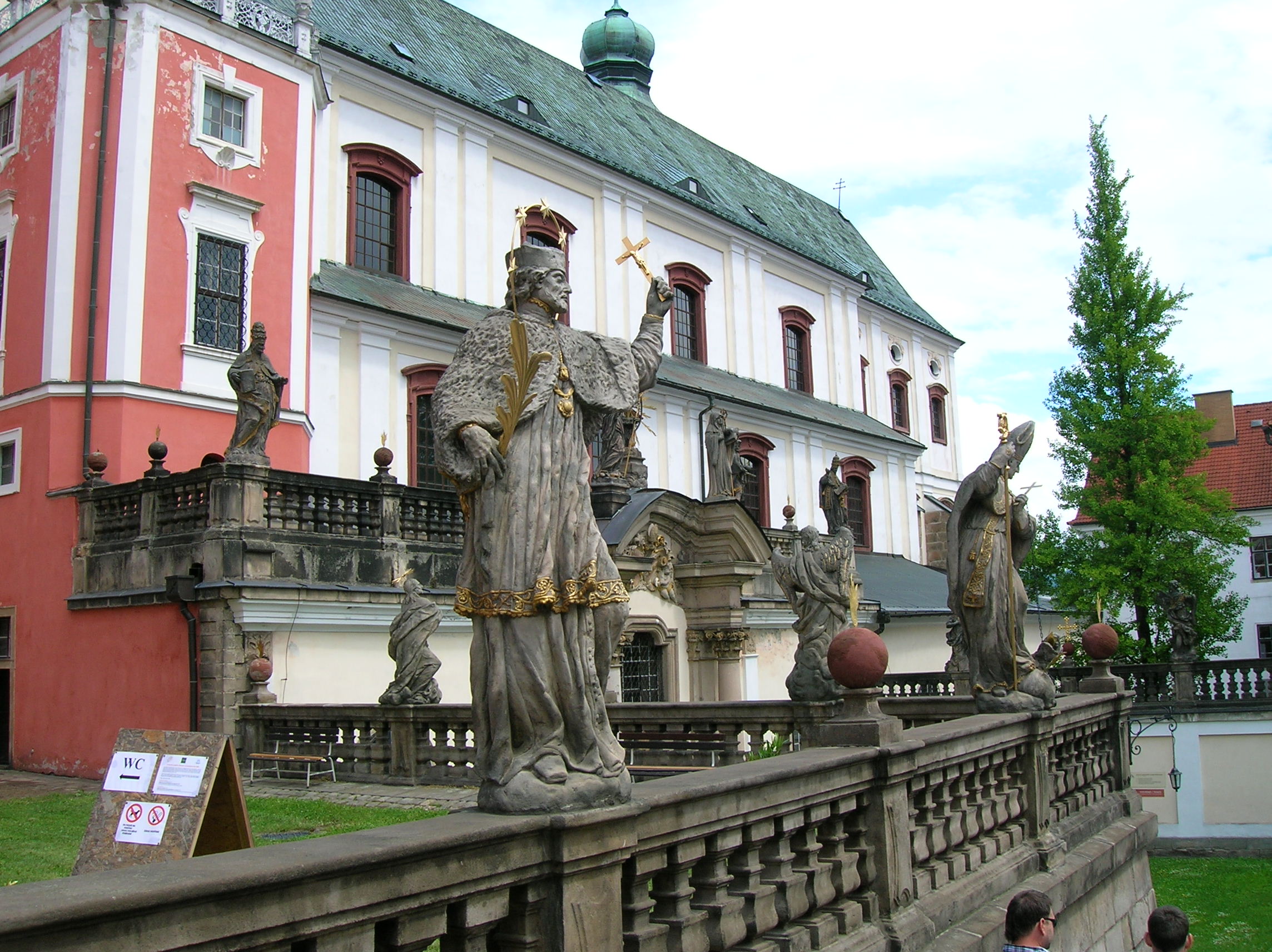
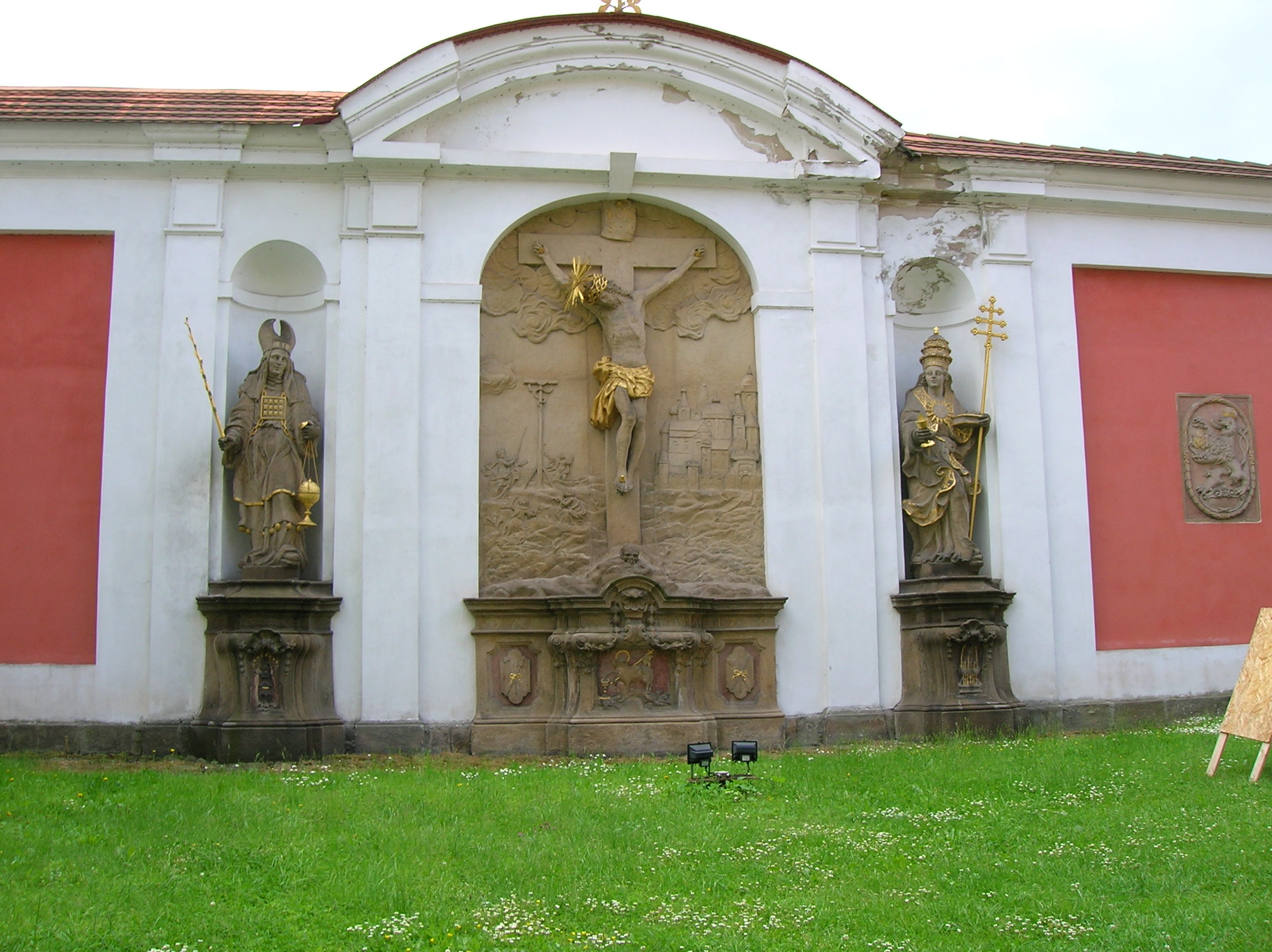
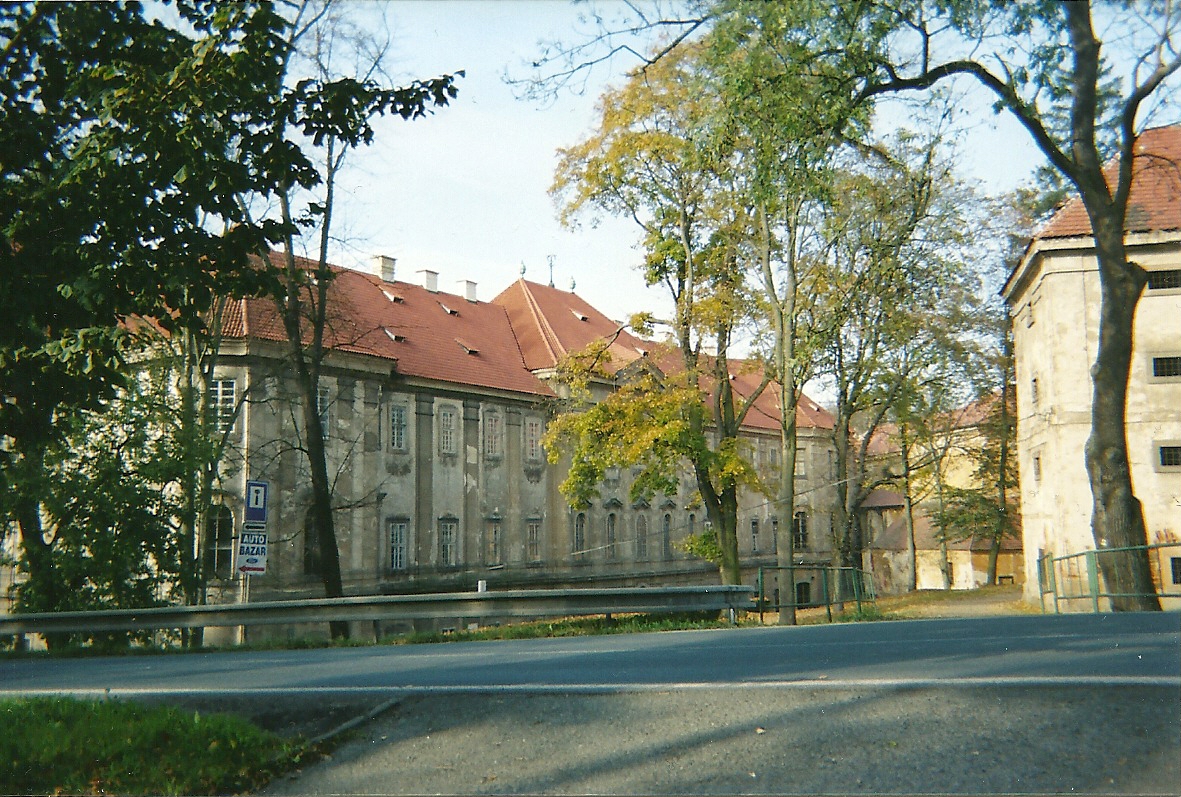
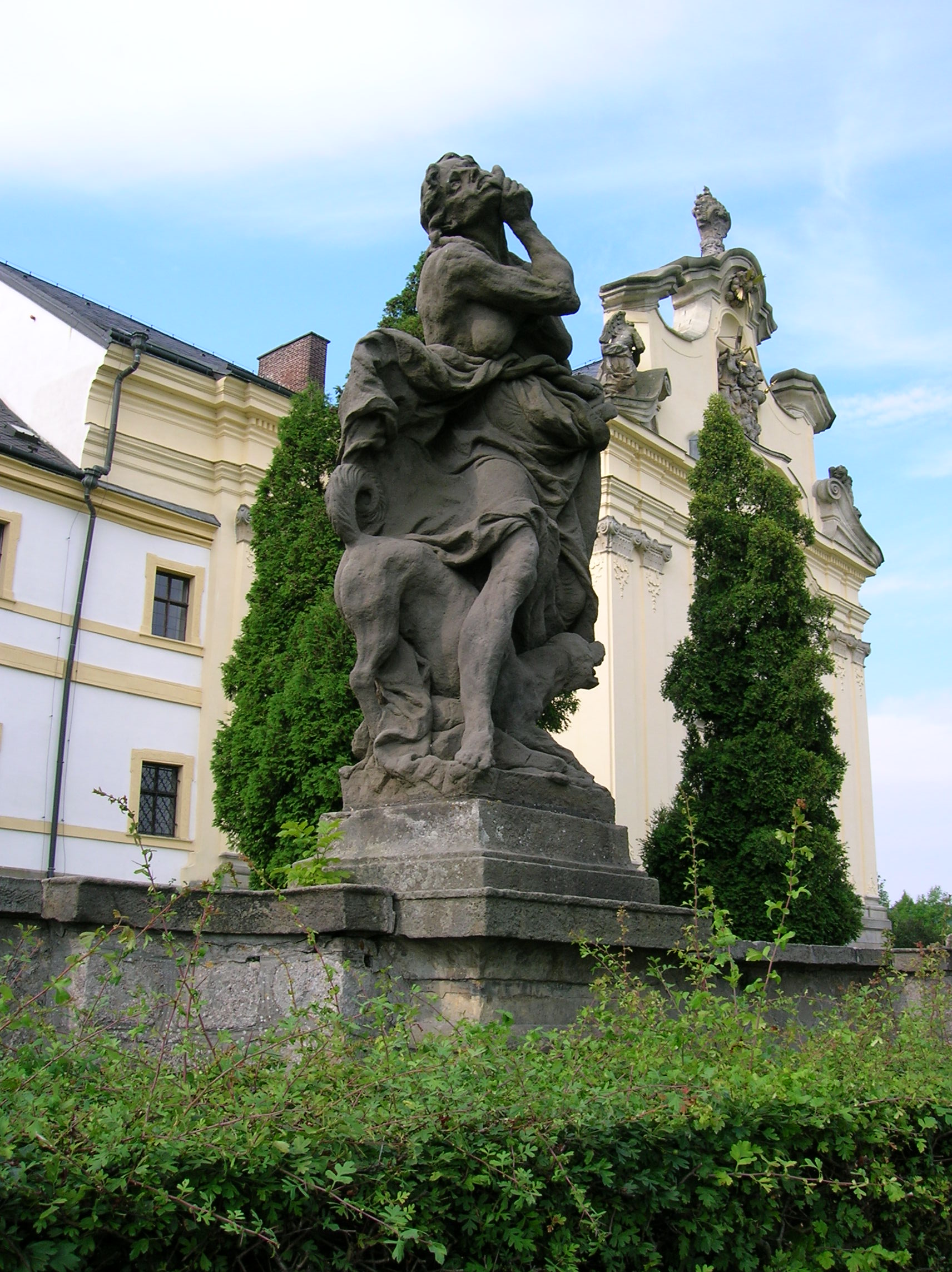
The bus to Kuks took half an hour. I only knew I was there because I saw a sign with the name of the village on a small wooden shack along the highway. I got off the bus and felt lost. I looked to my right: there was a large field, nobody in sight. To my left a building and a road. I reasoned that the village must be down the road; there must someone in the area to ask for directions.  I was right:  it only took only 15 minutes to come to the end of the big park in front of Kuks’ former hospital. I walked on the long path and up the stairs flanked by Matthias Bernard Braun’s 24 Late Baroque statues of Virtues and Vices.

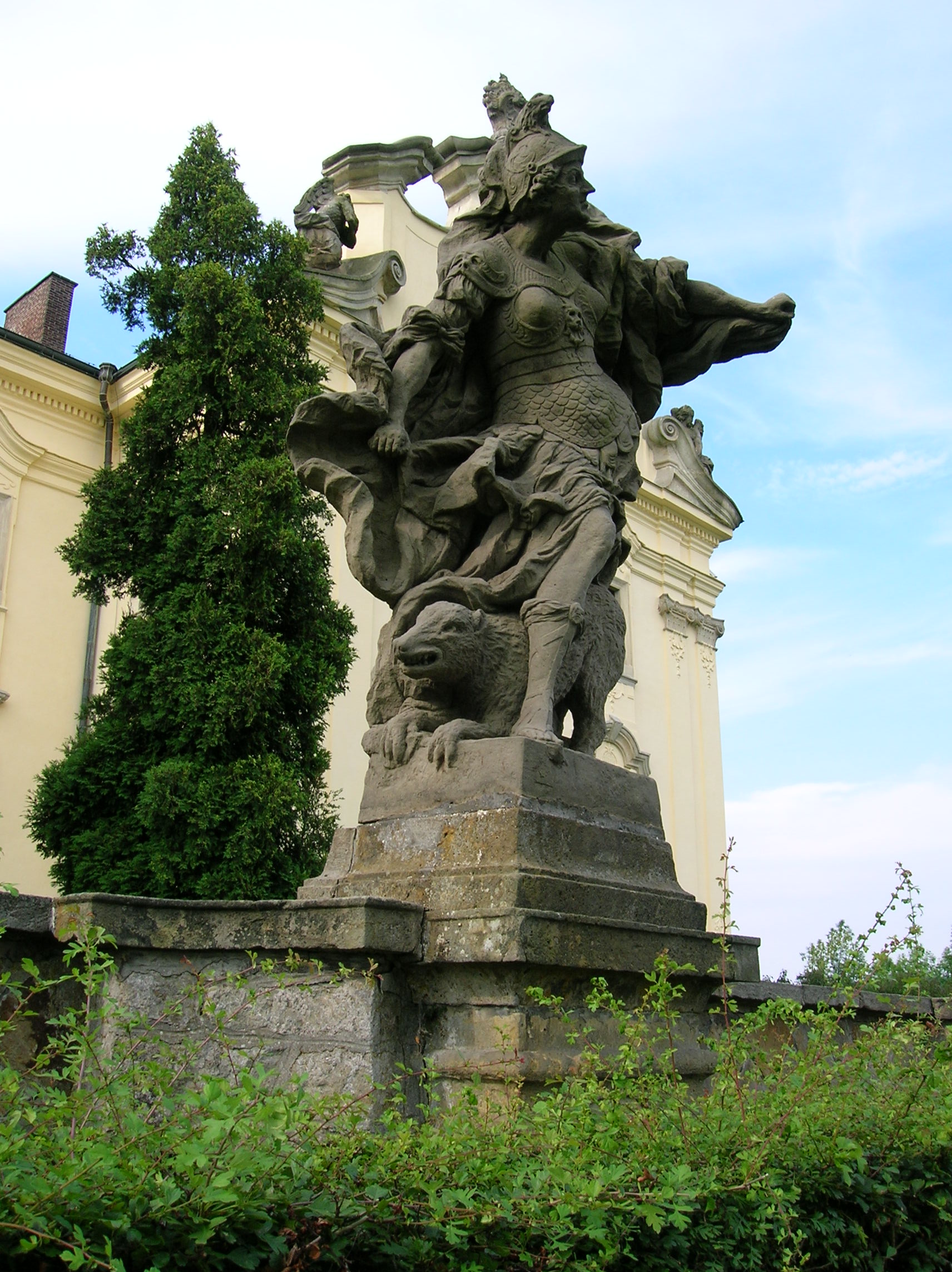
Kuks4I walked around Braun’s Baroque statues that seemed to be swirling and twisting and turning as I snapped photos of Love, Despair, Sloth, Sincerity, Faith, Virtue, Jealousy and Hope, to name a few. Then I went to the garden behind the hospital and took shots of the eight statues of the muses and the dominating statue, that of the Big Christian Fighter, wielding a sword and shield, with a godlike appearance as he defended Christianity against religious violence.

There were three tours. I took the one concentrating on the historical interior first. In the first room there were portraits on the walls.  An intriguing one showed a woman on her death bed, which was surrounded by candles. I could almost see them flickering.
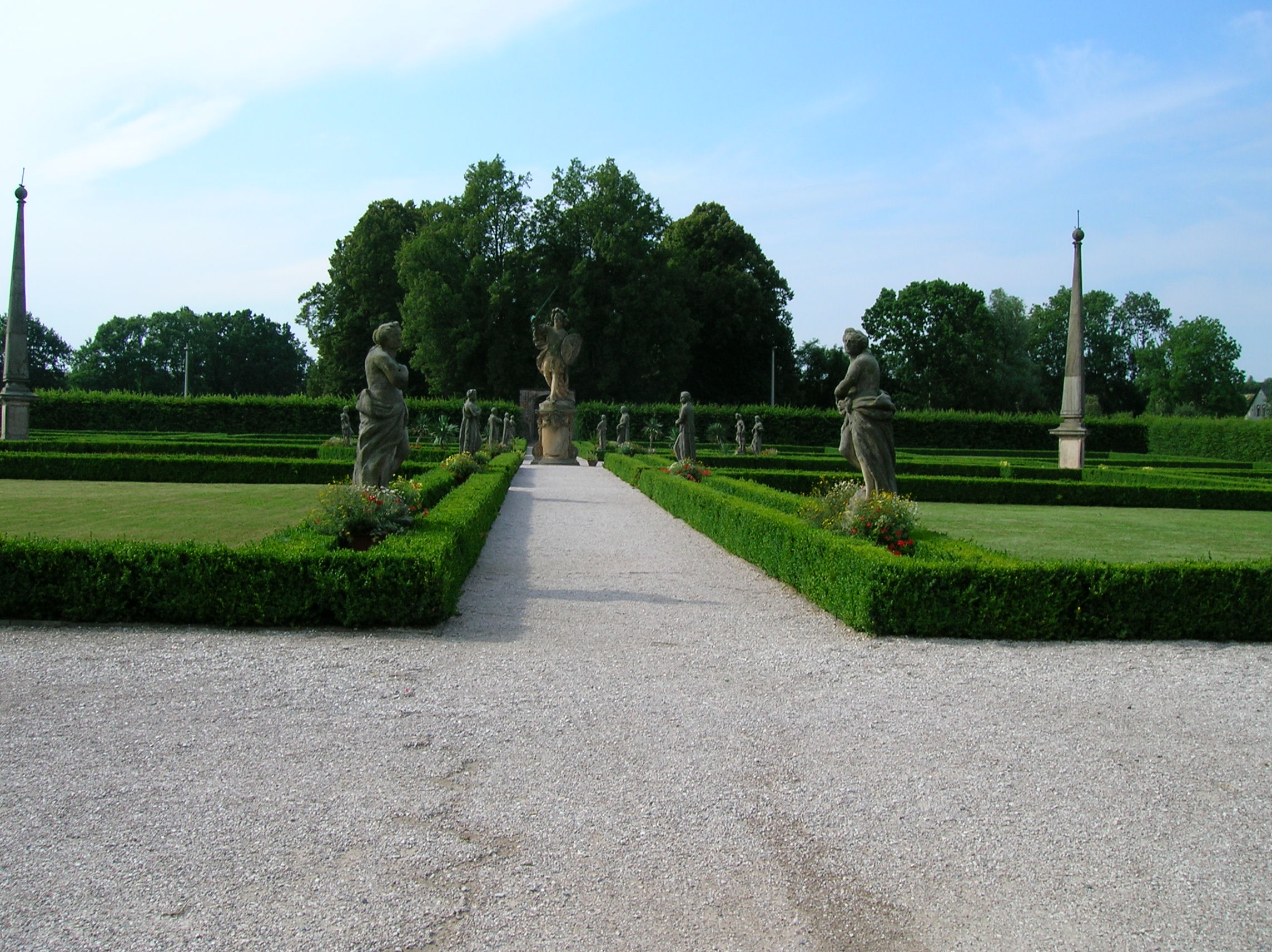
Kuksgarden1The second room featured a model of the former Kuks hospital for veterans and the spa that used to be across from it, until it was destroyed by a flood in 1740. The model harkened back to 1725, when the spa was flourishing. The guide pointed out a church, a wooden theatre and astronomical clock that used to be part of the village as well as the pub, erected in 1699 and still operating on the other side of the village. She also pointed out the River Labe that separated the monastery hospital from the spa as well as the Philosophers’ House, a two-storey Baroque villa, where the founder of the hospital and spa, Count František Antonín Špork, had kept his library of 40,000 volumes.

Kuksgarden5Then we went out in the courtyard, where the guide pointed out the statue of the Small Christian Fighter gripping a sword that had turned green with age. From there we stepped into the lapidarium, where the original 24 sandstone statues by Braun were displayed. The swirling maelstrom of gigantic Baroque images left me in awe.  I always seem to feel overwhelmed when face-to-face with Baroque artworks. Dating from 1718-1720, the statues included Faith, who leaned against a cross, donning lush drapery. Hope had an anchor and was gazing upwards. Patience featured a girl with a ram as she held one hand to her bosom. Wisdom had faces on both sides of the head, one looking back and the other looking forward, one face gazing into a mirror. Sincerity, clad in fantastically swirling drapery, was portrayed as a girl with a heart in the palm of her hand, gripping it to her own heart.

The Annunciation of the Virgin Mary Chapel was next. Two exquisite reliquaries with Baroque golden frames were placed on either side of a wooden Christ on the cross. On one wall there was a huge tabular of Bethlehem, painted in the 19th century. A figure of a sheep was curled up, asleep, next to Jesus’ crib.

Kuksgarden10Next door was the church – The Holy Trinity. The altar featured the resurrection of Lazarus. Images of God the Father and the Holy Ghost sparkled in gold. On one side of the main columned altar stood a golden Saint Peter, holding a key. On the other side was a golden Saint Paul, armed with a sword. The Rococo pulpit glinted in gold as well. Four other altars took up space, two bigger ones and two smaller. The organ above was Baroque and the columns in the church Corinthian.

There was much to see in the hallway. From the old worn-away frescoes I could make out the figures in “Death with a Madman” that portrayed a dancing skeleton with the insane figure and “Death with a Cardinal,” in the other. I wondered how appealing This “Dance of Death” cycle must have been to the patients who may have strolled down the corridors.

Kuksstatue4The ancient pharmacy was next on the list. Called the Granat Apples, it featured various medicine jars on shelves behind the counter. The colorful display consisted of jars made from glass, ceramics and wood, for example. On the counter was a figure of a tree with golden apples and hanging scales. There were weighing scales on the counter as well as a bottle of Atropen, a poison that makes the user go blind if it is used for a lengthy period of time.
Kuksstatue5The pharmaceutical museum was the highlight of the second tour. A prescription for eye drops, written out for the first democratic president of Czechoslovakia, Tomáš Garrigue Masaryk, was displayed under glass on one counter. The paper was scribed in fancy, black lettering. The guide pointed out various poisons, which were marked in white letters on black labels. As I went through centuries of pharmaceutical history in the museum, I stopped to look at a cash register with paper numbers that came up. It hailed from the beginning of the 20th century. You could stir mixes for medicines in bowls yourself, if you so desired. Machines from various pharmacies were also featured in the museum. In a cabinet I saw a jar full of bones from an Egyptian mummy.
Kuksstatue6The guide was careful to point out the cabinet for poisons, such as Strychnitr. I was impressed with the traveling first aid kit from the 19th century. Small glass bottles had been placed in a wooden case that had a floral decoration on the underside of the lid. I didn’t understand why boxes of the contemporary medicine of Jox spray were there for viewing. They were situated next to a pale green box marked Vomitin. Then the guide demonstrated how to make tablets smaller by using a machine and also showed us how to mix tablets with another machine. It was quite intriguing. She also demonstrated how to prepare a tablet from powder with a hammer.

Kuksstatue16For the third tour I went into the crypt below the church. The group was ushered down a dark corridor toward the main altar, decorated with cherubs holding one hand over their eyes and holding skulls in their hands. In the center of the altar was a skull. Looming behind and above the altar was Braun’s masterpiece of Christ on the Cross.  In the darkness, thanks to the guide’s flashlight, we were able to make out coffins of the Špork family members. Only one coffin did not belong to a member of the clan. In a small coffin lay the midget Anežka Tarnovská, who died at age 90 and had worked as a cook on the estate. She saved František Špork’s life when she informed him about a plan to poison him. Finally, we were ushered out of the dark, damp space.

Kuksstatue28Famished at noon because I had eaten breakfast at 3 a.m., I walked to the Chateau Restaurant, only to find that it had been replaced by a small snack bar offering sausages and other fatty foods I did not like. I went for the ham and cheese sandwich, which wasn’t bad. Since it had started raining, I headed for the waiting room near the box office and wrote postcards there. I had wanted to trek the three kilometers to Braun’s outdoor Bethlehem statues called “The Nativity,” but I wasn’t about to venture into a forest when it was raining so hard. I had walked through a forest to get to and from Rožmberk Castle in the Šumava region during a severe thunderstorm some years ago; I didn’t care to repeat the experience. I had read that the biblical statues were carved directly into the sandstone rock. It certainly would have been an amazing sight to behold.

So, without seeing Braun’s Bethlehem, I wound my way back to the wooden shack on the highway, waiting for the bus that would take me back to Hradec Králové. It came on time, but the bus going to Prague didn’t. The 15:13 didn’t show up. Instead there was a 15:35. While it took an hour and 15 minutes to get to Hradec Králové from Prague, the return trip lasted at least two hours, a good half hour in Prague itself, going from the Černý Most Metro and bus station to the Florenc main bus station. There was a positive side to the ride back, though. During the trip home, before reaching Prague, I saw field after field of sunflowers, postcard perfect scenes of ravishing nature.Image

 Tracy A. Burns is a writer, proofreader and editor in Prague.


Nelahozeves Chateau Diary

Nelahozeves courtyard

A comfortable 40-minute ride in a new, clean train. That’s all it took to get from Prague’s Masaryk station to Nelahozeves chateau in the village by the same name as it is a mere 30 kilometers from the capital city. Then it is only a short walk to the two-storey chateau. It was my third time here. I especially love the plethora of art work in the Italian Renaissance three-winged structure. Even from the train I could see the chateau, appearing as a sort of fortress looming above me, with its enchanting sgraffito-decorated northern wall facing me. I crossed under the oldest railway tunnel in Bohemia, dating from 1851 to 1855 and constructed in Neo Romanesque style, and then wound up gazing at the beautiful sgraffito on the façade.

Floral motifs decorate the northern wall as do scenes from The Old Testament. For example, on the wall Judith holds the head of Holofernes, Hercules fights the giant Antacus and Isaac is sacrificed. Virgil Solis, a follower of the master artist Albrecht Dürer, is responsible for the design. After crossing a stone bridge, I went through a gateway flanked by Ionic columns and arrived at a rectangular courtyard. The box office was straight ahead.

Nelahoz22

The history of the chateau intrigued me, as it had become intertwined with the Lobkowicz family, who bought the chateau in 1623. Bavarian aristocrat Florian Griespek of Griespek constructed it, and his successor Blažej put on the finishing touches in 1614. It took 60 years to build the chateau. Griespek had an interesting background. A former court official of the Holy Roman Emperor and King of Bohemia Ferdinand I, he had spent time in Prague’s White Tower for charges of high treason. Thanks to Ferdinand I, though, he became a free man again. It was his granddaughter Veronika who sold the chateau to Polyxena of Lobkowicz. The intriguing history does not end there. Not at all. During the Thirty Years’ War, the chateau was occupied by Swedish troops and those of other nationalities as well. Then it served as a military hospital during the Austrian-Prussian War. Later it was the home of a girls’ boarding school. During World War II and under the Communist regime the items in the chateau were scattered in various locations.

Restoration did take place after World War II when it became the property of the Czechoslovak state. Then, finally, in the early 1990s, the Lobkowicz family became its owners once again. The current owners live in the USA, while their son William takes care of the noble residence. To be sure, many of the Lobkowicz clan had been active in Czech politics and culture. For example, Polyxena’s son Václav Eusebius worked as an advisor to Holy Roman Emperor and King of Bohemia Ferdinand III and Holy Roman Emperor and King of Bohemia Leopold I. Also, Max Lobkowicz focused his energy on the Czechoslovak exile government in England during the Second World War. During that time he also served as Czechoslovak ambassador to Great Britain.

NelahozevesMay176

Perhaps the chateau is best known for its paintings.  In the Gallery of Portraits I saw paintings of members of the Lobkowitz family from the 19th and early 20th century. In my favorite, a woman in a stunning blue dress holds a budding pink rose. An admirer of Lucas Cranach the Elder’s works, I spent some time gazing at his “Madonna with Child, Saint Barbora and Saint Kateřina” from around 1520. I noticed the calming green and blue colors in the horizon as a saint in the foreground read a black book. The Madonna looked pensive while the child appeared defiant. I liked the detail of the baby’s little fingers.

There is a Peter Paul Rubens’ masterpiece on display as well. It is called “Hygieia feeds a sacred snake” and dates from circa 1614. The Baroque gem shows a snake with its mouth open, appearing famished. I could almost see its tongue flicking in anticipation.

NelahozevesMay17

My beloved Bruegel clan is among those represented in the chateau’s art work, too. Pieter Bruegel the Elder’s “Haymaking” dates from 1565 and depicts women walking in the foreground, gripping hoes, while others carry baskets on their heads. Horses, used for carting hay, drink from a bucket in the middle of the foreground as people toil in a vast field. The gigantic cliff to the left in the background caught my attention just as the blue and green mountains and river did. The painting depicted two months of the year, illustrating June and July. Then there’s a winter village scene, idyllic and calming, by Pieter Bruegel the Younger around 1615.

NelahozevesMay1712

But that’s not all. In Canaletto’s “Thames with Westminster Bridge” from 1746 I noticed the gentle frolicking of the waves and appreciated the details of the boards, sails and oarsmen. Hundreds of black-and-white prints depicting hunting themes also line the walls of a hallway.

My favorite three paintings, though, made up a satirical series of cats posing as female nobles and monkeys representing the male nobility. They are located in a small room filled with 47 paintings. The works by Sebastian Vrancx, who lived from 1573 to 1647, include one depiction of monkeys sword-fighting. I was drawn to the bright red clothing with the stiff collar of one particular monkey as he lunges forward to strike another monkey that had fallen onto the ground. A cat on the sidelines flails her arms, as if saying, “Enough already!”

NelahozevesMay172

Another shows cats and monkeys at a banquet. Two monkeys working as waiters had a well-ironed cloth over one arm. A plain chandelier is overhead while one monkey brings a kettle to a table full of chattering cats. I could almost hear the chit-chat of the seated felines.

In the third rendition cats and monkeys are on a boat in a river. A palace or manor house and another boat make up the background. One monkey reads aloud from a book while another plays the piccolo. I thought it was intriguing that the painter chose to place a monkey with his back to the viewer in the center of the foreground.

On the tour I saw much more than paintings. For example, the library contained 65,000 books, written in German, Latin, Hebrew, Italian, German, French, Spanish and Czech. There were 679 manuscripts, and 114 of them date from the Middle Ages. Subjects ranged from history, medicine, architecture, literature, law and travelogues. However, only a small portion of the books are on display in the chateau. Still, I was fascinated by the 1696 French first edition of The Art of Swimming, which ranked as one of the earliest books on the subject.

NelahozevesMay1711

In the Drawing Room I set my eyes on a gold Empire-style table, made with gems and decorated with intarsia. On the black table were pictures of apples, birds, and fruit and flowers in ornate bowls. In the room where the prince welcomes guests, I saw a black cabinet from the 17th century, decorated with pictures of biblical themes, birds and flowers.  In the chapel there was a three-winged altar with pictures of an angel, a man on a chariot with a skeleton to his side and a man in a long robe pointing at a manuscript on a podium.

The Dining Room exhibited exquisite Venetian decoration encased in glass. I was also impressed by the desk made out of antlers, located in the armory. In the middle of the room was a rifle for bird-hunting, decorated with a grotesque brown mask, a black ball in the creature’s mouth. Then there was the beautiful Knights’ Hall with paintings of knights on the walls and a sandstone fireplace from the 16th century. Stucco reliefs adorned the ceiling. At one time, many centuries ago, this room used to be the social center of the chateau, with its Renaissance décor.

Nelahoz23

After the tour I wanted to get something to eat in the delightful restaurant upstairs, but it was open only to groups who book it in advance. In past years, it had been open to the public. I made my way back to the train station- a small, brick building that was more of a stop than a station. I passed Antonín Dvořák’s birthplace, a white house that was open odd hours. It was a pity the house-turned-museum was not open; I would have liked to have visited the place again as I had not been there for many years.

A comfortable, clean train came on time, and I headed back to Prague in the early afternoon.


Image

Hrádek u Nechanic Chateau Diary

HradekuN2020ext3

On a hot Friday morning in August, I went to one of my favorite chateaus, the small yet enchanting Hrádek u Nechanic, situated west of Hradec Králové, a major town in east Bohemia. Once again, I changed buses at Hradec Králové, a station I now felt I knew intimately. (Note: I would visit it again in July of 2020 and be just as amazed by its exterior and interior.)

HradekuN2020ext4

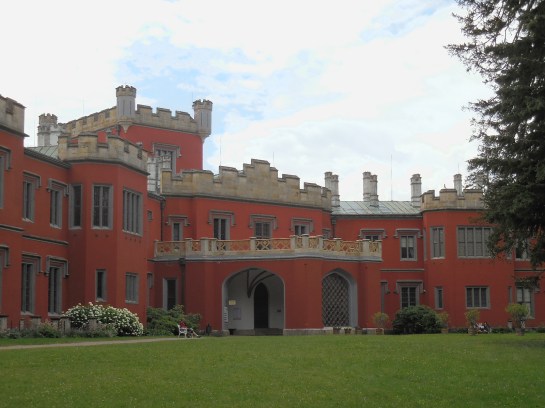
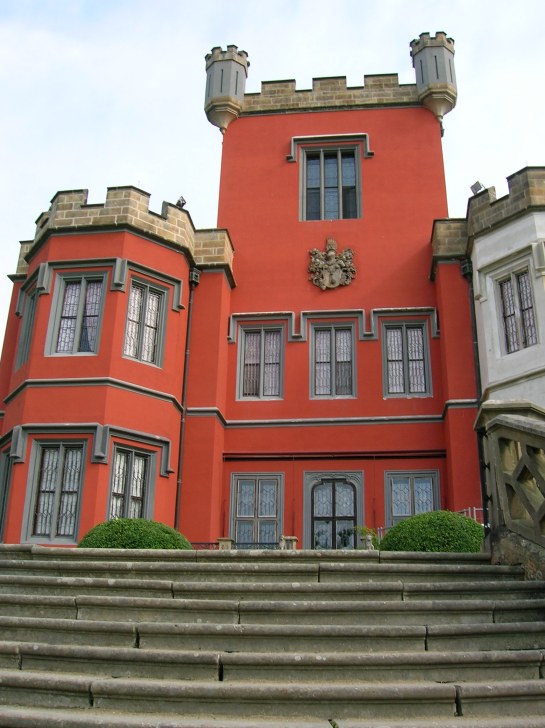
When I reached the chateau, I was struck by its cheerful, romantic, dark orange façade that made it look like it belonged in a fairy tale. After getting my ticket, I walked to the back of the chateau and noticed that this part of the park bordered on a golf course. What struck me most, though, was how the back side was not a playful orange but a mundane grey that was badly in need of a paint job. It even looked a bit dilapidated. A wire fence was set up in front of this side of the chateau. To the far left, though, I climbed a few stairs that led up to the chateau as another wing was painted that dynamic dark orange.

HrádekuN7

At the beginning of the tour, the guide pointed out the lantern lamps hanging on the walls. They harkened back to the 16th and 17th centuries and had been created in Venice. Hunting trophies also adorned the walls. Then the guide acquainted the group with the chateau’s history. While the village dated back to at least the 14th century, the chateau was young, a 19th century construction built in the Neo-Gothic style of English aristocratic homes reminiscent of the times when Queen Elizabeth I and King James I reigned during the 16th and 17th centuries.  Count František Arnošt Harrach of the prominent Harrach family was responsible for building this intimate chateau in 1839. A patron of the arts, he also supported the construction of the National Theatre in Prague.

HrádekuN4

From the July 3, 1866 battle of Hradec Králové during the Prussian-Austrian war to November of that year, the chateau served as a military hospital for the Prussians and was subsequently heavily damaged. Tents had been set up outside the chateau.  In 1884 František Arnošt’s son Jan Nepomuk Harrach took over. A distinguished Czech politician, he also was keen on the arts, giving his support to Czech artists such as Karel Jaromír Erben and Bedřich Smetana.

HradekuN2020ext11

When Jan died, the property was passed on to his brother Otto and then on to Otto’s son Jan, who lived there until 1945, when the Beneš decrees declared the property be handed over to the state. The controversial Beneš decrees declared Germans, Hungarians and collaborators living in the Czech lands and Slovakia would have to relinquish their Czechoslovak citizenship and property without compensation. Approximately three million ethnic Germans and Hungarians were expelled from the country from 1945 to 1947. The chateau was open to the public as early as 1953. It did not become a National Cultural Monument, though, until 2001.

HradekuNint1HradekuNint2

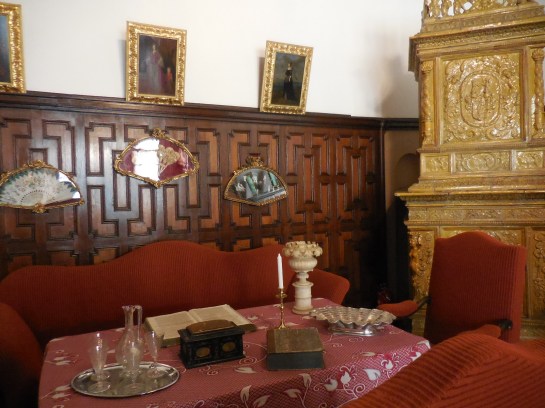
After putting large slippers over my shoes, I followed the group into the Knights’ Hall, a small room that happened to be the biggest in the chateau. I noticed that the floor had a black-and-white diamond pattern. Coats-of-arms decorated the space above the two doors and just below the ceiling. Portraits of Harrach family members dotted the walls. I noted the exquisitely carved backs of the chairs – there were nine of them. I remembered how this entire chateau had always enchanted me with superbly and ornately carved wooden furniture. That was one of the reasons I liked it so much. I found the dark wood appealing, and it made the small rooms feel cozy, perfect for a cup of hot ginger tea on a windy, wintry night. This is definitely a chateau I would not mind living in, if it were not so far from Prague. In the center of the room stood a stone table from the 16th century, decorated with writing and coats-of-arms. Looking up again, I spotted the Lobkowitz family’s coat-of-arms just below the ceiling near the door we had come through. It boasted two black eagles complemented with red and white colors.

HradekuNint55ceilingHradekuNint56HradekuNint57wallpaperHradekuNint60HradekuNint51

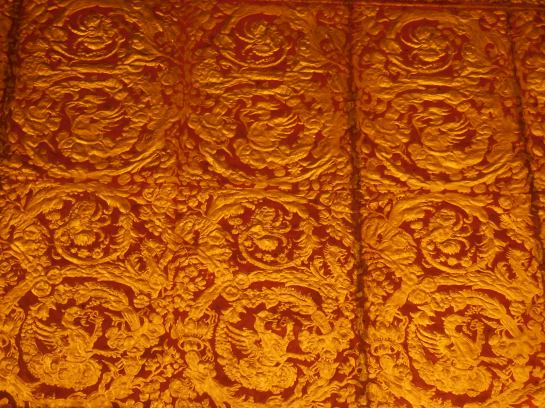
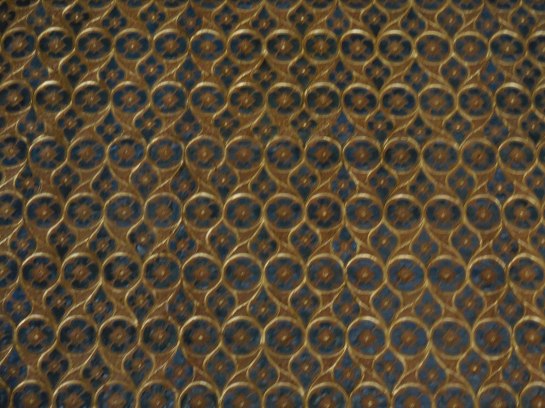
The Golden Hall next on the list was the most riveting space in the entire chateau. Its gold-plated leather wallpaper that featured golden swirls on a dark red background astounded me. The marble fireplace weighed 11 tons, and the tableware was 16th century, from Italy. What looked like a roll-up desk was revealed to be an upright piano. The guide lifted the lid to reveal a keyboard. Opening the two doors above the lid revealed the piano strings. But that was not the only object in that room that amazed me. A figure of a black eagle with a crown had a golden clock on its breast. It used to be able to wave its wings, too. This was the clock of Emperor Leopold I from the 17th century, the one a Russian tsar had given him. It is one of two in the world; the other graces the Hermitage Museum in Saint Petersburg.

HradekuNint63chandelierHradekuNint65

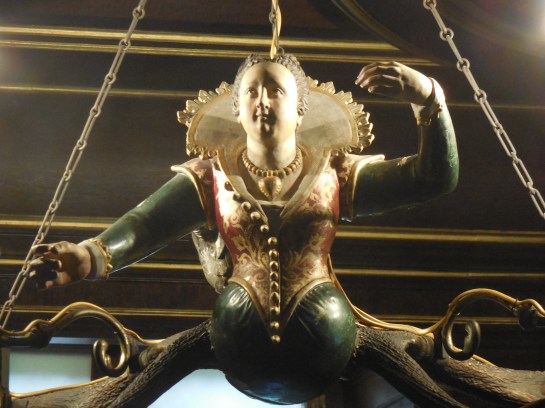
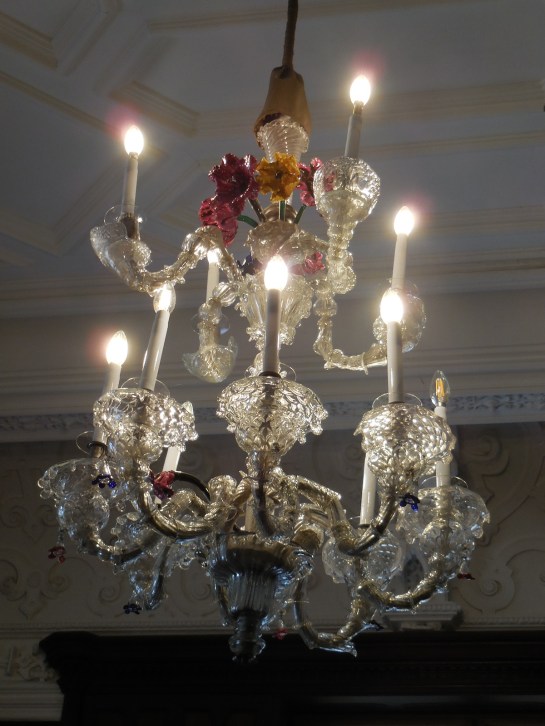
I was also entranced by the chandelier in the Breakfast Room. It featured a figure with a head and body. Its legs had been replaced by antlers that branched out to all sides. It reminded me of a creature from a fairy tale, one that was on the side of good rather than evil. Again, I admired the richly carved backs of the chairs.

HradekuNint72HradekuNint66HradekuNint68HradekuNint70

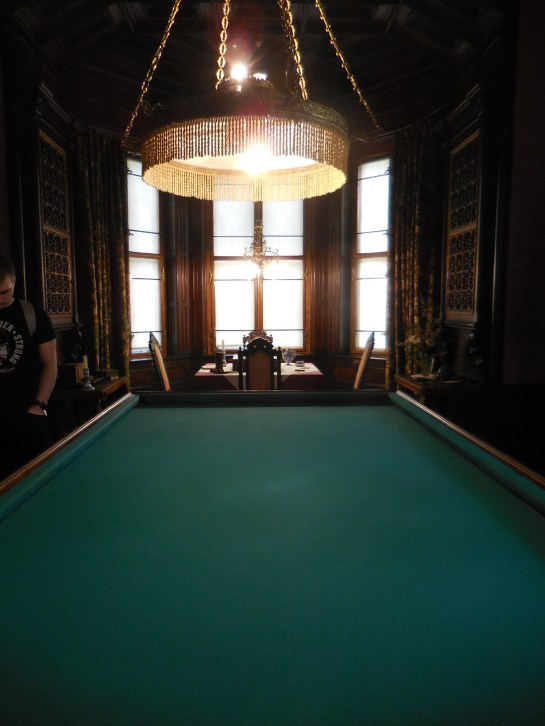
The Dining Room featured plates and ceramics situated on high shelves around the walls. They hailed from 16th and 17th century Italy and Germany. What looked like a brown and white water fountain once had been used to pour wine on tap. Predictably, in the Billiards’ Room there was a big pool table. Yet the holes had been covered over. A brown with gold décor grandfather clock hailed from 18th century Berlin. The dominant 16th century painting “Celebration in the Spa” by Dutch artist Lucas van Valckenborgh featured hills and a forest dotted with people. The picture was so detailed that if you looked closely, you could see a couple holding hands far in the background.

HradekuNint79libraryHradekuNint75libraryHradekuNint76libraryHradekuNint77chandelier

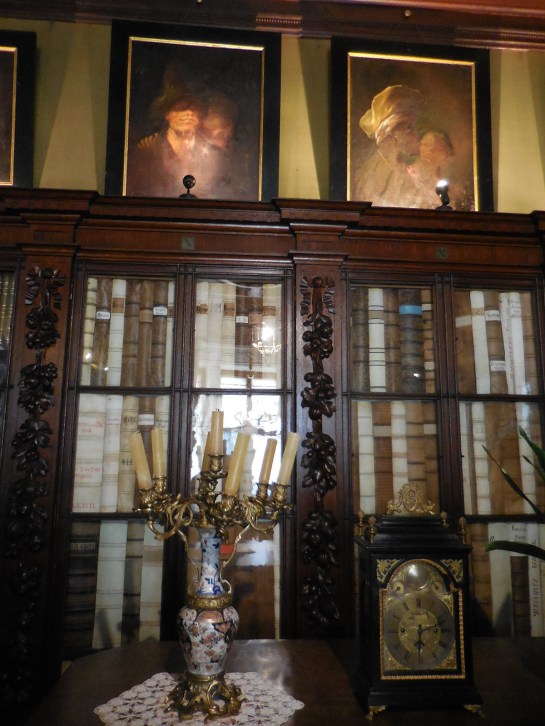
I marveled at the next room, the library, which housed an impressive collection of 19th century Czech and Slovak books. Usually chateau libraries held few, if any, books in Czech, and I had not heard of any carrying works in Slovak. The room was also home to many publications in English, French, Latin and Greek. There was even one book in Hungarian. But the books were not what caught my undivided attention in the library: The portraits hanging high on the walls did. There were 12 portraits of people’s faces, all with various diseases that resulted in deformities. I had to turn away when I saw the swollen warts on one man’s neck. Another had evil, demented eyes, his mouth open as if screeching in pain and anguish. The portraits also reflected the anti-Semitism and racism of those times by portraying an Arab, a Black man and a Jew. I was relieved that society no longer condoned such revolting prejudices. At the same time, I knew that society still had far to go in the anti-Semitism and racism departments. (When I visited in 2020, seeing the portrait of the Black man reminded me of the systemic racism in America and the murder of George Floyd as well as many others. Even though I was living in Prague, I had watched part of the protests and the moving funeral of Floyd on TV.)

HradekuNint9wallpaperHradekuNint10

Now on the first floor, we came to the Count’s Hall. The gold, blue and green leather wallpaper immediately caught my eye. The guide pointed out a faded pink armchair that was adjustable, able to move up and down. When the back of the chair was in the down position, it looked like a coffin. It so happened that František Arnošt died in that chair.

HradekuNint35HradekuNint36HradekuNint11


The Count’s Study featured a chandelier from Murano and a Renaissance desk. The guide showed our group what looked like a golden miniature telegraph but was really an alarm clock. Even the trash can was elaborate; it was made of carved wood.  How I would love to have a garbage can like that!

HradekuNint15ptngHradekuNint14chandelierHradekuNint16bed

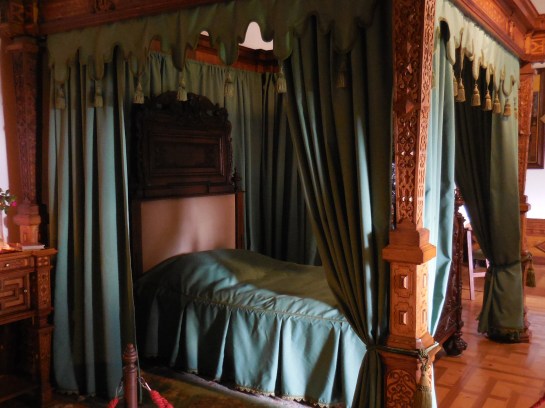
We continued to a bedroom with an icon from the 15th century, the oldest object in the chateau. I liked its bright colors; it had a distinctive vibrancy.  The guide showed us a chandelier that was electric; electricity had been installed in the chateau in the early 20th century. It hung from a flexible band that could be pulled up and down.

HradekuNint18wallpaperHradekuNint20HradekuNint22

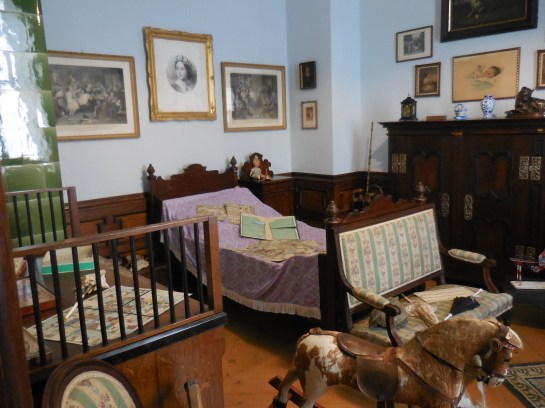
We walked through the guest rooms, where historical personalities such as Czech ethnographer and patron Vojta Náprstek had stayed. The exquisite carving on the doors also drew my attention.  On one wall I noticed the black-and-white engravings of an ancient city’s ruins – was it Rome? I saw a lovely, light blue bed frame with floral decoration in one of the rooms as well. Finally, we entered the Family Halls. Landscapes covered one wall. I noticed an impressively carved jewelry box with detailed wooden drawers. On the walls were black-and-white engravings of portraits of Habsburg generals. One of the earliest digital clocks was on display, too. It had a white square and a number in black on top of one other. The top number read two, the bottom one 59.

HradekuNint28HradekuNint31HradekuNint32HradekuNint25

Almost last but certainly not least was the Oriental Hall, which I don’t seem to have pictures of from my 2020 visit. I could hardly believe my eyes when I saw the ornate, detailed craftsmanship of the wooden furniture from China. I could not recall being more impressed by any other wooden furniture in all of the chateaus I had visited.

HradekuNint85chapelHradekuNint86chapelHradekuNint88chapel

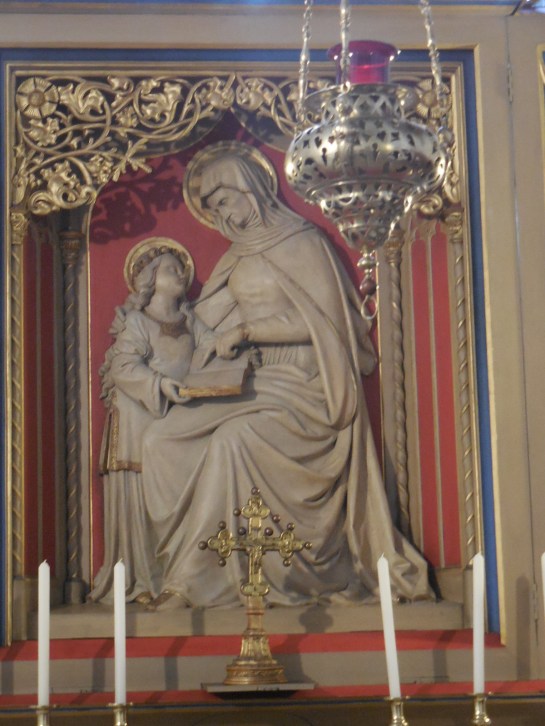
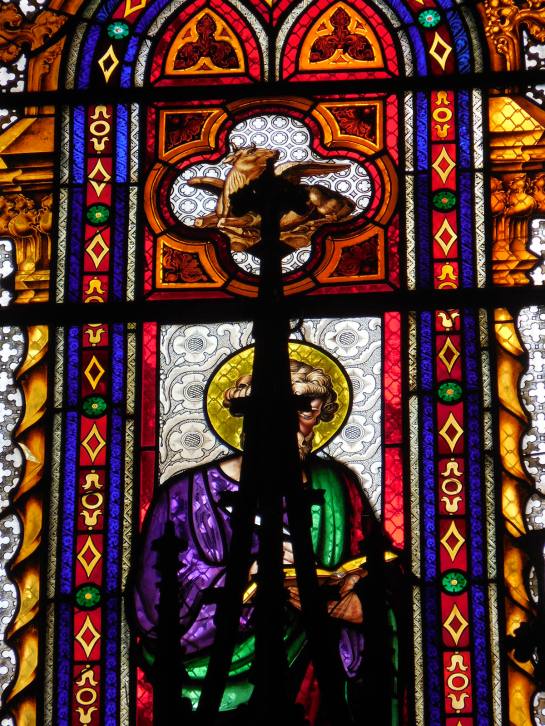
The chapel was dedicated to Saint Anna, who was depicted reading to a child in the altarpiece that consisted of lively, red, blue and tan colors. The stained glass windows were also a sight to behold. The men’s oratory was made of finely carved wood.

HradekuNint89chapelHradekuNint90chapel

The tour ended as a thunderstorm ensued. I wanted to take refuge in the cozy rooms of the chateau with dark wood lining. Yes, this chateau was still one of my favorites. I ventured outside and into the downpour, unable to get the images of all that exquisitely carved wooden furniture and lovely leather wallpaper out of my mind. (By the way, during my visit in 2020, it rained as well, but was an awe-inspiring trip nonetheless.)

Tracy A. Burns is a writer, proofreader and editor in Prague.

HradekuNint93chapelHradekuNint91chapel


Broumov Monastery Diary

Broumov2Getting to Hradec Králové from Prague was the easy leg of the trip, only taking one hour and 15 minutes courtesy of the comfortable Student Agency buses with plush seating. I had an hour before my connection, which would take me to Broumov on a journey lasting two and a half hours.

I had wanted to visit Broumov for about 10 years, but I was always put off by the four-hour or longer bus ride to get there. I do not like traveling by bus. A four-hour trip seemed too much to bear.

This time, though, I was determined finally to see the monastery that many of my friends had praised. Unfortunately, I would not have time to explore any of the rock formations near my destination, a town at the Polish border of northeast Bohemia.

My connecting bus pulled up on time. I spent about an hour reading about the monastery’s history. The town, I found out, had been established as far back as the 13th century. The first mentioning of the monastery that I could find came from 1306, when the Benedictines began to run a grammar school there. Several of the students would make names for themselves in Czech history: Arnošt of Pardubice, who served as the first Archbishop of Prague during the middle of the 14th century; writer Alois Jirásek; and the first Czechoslovak Minister of Finance, Alois Rašín. The history of the school was fraught with trials and tribulations, though. The Hussites destroyed it during 1420, and the uprising of the Bohemian Estates from 1618 to 1620 during the Thirty Years’ War also forced the school to shut its doors. The history of the uprising was intriguing, to say the least. Holy Roman Emperor Matthias had appointed Ferdinand as his heir, which caused a major fuss among the Protestants because Ferdinand abhorred Protestantism.

Broumov3I also read that in the early 17th century, Protestants constructed their own church near the Lower Gate of the monastery, causing much friction. Even though Emperor Ferdinand II ordered it to be shut down and put some rebels in prison, the church remained open. This Catholic-Protestant conflict in Broumov helped instigate the Prague defenestration of vice-governors on May 23, 1618, when the two representatives Ferdinand had sent to oversee the Czech government at Prague Castle were pushed out a window along with the secretary. (They survived because they fell on a pile of horse manure.) This marked the Second Defenestration of Prague and triggered the Bohemian Revolt.

That is when the directors of the Bohemian Estates confiscated the monastery, which was purchased by the citizens of the town. The complex was returned to the Benedictines after the Battle of White Mountain in 1620, when the Catholics, led by Holy Roman Emperor Ferdinand II’s army, defeated the Protestant Bohemians. The monastery was in ruins but was restored. The school was not closed again until 1939, when the Nazis controlled the complex. Benedictines from the USA oversaw the monastery from 1945 to 1948, but then the Communists took over, and the American monks went home. During 1950 the monastery became an internment camp for monks. It was not returned to the Benedictines until 1990.

To get to the monastery, I had to walk through the main square. Renaissance house number 105 boasted of a portal from 1595. I noticed two buildings in Neo-Renaissance style as well. The monastery was practically on the square. I purchased my ticket and gazed at the Baroque statues of saints on the balustrade of the monastery’s terrace before the tour began. Saint Prokop, in almost fluttering drapery, proudly gripped a cross. The Baroque masterpieces seemed to twist and turn on their own and gave the exterior a dramatic and dynamic atmosphere.

First, we entered the Church of Saint Vojtěch (Adalbert) – a Baroque wonderland thanks to Italian builder Martin Allio and the Dientzenhofer team of father Kryštof and son Kilián Ignáz during the 18th century. (The Dientzenhofers remodeled the other monastery buildings in Baroque style as well.) I was overwhelmed by the pink fresco-filled ceiling with white stucco décor. I felt dizzy with awe as I peered at the fresco showing the death of Saint Vojtěch. In the Saint Benedict Chapel, white angels fluttered amidst spiraling pink columns. In the choir I admired the carved wooden benches with gold decoration as well as the frescoes above them.  The 20-something guide with long blond hair pointed out a rendering of “The Last Supper”. The main altar, dating from 1706, was not disappointing, either. Flanked by Saint Václav (Wenceslas) and Saint John of Nepomuk, Saint Vojtěch stands proudly in the middle.

Broumov4Next, we went upstairs to the library – one of my favorite rooms on any tour. Originally, there were three libraries with a total of 67,000 books, but now only one remained, and the number of books has dwindled to 17,000. The guide explained that during the totalitarian regime, Communists threw books out the window. Other books went to Prague, and still others were stolen.  I tried to imagine someone hurling these exquisite volumes outside, but it was too painful. It was just one of the many ways that the Communists tried to suffocate Czech culture. Once again, I was reminded of how horrific the totalitarian era was. The reading material that remained was written in Latin, Spanish, French and Czech, among other languages. The books dealt with subjects such as law and history, the guide remarked, showing us a seven-volume set of The Old Testament, which made up the heaviest books. Each weighed 20 kilograms. I was moved by the portraits decorating the balustrade and the frescoes that adorned the ceiling. The illustrated manuscripts featured in display cases were a treat, too.

Downstairs to the first floor, we entered the refectory. The treasure in the room was one of 40 copies of the Shroud of Turin, discovered in the Saint Cross chapel during 1999. What a day that must have been! Imagine discovering a 17th century relic three centuries later!

Supposedly, Jesus Christ was wrapped in the original shroud after his body was taken down from the cross. Those who believe in its authenticity argue that an impression of a coin circulated at the time of Jesus of Nazareth’s death was shown on one of the eyes. Originally kept in Constantinople, it has been stored in Turin since the 16th century.

Made in 1651, this copy – the only one found north of the Alps – was a gift to Broumov Abbot Sobek of Bílenberk from Turin Bishop Bergirius. The shroud featured a brown impression of Christ’s body with a light outline. For some reason I had expected the impression to be more pronounced and the outline more visible, darker. Still, it was exciting to be able to see such a significant piece.

Broumov12In the corridor we stopped at three charts on boards. One denoted events from the 19th century, marking that the cholera epidemic had ravaged the region during 1836. A board from 1812 showed that hop-plant was the most expensive product that year.

Then the tour guide asked who wanted to see the mummies. I did not know anything about any mummies there, but, curious, I tagged along with two others. We walked deep down into the crypt. In two spaces I saw 20 mummies of 17th and 18th century townspeople in open coffins. There were 32 mummies in all, but only 20 were on display, the guide remarked. Then she explained that due to renovation work in Vamberk, the mummies had been kept here since 2000. She did not know when they would return home. I was aghast that the mummies were so small, the size of children rather than most adults. For a moment I was brooding and philosophical. I wondered if that is all there is after life. You wind up in a coffin, there is no God, no Heaven. You are stuck in a dark place for eternity. Moved by the sight of the open caskets, I tried not to dwell on those depressing thoughts and instead marveled at the mummies’ preservation.

The tour ended, and I went to the museum in the monastery, six halls focusing on 700 years of the Broumov region’s rich history. Gothic, Renaissance and Baroque objects were just a few of the attractions. Weapons, folk nativity scenes, shooting targets and regional folk costumes rounded out the permanent exhibition. There was also an exhibition of clocks – from ornate Baroque clocks to 20th century alarm clocks. The most intriguing object for me was the poster announcing that this region – the former Sudetenland with a German majority – was being incorporated into The Third Reich. The German citizens had been enthusiastic about it, I remember reading. They had welcomed the Munich Agreement of 1938 that ceded Czechoslovakia’s Sudetenland to Hitler. And I thought of the Beneš decrees instigated after World War II when Czechoslovak President Edvard Beneš expelled all Germans from the Sudetenland. History had certainly made a poignant mark on this seemingly tranquil town. Looking at that poster, I saw the brutality of 20th century events that had seeped throughout the region.

Wooden church in Broumov

Wooden church in Broumov

Next, I made my way toward the hospital. Across the street was a small cemetery with an exquisite wooden church – the Church of the Virgin Mary – that is the oldest preserved all-wood construction in Central Europe. There may have been a church on this site as far back as the 12th century, when this part of town made up a village. Legend has it that the church was built by a pagan princess during 1171. However, the first written documentation of its existence dates from 1383. In 1421 the church was destroyed by the Hussites, though the extent of the destruction is uncertain. The current church was constructed by the Benedictines in 1449. The Gothic structure had a single nave with a trihedral end and a steep gabled roof. A pyramid steeple punctuated the building. The ground floor was surrounded by an open gallery, and the interior was covered with planks.

The main altar

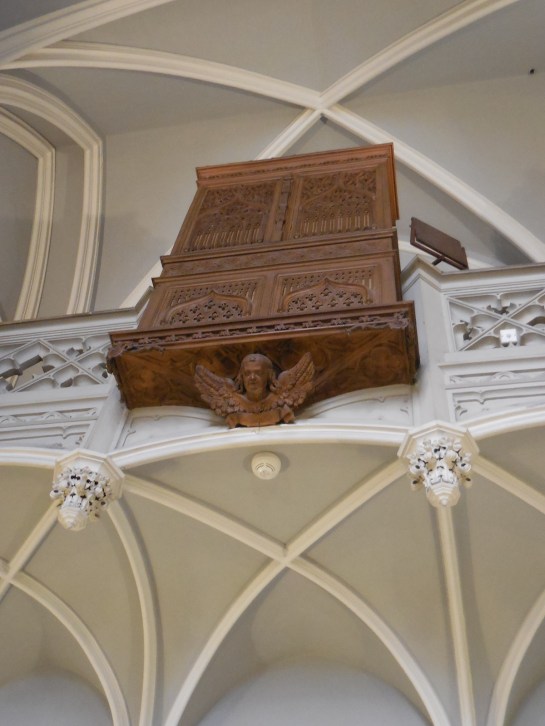
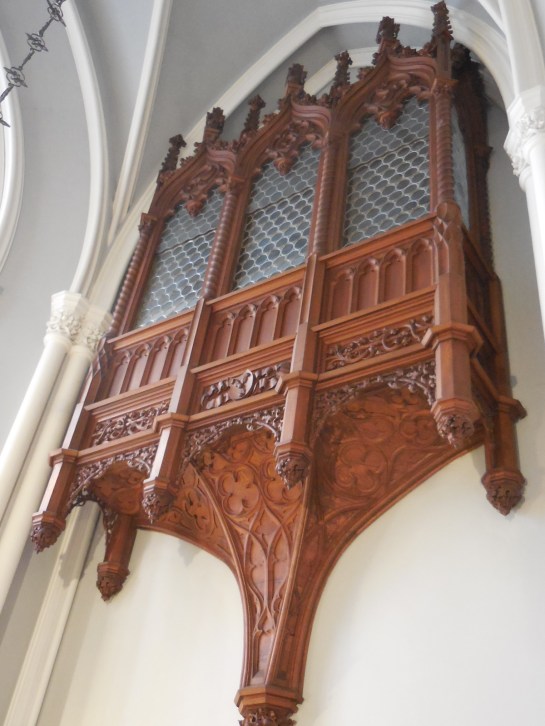
The exquisite interior of the church

The tombstones outside the church

The tombstones outside the church

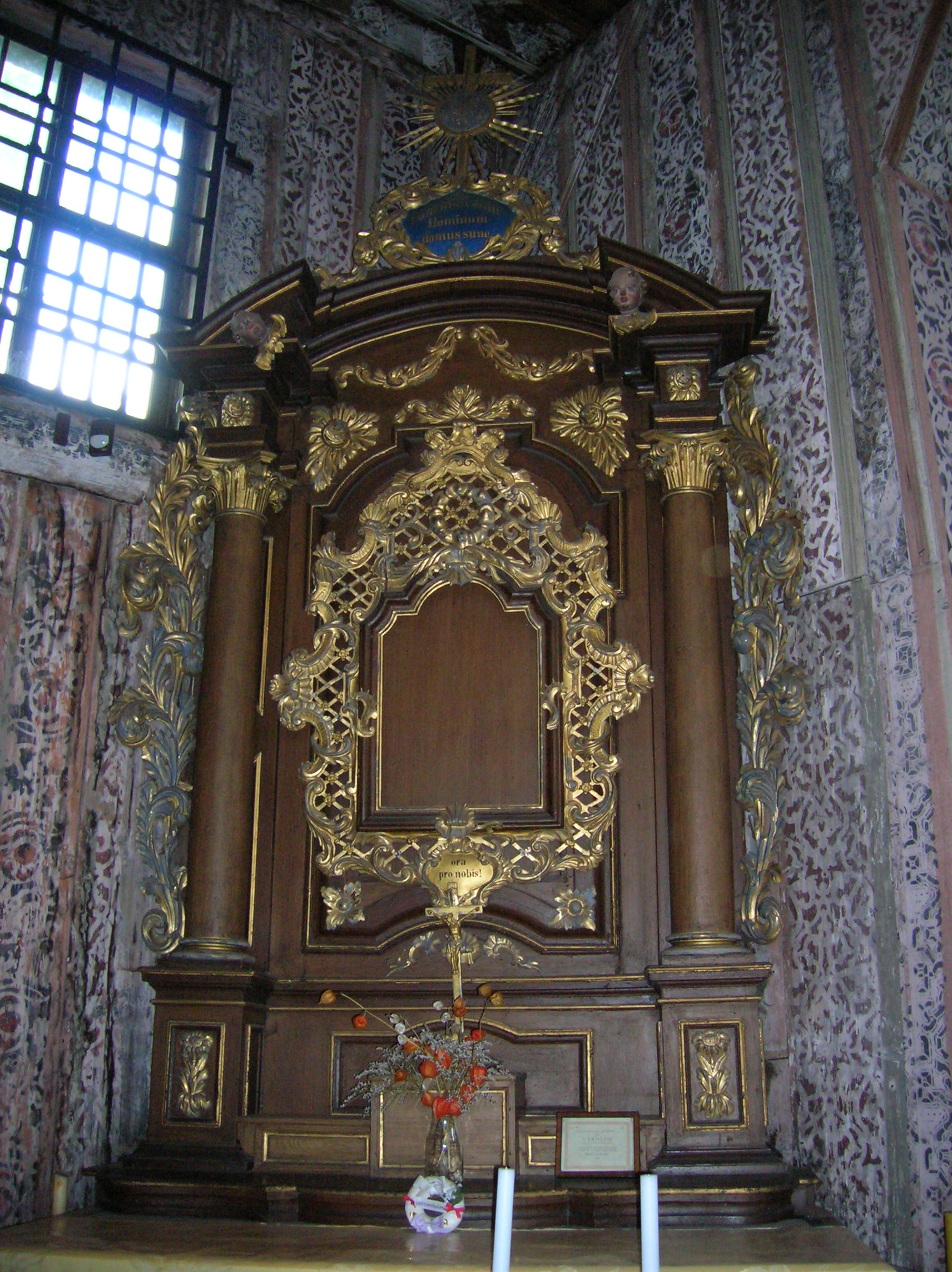
The art work was incredible. There was a remarkable stencil mural on a wall. I admired the black stencil motifs of geometric shapes and vegetables on the ceiling and walls, too. The main altar depicted the Virgin Mary looking up to Heaven, surrounded by a gold frame supported by two angels. Two columns were situated behind the angels. A huge halo dominated the top of the exquisite structure. 

Another photo of the interior of the church

Another photo of the interior of the church

After spending about a half hour in that modest yet fascinating architectural gem, I had lunch in a hotel restaurant with a garden and terrace. There was a fountain and statuary in the garden that seemed to belong to a palace. The prices were the same as the pizzeria I often visited in downtown Prague, yet the dining atmosphere was much classier. I felt as if I were at a resort.

My stomach filled with delicious chicken and diet Coke, I walked around the corner to the bus stop. It would be a four-hour journey back to Prague on the direct bus. I was surprised to find out that there was no break during the trip, such as a 10-minute interval to use the bathrooms. I did have five minutes in Náchod, though, where I raced around the corner to the train station restroom and made it back with a minute to spare. While the skies had foreshadowed rain during my entire trip, it did not start pouring until I got off the bus at the Černý Most Metro station in Prague. Still, nothing could damper my excitement about a trip that had been well worth the arduous journey.Broumov5

Tracy A. Burns is a writer, proofreader and editor in Prague.

Bouzov Castle Diary

BouzovAfter a one-hour ride from Olomouc, the bus left me off in the middle of nowhere. I knew that this bus would not take me to the main square, but I thought it must be near Bouzov Castle. The village of Bouzov, located in the highlands of Moravia, could not be so big, after all. Luckily, two women, a mother in her late forties or early fifties and her daughter, in her mid-twenties, got off with me. It turned off they were going to Bouzov Castle, too.


We climbed a short hill and walked along what could possibly be called a path, passing by some houses where big dogs barked ferociously in the front yards. The mother and daughter told me that they were from southern Bohemia and traveled for a week every year to a different part of the country to visit castles, chateaus and other sights. I began talking to the mother, as there was still no chateau in sight. She informed me that it was a two-kilometer trek.


While I was explaining to her the difference between a castle and a chateau, I thought I saw the daughter glare at me with a jealous look, as if I was intruding into her family by becoming friendly with the mother. She made me uncomfortable, and I felt like an intruder. I told the mother that while chateaus date from the 16th  to 19th  centuries, even sometimes into the beginning of the 20th  century, castles were built between the 12th  and 15th  century. Also, the purpose of construction differs: castles were made as fortresses for defense whereas chateaus were designed for comfortable lifestyles and usually were accompanied by parks and gardens.


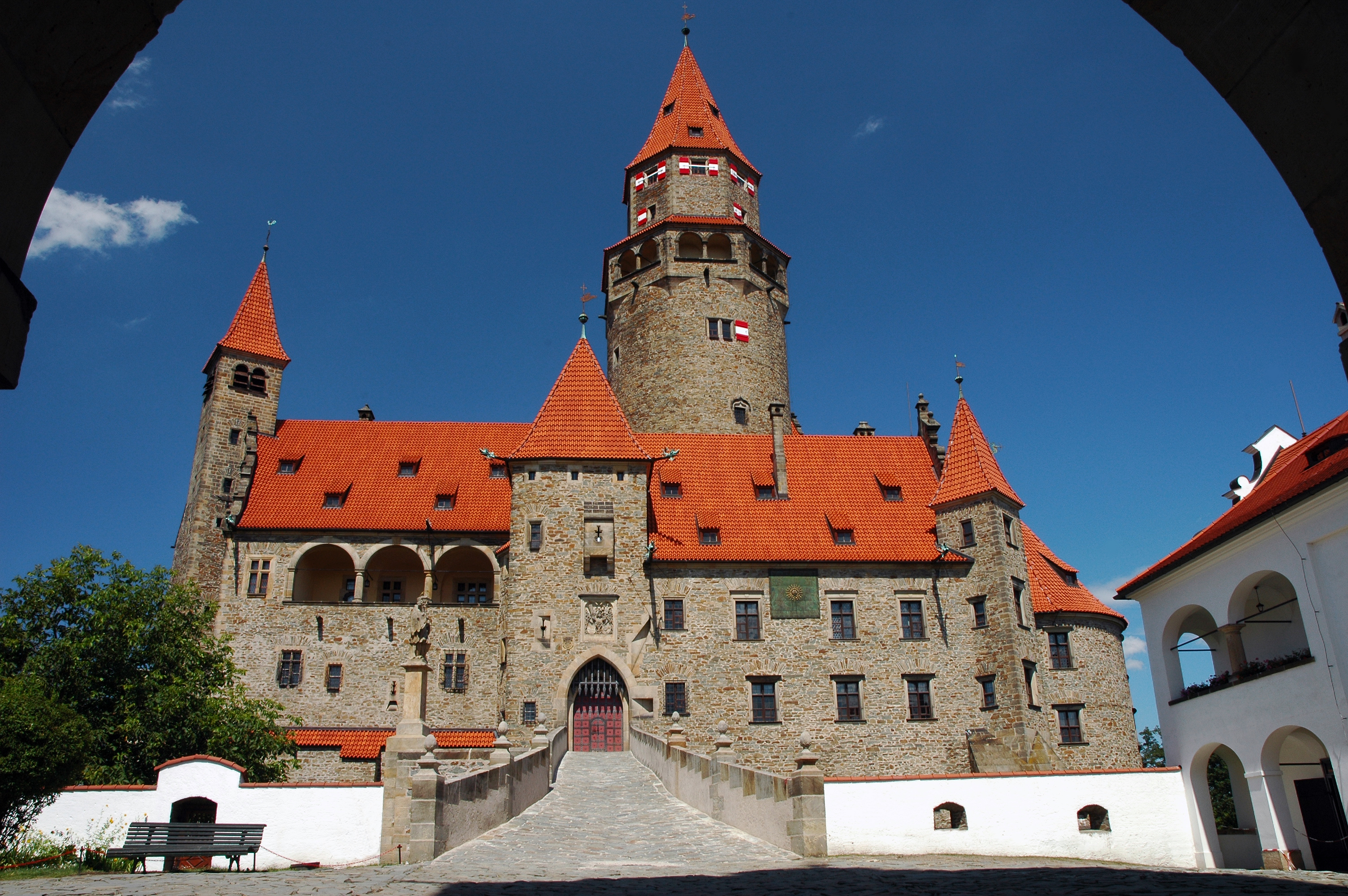
Finally, we came to the main square. I was stunned. Bouzov Castle had a fairy-tale appearance. I was so captivated that I was certain this would be one of my favorite chateaus even though I had yet to see the interior. While waiting for the tour to start, I read background material about the chateau in a brochure I had purchased at the souvenir shop.


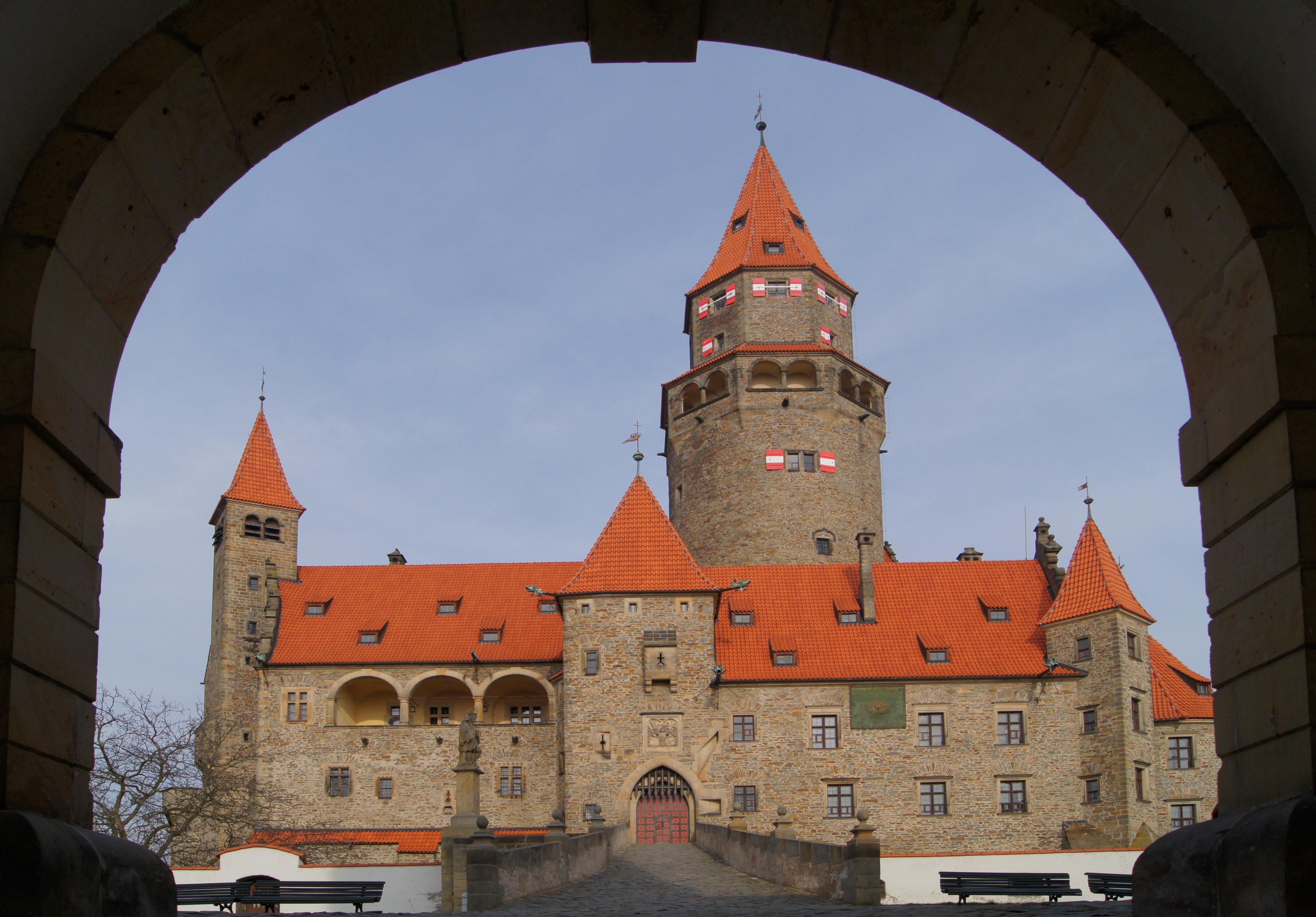
Bouzov4Originally built in the early 13th century as a late Gothic stronghold, Bouzov was the property of the Order of the Teutonic Knights from the late 17th century until the end of World War I. (Founded at the end of the 12th  century by a group of German merchants, the Teutonic Knights first came to Bohemia in 1203.) Now it is owned by the National Monument Institution in Olomouc. The castle looked as it did at the end of its reconstruction at the turn of the 20th century, when Teutonic Knights’ Grand Master Eugene Habsburg, inspired by late Gothic and early Renaissance architecture in Germany and the Netherlands, had what was at the time practically a ruin remade into a residence with a romantic flair.


Indeed, I did find symbols of the Teutonic Knights’ order figuring prominently in the chateau; even the order’s crest adorns the second castle gate. I saw six tombstones of Grand Masters from 1395 to 1515 in the chapel. In the Knights’ Hall the coat-of-arms of all the Grand Masters of Bouzov decorated the walls.


It didn’t take me long to find a figure of Saint George, one of the order’s symbols. For example, a marble Renaissance statue, hailing from Venice, depicted this saint at the chapel’s entrance. Also an exquisite wall painting of St. George fighting the dragon adorned the Knights’ Hall.


I marveled at the walls of the Hunting Hall. They depict the ancient tale of Prince Aktaion and Goddess Diana: When Aktaion spotted the goddess naked, Diana got revenge by changing him into a deer. The Knights’ Hall was another gem. By that time, my head was spinning. I was so enthralled by everything I was seeing. That hall featured a Neo-Gothic fireplace, a Renaissance ceiling, exquisite wall paintings and stained glass pictures in the windows. The ravishing Baroque Grand Master’s Bedroom incorporated exquisitely woodcut sculptural carvings on two closets and chairs and a tiled stove decorated with figures of men and women clothed in Renaissance attire.


Bouzov3I had to watch my step at the grating and hatch on the floor of Court Hall; it led to the dungeon. Convicts were dropped through the hatch into the prison. The Nuremberg chandeliers that combined antlers with wooden figures impressed me in Eugene Habsburg’s private apartments. The guide told us that the biggest one weighed more than 300 kilograms (660 pounds) and held 48 candles.


In the chapel I took special notice of the late Gothic altar from 15th century Germany. The armory featured painted shooting targets of life-size figures. Other intriguing displays included gargoyles showing dragons’ heads. An executioner’s sword dating from 1677 boasted ornate decoration on both sides. There was a helical staircase inside an octagonal tower and a sundial on the courtyard façade, Gothic lattice windows, arcaded loggia and the 1929 signature of Tomáš Garrigue Masaryk (the first president of democratic Czechoslovakia) in the visitors’ book. I was especially excited about seeing Masaryk’s signature. I was a big fan of the Czechoslovak president and wondered how it must have been to live in the country during the 1920s, when he was in charge and democracy flourished here. That era fascinated me. It must have been exciting time to have been alive.


A theatrical performance featuring medieval-dressed performers and sword-fighting also entertained our group. There were four tours to choose from, and I went on two of them: the classic short tour which lasted 60 minutes and the long tour which lasted 100 minutes. A bit later I hopped on a bus that left from the main square and went back to Olomouc, enthusiastic about seeing one of the Czech wonders that had a magical touch and romantic air.


Yes, Bouzov Castle was definitely one of my all-time favorites.

Bouzov2

Vyšší Brod Monastery Diary

Vyssi Brod MonasteryWhile staying in the picturesque southern Bohemian town of Český Krumlov, I took a day trip to the nearby Cistercian monastery Vyšší Brod, located in the town by the same name and nestled in the Šumava mountains region. Now once again the property of the Cistercian Order, the monastery, founded in 1259 and built over a period of 100 years, still retains a Gothic appearance with features of both Early and Late Gothic architecture, as I noticed upon my arrival.


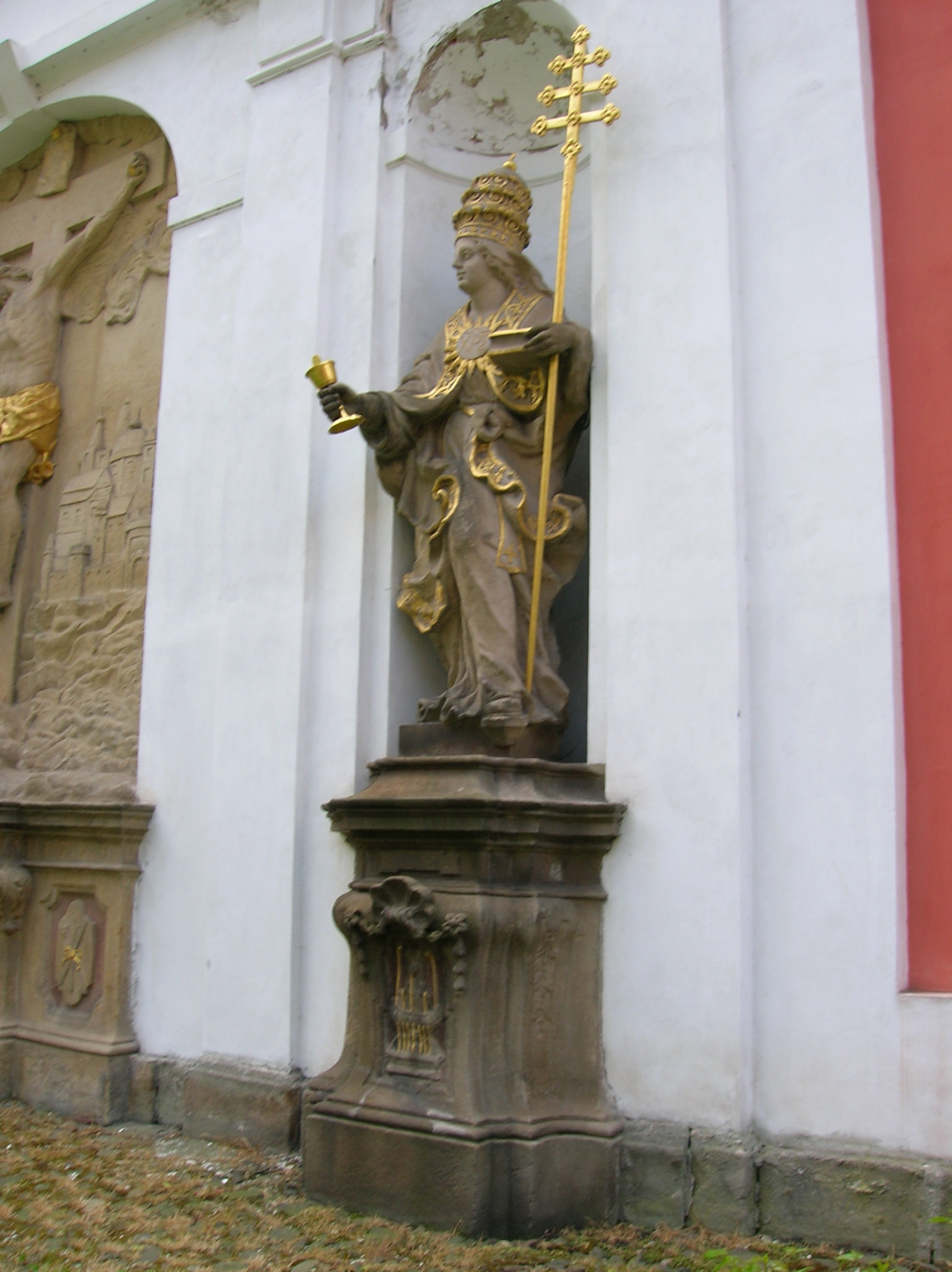
First, I stepped into the church itself and especially took note of the high altar and the side altar of the Virgin Mary. Built from 1644 to 1646, the Early Baroque high altar is made of brown gilded wood. I loved how it was adorned with statues, such as those of Saint Eugene the Pope and Saint Bernard. A sculpture of the Crowning of the Virgin Mary and another of the Holy Trinity also impressed me.


The side altar of the Virgin Mary boasted a valuable panel painting of the Madonna of Vyšší Brod by the Master of Vyšší Brod sometime after 1400. Set against a golden background, the blond Mother of God cradled a naked baby Jesus while angels hovered above her and saints posed at the sides.


Then there were the abbots’ tombstones, some in Mannerist style and others from the Baroque era I also saw the wood inlaid and gilded choir studded with Baroque statues of various saints. A glance upwards and I was looking at exquisite Gothic stained glass windows decorated with themes from the lives of saints.


An art lover, I was enthusiastic to see the monastery’s art collection. Mostly Gothic and Baroque, it featured many Dutch and Flemish works (yes!) as well as Baroque creations by Czech artists such as Petr Brandl (one of the Baroque painters I hold dearest!). Baroque seascapes and landscapes by Norbert Grund and František Xavier Palko’s rendition of the 12 apostles and a portrait by Czech master Jan Kupecký were among the dazzling canvases in the exhibition. I especially liked Grund’s landscapes.


Soon it was time to visit the library, which held 70,000 volumes, making it the third largest Czech monastic library. Only Strahov and Teplá boasted more books. I set my eyes on Rococo bookcases dating from 1756. Works from 1500 to 1800 made up part of the collection, though some pieces dated as far back as the 13th century. A five-volume Latin Bible also caught my attention. It hailed from the early 14th century. Chants of the Cistercian Order were written at the turn of the 15th century.


VyssiBrod1Then our group came to the Library Corridor, which is home to 19th century and early 20th century collections written mostly in Latin and German. We moved on to the Philosophical Hall where books about such subjects as math, biology, and chemistry as well as German dictionaries are stored. The astounding fresco on the ceiling was the work of Lukáš Vávra. Latin quotations by Saint Bernard promoting education could be seen above the windows. In the center of the room I was blown away by a detailed map of the Czech lands that featured even the tiniest villages from the 1600s. I was awed by the attention to detail.


The Theological Hall was best known for keeping one of the largest collections of bibles in Central Europe, and the holy books in the collection come in 40 languages. Can you believe it? The white pigskin bindings hailed from the middle of the 18th century. Another fresco by Vávra adorned the ceiling, this one showing a 12-year old Jesus in a temple. The guide pointed out something intriguing about the painting. If you look closely, you notice that some of the things featured in the fresco didn’t exist when Jesus was alive. For example, one man donned glasses, another held a book, and there was glass in a window. The style of clothing and the architecture were also ahead of their time. Then the tour ended.


On the main square in the town, only steps away from the monastery, I found a restaurant in a hotel where I was able to have my favorite chicken with peaches and cheese. Then I stood across the street, waiting for the bus back to Český Krumlov, but it seemed that I had the wrong information. It would be another two hours before a bus came along, according to the schedule at the stop. I spent another hour in the restaurant, downing Viennese-style coffee and glasses of nonsparkling water and then stood at the bus stop for a while on that nice, though crisp, day. I let my mind wander and just succumbed to the feeling of happiness that overwhelmed me.

 Tracy A. Burns is a proofreader, writer and editor in Prague.

VyssiBrod2

Opočno Chateau Diary

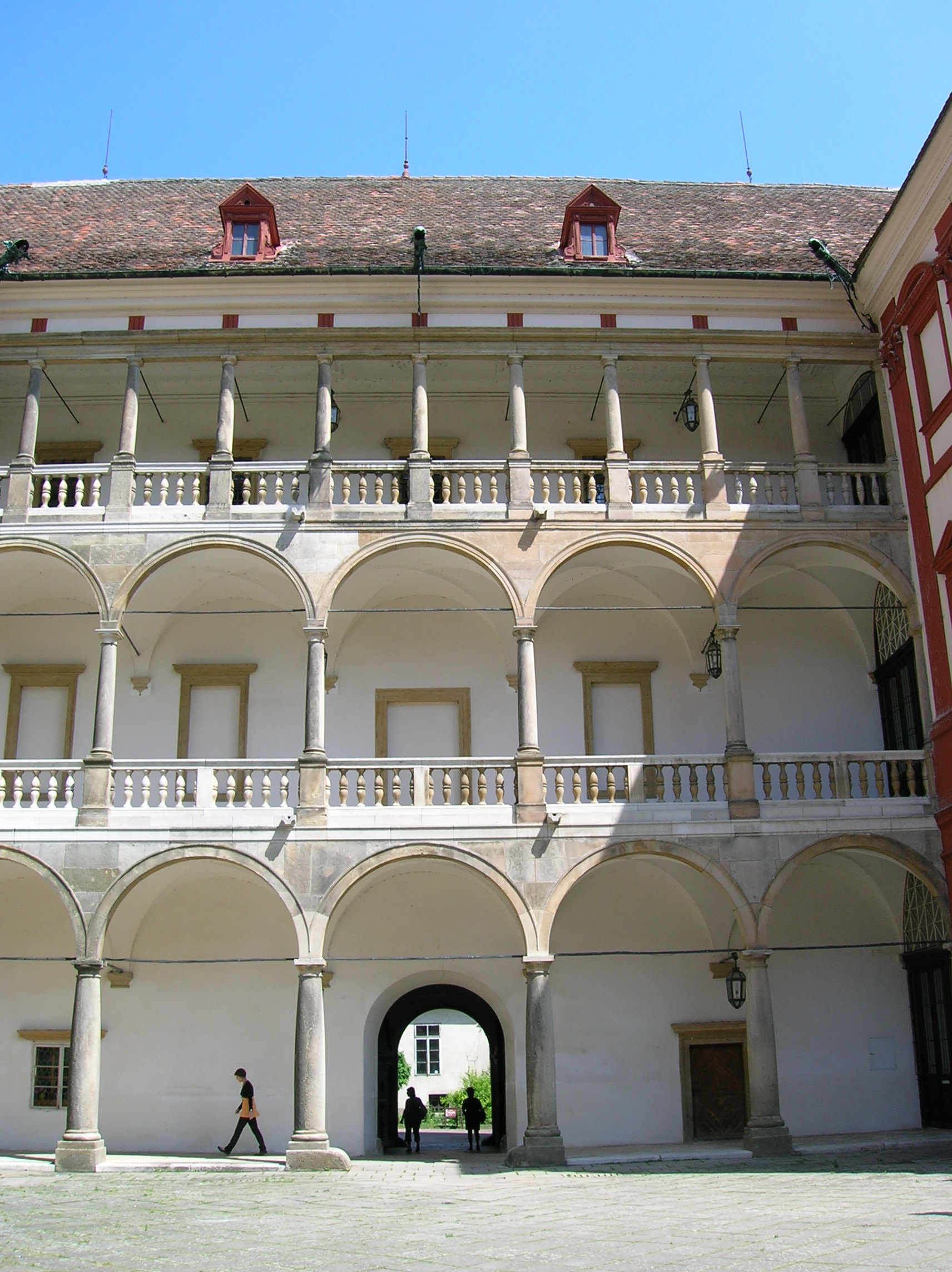
Opocnochateau3The trip went well. I changed buses at Hradec Králové after a little over an hour’s ride and then took another bus for almost an hour to the main square of the small town in called Opočno, where there is a chateau of the same name. I was in northeast Bohemia, near Poland, not far from the Orlické Mountains.  It didn’t take long to find the chateau as it was only 300 meters from the bus stop. After I bought my ticket, I walked through another courtyard and found myself staring at a façade with two-tiered light and airy arcades and a columned balcony on the third level. Flanking the arcaded façade were adjoining buildings of a pleasing red brick color complemented by white. Neatly trimmed circular hedges added color to the courtyard.

I had done enough reading about the chateau to know that the name Opočno conjures up a few intriguing stories connected with the chateau’s history. In the second half of the 15th century, the owner, Jan of Drslavic, protested against the legendary preacher and martyr Jan Hus being burned at the stake. Then he changed his mind and supported those who did Hus in. Jan Žižka, Hus’ successor with the Hussites, razed some of the surrounding villages and partially destroyed part of the chateau. Jan of Drslavic even hired a hitman to murder Žižka. He was unsuccessful.

When, during the 16th century, the Trčka family retained ownership of the chateau, Mikuláš Trčka Jr. not only reconstructed the chateau but also had his wife immured alive because she was unfaithful to him. Her lover was beheaded.

A significant historical event took place here as well. From June 16 to June 23, 1813 this was the setting for meetings dealing with the strategy to defeat French Emperor Napoleon Bonaparte. Austrian Chancellor Klemens Wenzel, Prince von Metternich; Russian Czar and Emperor Alexander I; and the King of Prussia, Friedrich Wilhelm III, were the main players in this historical drama.

Perhaps the 16th century is better known for the Trčka family’s work on the chateau. Jan Rudolph Trčka constructed a summerhouse and had built a garden and orangery with a Renaissance park and ponds. During the 18th century the façade took on a Baroque appearance.

The most significant changes, though, probably came about when Rudolph Joseph Colloredo-Mannsfeld became the owner in 1807. A greenhouse was built, and the English style park was filled with ponds and many types of plants, some of them exotic and rare. In 1896 the family moved their impressive picture gallery to the chateau.  At the beginning of the 20th century, Joseph Colloredo-Mannsfeld transformed some interiors into Rococo style.

His successor, though, was not so lucky. The Nazis overtook the chateau and grounds in 1942. After the war the chateau became the property of newly independent Czechoslovakia. The chateau underwent much restoration during the late 1980s and early 1990s, but disaster hit in 1998, when floods ravaged the park. It took two years to clean the mud out of ponds, bridges had to be rebuilt, and rare species of plants had to grow anew.

Although the Colloredo-Mannsfeld family asked for the property back during 1992, they did not get their wish granted until 2003. Some legal disputes have yet to be settled, though.

Opocnochateau1It was soon time for the tour. The first room I entered was the Ethnographic Hall, where I saw various objects from Sudan, Egypt, Central Africa, and South America. There was an Arabic sword and breastplate armor as well as a tonton drum.  Arabic furniture and the apparel of the Sioux and Apache Indians were also on display. The Central American Indians were also represented.

Swords, shields and armor from the 16th to 19th century adorned the staircase as did paintings of the chateau as it had appeared at the beginning of the 18th century. Colloredo-Mannsfeld family portraits also hung here.

The Chapel of Saint Anne, dating back to the early 18th century, took up two floors. It was adorned with a fresco showing the coronation of the virgin, a painted ceiling showing swirling figures and also images of patrons of the Czech Lands. It boasted rich wooden décor.  It was breathtaking to look up at all those swirling figures. I felt gripped by their beauty.

The Study boasted Italian commodes from the 16th to 17th century and a Neo-Renaissance wardrobe. One painting, called “The Twelve-Year Old Jesus in the Temple,” was executed by a follower of Hieronimus Bosch around 1550. The bright pink robe of one of the rather static figures caught my eye.

In the Smoking Room I was impressed with the glass – there was a collection of Venetian glass from the 16th century as well as Czech cut glass. German guild goblets, German pottery and Empire style Viennese porcelain also made the room intriguing. I spotted an ashtray shaped as a horn and made out of brown leather. I especially liked the hand painted vases and the glasses sporting coats of arms. I recognized pictures of Dobříš Chateau, near Prague, and Opočno Chateau on two glasses.

A Hapsburg dynasty portrait gallery called the Dining Room home. I spotted Empress Maria Theresa of Austria in a blue dress as well as Holy Roman Emperor and King of Bohemia Leopold I and his first wife, Margaret Theresa of Spain. I had visited enough chateaus to know that the pair was considered the ugliest and most faithful couple, according to legend. Somehow the curly, long black hair and moustache didn’t suit Leopold I’s disproportionate face, only making him more displeasing to the eye. Elaborate candlesticks were 200 years old, dating from the 18th and 19th century.

The chateau park

The chateau park

Flemish tapestries and hunting trophies from North America and Africa dotted the Game Room, which was also fit with a pool table. While I was always entranced by Flemish tapestries, I did not like hunting trophies, as I do not approve of killing animals for sport.

The Changing Room was distinguished by the 18th century Flemish tapestries with a hunting theme as well. Baroque still life paintings also adorned the walls. The guide told us that during the 18th century women could not show their ankles because it was considered the most erotic part of the body.

The Ladies Bedroom had a small bed because women remained in a sitting position while asleep so they wouldn’t mess up their elaborate hairdos. That was how the guide explained it. But I had also heard on many tours that people back then were afraid they would die if they lay down at night. I was particularly drawn to one black-and-white painting showing Empress Maria Theresa of Austria with 13 of her 16 children. Why only 13? Because three had already died before the painting was executed. The colorful chandelier made of Venetian glass will fall if an unfaithful man steps under it, the guide told us. I hoped there were no unfaithful men on the tour.

The Guest Rooms exhibited various styles of furniture, from Renaissance, Early Baroque and High Baroque to Classicist and Empire. In the Classicist room I noticed an intriguing stand for candles with three-tiers, one with figures of people, another with ravens and a third with what looked like cherubs.

Then we came to my favorite rooms, the small and large picture galleries. There were so many swirling Baroque figures in the paintings that it was overwhelming. I was dizzy with awe. The paintings were side-by-side, so close to each other. The small gallery featured Italian paintings of the Venetian and Ferraro Schools, to name a few, ranging from the 16th to 18th century while the large gallery was dominated by the work of the Neapolitan School and others during the 17th and 18th centuries. Three large paintings also depicted the history of the Italian town Mantova. I noticed a rendition of a hilly landscape, in calming blue and green, with a man in the foreground kneeling in front of some water. In the large gallery some seascapes caught my eye. One painting depicted a man with six toenails. On a hall there was a map of the area around Opočno with a legend of various places depicted on the painting. Yet another showed a battle scene with ruins in the background.

Opocnopark3I would like to point out some of the paintings that particularly enthralled me. In Luca Cambiaso’s “The Holy Family,” I took note of how Mary gazed so lovingly at the baby Jesus as she tickled his foot. The darkness contrasting with light caught my attention in Francesco Trevisani’s “The Assassination of St. Wenceslas.” While angels congregated in the light sky above, a helmeted man decked in blue gripped a dagger in the lower portion of the painting, almost complete darkness enclosing him as he was ready to strike an almost lifeless, chained Saint Wenceslas. Rays of light streamed into the darkness at a right angle. In “The Battle,” by a follower of Salvatore Rosa, one fighter on horseback shoved his sword into his foe, who began to slide off his horse. The wounded lifted up one hand toward Heaven as if asking God to stop time. I was moved by the helplessness of such a gesture.  The atmosphere was totally different in Giacomo Po’s “Victor’s Apotheosis II,” as I saw a swirling figures and horses carried out in Baroque style. The clear, light blue sky melting into the horizon and the dark green color of the trees in the foreground had a calming effect on me in Jan Frans van Bloeman’s (known as Orizzonte) “Landscape in Campagna.”

The library became another of my favorite rooms as I was entranced by its rare books. Martin Luther’s German 16th century translation of The Bible was here, and I knew how much that book had influenced the evolution of the German language. There was a French encyclopedia dating from 1765, too. Altogether there were about 7,000 books, bound in what looked to be gold, written in languages such as Latin, French and Italian. The subjects ranged from religion to history to linguistics to philosophy. One manuscript was called The Czech Chronicle of the World – this was my favorite – and it had been printed before 1423 in Nuremburg. I loved old, fragile manuscripts. The ancient, crisp paper with the neat, careful, fancy script always caught my eye. Each page seemed to have a life of its own, to tell its own story. To me such manuscripts seemed magical.

I wasn’t keen on weapons, but the three rooms – the Asian Armory, the Hunting Hall and the Knights’ Hall – were impressive, no doubt about it.  The Asian Armory featured weapons from the Near East and Far East, from countries such as Turkey, India and Japan.  Perhaps the highlight of the room was the 2,000-year old small bronze drum from the Dongon culture of what is today North Vietnam.  I took note of a sword from Thailand with beautifully carved handles. What intrigued me the most, though, was one object from Japan. It consisted of poles with spikes that had been used to catch the kimonos of thieves in the market.

The Knights’ Hall portrayed the development of weapons and armor from the 15th to 18th century, some pieces harkening back to the 15th century Hussite Wars and the 17th century Thirty Years’ War, for example. The guide showed us one sword that had no sharp point because it was used for executions. A Roman helmet was 2,000 years old and found in what is now Moravia. Another unique object that caught my attention was a painting of Opočno. It looked nothing like the chateau because the painter had never been there

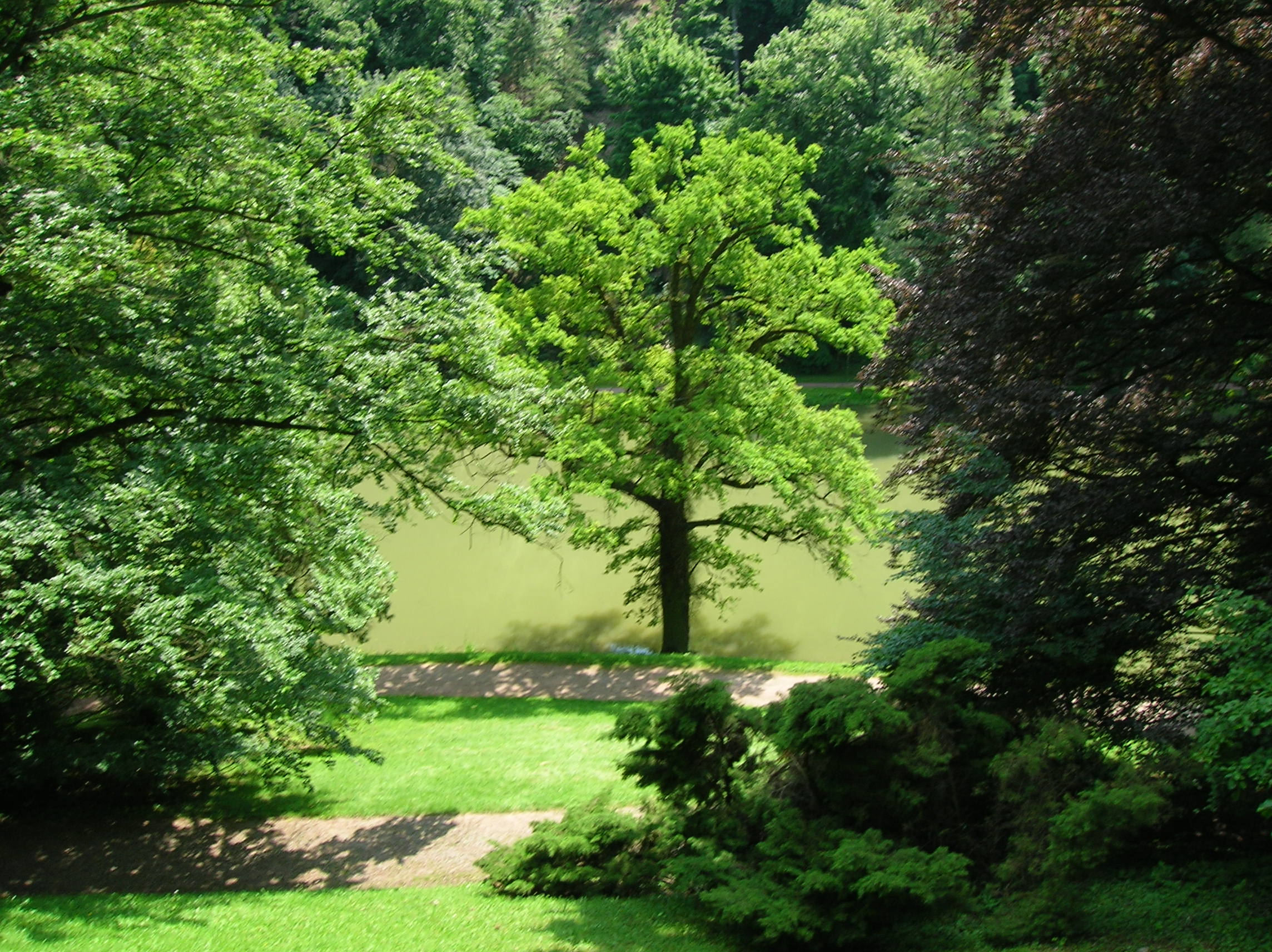
Opocnopark1After the tour I went to the park. It was a very hot, sunny day. I sat on a bench not far from the entrance, under a tree in the shade and stared at the pond and leafy trees that looked like enchanting scenery from a postcard. This was my favorite park, I was certain. I felt so at ease here. I couldn’t exactly explain why. I didn’t need to go to the sea to relax. I just needed to go to Opočno’s chateau park. When I first visited Opočno 10 years earlier, I had thought that I would like my wedding to be here, so I could walk with my new husband through this park, through this fairy tale of natural wonders. Ten years later, still with no husband, I sat on the bench and read The Death of the Beautiful Deer by Czech author Ota Pavel. I stayed there for about two hours, content, not wanting to leave. But I had to get something to eat before I caught the five o’clock bus back. The closest restaurant was reserved, so I found a pub with attractive seating on the main square and chose my favorite – chicken with peaches and cheese plus a diet Coke.

I got to the bus stop on the main square about 20 minutes before five o’clock. According to the schedule on the Internet, the bus was supposed to come a little after five. I wanted to check it on the schedule on the bus stop, but I couldn’t. It was June 12, and the bus schedule changed June 13. Tomorrow’s schedules were already posted; today’s had been taken down already. I could only hope my information from the Internet was right. Then two teenage girls showed up at the stop. The bus came about 10 minutes before five o’clock.

I had been lucky. In early August, when I looked up the times of buses from Hradec Králové to Opočno, according to the web site, no such connection existed.

Tracy A. Burns is a writer, proofreader and editor in Prague.
Image